

Key Takeaways:
- Dynamics 365 Business Central, Sage Intacct, Sage 300, Oracle NetSuite, Acumatica and Odoo are the six platforms Alberta finance teams weigh up when comparing ERP accounting software in Alberta
- Alberta and Quebec are the only provinces that don't let the CRA collect corporate income tax, so an Alberta corporation submits a federal T2 and a provincial AT1
- Electronic filing of the AT1 became mandatory for tax years beginning after 31 December 2024, and the penalty for using paper is $1,000
- Alberta capital cost allowance is claimed on its own schedule and doesn't have to match the federal number, so the asset register carries two positions
- Alberta charges no provincial sales tax, which catches businesses out the moment they sell into another province
An Alberta corporation files its corporate income tax twice. The federal T2 goes to the Canada Revenue Agency. A separate AT1 goes to Alberta's own Tax and Revenue Administration, under a different account number and on its own deadline. Only Alberta and Quebec work this way. Everywhere else lets the CRA collect on the province's behalf.
That arrangement puts one demand on ERP accounting software in Alberta that the same product doesn't face anywhere else in the country. The chart of accounts has to produce figures reconciling across two parallel returns, and the asset register has to support a provincial capital cost allowance claim that can sit apart from the federal one. A few platforms hold both positions natively, and the rest hand the provincial one back to whoever keeps the spreadsheet.
Build the Chart of Accounts Once
Gestisoft designs Alberta ERP projects so the provincial return is configured before anything posts.
 Book a free consultation
Why does ERP accounting software in Alberta answer to two tax authorities?
Alberta has taxed corporate income directly since the 1940s. Any incorporated business with a permanent establishment here, from a Calgary office to a well site in the Peace Country, pays tax on the share of taxable income allocated to the province. Alberta corporate income tax is administered by the province itself, and that one fact gives ERP accounting software in Alberta an extra job to do.
Scheduling is the first consequence for anyone choosing ERP accounting software in Alberta. An AT1 falls due within six months of the tax year end, while the balance owing is payable at the end of the second month after that date, so an Alberta corporation pays the province long before it files. Canadian-controlled private corporations claiming the small business deduction on taxable income of $500,000 or less get until the third month, and everyone else pays monthly installments.
Format is the second. For tax years beginning after 31 December 2024, every corporation has to file its AT1 electronically through Alberta's net file service, using TRA-certified software and a valid Alberta Corporate Account Number. The requirement excludes insurance and non-resident corporations, along with any reporting in functional currency or exempt from taxation under section 35 of the Alberta Corporate Tax Act. Any corporation that fails to file electronically when required is liable to a penalty of $1,000 under Special Notice Vol. 5 No. 67.
None of this changes what a general ledger is. It changes what has to come out of one. An ERP system in accounting earns its place here by producing both sets of numbers from the same posted transactions, and the choice between doing that cleanly and rebuilding it every spring gets made while the chart of accounts is still being configured. Canadian ERP software gets judged on how it handles requirements like the AT1.

What the AT1 asks of ERP accounting software in Alberta
Alberta works out taxable income much the same way the federal system does, with one difference that changes how ERP accounting software in Alberta gets set up. A corporation can claim capital cost allowance at a different rate provincially than it claims federally, and AT1 Schedule 13 is where the provincial number goes.
So the asset register carries two depreciation figures for the same piece of equipment. The Innovation Employment Grant adds a second job, since it's worth 8% of eligible research and development spending carried out in Alberta and the province asks for a project listing to support the claim.
Each of those obligations comes back to how the ledger is set up.
- Two capital cost allowance figures on one asset register, with the provincial one going on AT1 Schedule 13
- GIFI-mapped balances that agree across the T2 and the AT1
- Research and development spend tagged to Alberta projects for the Innovation Employment Grant
- Loss carryforwards tracked provincially, since a federal reassessment doesn't change Alberta's record
- A payment schedule that runs ahead of the filing date
Information Circular CT-2 governs filing and payment, and an Alberta finance team that reads it before signing a software contract walks into the vendor conversation knowing exactly what to ask for.
Project and province tags turn these obligations into settings the system applies, with no monthly work behind them. They ship natively in some ERP accounting software in Alberta and arrive as an add-on elsewhere, so knowing the types of ERP software narrows the field faster than a feature grid does. Finance teams running projects in Business Central recognise the model straight away.

What each ERP accounting software in Alberta option is built for
Alberta's market splits between full ERP, where accounting and operations share one database, and finance-first platforms that handle the ledger superbly and connect outward for everything else. A proper ERP software selection exercise before the demos settles which side your business belongs on. A Canadian tax localisation is what separates a platform an Alberta finance team can use from one it would have to pay a developer to finish. The top ERP systems in Canada all ship with one.
1. Dynamics 365 Business Central
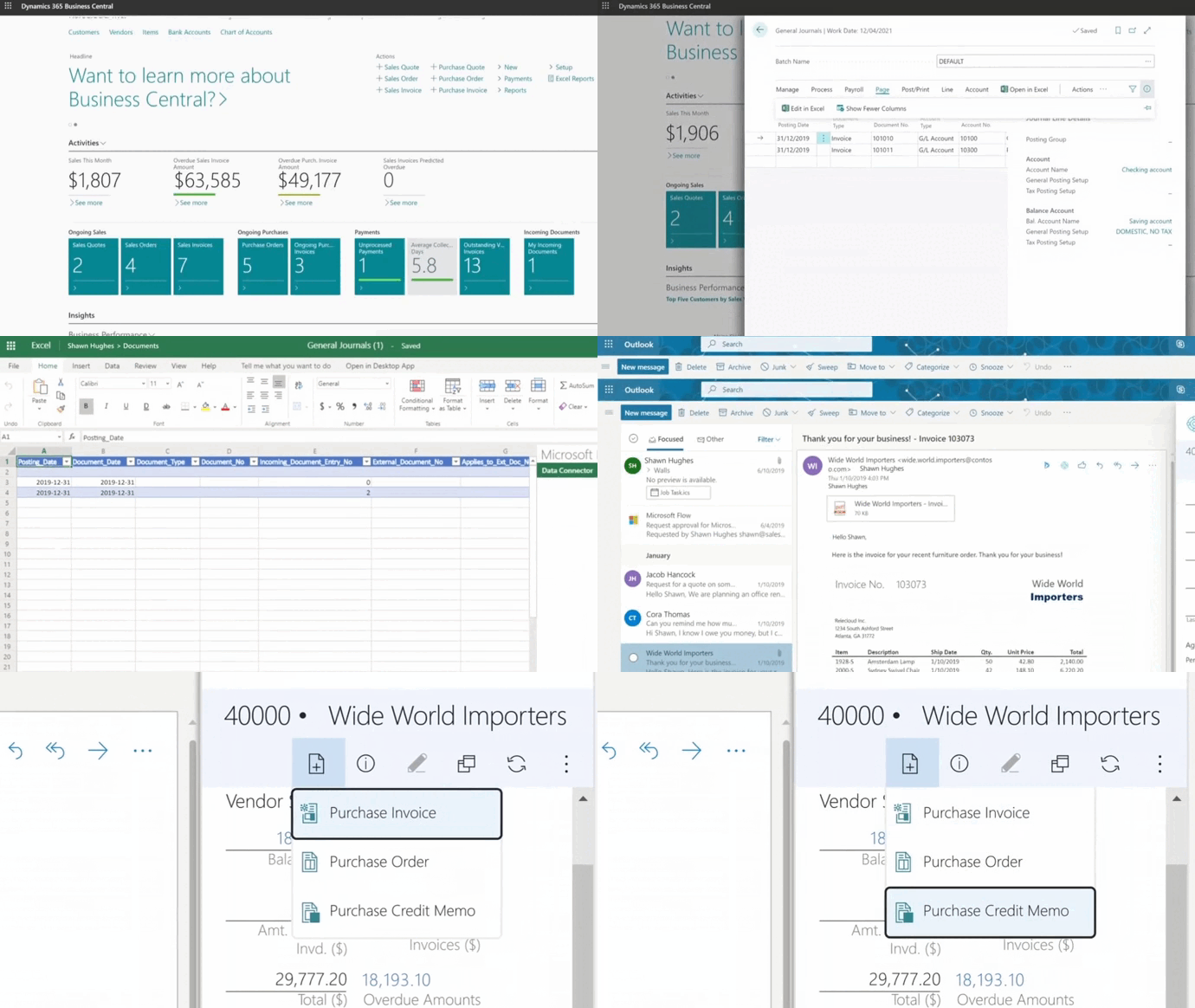
Business Central is Microsoft's cloud ERP for growing small and mid-sized companies, built on the Dynamics NAV accounting core. Finance, inventory and purchasing sit inside one licence, with manufacturing and service management on the Premium tier.
For an Alberta buyer, the relevant part is a Canadian localisation that has carried federal and provincial sales taxes since long before a cloud version existed.
Fixed assets are native, and the depreciation book structure supports more than one book against a single asset, which is precisely what an AT1 Schedule 13 position needs. Account categories map to a reporting structure you define once, so GIFI groupings come off the same chart that produces your monthly statements, and every general ledger account opened afterwards inherits that mapping.
Native Excel, Outlook and Teams integration removes the middleware layer every other platform here needs, and Copilot arrives included.
Reporting runs through Power BI, and an ERP with Power BI built during implementation beats one retrofitted afterwards. Customisations survive release waves under the upgrade-safe extension model, so an Alberta business that pays for a change keeps it through the next update.
“The software is our working tool. With our previous solution, it was like having a stone hammer. We could accomplish our tasks, but the tool was outdated. With Business Central, if we decide to move into the Industrial 4.0 era, it’s possible. We now have an up-to-date solution that meets our needs.”
Microsoft sells the licence and a certified partner does the build, so discovery, configuration, data migration and training all belong to the firm you hire. Choosing a Business Central implementation partner carries more weight for ERP accounting software in Alberta than the licence tier does.
On the AT1: depreciation books and dimensions are both native, so nothing on the provincial return needs a third-party module.
“As a customer since 2015, I would like to highlight the quality of support and expertise provided by Gestisoft for our Business Central application. Their competence is notable and has greatly contributed to the success of my business. I highly recommend them as a service provider for Business Central.”
2. Sage Intacct
Sage Intacct was built by accountants for their own trade, and the general ledger shows it. Multi-entity consolidation is the strongest thing Sage Intacct does, and dimensional reporting comes as standard. An Alberta holding structure with four operating companies and a management company consolidates with less configuration than any other ERP accounting software in Alberta demands.
Inventory and manufacturing sit outside the product entirely. Operations run in connected systems, which suits a services business and frustrates a distributor. Alberta professional firms, engineering consultancies and non-profits managing restricted funds buy it for that reason, and the decision resembles accounting for service business more broadly. Budgeting is a separate Sage module, so anyone weighing this against dedicated financial planning software should price the whole stack.
On the AT1: dimensions handle Alberta project tagging cleanly, though fixed assets and the second capital cost allowance figure need a connected module.

3. Sage 300
Sage 300 started life as Accpac, developed in Vancouver in the 1970s, and Canada holds one of the largest installed bases anywhere. Plenty of Alberta manufacturers have run it since the 1990s, and multi-currency, job costing, Canadian payroll and optional fields for transaction analysis are all mature.
The architecture is modular and Windows-based, with cloud hosting sitting on top of a design that predates the cloud. That changes upgrade economics across five years, which is the argument at the centre of any ERP cloud solution decision.
Alberta businesses on an older build reach a point where the customisation layer holds them back, and the sorting work in an ERP system migration plan decides what the next ERP accounting software in Alberta inherits.
On the AT1: optional fields give you the tagging and Canadian tax services are solid, while the provincial depreciation figure gets managed outside the system.
Get Both Alberta Filings Out of One System
Gestisoft builds Alberta account structures that feed the T2 and the AT1 from the same postings.
 Free discovery call
4. Oracle NetSuite
NetSuite is the most global of the ERP accounting software in Alberta options, selling cloud ERP since 1998 with deep multi-subsidiary financials, advanced revenue recognition and subscription billing. Multibook accounting sets it apart, since the platform maintains more than one set of books against identical transactions.
For an Alberta corporation with US operations, multibook does useful work on cross-border reporting. Procurement is where Alberta buyers get caught, since pricing is negotiated and contracts are rigid, so the total surfaces late.
An Alberta business already running Microsoft 365 settles the NetSuite vs. Dynamics 365 Business Central decision on how much middleware its finance team wants to maintain, since the Excel and Outlook links run through connectors.
NetSuite belongs to Oracle, so an Alberta buyer inherits that licensing and renewal culture along with the software. The mid-market Oracle competitors give a finance team somewhere else to go when those terms stop suiting.
On the AT1: multibook handles two positions on one asset properly, and the Canadian localisation is capable with configuration effort on the higher side.
5. Acumatica
Acumatica launched in 2008 with no legacy codebase, and its signature is consumption-based licensing with unlimited users. An Alberta construction firm with forty field staff who each open the system twice a week pays for transaction volume, and headcount stops driving the bill for ERP accounting software in Alberta. That arithmetic beats per-user pricing outright once the headcount is high and the usage is light.
Construction and distribution editions are strong, which counts in a province where those industries carry a large share of the economy. Against that, no native generative AI assistant ships with the product, Microsoft 365 connections need middleware, and the Canadian partner bench is thinner than the Dynamics one.
An ERP pricing exercise is the only way to know which model wins, and a small business ERP with twelve heavy users seldom comes out ahead on consumption.
On the AT1: fixed assets and deferred revenue are native, and the reporting layer produces provincial figures with configuration work behind it.
6. Odoo
Odoo is the cheapest ERP accounting software in Alberta to start with, being open-source and modular. An Alberta startup with an in-house developer and simple workflows gets live on accounting, inventory and sales for a fraction of what the others cost in year one.
Year three is a different conversation. Custom code breaks on upgrades. Technical debt accumulates while developer dependency grows, and consolidation work needs add-ons of varying quality. Alberta businesses that start on Odoo and grow past twenty users end up facing a custom ERP decision nobody planned. Most of the ERP implementation challenges surfacing late on these projects trace back to a customisation nobody wrote down.
On the AT1: the ledger holds the data, and producing the provincial position reliably becomes somebody's development ticket.
How much does ERP accounting software in Alberta cost?
Microsoft publishes its numbers, which makes Business Central the easiest of the six to budget. Essentials runs CAD $108.50 per user per month and Premium runs CAD $149.20. Team Members, for read-and-light-entry access, cost CAD $10.90. Business Central pricing in Canada moved to those rates on 1 November 2025.
Sage Intacct and NetSuite publish no list price, and Acumatica's consumption model gets quoted the same way. Those numbers come out of a sales conversation and differ from one customer to the next.
Licensing is the smaller part of the budget. Services carry the rest. A defined finance-only scope for an Alberta SMB starts far under a mid-market deployment carrying consolidation and migration off a legacy system, which runs $75,000 to $200,000 CAD or more. Support and optimisation afterwards cost 15% to 25% of the implementation number each year.
Two things move the price of ERP accounting software in Alberta specifically. Multi-entity structures are common here, particularly across energy services and agri-food, and consolidation scope drives configuration hours directly. Asset volume is the other, since a business with three hundred pieces of equipment faces a far longer migration than one with twelve.
Business Central implementation cost separates the licence from the services, and holding every other quote to that same split is what makes them comparable. Phase one of ERP accounting software in Alberta should put a working system in place on its own, so an ERP implementation phase built around a capital approval cycle delivers the general ledger, receivables, payables and the two tax positions before anything else gets switched on.

What no provincial sales tax does to ERP accounting software in Alberta
Alberta charges no PST, no provincial payroll tax and no employer health tax. A business selling only inside the province sets up 5% GST and stops, since Goods and Services Tax in Alberta is the only sales tax it will ever charge at home.
The asymmetry starts the moment that business sells somewhere else. An Edmonton distributor shipping to Saskatoon charges GST plus Saskatchewan PST, and the identical order sent to Winnipeg picks up Manitoba RST. Neither rate appears on a local invoice, so an Alberta finance team can run for years without configuring either one, then win a customer across the border and discover the setup was only ever half built.
The tax engine is where accounting software and ERP accounting software in Alberta stop being interchangeable. A system sourcing tax to the ship-to address handles the Winnipeg order without anybody remembering to. One carrying a single default rate produces an invoice somebody has to correct.
That distinction runs through the whole accounting software vs ERP question. Alberta buyers comparing on ledger features alone find it twelve months later.
Workers' Compensation Board premiums add the other Alberta-specific piece, since rates are set by industry code and a business operating under more than one needs payroll costs split accordingly. Any of the ERP consulting companies working in Alberta should raise that during discovery unprompted.
When does a business need ERP accounting software in Alberta?
Server-based accounting software is being retired across the market. Vendors have closed new Canadian subscriptions to their desktop products and are winding support down on published schedules, so an Alberta business still running one has an end date looming.
Four other signals show up consistently.
- Month-end close taking more than five working days, because the delay stops the numbers influencing anything
- Fixed assets maintained in a spreadsheet beside the ledger, which is the one that bites hardest at AT1 time
- Work-in-progress figures nobody trusts without a manual count
- A second entity acquired or incorporated, since consolidation is where spreadsheets stop scaling
Replacing ERP accounting software in Alberta while the current system still works costs considerably less than doing it afterwards. A business with time in hand reads a proper accounting software comparison and makes a considered choice.
One doing it four weeks before a payroll deadline takes what it can get. Older Microsoft platforms raise the same question, and Dynamics GP vs Dynamics 365 Business Central is a decision plenty of Alberta finance teams have already worked through.
Your Fiscal Year End Sets the Go-Live Date
Gestisoft scopes Alberta ERP projects backwards from the date your books have to be clean.
 Book a free consultation
How Gestisoft implements ERP accounting software in Alberta
Gestisoft has been implementing ERP for Canadian businesses since 1997 and has held Microsoft partner status since 2004, working in English and French out of Montreal, Toronto, Ottawa and Quebec City. Alberta delivery runs remotely, and a two-hour offset still covers most of an Alberta working day.
Gestisoft treats the chart of accounts as the first deliverable on ERP accounting software in Alberta, before any module gets switched on. Running both Dynamics 365 CRM and Business Central puts Gestisoft in a small group of Canadian partners, so the customer record a sales team creates and the receivable it becomes gets designed against one data model.
An Alberta business buying its ledger from one firm and its CRM from another pays for that seam at every month-end. A Business Central specialist from Gestisoft carries the design from discovery through migration and stays on the account afterwards.
Gestisoft also builds and maintains its own extensions for Canadian requirements, so an Alberta business asking for something the standard product doesn't cover gets an answer from the team that will support it afterwards.
A dedicated Customer Success Manager picks up the account at go-live and handles the questions that only appear once people run month-end through the system, which is where Business Central support services hold adoption together.
“What we really appreciate is that even in difficult times, Gestisoft supports us with solutions that are clear and adapted to our reality.”
Gestisoft deploys into Azure's Canadian regions in Toronto and Quebec City, so an Alberta corporation's ledger and its supporting documents stay inside the country. For a business answering to two tax authorities, a partner who has configured Canadian localisations for nearly three decades already knows which questions to ask during discovery.
-
Dynamics 365 Business Central suits most Alberta businesses already on Microsoft 365, since accounting and operations share one licence and the Canadian localisation is mature. Sage Intacct fits finance-led organisations whose complexity lives in the ledger. Acumatica works for businesses with many light users. The best ERP accounting software in Alberta follows from where your complexity sits.
Liked what you just read? Sharing is caring.

September 11, 2026 by Shelley Sunjka by Shelley Sunjka Copywriter & Marketing Strategist
Armed with a psychology degree and an irrational obsession with okapis, I've spent the last decade helping bold brands tell better stories. I believe the best writing bends grammar rules on purpose and makes people feel something. When I'm not deep in words or nerding out on buyer behaviour, I'm probably convincing my kids that impromptu kitchen dance parties are totally normal.
