

Most Canadian professional associations have heard the pitch by now. A CRM will centralize your member data and fix your renewal headaches. Plenty of associations bought in and then they spent six months trying to make a platform designed for sales pipelines work for a compliance-driven membership lifecycle that spans an entire career.
A CRM for professional associations is a different category of platform. Every member record combines relationship data with operational workflows. Canadian regulatory bodies managing thousands of licensed professionals need those layers on the same record. Engagement data in one system and compliance data in another means your team makes decisions with half the picture.
That alone changes the evaluation, but for Canadian professional associations, there's a regulatory layer on top that most CRM vendors have never built for.
Canadian professional associations carry privacy and compliance requirements along with bilingual obligations, so a CRM for professional associations built specifically for that regulatory environment puts your membership management software, compliance enforcement, and board reporting on one platform.
Your CRM for professional associations should reflect how your organization operates
Gestisoft helps Canadian professional associations and regulatory bodies evaluate CRM platforms against their compliance and member service requirements.
 Book a free consultation
Why a CRM for professional associations fails when the platform was designed for a sales pipeline
Professional associations manage relationships that last decades. A member joins as a new graduate, earns credentials, attends events, serves on committees, gets inspected, and renews annually for the next 30 years. That lifecycle has nothing in common with a sales cycle measured in weeks. Unfortunately the CRM platforms most associations evaluate were built for moving prospects through a pipeline toward a close.
The structural problem goes deeper than features. Every member record in a professional association needs to carry two layers of data simultaneously. The operational layer tracks renewals, dues, CE credits, and compliance status. The relationship layer tracks engagement patterns, event attendance, communication history, and renewal risk indicators. When those layers sit in separate systems, the association falls into the classic AMS CRM divide where operations run in one tool and relationships get tracked in another. Your team makes decisions with half the picture no matter which screen they're looking at.
Standard CRM platforms handle the relationship side well because they were built for it. The operational side is where the mismatch starts costing real money. Configuring a sales CRM to handle multi-tier membership categories, CE tracking tied to renewal cycles, compliance enforcement, and disciplinary case management typically costs upward of $50,000 in custom development. And that configuration needs rework every time association workflows evolve, which happens regularly as provincial legislation changes and membership models expand.
The numbers put the cost of this mismatch into context. According to the Sequence Consulting 2026 Association Trends Report, 41% of associations report flat retention and 14% are actively losing members. Only 29.7% integrate their engagement tools effectively. That means the vast majority of associations are running disconnected systems that can't surface the signals your team needs to intervene before a member lapses.
For Canadian professional associations, the mismatch carries regulatory weight. Provincial legislation governs how many regulatory bodies operate, and a Canadian CRM that stores compliance data without enforcing compliance rules introduces real risk. If the platform can record that a member's credentials have lapsed but can't cascade that status change into their renewal pathway automatically, your association is carrying the enforcement burden manually. At 500 members that's tedious. At 5,000 it's operationally dangerous.
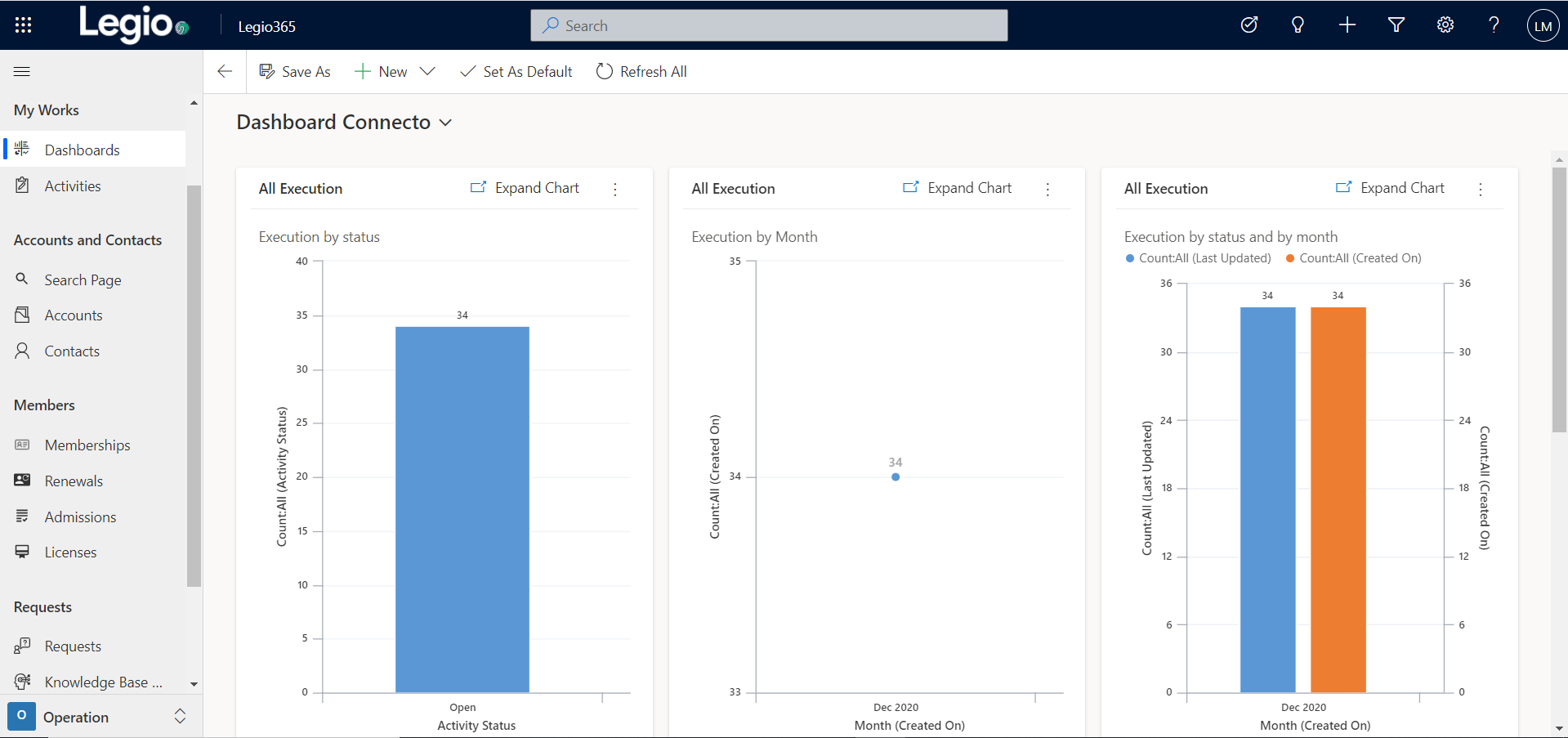
What a CRM for professional associations has to handle in the Canadian regulatory environment
Data security for regulatory bodies under PIPEDA and provincial privacy legislation starts with this specific vendor question.
Where do Canadian member records physically reside, and can you document data residency for a provincial audit?
Most CRM vendors headquartered outside Canada host records on US or EU infrastructure by default. Microsoft Azure's Canadian datacentres in Toronto and Quebec City provide data residency for platforms built on the Microsoft stack, which removes that question before it comes up.
Bilingual requirements mean that associations serving Quebec members need everything to function natively in French. A toggle doesn’t switch the workflow logic that Quebec members interact with during renewals, or the notification sequences that trigger throughout the membership cycle. Quebec's Law 25 layers data governance on top, and requires consent management and privacy notifications to operate in French as built in compliance requirements rather than translated afterthoughts.
Provincial legislation governs how Canadian regulatory bodies enforce compliance, and the CRM's architecture has to reflect that accountability at the workflow level. Automatic status cascades when credentials lapse and CE tracking connected directly to renewal cycles so incomplete requirements block or adjust the pathway are baseline expectations for a licensing and registration management platform. Disciplinary case management with audit trails that satisfy the procedural stages provincial regulators expect rounds out the compliance layer. A platform adapted from a sales CRM treats those as post-purchase configuration requests.
For most Canadian associations, the technology environment already runs on Microsoft. Staff communicate through Outlook, coordinate through Teams, build reporting in Power BI, and manage documents through SharePoint. A CRM for professional associations that forces your team into a separate ecosystem competes with tools they already use daily, which is why the membership management software selection process should weight ecosystem fit alongside feature claims.
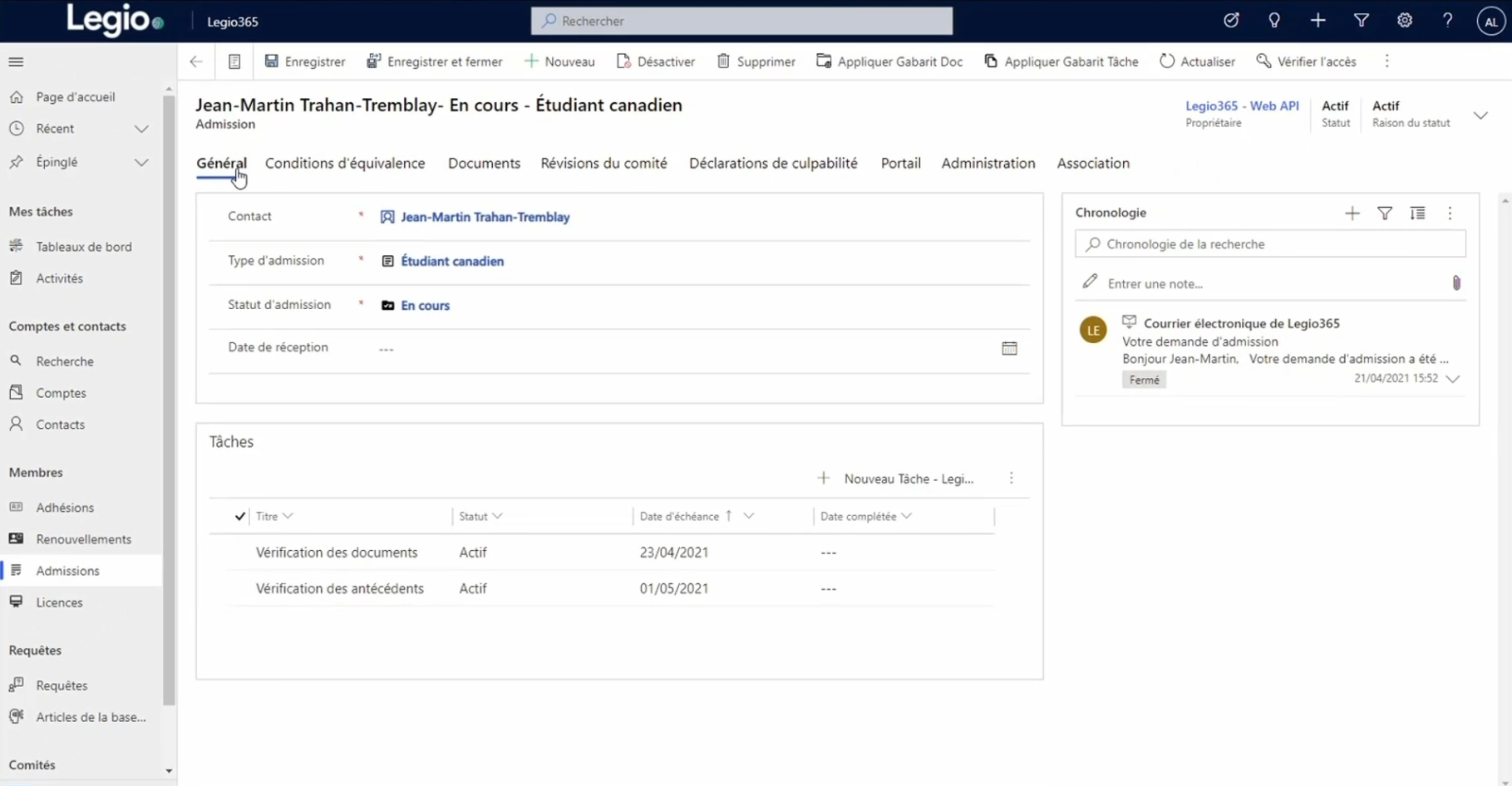
How a CRM for professional associations benefits retention and operational visibility
When the same member record carries engagement data and compliance status together, your team can spot at-risk members months before the renewal date. A member who let CE credits slip and stopped attending events six months ago carries a different renewal risk than someone actively engaged. That signal is invisible when engagement data sits in one system and compliance status sits in another. The board conversation moves from "how many did we lose last year" to "how many did we flag early, and how many did we recover."
The same consolidation changes how your association prepares for board meetings. Renewal projections, CE completion rates, engagement trends, and event ROI all pull from one data source through analytics and dashboards built into the platform instead of being compiled manually from four different tools. Automated renewal sequences and compliance reminders handle the follow-up work that used to eat staff hours every cycle, and those hours go back into membership management software benefits your members can feel.
The full picture of CRM for professional associations benefits for Canadian regulatory bodies extends into compliance enforcement, bilingual operations, governance reporting, and long-term scalability.
CRM for professional associations challenges Canadian regulatory bodies should prepare for
The membership management software challenges that cause the most damage tend to surface six months after go-live once the association has committed and the implementation partner has moved on. Then the team discovers that every workaround they built to handle multi-tier membership categories and compliance-driven lifecycle stages is creating more problems than it solves.
The workarounds accumulate and staff lose confidence in the system and default to the spreadsheets they were supposed to be leaving behind. This pattern accelerates when the CRM was implemented using vendor defaults instead of mapping how the association's team works.
Bilingual implementation carries its own version of this problem. The vendor demonstrated French capability during the demo then the association launched a platform where the member portal reverts to English halfway through a renewal. Automated communications generate in the wrong language and the association's credibility takes a hit that has nothing to do with its services.
Most of these CRM for professional associations challenges are preventable when you know they exist before the evaluation starts.
A CRM for professional associations should handle compliance and member engagement from the same platform
Gestisoft maps your association's workflows and regulatory requirements before recommending a platform or configuration.
 Book a free consultation
CRM for professional associations features to test before signing a contract
Every CRM vendor pitching to professional associations will claim their platform handles the full scope of association operations. The membership management software features lists on their websites all look remarkably similar. The differences only become visible when you test them with your own data during a demo.
Ask the vendor to show you what happens when a member's CE deadline passes without completion. Does the system update their compliance status automatically, restrict their renewal pathway, notify the relevant staff member, and generate an audit trail? If any of those steps require someone on your team to notice the gap and change a field manually, the platform stores compliance data but doesn't enforce compliance rules. That distinction will define your team's workload for years.
Then walk through a complete member journey in French, from application through renewal to complaints, investigation, and discipline workflows. If the portal reverts to English at any point or automated communications generate in the wrong language, the bilingual capability won't work for your Quebec membership.
The CRM for professional associations features that separate native capability from a vendor workaround become clearest when you know which follow-up questions to bring into the room.

How a CRM for professional associations compares to standalone AMS and generic CRM tools
Most associations evaluating technology land on one of two existing paths. A standard CRM platform gives you strong relationship intelligence but zero association-specific workflows. Configuring it to handle CE tracking and compliance enforcement means custom development with ongoing maintenance costs. The alternative is a standalone AMS tool, which handles operational workflows but treats the relationship layer as a flat contact list with no behavioral analytics. Associations running on entry-level AMS software or exploring Wild Apricot alternatives tend to outgrow those platforms once membership scales past the point where a basic contact database can support retention decisions.
A CRM for professional associations is the category that sits between those two options and combines what each one does well. Your team works from one platform instead of reconciling two and it's exactly what Legio was built to deliver.
Your association's next CRM should be the last platform your team needs to learn
Gestisoft implements Legio for Canadian professional associations and regulatory bodies with bilingual portals and compliance enforcement support built in.
 Book a free consultation
How Gestisoft built Legio into the CRM for professional associations that Canadian regulatory bodies kept requesting
Gestisoft didn't set out to build a product for associations. As a CRM implementation consultant for Microsoft, we started out by implementing Dynamics 365 for Canadian regulatory bodies.
Every engagement required building admissions workflows, renewal automation, compliance enforcement, CE tracking, bilingual member portals, and disciplinary case management from the ground up. The associations varied in size and credential categories, but the underlying build was the same every time.
Legio was born out of the decision to stop rebuilding that architecture from scratch for each new client and turn the pattern into a product specifically for Canadian associations and professional bodies. Because it runs on Dynamics 365 and Power Platform, the CRM intelligence is foundational instead of layered on top of an association management tool. The platform started as a CRM and had association operations built into it, which is the opposite of how most association software gets made. With Legio the member record your staff works from every day carries compliance status, engagement history, CE progress, and communication touchpoints together. Nobody has to cross-reference a second system to get the full picture.
“Legio has allowed us to take a crucial step in our digital transformation. We have automated several processes, improved our data management, and increased efficiency.”
The operational gains we achieved for OPPQ come from a platform that changed how their team worked daily. That's the outcome we build toward from the first conversation, and it's available to every Canadian regulatory body and professional association willing to bring their full requirements to the table. The more specific you are about what your association needs, the more precise the implementation becomes.
-
A CRM for professional associations is a platform that combines relationship intelligence like member engagement tracking, behavioral analytics, communication history and renewal risk indicators with the operational workflows associations depend on daily like dues processing, renewals, CE tracking, compliance enforcement, and event management. It replaces the gap between a generic CRM that tracks relationships but can't run association operations, and a basic AMS that runs operations but can't track relationships.
Liked what you just read? Sharing is caring.

June 08, 2026 by Shelley Sunjka by Shelley Sunjka Copywriter & Marketing Strategist
Armed with a psychology degree and an irrational obsession with okapis, I've spent the last decade helping bold brands tell better stories. I believe the best writing bends grammar rules on purpose and makes people feel something. When I'm not deep in words or nerding out on buyer behaviour, I'm probably convincing my kids that impromptu kitchen dance parties are totally normal.

