

The CRM for professional associations benefits that get cited most often are better engagement, centralized data, improved retention, and stronger member satisfaction.
But those phrases could describe any organization running any software.
For a Canadian professional association managing licensed professionals under provincial legislation, they're too broad to justify the investment to your board. The benefits worth bringing to your board are operational.
Your renewal team can flag at-risk members 60 to 90 days before lapse when engagement patterns and compliance standing feed from the same record. Board meeting prep drops from a week of data sleuthing to one screen with current numbers already on it and staff productivity recovers the hours that were disappearing into manual data reconciliation between disconnected tools.
Canadian regulatory bodies that have moved to a CRM built for their operating model are measuring those gains within the first year. The full picture of how a CRM for regulatory bodies changes daily operations extends well past the renewal cycle into long-term scalability.
You should see CRM for professional associations benefits in the first renewal cycle
Gestisoft helps Canadian regulatory bodies evaluate what a purpose-built CRM should deliver against their compliance and member service requirements.
 Book a free consultation
How a CRM for professional associations benefits renewal rates by connecting engagement data to compliance status
Retention in a professional association runs on signals that a commercial CRM was never designed to track.
- Did this member attend events over the past year?
- Are their CE credits up to date?
- Have they responded to communications or gone quiet?
- Is their compliance standing current?
Each of those data points tells you something about renewal likelihood on its own. The prediction only becomes reliable when they all feed from the same record.
The compliance data layer is what makes this specific to professional associations. A member who stopped attending events might just be busy but a member who stopped attending events, let their CE credits fall behind, missed a committee they'd attended for years, and hasn't responded to the last two months of communications is a pattern your team needs to act on. When those signals are in separate systems, nobody can identify the full pattern until the renewal date passes and then it’s firefighting mode.
The numbers put the retention problem into context. According to the Sequence Consulting 2026 Association Trends Report, 41% of associations report flat retention and 14% are actively losing members. For most of those organizations, the lapsing members weren't invisible. The signals were there just scattered across four different tools, and nobody had time to piece them together before the deadline hit.
When the CRM connects engagement data to compliance status on one record, your team's renewal process changes at a structural level. Instead of sending a generic renewal notice to the full membership, you're contacting at-risk members 60 to 90 days out with outreach that addresses their specific situation. The member whose CE credits are falling behind gets a different message than the member who's fully compliant but disengaged. That kind of targeted intervention is how associations improve membership renewal for their regulatory body in a way that compounds year over year.
The board sees the difference too. Instead of a backward-looking report on how many members the association lost, leadership reviews how many at-risk members were flagged, how many were contacted, how many recovered, and what the recovery rate looked like compared to the previous cycle. That's a membership management software benefit that hits the budget line directly, because every recovered member is dues revenue that would have walked out the door unnoticed.
How a CRM for professional associations benefits board reporting and governance visibility
Canadian professional association boards report to government regulators, their membership, and in some cases the public on compliance completion rates, disciplinary case outcomes, CE participation, membership demographic trends, and renewal projections. That reporting obligation carries governance weight that a commercial board simply doesn't face, and the data behind it needs to withstand scrutiny from audiences who have the authority to act on what they see.
Most associations assemble that board package from pieces that were never designed to fit together. Renewal data comes from the AMS, but CE completion tracking is usually buried in a spreadsheet someone built years ago that nobody has ever migrated. Communication history is scattered across the email platform with no easy way to pull it into a report. And disciplinary records tend to occupy a shared drive with its own filing logic that only one person on the team fully understands. The staff member responsible for the board report spends days or even weeks pulling numbers from each source and formatting the result into something presentable.
That process repeats every quarter.
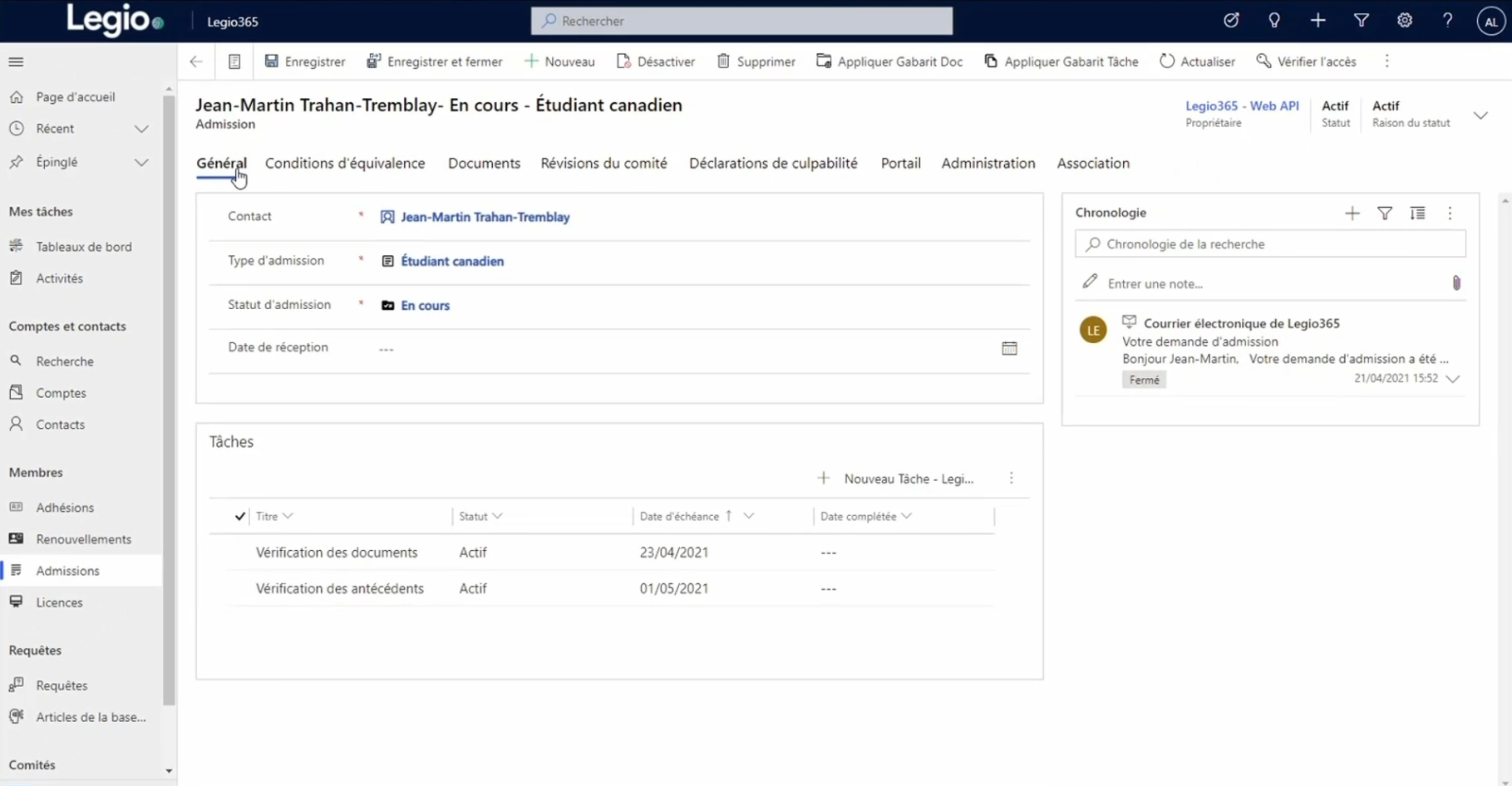
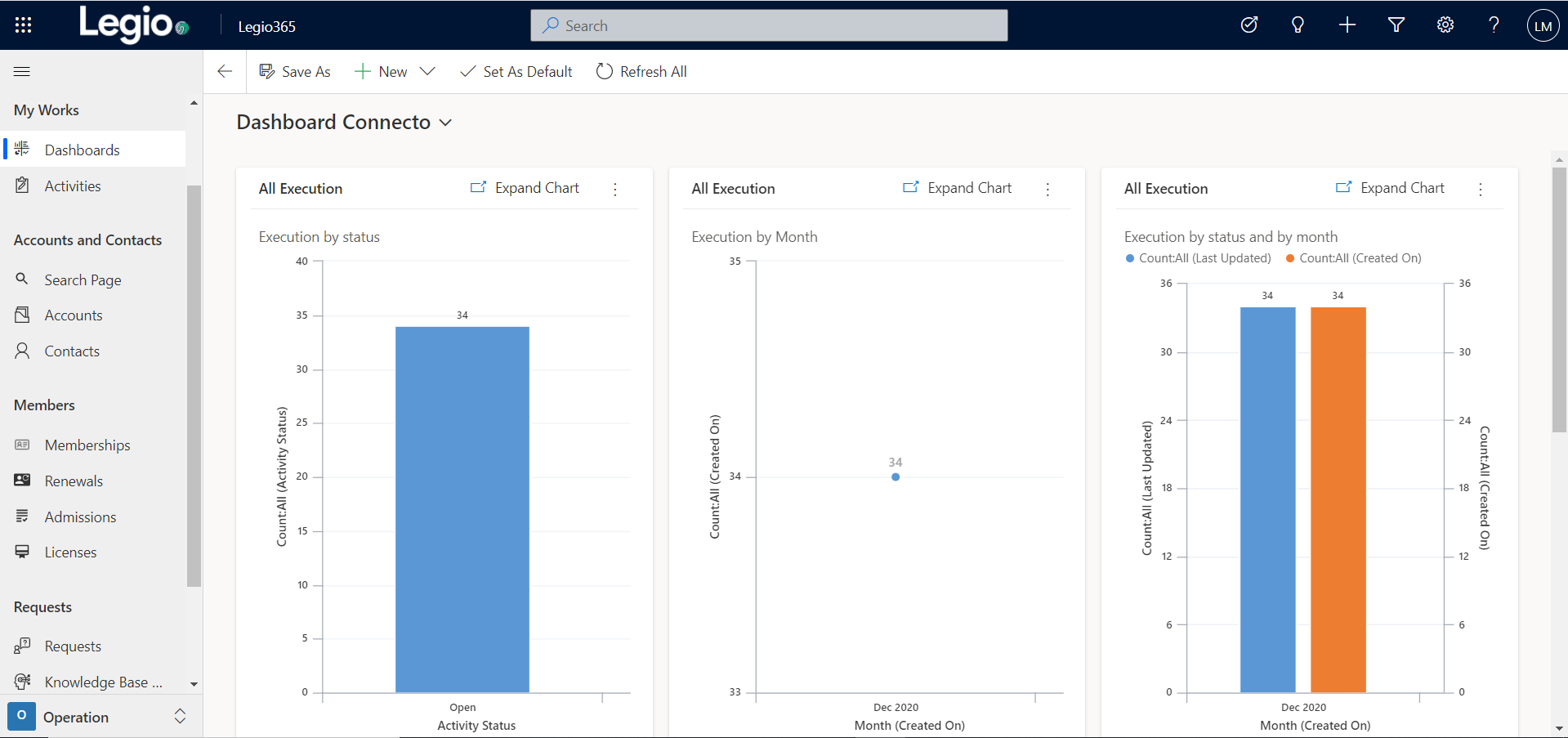
When the CRM consolidates those data sources into one record, the reporting changes at a structural level. Renewal projections, compliance completion percentages, engagement trends, and member satisfaction indicators all pull from the same membership management software your team uses daily. Analytics and dashboards produce the board package automatically, and the numbers are current because they refresh on a schedule.
When a provincial regulator requests compliance rates across your membership, the CRM produces it the same day. Associations running on fragmented systems take weeks to assemble the same answer, and every day that passes between the request and the response is a day your regulator is forming an impression about how your association manages its obligations.
Sequence Consulting identifies "turning data into shared insight" and "proving member value" as two of the six imperatives shaping association growth in 2026. Both require a single reporting layer that produces governance-grade analytics without manual compilation. The board reporting benefit from a CRM for professional associations is how that imperative becomes operational.
How a CRM for professional associations benefits compliance enforcement across the full member lifecycle
Compliance in a professional association is not optional. Members must maintain credentials, complete CE requirements, hold valid insurance, and meet standards set by provincial legislation. When a member falls out of compliance, the association has a legal obligation to act. That obligation runs on its own timeline, and in most associations, the system tracking compliance can't keep pace with it.
The typical approach is a manual report run quarterly to identify non-compliant members. The staff member pulls the data, reviews the list, flags the ones who need attention, and contacts them individually. Some members get caught but others slip through because the data was already weeks old when the report ran, or because the spreadsheet didn't connect CE completion to credential status in a way that surfaced the full picture. By the time the association acts, the member has been out of compliance for months and the remediation conversation is harder than it needed to be.
The CRM for professional associations benefits that change this are the ones built into the platform's workflow architecture. When a CE deadline passes without completion, the member's status updates automatically and the renewal pathway adjusts. Credential lapses generate a staff notification and update the member's record without anyone manually editing a field. The same logic applies to disciplinary cases, where reaching a procedural stage that requires member notification produces the communication automatically with the audit trail intact. Nothing depends on someone remembering to run a report or check a spreadsheet on the right day.
The difference between a CRM for professional associations that enforces compliance and one that stores compliance data is what separates a platform built for this operating model from one adapted for it. Continuing education as a growth accelerator for regulatory bodies depends on CE tracking that connects to the rest of the member lifecycle, and the complaints, investigation, and discipline workflows provincial regulators expect need audit trails baked into every procedural stage.
Provincial regulators hold the association accountable for member compliance so a CRM that automates enforcement at the workflow level reduces the regulatory risk the association carries, and that reduction compounds as membership grows. At 500 members, manual monitoring is labour-intensive but survivable. At 5,000, it becomes a liability that one missed quarterly report can expose.
CRM for professional associations benefits should be measurable in the first year of operations
Gestisoft helps Canadian regulatory bodies map expected outcomes before implementation so your team can track progress from day one.
 Free discovery call
How a CRM for professional associations benefits staff productivity by removing manual reconciliation work
Association staff spend hours every week on tasks that only exist because their tools are disconnected. Pulling renewal data from the AMS, matching it against engagement data from the email platform, cross-referencing CE completion from a separate tracking tool, and compiling the whole picture into something leadership can read.
That reconciliation work eats hours every cycle without producing a single member outcome. It's duct tape between systems that should have been connected from the start, and it's one of the most common membership management software challenges associations report after going live on a platform that wasn't built for their operations.
When renewals, engagement, CE tracking, events, and communications all run from the same member record, that reconciliation work disappears entirely. The staff hours that were going into data assembly go back into member services, event programming, and the kind of proactive outreach that improves retention. Associations stuck in the AMS CRM divide lose those hours every single week with no way to recover them. It's one of the most overlooked CRM for professional associations challenges because nobody tracks the hours lost to it until someone finally calculates the total.
When you put numbers on it, the wasted time starts to become very real. If your team spends 10 hours per week reconciling data across systems, that's 520 hours per year. For a small association, that's the equivalent of a quarter of a full-time position absorbed by work that the right platform eliminates. For a mid-sized regulatory body with a larger team, multiply that across every role that touches member data and the time cost becomes difficult to justify once you've seen the alternative.
Canadian associations are competing for administrative talent in a tight labour market. The CRM for professional associations benefits that show up in staff productivity affect whether your team stays. Burning skilled coordinators on data entry and spreadsheet reconciliation when the work could be handled by the platform is how associations lose people they spent months hiring.
How a CRM for professional associations benefits bilingual member experience across both official languages
Canadian professional associations serving Quebec members or operating nationally need every member-facing interaction to function properly in both official languages. Renewal notices, event registrations, member portal navigation, CE tracking interfaces, and automated communications all need to run natively in French and English. That's a long list of touchpoints, and the failure rate on any one of them creates friction your Quebec membership feels immediately.
Most CRM vendors handle bilingual requirements by translating the English interface after launch but that doesn’t change the workflow logic underneath. A Quebec member renewing their credentials might start the process in French and hit an English confirmation screen halfway through, or receive an automated CE reminder in the wrong language because the notification template was never rebuilt for French. These problems show up in nearly every implementation where bilingual capability was added after the platform was already built.
The CRM for professional associations benefits that matter here are the ones your Quebec members interact with directly. Bilingual portals built into the platform mean members complete their entire journey in their preferred language across every touchpoint without staff manually switching templates or maintaining parallel content. Your team configures the workflow once and both language streams run from it. That changes the member experience in Quebec concretely, because the digital interaction finally matches the service quality the association delivers in person.
Quebec's Law 25 pushes the bilingual requirement deeper than the interface. Consent management and privacy notifications have to operate in French as compliance obligations, and data security for regulatory bodies under provincial legislation applies to how that member data is collected and stored in both languages. A Canadian CRM built for this operating environment handles that compliance layer natively. One built outside Canada and translated for the market almost always has gaps your team discovers after launch when the CRM for professional associations features are tested against real Quebec member interactions.
How a CRM for professional associations benefits long-term scalability when your membership grows
This is one of the CRM for professional associations benefits that nobody evaluates during the buying process and everyone wishes they had two years later. The association picks a platform that fits the organization as it operates today. Then the membership grows and the platform that handled 800 members with two membership tiers starts buckling under 2,500 members with five tiers and reporting obligations that didn't exist when the system was configured.
Associations running on entry-level tools or exploring Wild Apricot alternatives tend to hit that ceiling faster because those platforms were designed for a simpler version of the organization. Adding complexity means workarounds, and workarounds eventually become the system your staff spends more time maintaining than using. The membership management software selection process should account for where your association is heading in the future.
A CRM built on an enterprise foundation like Dynamics 365 and Power Platform scales by configuration. New membership tiers, additional compliance workflows, expanded governance reporting, and deeper Power BI analytics all extend from the same platform without requiring a migration to a different product. Your team learns one system and that system grows with them.
The cost angle makes this benefit even harder to ignore. Migration between platforms costs more than the original implementation because the new partner has to audit the existing configuration, figure out what needs to be undone, clean data that was migrated without proper preparation, and retrain staff who don’t trust whatever platform comes next. Every dollar spent on a second migration is a dollar that should have gone into the first implementation. The CRM for professional associations benefits that hold up at scale are the ones that make that second project unnecessary.
Your association should see CRM for professional associations benefits across every department that touches member data
Gestisoft implements Legio for Canadian regulatory bodies with compliance enforcement and board-ready reporting configured from day one in both English and French.
 Book a free consultation
How Gestisoft delivers CRM for professional associations benefits through Legio and Dynamics 365
Legio runs on Dynamics 365 and Power Platform, so the CRM intelligence is built into the architecture from the ground up. The member record your staff opens every morning carries compliance status, engagement history, CE progress, renewal risk indicators, and communication touchpoints on one screen. That's how your team gets renewal prediction, board reporting, compliance automation, and bilingual member experience running from one platform without reconciling data from separate systems.
We configure Legio so the analytics and dashboards your executive director pulls before a board meeting are current without anyone building them manually. Compliance enforcement runs on automatic status changes that your staff can trust when credentials lapse or CE deadlines pass because we set it up the way your association runs. And your Quebec members can complete their entire renewal journey in French through bilingual member portals that are configured natively during the implementation process.
The reason these configurations hold up after go-live is that we've built them enough times to know where associations hit friction and where the platform needs to be tuned during the first 90 days of real use. As a CRM implementation consultant for Microsoft, we stay in the engagement through that window because the CRM for professional associations benefits your team expects only compound once the configuration reflects how your staff works in practice.
“There is still great potential to unlock, and we look forward to seeing how the solution will continue to evolve with us.”
That's the outcome we build toward from the first conversation, and every Canadian regulatory body we work with starts seeing it within the first renewal cycle on the platform.
-
The benefits that produce the most immediate operational impact are renewal prediction based on engagement and compliance data combined, automated compliance enforcement that removes manual monitoring, board-ready reporting from a single data source, and bilingual member experience across both official languages. Each of these reduces staff time while improving the quality of member services and governance reporting.
Liked what you just read? Sharing is caring.

June 08, 2026 by Shelley Sunjka by Shelley Sunjka Copywriter & Marketing Strategist
Armed with a psychology degree and an irrational obsession with okapis, I've spent the last decade helping bold brands tell better stories. I believe the best writing bends grammar rules on purpose and makes people feel something. When I'm not deep in words or nerding out on buyer behaviour, I'm probably convincing my kids that impromptu kitchen dance parties are totally normal.
