
Managing 5,000+ regulated professionals with spreadsheets and email chains is inefficient and puts compliance at risk. This is exactly the problem membership management software is designed to solve.
But there's a catch. Most membership management software was built for gyms, community nonprofits, and other kinds of clubs where a lapsed membership just means lost revenue. For a regulatory body, a lapsed membership means someone could be practising engineering or medicine without a valid licence. The stakes go well beyond lost dues.
Regulatory bodies and professional associations across Canada deal with this every day. The membership you manage isn't optional. People need it to practise their profession. And the systems tracking renewals, credentials, compliance, and disciplinary processes need to reflect that weight.
The right platform centralizes member records, automates renewals, tracks compliance, and replaces the patchwork of spreadsheets and email chains that someone set up years ago and nobody fully understands anymore.
Not all platforms can do that for regulated industries though. A platform designed for a community nonprofit handles membership very differently than one built for a professional order managing 15,000 licensed practitioners with annual CE requirements and government oversight.
If you're a registrar or operations director at a Canadian regulatory body, knowing that distinction early will save you a painful re-implementation down the road.
See What Membership Management Software Looks Like for Regulatory Bodies
Legio is built on Microsoft Dynamics 365 specifically for professional associations and regulatory bodies managing compliance, renewals, and member engagement at scale.
 Free discovery call
What is membership management software (and why generic CRMs fall short)?
Membership management software is a platform built to handle the full lifecycle of a member's relationship with an organization. It tracks who your members are, what credentials they hold, when their renewals are due, whether they've met their compliance requirements, and how they interact with your organization through events, communications, and payments. Everything lives in one system instead of being scattered across separate tools.
That sounds a lot like a CRM but it's not quite the same thing.
A CRM like Salesforce or HubSpot is designed around sales pipelines. It tracks leads, deals, and customer interactions because its job is to help a sales team close revenue. The entire architecture is built around moving prospects through stages toward a purchase.
Membership management software is built around a completely different relationship. Members aren't buying a product. They're maintaining an ongoing status with your organization, and that status carries obligations on both sides. The software needs to handle renewals, credential verification, CE tracking, tiered membership structures, communications, events, and in the case of regulatory bodies, disciplinary processes and government reporting.
Can you make a CRM to do some of this? Technically, yes. With enough custom development, you can bend Salesforce into something that resembles membership management. But custom-built compliance tracking bolted onto a sales pipeline architecture tends to get brittle fast.
A wide range of organizations use membership management software. Nonprofits, clubs, gyms, industry associations, and professional orders all need to manage members. The operational complexity varies enormously between them though. A yoga studio tracking 200 monthly memberships and a professional engineering body tracking 12,000 licensed practitioners with annual CE requirements, practice inspections, and complaints processes are operating in different universes, even if the software category has the same name.
That gap is where the selection decision gets interesting, and where a lot of regulatory bodies end up with the wrong platform.
Key membership management software benefits for professional associations and regulatory bodies
Membership management software benefits are directly tied to how well the software fits your process. When it does, the benefits for regulatory bodies go well beyond convenience and change how your team operates day to day.
Automated compliance tracking is the most immediate one. Instead of staff manually verifying whether 8,000 members have completed their continuing education requirements, the software tracks progress against configurable rules and flags gaps before deadlines pass. For organizations where compliance isn't optional, this alone justifies the investment.
Centralized member records eliminate the problem that every regulatory body knows too well. One team is working from a spreadsheet export, another team is referencing an email chain from six months ago, and nobody is confident they're looking at the right information. A single system holding credentials, payment history, renewal status, and complaints records means every department works from the same source.
The administrative burden shifts too. Staff who were spending their days chasing renewal payments and manually updating records can redirect that time toward the work the organization actually exists to do.
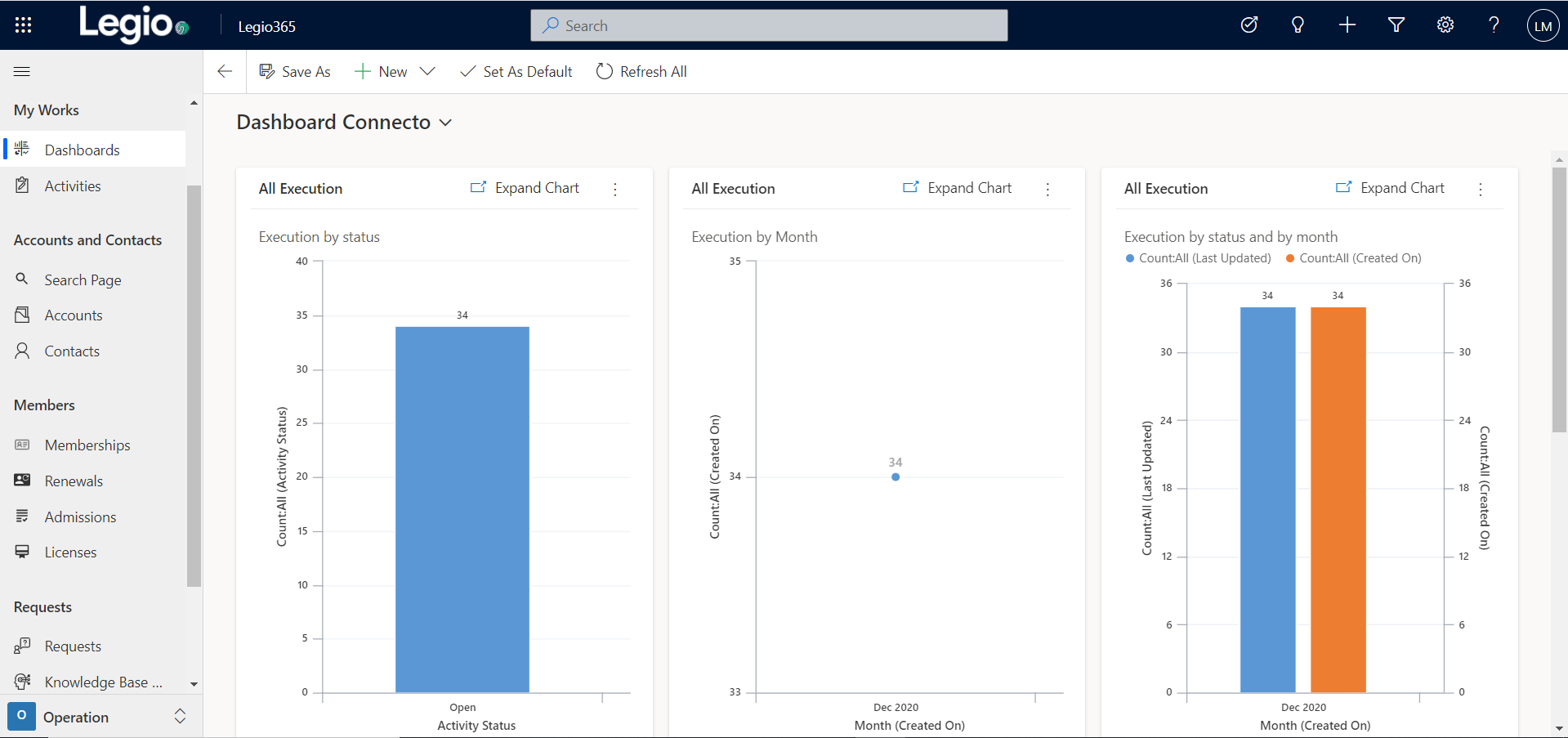
And for the board and government reporting side, real-time dashboards replace the quarterly scramble of pulling data from multiple systems and compiling reports by hand. When a government ministry asks for compliance rates or membership numbers, the answer takes minutes instead of weeks.
Each of these membership management software benefits plays out differently depending on your organization's size and regulatory obligations.
Membership management software features regulatory bodies can't afford to skip
Most membership management software feature lists start and end in the same place.
- Member database.
- Email tools.
- Event registration.
- Renewals.
- Reporting.
Those are real features and they do matter, but they describe the baseline and every platform on the market offers some version of them.
For regulatory bodies, the features that determine whether a platform will work are the ones that go further than these. Compliance and credential tracking that automatically monitors CE credits, licence status, and certification requirements against configurable rules per membership tier. Practice monitoring and inspection workflows that standardize how your organization tracks site visits, audits, and follow-ups. Disciplinary case management with full audit trails so every complaint, investigation, and hearing decision is documented and accessible to authorized staff only.
Then there's the renewal engine. Basic renewal processing sends a reminder and collects a payment. Renewal processing built for regulated industries can enforce conditions before allowing renewal, apply different rules per membership tier, and cascade status changes when a member fails to renew on time.
Bilingual member portals are important for Quebec-based organizations operating under language legislation, and integration with the Microsoft ecosystem matters for organizations already running Outlook, Teams, and Power BI.
The membership management software features that separate a generic platform from one built for regulatory bodies aren't always visible in a feature comparison chart. They show up when the platform has to handle a complicated Tuesday morning, not a polished demo with clean sample data.
Choose the software with the right features for your organization
A 30-minute discovery call with Gestisoft's team can help you identify what your regulatory body or association needs before you start evaluating platforms.
 Free discovery call
Membership management software selection: How to choose the right software for your organisation
Choosing membership management software is one of those decisions that feels manageable at first and then spirals. There are dozens of platforms, every vendor's website says the same reassuring things, and your shortlist somehow keeps getting longer instead of shorter.
For regulatory bodies, the selection process works best when it starts with your regulatory obligations.
- What are you legally required to track?
- What reporting do you owe to government oversight bodies?
Those obligations filter out a significant number of platforms before you even book a demo.
From there, the question is whether the platform handles compliance natively or whether it's been retrofitted through custom fields and workarounds. That distinction doesn't always show up in a feature comparison, but it shows up fast during implementation.
Bilingual requirements should be considered if you operate in Quebec or serve French speaking members across Canada. Integration with your existing tools matters because membership management software that forces your team into an entirely separate environment from their daily work tends to get resisted.
And post-go-live support deserves as much weight in your evaluation as the implementation project itself. The vendor relationship shouldn't end with a handshake on launch day.
The membership management software selection process has enough moving parts that getting the evaluation framework right early saves significant pain later.
Common membership management software challenges (and how to avoid them)
Nobody implements membership management software because everything is going well. By the time an organization commits to a new platform, something has already been painful for a while. And while the decision to move forward is the right one, the process comes with its own set of challenges that regulatory bodies should see coming.
Data migration is consistently the one that catches people off guard. Decades of member records spread across legacy systems, Excel files, email folders, and partially digitized paper archives don't transfer cleanly into a new platform. The data needs auditing and validating before it goes anywhere, and that takes longer than most organizations expect.
Staff adoption is the human side of the same coin. People who've built personal systems and workarounds over many years don't always welcome a new platform, even when the old way was clearly broken. Getting adoption right requires involving staff early, connecting training to their actual daily work, and being honest about the learning curve.
Organizations that select membership management software based on price or a polished demo sometimes discover months later that the platform can't handle their compliance requirements, disciplinary workflows, or membership structure complexity. That's a painful place to be after you've already migrated data and trained staff.
Underestimating the implementation timeline compounds all of it. Regulatory bodies with complex requirements should plan for months, not weeks, and assign dedicated internal resources rather than treating implementation as a side project.
Every one of these membership management software challenges is avoidable with the right preparation.

Can free membership management software handle regulatory requirements?
Free membership management software exists, and for small organizations with straightforward needs it can be a reasonable starting point. Platforms like WildApricot, Zeffy, and Yapla offer basic member databases, renewal tools, and event registration at no cost or very low cost.
But for regulatory bodies, the picture changes quickly.
Free and freemium platforms typically cap member numbers, which rules them out for organizations managing thousands of licensed professionals. Compliance tracking, when it exists at all, tends to be limited to custom fields that store data rather than automated workflows that enforce rules and flag gaps. Audit trails for disciplinary processes are either basic or nonexistent. Bilingual portals for Quebec-based organizations aren't part of the package. And integration with existing tools like Outlook, Teams, or Power BI usually sits behind a paid tier.
Support is the other gap to be aware of. Free platforms rely on community forums and knowledge bases rather than dedicated support teams. That's fine when you're figuring out how to format an email template. It's less fine when a compliance workflow breaks during your annual renewal cycle and 8,000 members are affected.
The hidden cost of free membership management software for regulatory bodies isn't measured in dollars. It's measured in regulatory risk. A renewal that slips through the cracks or a compliance gap that goes undetected aren't inconveniences. They're exposures.
Organizations that have outgrown free membership management software tend to realize it during their busiest period, which is the worst possible time to be shopping for a replacement.
Your Members Deserve Better Than Spreadsheets
Gestisoft's team specializes in membership management for regulatory bodies and professional associations across Canada.
 Free discovery call
Why Canadian regulatory bodies use Legio as their membership management software
Most regulatory bodies in Canada already run on Microsoft. That existing ecosystem is exactly why Legio was built on Microsoft Dynamics 365 and Power Platform.
Legio isn't a generic membership platform that's been adjusted to fit regulated industries. It was designed from the start for professional orders and regulatory bodies. The operational reality of managing admissions, renewals, compliance tracking, practice monitoring, and disciplinary case management shaped the product architecture, not the other way around.
What that looks like in practice is that compliance workflows enforce rules automatically rather than relying on staff to check custom fields. Disciplinary case management sits inside the same system as member records, with full audit trails and confidentiality controls. Renewal processing handles configurable rules per membership tier and cascades status changes when deadlines pass. Event and CE management connect directly to compliance records so attendance automatically updates a member's credit balance.
Because Legio runs on the Microsoft stack, your team works within tools they already know. The adoption gap that sinks many software implementations shrinks considerably when the new system lives inside a familiar environment.
For Canadian organizations specifically, Legio is PIPEDA compliant with full French-language support for Quebec-based regulatory bodies. Gestisoft's implementation team operates from offices in Montreal, Toronto, Ottawa, and Quebec City, which means local support in your time zone from people who understand the Canadian regulatory landscape.
Why Gestisoft is the right membership management software partner
Membership management software is only as good as the fit between the platform and the partner implementing it. A regulatory body can choose the right software and still end up with a painful implementation if the team configuring it doesn't understand how regulated membership actually works.
Gestisoft has been a Microsoft Solutions Partner since 1997. That's 27+ years of implementing Dynamics 365 across CRM and ERP for Canadian organizations, with a team of 110+ specialists who deliver over 220 projects a year. The consultants working on your implementation come from the industries they serve, which means less time explaining how a professional order operates and more time configuring the system to match yours.
The implementation philosophy starts with business process mapping. Gestisoft documents how your organization actually works before touching the software configuration. That sounds obvious, but plenty of vendors skip straight to setting up modules and expect your team to adapt. The difference shows up months later when the system reflects your real workflows instead of forcing you into someone else's template.
Every client gets a dedicated Customer Success Manager rather than a rotating support queue. And the relationship doesn't end at go-live. Gestisoft provides full lifecycle support from needs assessment through implementation, training, and ongoing optimization as your organization evolves.
With offices in Montreal, Toronto, Ottawa, and Quebec City and a fully bilingual team, Gestisoft is built for the Canadian market from the ground up.
Talk to Gestisoft about membership management software for your regulatory body.
-
A CRM tracks customer relationships and sales pipelines. Membership management software tracks the full member lifecycle, including renewals, compliance, credentialing, events, and communications specific to member-based organizations.
Liked what you just read? Sharing is caring.

April 09, 2026 by Shelley Sunjka by Shelley Sunjka Copywriter & Marketing Strategist
Armed with a psychology degree and an irrational obsession with okapis, I've spent the last decade helping bold brands tell better stories. I believe the best writing bends grammar rules on purpose and makes people feel something. When I'm not deep in words or nerding out on buyer behaviour, I'm probably convincing my kids that impromptu kitchen dance parties are totally normal.


