
Every membership management software features list looks the same. There’s a member database, automated renewals, email tools, event management and reporting capacity. Those are real features and they're worth having, of course.
The problem is that those features were built for the broadest possible audience. They describe what a gym and a 15,000-member professional order both need in the same breath. The result is a checklist that sounds comprehensive but doesn't tell a regulatory body whether the platform can handle what gets thrown at it on a Tuesday morning when 200 renewal exceptions need processing and a government ministry wants a compliance report by end of day.
The membership management software features that separate a workable platform from the right one for regulated industries aren't always on the standard checklist. These features indicate how compliance is tracked, how disciplinary cases are managed, how renewal workflows handle conditions and exceptions, and whether the reporting can satisfy a government auditor.
Regulatory bodies and professional associations need to evaluate membership management software features through a different lens than voluntary membership organizations. Compliance obligations, disciplinary processes, and government reporting requirements put pressure on a platform that most vendors have never had to account for. You need to be asking whether that feature can hold up under the operational weight of regulated membership, mandatory compliance, and government oversight.
Get help evaluating membership management software features
Gestisoft works with regulatory bodies and professional associations to identify the features that match their operational requirements.
 Free discovery call
Compliance and credential tracking membership management software features
This is the membership management software features category that separates platforms built for regulated industries from everything else. If a platform can't handle compliance and credential tracking natively, nothing else on the feature list is going to compensate for that gap.
What to look for is automated tracking of continuing education credits against configurable requirements per membership tier and category. Real-time credential status visibility for every member, showing whether they're active, expired, pending, or suspended. Automated notifications going to members approaching CE deadlines or licence expiry before they lapse. And configurable compliance rules that differ by membership type, because a student member has different requirements to a fully licensed practitioner.
Compliance dashboards round out this category. Registrars and compliance teams should be able to see a live overview of where the entire membership stands without pulling manual reports or waiting for someone to compile a spreadsheet.
Where generic platforms fall short is predictable. Most membership management software offers custom fields where you can record credential information. But recording data is not the same as enforcing rules. A custom field that says "CE hours: 24/30" doesn't automatically flag the gap or notify the member. It just sits there until someone notices. Compliance-native platforms flag gaps, trigger notifications, and update member status without manual intervention.
During vendor demos, ask whether the platform tracks compliance or just stores compliance data. The distinction sounds subtle but the operational difference is enormous.
Disciplinary and complaints membership management software features
Most membership management software features don't account for disciplinary and complaints procedures at all, so the entire category is absent from their architecture.
For regulatory bodies, this is a core operational function. What to look for starts with a complaints intake workflow that handles online submissions and internal logging. From there, case tracking through defined stages, for example, received, under investigation, hearing scheduled, resolved, or appealed. Every action on a case should carry a full audit trail with timestamps and user attribution so there's a clear record of who did what and when.
Document management attached to cases is essential. Evidence, correspondence, decisions, and rulings all need to live alongside the case record rather than in someone's email folder or a shared drive that half the team can't find. Confidentiality controls should restrict case access to authorized personnel only, and deadline tracking should flag when a case is approaching the regulatory timeline for resolution. Many jurisdictions require complaints to be resolved within specific timeframes, and missing those deadlines creates its own set of problems.
Reporting on case volumes, resolution times, and outcome trends completes the picture. Your board and oversight bodies will ask for this data, and producing it shouldn't require someone to manually trawl through case files.
Where generic membership management software falls short here is straightforward. Organizations end up running disciplinary tracking in a parallel system disconnected from member records. The people investigating a complaint can't easily access the member's full history, and the member record doesn't reflect that a complaint is active. That disconnection creates risk that a purpose-built platform eliminates entirely.
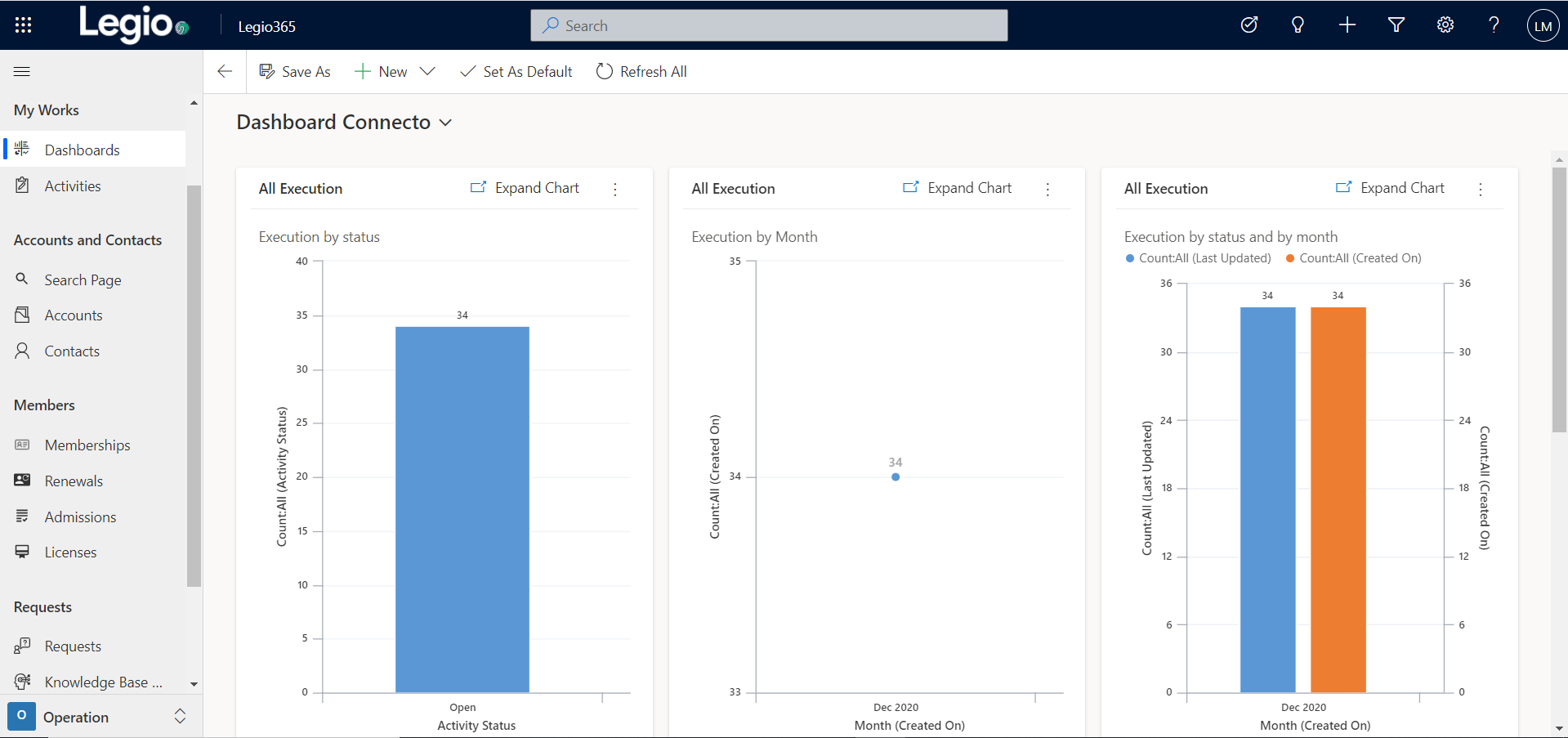
Membership management software features for renewal processing
Renewals are the operational heartbeat of any membership organization. For regulatory bodies processing thousands of renewals annually, the membership management software features in this category need to go well beyond sending a reminder and collecting a payment.
Configurable renewal cycles per membership tier are the starting point. Not all tiers renew on the same schedule, and the platform should be able to handle that without manual workarounds. Multi-step renewal workflows add another layer. A regulatory body might require document uploads, a CE declaration confirming requirements have been met, and payment before renewal is considered complete. If any of those conditions aren't satisfied, the renewal should stall rather than process anyway.
Automated reminder sequences at configurable intervals keep the volume manageable. Members approaching expiry should receive notices at defined intervals, and members who miss the deadline should receive overdue notifications automatically. Online payment processing with support for multiple payment methods removes the friction of cheques and phone calls from the equation.
The membership management software features that carry the most weight in this category are the ones that handle what happens when a member doesn't renew. Automatic status changes should move the member from active to lapsed, with downstream effects on licence validity. Grace period configuration should be available for tiers that allow temporary continuation after expiry. And bulk processing capabilities should support the annual renewal window when a large percentage of your membership renews within the same compressed timeframe.
Where generic platforms fall short is in enforcement. Basic renewal features process payments and send reminders. They don't enforce conditions like CE completion before allowing renewal to proceed, and they don't cascade status changes through related records. For a regulatory body, that gap is where you open yourself up to compliance risk.
The gaps in your current renewal process have a fix
Gestisoft can walk you through how Legio handles complex renewal workflows for regulatory bodies managing thousands of members.
 Free discovery call
Member database and profile membership management software features
Every membership management software platform has a member database. The differences between them come down to depth and structure, and for regulatory bodies those differences determine whether the database is useful or just a contact list with extra steps.
Configurable member profiles should go well beyond name and email. Regulatory bodies need to see licence type, credential status, CE history, inspection records, complaints history, committee involvement, and payment records all attached to a single member profile. When a registrar pulls up a member, they should have the full picture without switching between systems or opening a separate spreadsheet.
Support for complex membership structures is the other side of this. Individual memberships are straightforward. Organizational memberships where a company holds the primary membership and individual practitioners hold credentials underneath are not. Neither are multi-category members who hold licences in more than one discipline. The platform needs to model these relationships accurately, not force them into a flat structure that doesn't reflect how your membership actually works.
Historical record keeping is worth evaluating closely. A regulatory body needs the full timeline of a member's relationship with the organization, not just their current status. When a complaint is filed or a credential is questioned, the ability to see five years of history on that member's record is operationally critical.
The database should also be searchable and filterable so staff across departments can query it without running manual exports. And deduplication tools become important during data migration from legacy systems where the same member frequently appears in multiple places under slightly different names or old addresses.
Where generic membership management software falls short here is in profile depth. Flat profiles designed for name, email, membership level, and payment status don't accommodate the data regulatory bodies need to maintain. Organizations compensate by creating dozens of custom fields that quickly become unmanageable and impossible to search or report on effectively.

Membership management software features for reporting and analytics
Reporting for a regulatory body and reporting for a nonprofit are fundamentally different exercises. A nonprofit wants to understand engagement trends. A regulatory body needs to prove to a government ministry that its members meet their practice requirements. The membership management software features need to reflect that difference.
Standard reports for board and government oversight should cover active membership counts, renewal rates, compliance percentages, revenue, and trend data without requiring someone to build them from scratch every quarter. A custom report builder for ad-hoc queries is equally important because your board, your legal team, and government oversight bodies will all ask questions that don't fit neatly into a pre-built template. Staff should be able to run those queries without involving IT.
Real-time dashboards that update as data changes save regulatory bodies from the quarterly reporting scramble. When a government ministry calls asking for current compliance rates, the answer should take minutes rather than triggering a two-week data collection exercise. Audit-ready exports that can be produced on demand for oversight bodies or legal proceedings should be a standard capability, not a custom project.
Segmentation and filtering round out the picture. The ability to report on specific membership tiers, geographic regions, compliance categories, or time periods turns raw data into something your leadership can act on. Integration with external reporting tools like Power BI and Excel extends that further for organizations that need to combine membership data with other organizational data.
Where generic membership management software features fall short in reporting is that basic reporting covers top-level metrics like total members and revenue collected. Regulatory bodies need compliance rates, inspection outcomes, CE completion by category, and disciplinary case resolution timelines. If the platform doesn't track those data points natively, it can't report on them no matter how polished the dashboard looks.
Member portal and self-service membership management software features
A member portal is standard in most membership management software. What varies is how much members can actually do through it, and for regulatory bodies the difference between a basic portal and a comprehensive one has a direct impact on staff workload.
At minimum, members should be able to update their own contact information, employment details, and practice information without calling the office. Renewal and payment processing should happen directly through the portal so nobody is mailing cheques or waiting on hold. CE status visibility lets members see their own progress against requirements, which eliminates one of the most common routine inquiries staff deal with.
The membership management software features that make a real operational difference are document uploads for applications, supporting credentials, and compliance evidence which allow members to submit what's needed without emailing attachments back and forth. Application tracking for new applicants or members applying for additional categories means fewer phone calls asking "where does my application stand?" Receipt and certificate downloads should be available without contacting staff at all.
Communication preferences management is worth looking for in Canadian regulatory bodies specifically. Members should be able to set their language preference so they receive correspondence in English or French, along with their preferred communication channels.
Generic platforms just don’t have this scope. Basic portals let members view their profile and make payments. Portals designed for regulatory bodies let members interact with every aspect of their membership lifecycle. That difference directly reduces the volume of routine inquiries hitting your staff, which ties back to the administrative burden that most regulatory bodies are trying to solve in the first place.
Membership management software features for events and continuing education
For regulatory bodies, events and CE programs are part of the compliance infrastructure. The membership management software features to evaluate here are the ones that connect event attendance directly to member compliance records without manual reconciliation.
That means attendance tracking that automatically logs participation against CE requirements, with credits applied to attending members without staff updating records one by one. Targeted event communications should reach members who need specific CE hours before their renewal deadline rather than blasting the entire membership list. Waitlist management, capacity controls, and post-event reporting on attendance and CE credits distributed complete the picture on the operational side.
MOst software doesn’t allow for this depth of connection between systems. Event management and member records might live in the same software but aren't functionally linked. Staff end up exporting attendance lists and manually updating CE records after every event, which is exactly the kind of manual step where errors accumulate.
Communication and automation membership management software features
Membership management software should handle both bulk communications and triggered automated messages. For regulatory bodies, the communication membership management software features worth evaluating go beyond newsletter distribution.
Segmented communications based on membership tier, compliance standing, geographic region, and language preference allow your team to reach the right people with the right message. A renewal reminder going to members who've already renewed is annoying. A CE deadline notification going only to members who are behind on their hours is useful. The difference is segmentation, and the platform should handle it without your staff manually building recipient lists every time.
Automated triggers are where staff time savings compound. Welcome messages for new members, renewal reminders, CE deadline notifications, and status change alerts should fire based on member-specific data points without anyone pressing send. Template management keeps messaging consistent across the organization so individual staff aren't drafting one-off emails that go out with different formatting and different information.
Communication logging deserves attention during evaluation, particularly for regulatory bodies. A record of what was sent to whom and when becomes important during disputes, audits, and disciplinary proceedings. If your platform can't produce that record, your team will be reconstructing it manually from sent folders when they should be focused on the issue at hand.
Multi-channel capability rounds out this category. Email is the baseline. SMS and in-portal notifications extend reach for time-sensitive communications like overdue renewal notices or urgent compliance alerts. Most members won't miss a text the way they'll miss an email buried under forty others.
Compare membership management software features against your requirements
Gestisoft can run a feature mapping session against your specific requirements so you know exactly what to look for during vendor demos.
 Free discovery call
Why Canadian regulatory bodies choose Legio for membership management software
The feature categories above describe what a platform should do. The harder question is whether those features work as described once your operational complexity starts pushing against them. Demo environments with clean data and simple membership structures make everything look capable. Production environments with 10,000 members, eight tiers, and a disciplinary caseload tell a different story.
Legio was built on Microsoft Dynamics 365 and Power Platform specifically because regulatory bodies need features that hold up under that kind of pressure. Compliance and credential tracking isn't a module that was added to chase a market opportunity. It's foundational architecture that enforces rules, cascades status changes, and triggers notifications without relying on staff to monitor custom fields.
Disciplinary case management runs inside the same system as every other membership management software feature rather than in a parallel tool. When your compliance team pulls up a member record, they see the full picture. Credentials, renewal history, CE status, and any active complaints all visible in one place to authorized personnel. That depth of connection between feature categories is what makes the difference between a platform that checks boxes and one that supports how your regulatory body operates.
The member-facing side handles bilingual self-service portals in English and French, with online renewals, document uploads, application tracking, and CE status visibility all running through a single portal. Your members interact with one system instead of navigating between disconnected tools for different tasks.
Because everything runs on the Microsoft stack, reporting flows into Power BI, communications connect to Outlook, and your team works inside an environment they already understand. That last point is where a lot of feature-rich platforms lose ground. The features exist but staff don't use them because the platform feels like foreign territory. Legio integrates smoothly.

Why Gestisoft stands out as your membership management software partner
Having the right membership management software features on paper and having them configured to match your operational reality are two different things. A platform can offer every feature category in this article and still underdeliver if the configuration doesn't reflect how your organization processes renewals, tracks compliance, or manages disciplinary cases.
Gestisoft's implementation approach starts with your workflows, not the software. Before any feature gets configured, the team maps how your regulatory body operates in practice, including the exceptions, the edge cases, and the informal processes that staff have built over years because the previous system couldn't handle them properly.
That mapping is what turns a feature list into a working system. Features that other implementations leave as generic defaults get tailored to your operational specifics.
Training follows the same philosophy. Staff don't learn the software in the abstract. The compliance team trains on compliance features using scenarios from their own caseload. The registration team trains on renewal workflows built around their membership structure. Adoption improves because the training connects to work people recognize rather than a generic demonstration they'll forget within a week.
Post-implementation, your dedicated Customer Success Manager keeps the configuration aligned as requirements evolve. The features stay current because someone who understands your setup is actively maintaining them rather than leaving you to figure it out alone.
-
Compliance and credential tracking, disciplinary case management with audit trails, configurable renewal workflows, audit-ready reporting, and bilingual member portals are the feature categories that matter most for regulated industries.
Liked what you just read? Sharing is caring.

April 09, 2026 by Shelley Sunjka by Shelley Sunjka Copywriter & Marketing Strategist
Armed with a psychology degree and an irrational obsession with okapis, I've spent the last decade helping bold brands tell better stories. I believe the best writing bends grammar rules on purpose and makes people feel something. When I'm not deep in words or nerding out on buyer behaviour, I'm probably convincing my kids that impromptu kitchen dance parties are totally normal.


