
Nobody implements membership management software because everything is going great. By the time an organization commits to a new platform, something has already been painful for a good long while. The decision to move forward is the right one, but the process of getting there comes with a set of membership management software challenges.
Regulatory bodies face a version of challenges that's more complex than what most membership organizations will ever deal with simply because the stakes are higher for regulated bodies and professional associations.
The organizations that struggle most aren't necessarily the ones with the most complexity. They're the ones that didn't see the challenges coming. Preparing for them makes the difference between an implementation that delivers value within months and one that's still causing headaches a year later.
Here are 8 membership management software challenges regulatory bodies in Canada should prepare for, along with practical ways to avoid each one.
Every membership management software challenge on this list is avoidable
Gestisoft has helped regulatory bodies and professional associations work through them. A discovery call can help you figure out where to start.
 Free discovery call
1. Data migration from legacy systems is harder than anyone expects
This is consistently one of the most underestimated membership management software challenges for regulatory bodies. Many professional orders have been operating for decades, and the data they're sitting on has been through multiple systems, format changes, staff turnovers, and ad hoc processes that nobody fully documented.
Data is spread out across a number of places that nobody has a complete map of. A database from 2008 that was replaced but never properly archived or excel spreadsheets maintained by individual staff members who have since left. There are multiple email folders containing credential verifications that never made it into the official system and paper files that were partially digitized during a project that ran out of budget halfway through.
Unlike a gym where you can import current members and start fresh, a regulatory body needs the full history. Credentials, complaints, inspections, and disciplinary records all need to migrate because that historical data is operationally and legally relevant.
Budget dedicated time for data auditing and cleaning before migration begins and assign an internal data owner who understands the organizational history and can make decisions when records conflict. Ask your implementation partner for a detailed migration plan with validation steps and rollback procedures. And accept that migration will surface data problems that have been accumulating for years.
2. Staff resistance to new membership management software
People who have been doing their jobs a certain way for years don't always welcome a new system, even when the old way was clearly inefficient. This is a human challenge rather than a technology one, and it's one of the most common membership management software challenges that derails implementations.
Long-tenured staff have built personal systems and workarounds that they understand intimately. Their Excel spreadsheet might be a mess by anyone else's standards, but they know exactly how it works and they can find what they need in seconds. Replacing that with an unfamiliar platform feels like a risk, not an upgrade. Some staff also worry that a proper system will expose gaps in how things have been done. If renewals were tracked informally for years, a structured platform makes that visible in ways that can feel uncomfortable.
Then there's the job security concern that rarely gets said out loud but sits underneath a lot of resistance. "If the software automates what I do, what happens to me?" That question deserves a direct answer early in the process, not a dismissive one later.
The way through this is involvement. Bring key staff into the selection and implementation process early rather than presenting them with a finished decision at the training stage. Connect training to their daily workflows so it feels relevant rather than abstract. And be honest about the learning curve, because pretending it's effortless when it isn't erodes trust faster than anything else.
3. Choosing membership management software that wasn't built for regulated industries
Of all the membership management software challenges, this one’s the hardest to recover from because it's a foundation problem. If the platform wasn't designed for organizations with regulatory obligations, every workaround you build on top of it adds fragility.
It usually starts well enough. The demo looked great, the vendor was responsive, and the pricing was competitive. The platform handled renewals and member communications without any obvious issues, so it seemed like a fit. What wasn't tested during the demo was whether the platform could enforce compliance rules automatically, track disciplinary cases with full audit trails, or handle a membership structure with eight tiers that each carry different renewal rules and CE requirements. Those questions tend to surface three to six months into implementation, by which point the organization has already committed budget, migrated data, and trained staff.
During membership management software selection, test the platform against your regulatory obligations rather than generic use cases. Ask vendors directly whether compliance and disciplinary case management are native features or custom configurations. And talk to references from other regulatory bodies, not general association clients.
The wrong membership management software costs more than the right one
Gestisoft only implements for organizations where the platform is a genuine fit. A call will help to outline your requirements.
 Free discovery call
4. Underestimating the implementation timeline for membership management software
Underestimating the implementation timeline is one of the most common membership management software challenges, and one of the most avoidable. Vendor websites sometimes suggest that membership management software implementation takes weeks. For a small club with 200 members and straightforward needs, that might be accurate. For a regulatory body with thousands of members, complex membership structures, legacy data, and compliance workflows, it's not.
A well-planned implementation for a regulatory body typically runs three to six months from kickoff to go-live. Complex organizations with significant data migration and multiple integrations may need longer. And the timeline doesn't just depend on the vendor. It depends on your internal resource availability. Staff need to participate in requirements gathering, data validation, testing, and training alongside their regular responsibilities, and that time has to come from somewhere.
Timelines blow out for predictable reasons. Requirements weren't defined clearly enough at the start, leading to scope changes during configuration. Data migration reveals more problems than anticipated. Staff availability is limited because implementation was treated as a side project rather than an organizational priority. Testing gets rushed, and issues that should have been caught before go-live surface afterward when they're more expensive to fix.
Build a realistic project plan with milestones and internal resource commitments from the start. Assign dedicated internal project ownership to someone who isn't doing it on top of a full-time role. Plan for a buffer because something will take longer than expected, and that's normal. A phased approach where core functionality goes live first and additional modules follow takes pressure off the timeline without delaying the membership management software benefits.

5. Integration challenges between membership management software and existing systems
Integration with existing systems is one of the membership management software challenges that tends to get underestimated during the selection process. The platform doesn't operate in a vacuum. It needs to connect to your existing tools, and for regulatory bodies those connections can get complicated fast.
"We have an API" is something you'll hear from almost every vendor. It doesn't mean the integration will work the way you need it to. An API is a starting point, not a finished connection. Legacy systems may not have modern integration capabilities at all, requiring manual data transfer or middleware solutions that add cost and complexity. Data format differences between systems create sync issues when dates are formatted differently, name fields are structured inconsistently, or duplicate records exist across platforms.
For regulatory bodies specifically, integration with government reporting systems or external registries may carry requirements that generic membership management software wasn't designed to accommodate. If your organization relies on the Microsoft ecosystem, a platform built on Microsoft technology will integrate more naturally than one that treats Microsoft connectivity as an aftermarket add-on.
Document every system your organization currently uses and how data flows between them before you start evaluating platforms. During selection, ask vendors to demonstrate actual integrations rather than just describing them. Budget for integration work as a separate line item because it's rarely included in the base price, and many organizations discover that connecting their membership management software to existing tools requires more investment than they anticipated. Prioritize the integrations that affect daily workflows over the ones that would be nice to have eventually.
6. Compliance gaps when membership management software isn't configured properly
Even when the platform is right, configuration can still create problems. This challenge is particularly dangerous for regulatory bodies because the consequences of a compliance gap are regulatory.
There's almost always a gap between the official process documented in your policies and the actual process staff follow on the ground. Edge cases get missed too. The standard renewal workflow performs perfectly in testing, but the system doesn't handle the member who holds licences in two categories with different CE requirements and different renewal dates.
Testing compounds the problem when it doesn't include enough real-world scenarios. Clean test data produces clean results. The messy reality of member records produces something very different. And rules change over time. Legislation updates CE requirements or a new membership category gets introduced, and if the configuration isn't updated to match, your membership management software enforces outdated rules without anyone realizing until the damage is done. Of all the membership management software challenges, this one is the sneakiest because the system appears to be working correctly the entire time.
Map your actual processes during implementation, including the exceptions and edge cases that staff deal with regularly. Test with real data and real scenarios. Build an internal process for updating compliance rules when legislation or policy changes. And choose an implementation partner who understands regulatory workflows well enough to push back when your configuration doesn't match your obligations.

7. Ongoing costs that weren't in the original membership management software budget
The subscription fee is the number everyone focuses on during selection. For regulatory bodies, it's rarely the largest cost and it's almost never the one that causes budget problems down the road.
Data migration is the first place estimates go sideways. Legacy data is almost always messier than anyone realized during the scoping phase, and cleaning it takes longer and costs more than the original plan accounted for. Customization for specific workflows that weren't included in the base configuration adds another layer. So do integration costs for connecting to existing systems or government registries, and training costs that extend beyond initial onboarding when staff turnover means new people need to learn the platform months after go-live.
Support tier upgrades catch organizations off guard too. The basic support package often doesn't include the response times or dedicated contacts that a regulatory body needs during a critical renewal cycle. And the most expensive line item of all is re-implementation, which happens when an organization outgrows the platform within a few years and has to start the entire process over.
Build a total cost of ownership model that covers three to five years rather than just year one. Ask vendors for a complete pricing breakdown that includes every phase from implementation through ongoing support. Factor in internal costs like staff time for data cleaning and testing. The cheapest option without understanding what's excluded is how organizations end up facing the most expensive of all membership management software challenges and that’s implementing twice.
Organizations that have discovered the hidden costs of free membership management software understand this dynamic particularly well.
Budget surprises are avoidable with the right membership management software partner
Gestisoft's implementation approach is built specifically around the challenges regulatory bodies face.
 Free discovery call
8. Losing momentum after go-live with membership management software
Go-live is not the finish line. This gets the least attention during planning and causes the most long-term frustration.
The pattern is predictable. The platform launches, staff complete their initial training, and then adoption stalls. People revert to old habits because the new system feels unfamiliar and nobody is actively reinforcing the change. Features that were configured during implementation sit underused because the team hasn't had time to explore them beyond the basics they learned in training.
Plan for a post-go-live optimization phase from the start. The first three to six months after launch are when the real fine-tuning happens. Schedule regular check-ins with your implementation partner to review usage and adjust configuration as needs evolve. Build onboarding for new staff into your standard processes so platform knowledge doesn't erode with turnover. The vendor relationship after go-live is where the long-term value of membership management software challenges either get resolved or compound.
Why Canadian regulatory bodies choose Legio to mitigate these membership management software challenges
Most of these membership management software challenges trace back to the same root cause, and that’s a platform that wasn't built for the operational complexity of regulated membership. Legio eliminates that.
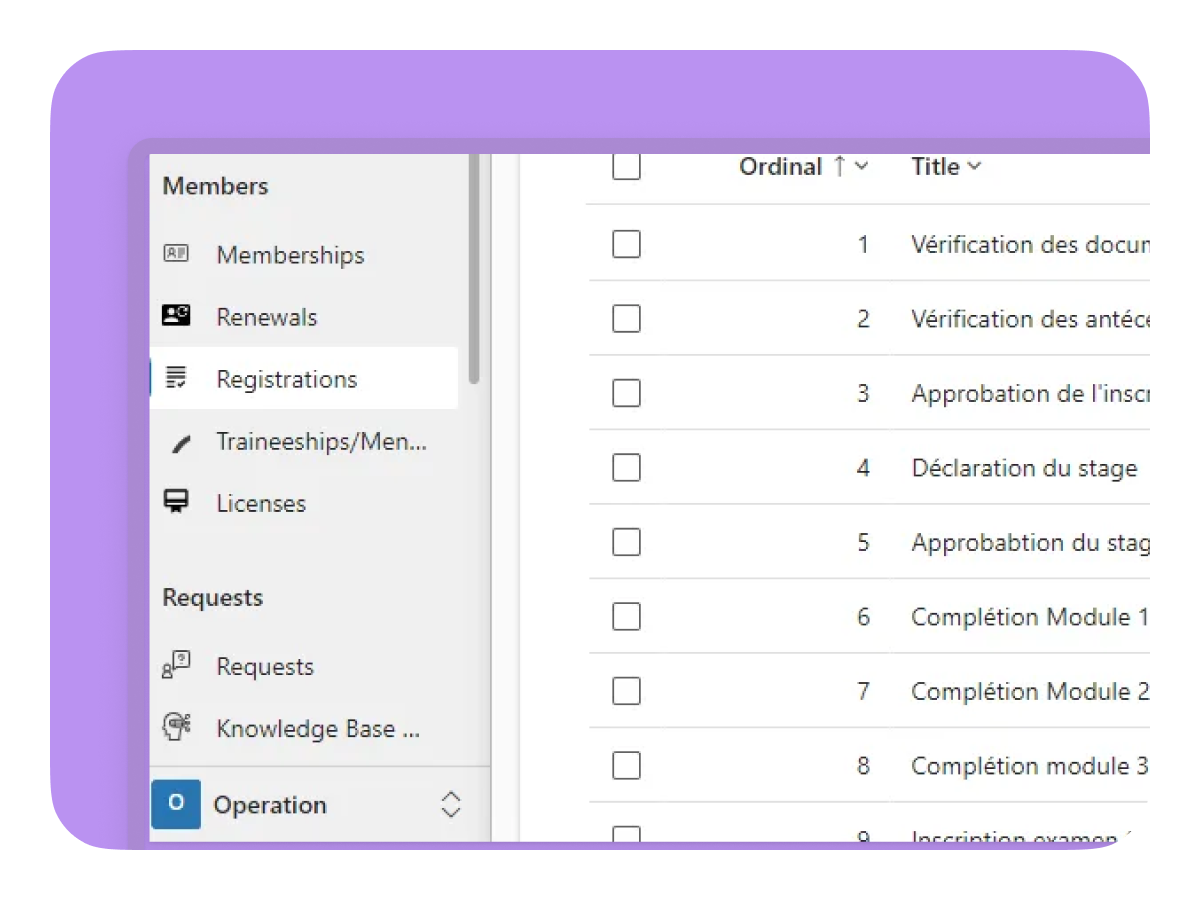
The compliance-native architecture means your team isn't building workarounds to track credentials or running disciplinary case management in a parallel system. Those workflows are core to the platform because they were the reason it was built in the first place. Configuration reflects how regulatory bodies actually operate rather than how a generic membership platform thinks they should.
Data migration gets simpler when the destination platform already has the right data structures. Member profiles in Legio are designed to hold the depth of information regulatory bodies maintain, from credential history and CE tracking through to inspection records and complaints. Your legacy data has somewhere to land that makes sense instead of being crammed into flat profiles and custom fields.
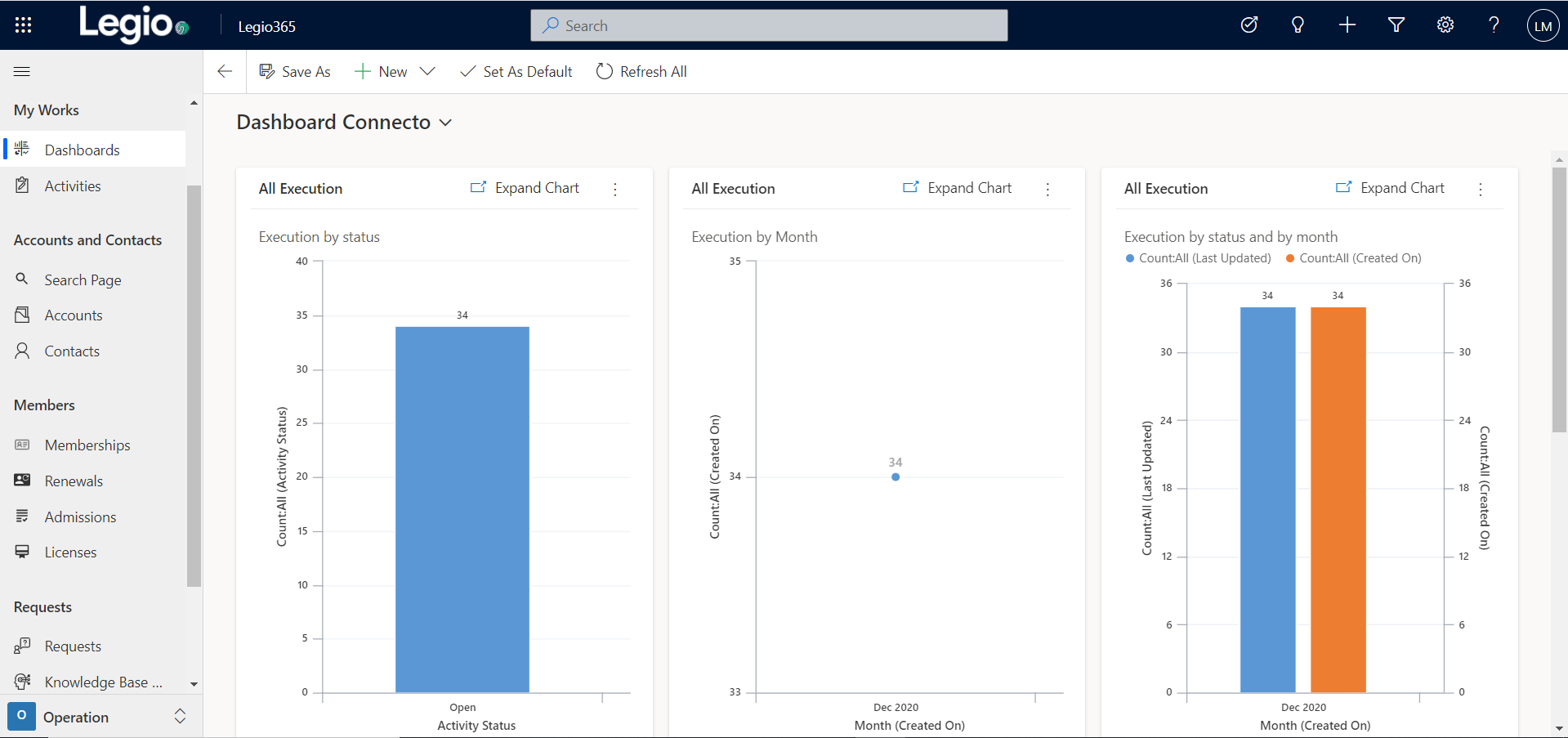
The Microsoft Dynamics 365 and Power Platform foundation directly reduces the integration and adoption challenges. Your team already uses Outlook and Teams. Reports flow into Power BI. The new system connects to the environment staff work in every day rather than pulling them somewhere unfamiliar.
Bilingual self-service portals in English and French, PIPEDA-compliant data handling, and event management connected to CE compliance records round out a platform that was built to prevent the exact membership management software challenges regulatory bodies keep running into with generic tools.
For regulatory bodies evaluating platforms after a difficult experience with generic membership management software, Legio tends to be the answer to the specific frustrations that prompted the search in the first place. Now instead of using their time building workarounds to make a generic platform fit, they're spending it using the system for the work it was designed to support.
How Gestisoft helps you avoid all these membership management software challenges
Legio handles the technology side of these challenges. The implementation is where the human side gets addressed.
A significant number of Gestisoft's regulatory body clients arrive after a difficult experience with another platform. They've lived through several membership management software challenges already and they're looking for a partner who won't repeat them.
Most Microsoft partners implement software that someone else built but Gestisoft built Legio and that’s where there’s a significant distinction.
When your regulatory body needs a workflow adjusted, a new membership category supported, or a compliance rule reconfigured because legislation changed, you're not submitting a feature request to a third-party vendor and hoping it makes the product roadmap. You're talking directly to the team that designed and developed the platform. The gap between identifying what you need and having it built closes dramatically when your implementation partner and your software developer are the same organization.
Other Microsoft partners can configure what exists. Gestisoft can change what exists. If Legio doesn't handle something your regulatory body requires, the development team can build it. That capability turns the platform into something that evolves alongside your organization rather than something you eventually outgrow.
For regulatory bodies evaluating Microsoft partners, the question worth asking is whether you want a partner who configures someone else's product or one who built the product and can reshape it when your requirements demand it.
-
Choosing a platform that wasn't built for regulated industries. When compliance tracking and regulatory reporting aren't native to the platform, every other challenge compounds on top of that foundation problem.
Liked what you just read? Sharing is caring.

April 09, 2026 by Shelley Sunjka by Shelley Sunjka Copywriter & Marketing Strategist
Armed with a psychology degree and an irrational obsession with okapis, I've spent the last decade helping bold brands tell better stories. I believe the best writing bends grammar rules on purpose and makes people feel something. When I'm not deep in words or nerding out on buyer behaviour, I'm probably convincing my kids that impromptu kitchen dance parties are totally normal.


