

Most Canadian associations start searching for Wild Apricot alternatives after the organization outgrows what the platform was built to handle. Wild Apricot is a solid starting point for associations that need simple membership renewals and event registration up and running without a lengthy implementation project. Plenty of Canadian associations have built their early operations on it, and for organizations at that stage it does the job well.
The problem surfaces when the organization scales past that stage. Staff end up spending more time building workarounds than doing the work the platform was supposed to handle for them, and leadership loses confidence in what the system can tell them about the membership.
That's when Wild Apricot alternatives become a serious conversation, and for Canadian associations operating under PIPEDA or serving Quebec members in French, finding a platform that can handle those requirements properly is non-negotiable.
The good news is that the Canadian AMS market has matured considerably over the past few years. Associations that would have been stuck choosing between an American platform with a Canadian pricing page or a heavily customized generic CRM now have purpose-built options designed around how Canadian member organizations operate. The platforms worth evaluating are the ones where bilingual capability and compliance enforcement aren't configuration projects added on after the contract is signed.
Your association's next platform should solve real operational problems
Gestisoft helps Canadian associations figure out what they've outgrown and what they need next.
 Book a free consultation
Why Canadian associations start looking for Wild Apricot alternatives
Canadian associations tend to hit a ceiling with Wild Apricot in one of four areas. Not every organization runs into all of them, but even one is usually enough to trigger the search for Wild Apricot alternatives.
The compliance ceiling
Wild Apricot stores member data in custom fields. It doesn't enforce compliance rules or cascade status changes when credentials lapse. For voluntary associations running a straightforward membership model, that's perfectly fine.
For regulatory bodies managing licensed professionals, the gap between storing compliance data and enforcing compliance workflows is an operational risk. A member whose credentials have lapsed should have their status updated automatically, with notifications sent to the right people at the right time. When that process depends on someone remembering to check a spreadsheet, it's usually the first reason Wild Apricot alternatives start getting evaluated seriously.
The bilingual ceiling
Wild Apricot supports translated content, but the bilingual experience for Quebec members is limited. Member portals and governance reporting in both official languages require a platform where bilingual capability is built into the architecture rather than layered on top as a translation feature.
For associations with significant Quebec membership, this becomes a compliance issue as much as a usability one. Quebec's Law 25 adds data handling requirements on top of the language obligations, and a platform that treats French as a secondary experience creates friction for the members who interact with it most frequently.
The structural ceiling
As associations scale past 1,000 to 2,000 members, Wild Apricot's flat membership structure and per-contact pricing start creating friction. Complex membership tiers with different renewal rules push against what the platform was designed to handle, and organizational memberships with individual practitioners sitting underneath them add a layer of complexity the system wasn't built for. Most Wild Apricot alternatives on the market were designed with these membership structures in mind from the start.
The integration ceiling
Associations running on the Microsoft stack find that Wild Apricot operates as a separate island. Data doesn't flow naturally between the membership platform and the tools staff use every day in Outlook and Teams, which creates reconciliation work every time someone needs a number that lives in both systems. Over time, that disconnect slows adoption because staff default to the tools they're already comfortable with and treat the AMS as an obligation rather than something that helps them do their jobs.
These ceilings tend to compound. An association dealing with compliance gaps while also managing a bilingual membership on a platform that doesn't integrate with their Microsoft environment is facing membership management software challenges that get harder to untangle the longer the transition is delayed.
5 Wild Apricot alternatives for Canadian associations
These five platforms each address a different operational gap Canadian associations run into with Wild Apricot. Which one of the Wild Apricot alternatives you pick depends on which ceiling your organization has hit.
1. Legio by Gestisoft
Best for: Canadian regulatory bodies and professional associations that have outgrown Wild Apricot's compliance and bilingual capabilities.
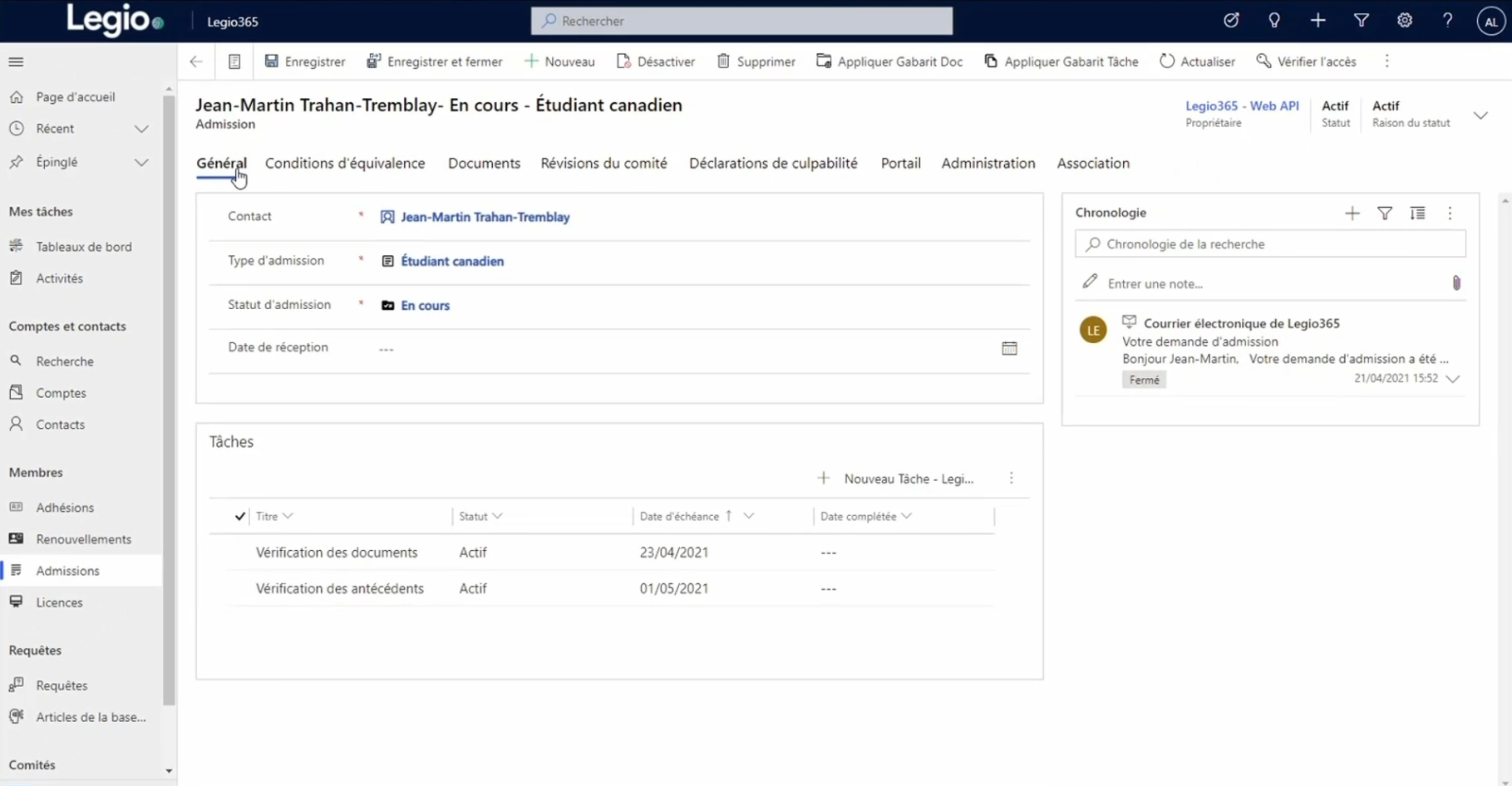
Legio is one of the Wild Apricot alternatives for associations that need compliance tracking to be a core function rather than a custom field. Built on Microsoft Dynamics 365 and Power Platform, the platform was designed from the start for Canadian regulatory bodies managing admissions, renewals, CE tracking, practice monitoring, and disciplinary case management.
Where Wild Apricot stores compliance data, Legio enforces compliance rules. Status changes cascade automatically when credentials lapse and CE credits track against configurable requirements per membership tier. Disciplinary case management runs inside the same system as member records with full audit trails.
Bilingual member portals are native to the platform which means Quebec members interact with the system entirely in French while members in Ontario use the same platform in English, without anyone on the administrative side managing two separate configurations. PIPEDA compliance is built into the data architecture through Microsoft Azure's Canadian data centres.
The integration ceiling disappears with Legio because the platform runs inside the Microsoft ecosystem your staff already use. Email and internal collaboration flow through Outlook and Teams rather than a separate system, and reporting runs through Power BI alongside whatever other operational reporting the organization already produces.
Where Legio fits over Wild Apricot: Any Canadian association where compliance enforcement, bilingual operations, or Microsoft ecosystem integration are non-negotiable. If your organization manages licensed professionals with mandatory membership, Legio fills the operational gap Wild Apricot was never designed to cover.
2. Association Server by Oasis Computing
Best for: Mid-sized Canadian associations already running Microsoft infrastructure that want a flexible, Canadian-hosted AMS.
Association Server is Canadian-built and hosted on Microsoft Azure, which settles the data residency question on day one for associations that need member information stored in Canada. The platform pairs an open-source CMS architecture with the AMS, giving associations more control over their public-facing website than most membership platforms offer out of the box.
Version 5.0 introduced agentic AI features, and the pricing model is flat-cost rather than per-member. For associations watching their Wild Apricot invoice climb every year as the membership grows, that predictability changes the budget conversation considerably. A 5,000-member association pays the same as a 2,000-member association, which removes the penalty for growth that per-contact pricing creates.
The platform suits associations where the executive director has a clear view of what they need and wants the flexibility to configure it without relying on a vendor for every change. The open-source CMS side gives the web team room to build the site they want rather than working inside a template that limits what's possible.
Where it fits over Wild Apricot: Canadian data residency with predictable pricing and Microsoft infrastructure underneath. A stronger fit than other Wild Apricot alternatives for associations that need website control alongside membership management without running two separate platforms.
3. Members Village
Best for: Smaller Canadian associations and nonprofits that want Canadian data residency and CRA-compliant tax receipts without enterprise complexity.
Members Village is Canadian-hosted with CRA-compliant tax receipts built into the platform, which saves smaller associations from cobbling together a separate receipting process at year-end. For organizations where charitable donation receipts are a regular part of operations, having that functionality native to the AMS CRM eliminates the reconciliation work that eats up finance staff time every quarter.
Automated renewal cycles and a member self-service portal handle event registration without requiring dedicated admin resources to manage them manually. The setup is faster than enterprise-tier Wild Apricot alternatives, and the learning curve reflects that. This is a platform designed for organizations where the person managing the membership database is also the person answering the phone and planning the annual conference.
That scope is deliberate. Members Village doesn't try to compete with enterprise platforms on compliance enforcement or disciplinary case management. It handles the core membership operations a smaller association needs and handles them well enough that staff aren't building workarounds inside a system that's too heavy for what they're doing. For associations that have been paying for Wild Apricot features they don't use while missing Canadian-specific functionality they do need, the trade is worth evaluating.
Where it fits over Wild Apricot: When Canadian data residency and CRA compliance are the driving factors and the organization doesn't need enterprise-level compliance tracking. This is a lateral move for small associations rather than an upward one, and the value is in the Canadian-specific functionality Wild Apricot doesn't prioritize.
4. Memberclicks
Best for: US and Canadian associations that need community engagement features and a modern member experience alongside standard AMS functions.
The MemberClicks platform leans harder into member engagement than most Wild Apricot alternatives on the market. Discussion forums, member directories, and content management tools give associations a way to build community around the membership rather than just administering it. For organizations where member retention depends on perceived value beyond the credential or the annual conference, that engagement layer carries real weight in the evaluation.
The platform comes in two editions. MC Professional is built for professional associations and MC Trade is built for trade associations, which means the default workflows and templates reflect how each type of organization operates rather than forcing both into the same generic structure. LMS integration through Classroom LMS adds continuing education delivery alongside the membership management, so associations running professional development programmes can track completion without a separate system.
The member-facing experience is noticeably more modern than what Wild Apricot offers. The portal feels like something built in the last few years rather than something that's been incrementally updated since 2010. For associations evaluating Wild Apricot alternatives primarily because the member experience feels dated, Memberclicks addresses that gap directly.
Where it fits over Wild Apricot: When the primary gap is community engagement and a modern member-facing experience rather than compliance or regulatory capability. MemberClicks is US-headquartered, so Canadian associations should evaluate bilingual capability and PIPEDA compliance carefully during demos rather than assuming those requirements are covered.
5. Fonteva
Best for: Larger associations already invested in Salesforce that need enterprise-scale membership management.
Fonteva is built on Salesforce, which gives it the CRM-grade analytics and customization depth that comes with that ecosystem. For associations with large membership populations and complex organizational structures, the platform handles what most lightweight AMS tools can't. Multi-chapter organizations with different governance rules per region, enterprise-scale event management with thousands of attendees, and membership models that vary significantly across categories all exist within what Fonteva was architected to support.
The Salesforce foundation also means associations get access to one of the largest app marketplaces in the software industry. If the organization needs a specific integration or capability that Fonteva doesn't offer natively, there's a reasonable chance someone has already built it on the AppExchange. That extensibility is valuable for associations whose operational needs tend to evolve faster than their AMS vendor's product roadmap.
The trade-off is cost and commitment. Fonteva is not a budget-friendly swap from Wild Apricot. The Salesforce licensing model, combined with implementation costs and the ongoing need for Salesforce-skilled administration, puts the total investment well above what most small to mid-sized associations are prepared for. This is a platform for organizations with 5,000 or more members and the budget to match.
Canadian associations should also evaluate bilingual capability and data residency options with particular care. Fonteva is US-based, and while Salesforce does offer Canadian data centre options, those need to be specified and confirmed during the sales process rather than assumed. For associations where PIPEDA compliance and French-language member portals are requirements, those conversations need to happen before the demo.
Where it fits over Wild Apricot: When the organization has significant scale, needs advanced analytics, and is willing to invest in the Salesforce ecosystem for the long term. Wild Apricot alternatives at this end of the market solve a fundamentally different problem than the platforms built for smaller organizations.
The right Wild Apricot alternative depends on what ceiling you've hit in your organization
Gestisoft can help you map the gap between where Wild Apricot stops and where your association needs to go.
 Book a free consultation
How to evaluate Wild Apricot alternatives as a Canadian association
The evaluation for Wild Apricot alternatives should reflect the fact that the organization's needs have changed since then, and the criteria for the next platform need to change with them.
The most useful thing an association can do during a demo is test the specific gap that triggered the search. Bring your own data and your own scenarios into the room and ask the vendor to run them live. Sample data demos are designed to make the platform look good. Your own data shows you whether it can handle the workflows your team depends on every day.
Ask for references from Canadian associations with a similar membership model and similar compliance obligations.The quality of those references tells you more about vendor fit than any feature comparison spreadsheet, and it's the fastest way to narrow a long list of Wild Apricot alternatives down to the two or three worth serious evaluation.
The subscription fee is the smallest part of the investment. Implementation and data migration determine what the decision costs over three to five years, and a thorough membership management software selection process that accounts for those costs upfront is what prevents the next platform from becoming another short-term fix.
Your next platform should be the last one you need to buy
Gestisoft helps Canadian associations move from Wild Apricot to a platform built for their next decade of operations.
 Book a free consultation
Why Gestisoft is where Canadian associations land when evaluating Wild Apricot alternatives
Gestisoft has been implementing membership management platforms for Canadian regulatory bodies for over two decades. That depth of experience means the team has seen every version of the Wild Apricot alternatives conversation, and the implementation methodology reflects what they've learned from running those transitions repeatedly.
Legio exists because of that experience. Gestisoft kept building the same compliance enforcement and bilingual portal configurations from scratch for every new regulatory body client. Legio turned those repeated customization projects into a product, so associations get a platform where the hard work has already been done.
The practical difference shows up in the first few months after go-live. Compliance status changes that used to require manual checking cascade automatically, and Quebec members complete their entire renewal process in French without the portal reverting to English halfway through.
Staff who spent years managing around Wild Apricot's limitations tend to notice the difference quickly. The new system doesn't feel like a migration project for long. It starts feeling like the way the organization should have been operating all along.
-
The most common reasons are limited compliance tracking and lack of native bilingual capability for Quebec operations. Per-contact pricing that escalates as membership grows is another frequent trigger, along with limited integration with the Microsoft tools staff already use. Most associations start evaluating Wild Apricot alternatives once two or more of those gaps are affecting daily operations.
Explore more
- Membership management software: the complete guide
- The best AMS tools for Canadian associations in 2026
- AMS CRM: why Canadian associations are done choosing between the two
- 8 membership management software challenges every regulatory body should prepare for
- Free membership management software: can it handle regulatory requirements?
Liked what you just read? Sharing is caring.

May 22, 2026 by Shelley Sunjka by Shelley Sunjka Copywriter & Marketing Strategist
Armed with a psychology degree and an irrational obsession with okapis, I've spent the last decade helping bold brands tell better stories. I believe the best writing bends grammar rules on purpose and makes people feel something. When I'm not deep in words or nerding out on buyer behaviour, I'm probably convincing my kids that impromptu kitchen dance parties are totally normal.

