

The CRM for professional associations challenges that cause the most damage are the ones nobody warned you about during the sales process. The demo looked solid and the feature list checked every box. But then your association launched the platform and discovered it handles half of what the team needs, with the other half requiring custom work that wasn't in the original quote.
Most of these challenges are preventable and once you know what to look for you can see they follow a pattern that Canadian regulatory bodies encounter repeatedly because the CRM market was built for commercial sales organizations and adapted for associations afterward.
The membership management software challenges most associations report after a failed deployment share a common thread. The platform wasn't tested against the association's operations before the contract was signed. Knowing these CRM for professional association challenges exist before the evaluation starts is what changes the outcome.
Most Canadian associations evaluating platforms have already been through at least one that didn't deliver. That experience is useful information during the next evaluation, because your team already knows exactly where the last system fell short. The trick is turning that institutional knowledge into specific questions that expose whether the next platform will repeat the same problems.
Preparing for CRM for professional associations challenges starts with understanding your current operations
Gestisoft helps Canadian regulatory bodies map their workflows and compliance requirements before evaluating any platform.
 Book a free consultation
The CRM for professional associations challenges that stem from a sales-first data architecture
Most Canadian regulatory bodies discover data architecture problems after they've already committed to a platform. The vendor demo handled a simple member record cleanly, but the demo didn't include membership tiers with different renewal rules or organizational memberships where individual practitioners each hold separate credential categories with their own CE deadlines. The question of whether a member's compliance status can automatically restrict their renewal pathway probably never came up at all. Standard CRM data structures weren't designed for those relationships, which is why the AMS CRM divide exists. Associations end up splitting operations across two platforms because neither one can hold the full picture alone.
During the demo, ask the vendor to configure your hardest membership scenario while you watch. For example, an organizational membership with four practitioners underneath, each holding a different credential category with separate CE deadlines, where one practitioner's compliance status affects the organization's standing. How they react to that request tells you more about the platform's architecture than anything on their feature list.
If the configuration requires custom development rather than platform settings, pay attention to the quote. Custom CRM development for associations typically runs $50,000 or more, and the configuration needs rework every time your membership model evolves. Most associations that go down that road end up evaluating purpose-built platforms within two years because the maintenance cost of the customization outpaces the cost of switching.
The CRM for professional associations features that prevent this problem are the ones built into the platform's data architecture rather than configured on top of a sales model after purchase.
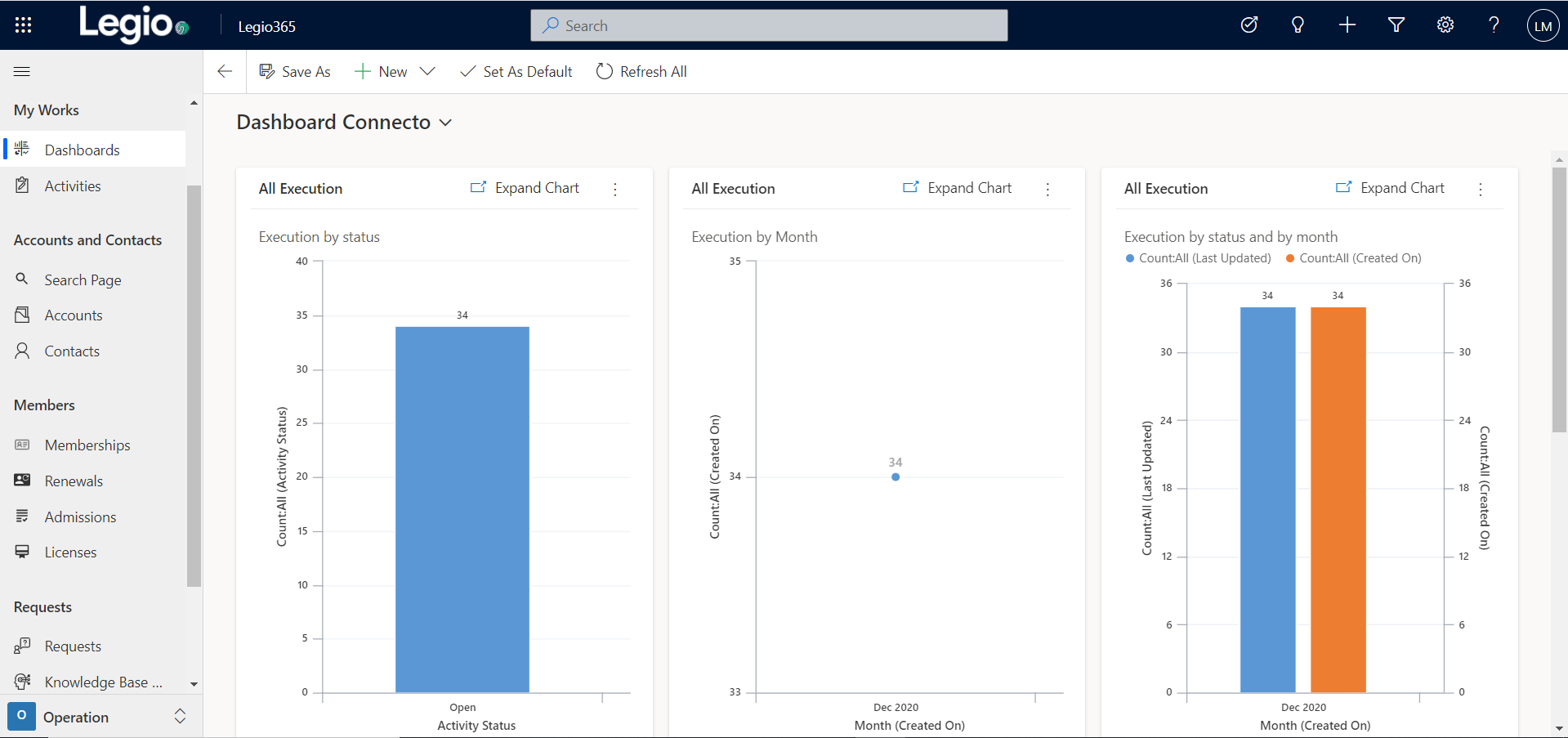
CRM for professional associations challenges around compliance enforcement vs compliance storage
Every CRM demo for a professional association will include a member record with a compliance status field and at first glance it looks functional. Someone set the field to "compliant" before the presentation and the demo records it cleanly. What nobody in the room thinks to ask is what happens to that field when a CE deadline passes, a credential expires, an insurance certificate lapses, or a disciplinary proceeding changes a member's standing. On most platforms, the answer is nothing. The field sits there showing "compliant" until a staff member notices the problem and updates it manually.
That gap between storing compliance data and enforcing compliance rules is invisible during evaluation and devastating in production. At 500 members, a staff member running a manual report every quarter can catch most of the gaps. The process is slow and tedious, but survivable. Scale that to 2,000 members across multiple credential categories with overlapping CE deadlines and the manual approach collapses. Members fall out of compliance for months before anyone catches it and remediation becomes a massive undertaking of time and admin.
So when you're evaluating a platform ask for a runthrough of what happens when a member's CE deadline passes without completion.
- Does the compliance status update on its own?
- Does the renewal pathway adjust?
- Does the relevant staff member get a notification?
- Does the system produce an audit trail a provincial regulator could review?
If any of these steps require a person to intervene manually, the platform stores compliance data but cannot enforce compliance rules at scale.
Provincial regulators hold your association accountable for every member's compliance standing. A platform that requires manual monitoring transfers the full weight of enforcement to your staff, and every member you add increases the chance that something gets missed. Continuing education as a growth accelerator for regulatory bodies only works when the CE tracking connects to the rest of the member lifecycle, and the complaints, investigation, and discipline workflows that provincial regulators expect you to be on top of need clear audit trails running through every procedural stage.
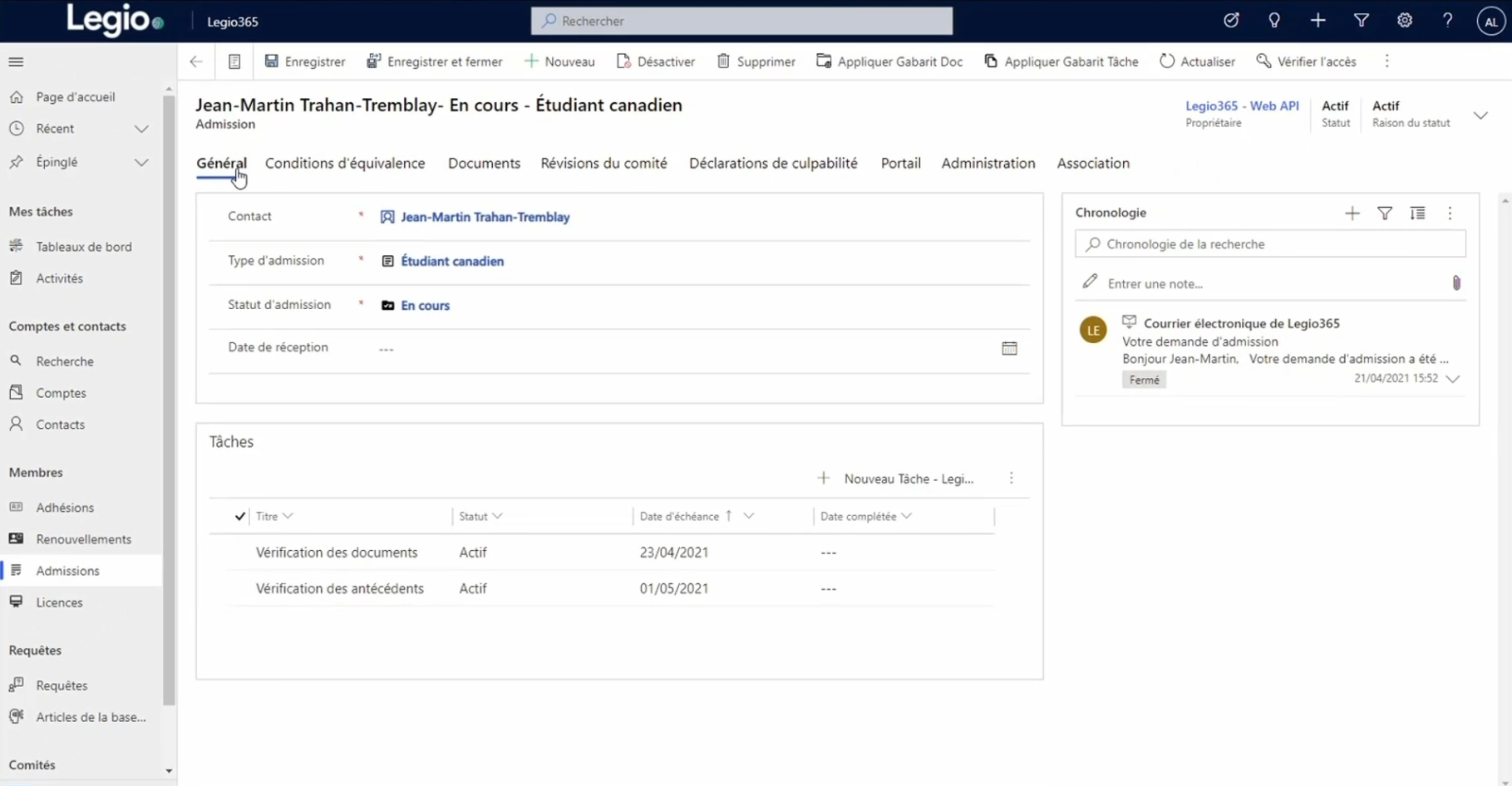
CRM for professional associations challenges with bilingual implementation in Canadian associations
Bilingual capability during a vendor demo typically means someone clicks a language toggle and the interface labels switch to French. The sales team nods approvingly and the demo moves on. That toggle is where the bilingual story begins and ends on most CRM platforms, and Canadian associations serving Quebec members discover the rest of the story after launch.
The problems start showing up when Quebec members interact with the portal for real and hit an English confirmation screen partway through their renewal process because the workflow logic was configured in English and only the surface layer was translated. Automated CE reminders arrive in the wrong language and governance reports that the board needs in both official languages only generate in one. These aren't minor cosmetic issues for an association whose Quebec membership expects the same digital experience their English-speaking colleagues receive.
Quebec's Law 25 makes this more than a service quality problem. Consent management and privacy notifications have to operate in French as compliance obligations under provincial legislation, and data security for regulatory bodies applies to how member data is collected and stored in both languages. An association running a CRM that treats French as a secondary language is carrying compliance exposure it may not realize it has until an audit surfaces it.
The simplest way to catch this before signing is to refuse the English demo entirely. Ask the vendor to run the full presentation in French from the first screen. Walk a Quebec member's complete journey from application through renewal, CE tracking, and portal access without switching back to English at any point. Watch what happens to the automated communications and check whether the governance reports generate in French or require a workaround. A Canadian CRM vendor who has built bilingual capability natively will handle that request without hesitation.
Most CRM for professional associations challenges are preventable when you test for them during evaluation
Gestisoft can walk your association through the evaluation scenarios that expose platform gaps before you commit.
 Book a free consultation
CRM for professional associations challenges when staff adoption depends on workflows that were never mapped
This challenge has nothing to do with the software. The platform might be perfectly capable but the CRM specialist configured it based on vendor best practices and generic association workflows instead of watching how your team processes a renewal or handles a CE exception.
Your membership coordinator has a sequence for renewals that was developed over years of trial and institutional memory. The registrar handles credential exceptions using a mental checklist that has never been written down, and nobody else on the team fully understands the workarounds your CE administrator built for deadline combinations that create cascading problems. When a CRM implementation consultant skips past those realities and configures the platform from a template, the system launches clean but wrong. Staff feel the friction immediately and within 90 days, the spreadsheets are back.
The fix is unglamorous but effective. Before any configuration begins, every role that touches member data needs to sit down separately with the implementation partner and describe how they do their work. That documentation becomes the configuration blueprint, and it's the reason implementations hold up past the 90-day mark where most associations discover the CRM was built for someone else's operations.
When that discovery phase gets skipped, the cost shows up 12 to 18 months later as a re-implementation project. The new partner has to audit what was built, figure out what needs undoing, clean data that was migrated without proper preparation, and retrain staff who have already decided the CRM doesn't work. That project costs more than the original, and the membership management software selection process starts from scratch with a team that trusts the outcome even less than they did the first time.

CRM for professional associations challenges with data migration from fragmented systems
Data migration sounds like a technical task where you move the records from the old system to the new one and move on. In practice, most professional associations don't have one old system. They have four or five, and each one has been maintaining its own version of the member record independently for years.
The Sequence Consulting 2026 Association Trends Report identifies technology fragmentation as one of the top operational challenges facing associations, with staff spending significant time managing data across disconnected systems. Migration is the moment that fragmentation stops being an inconvenience and becomes a decision. You either clean it up before the records move, or you import years of accumulated inconsistencies into a platform your team needs to rely on.
Most CRM regulatory bodies evaluations focus heavily on features and overlook what's happening underneath with the data. Associations that skip the cleanup phase tend to spend their first 90 days on the new platform correcting duplicate records and reconciling mismatched fields instead of learning the system. That correction work happens at the worst possible moment, right when your team is forming their first impressions of whether the CRM is worth using. A staff member who opens a member record on day two and sees outdated information has already started building the case for going back to the spreadsheet.
Budget for the cleanup specifically. Deduplicate your member records and reconcile CE completion data against your official sources before anything moves. Validate email addresses and archive members who haven't been active in years so you don’t transfer them into the new environment. The investment in preparation pays for itself within the first month, because the staff who open the new CRM and find clean, reliable data will trust it enough to make it their primary tool. The CRM for professional associations becomes the system your team runs their operations from, and the hours that were disappearing into manual reconciliation go back into member services. Associations that have been through a failed migration on AMS tools that didn't handle the data properly already know how expensive the alternative looks.

CRM for professional associations challenges around governance reporting that the platform wasn’t designed for
The reporting challenge tends to announce itself at the worst possible moment. Your association just went live on the new CRM, the first board meeting since launch is approaching, and the staff member responsible for the board package discovers that the platform cannot produce what the board expects. The CRM vendor promised "robust reporting" during the demo and the dashboard had attractive charts but this doesn’t give the board the information it needs.
What happens next is painfully familiar. Your team exports the data, opens Excel, and spends days assembling the board package manually which is exactly what they were doing before the CRM arrived. The only difference is that the data now comes from a newer system before it lands in the same spreadsheet.
The reason this happens is that commercial CRM reporting was designed to produce pipeline value, conversion rates, revenue forecasts, and customer acquisition metrics. Membership management software for professional associations needs to produce governance metrics that most CRM reporting engines have no built-in structure for.
The most effective safeguard is to bring your most recent board report package to the vendor meeting and ask them to show you how the platform would produce each section natively. Watch whether the answer involves the platform's own analytics and dashboards or whether it involves exporting to Excel and building it yourself.
Canadian professional associations that report to provincial regulators on specific metrics at defined intervals need the CRM to produce those regulatory reports from the same data source that produces internal board reports. Maintaining two reporting processes is exactly the kind of duplication the CRM was supposed to eliminate.
Canadian regulatory bodies can prepare for CRM for professional associations challenges before the evaluation starts
Gestisoft helps associations identify where platform gaps create operational risk and how to test for them during vendor demos.
 Book a free consultation
How Legio by Gestisoft addresses the CRM for professional associations challenges Canadian regulatory bodies encounter most
Gestisoft works with Canadian regulatory bodies and professional orders that have already been through a failed CRM implementation. They arrive knowing exactly where the last platform fell short, and that knowledge gives us a precise starting point for their Legio configuration.
“Gestisoft has been an invaluable partner for us from the very beginning. Their CRM solution is specifically designed for professional associations and regulatory bodies. Their knowledge and dedication to our project enabled us to make a seamless transition to their platform. We're absolutely delighted to have their team supporting us, and look forward to continuing our partnership for years to come!”
Legio was designed after dozens of real implementations for Canadian regulatory bodies where the underlying architecture kept repeating. Every engagement required building compliance enforcement, bilingual member portals, governance reporting, and CE tracking tied to renewal cycles from scratch, so we productized those patterns. That means your association gets a platform built from accumulated implementation experience with Canadian regulatory bodies who operate the way yours does.
That specialization extends to the implementation process itself. We understand PIPEDA and provincial privacy legislation because we've worked through data residency conversations with regulatory bodies across multiple provinces. We run a full data audit and reconciliation phase before migration so your database doesn’t contaminate the new platform and we stay on after launch because that window is where we can tweak the workflow so it matches how your team works. The CRM for professional associations benefits your team expects to see after go-live only compounds once the configuration reflects how your staff operates in practice.
-
The CRM for professional associations challenges that surface most frequently are architecture mismatch between sales-focused data structures and compliance-driven membership lifecycles, compliance storage without enforcement automation, bilingual implementation that falls apart in production for Quebec members, staff adoption failure when workflows were not mapped before configuration, and governance reporting gaps where the platform cannot produce the metrics association boards require.
Liked what you just read? Sharing is caring.

June 08, 2026 by Shelley Sunjka by Shelley Sunjka Copywriter & Marketing Strategist
Armed with a psychology degree and an irrational obsession with okapis, I've spent the last decade helping bold brands tell better stories. I believe the best writing bends grammar rules on purpose and makes people feel something. When I'm not deep in words or nerding out on buyer behaviour, I'm probably convincing my kids that impromptu kitchen dance parties are totally normal.
