
You can always tell when a company doesn’t have a CRM specialist.
- The sales team says the data is “mostly right.”
- There are no regular reports from marketing.
- Leadership asks for numbers and gets three different answers.
- And everyone agrees the CRM is “a bit messy.”
That mess happens because no one truly owns the CRM.
Most businesses invest in CRM software with the right intentions. They expect better visibility, smoother processes, clearer reporting and greater accountability across teams. But without defined ownership, even the best system starts to drift.
Who is a CRM specialist?
A CRM specialist is the person who makes sure your customer relationship management system actually works, not just technically, but strategically. They’re the bridge between sales, marketing, customer service and leadership. They keep the data clean, fix broken workflows and make sure the automation truly helps move the company forward by turning raw customer information into something a business can act on.
A CRM specialist is responsible for managing and improving a company’s CRM system so it supports growth instead of slowing it down.
That sounds pretty straightforward, but in practice, it’s one of the most important roles in a modern business.
In Canada especially, where small and mid-sized companies are scaling quickly and leaning heavily on digital sales processes, the demand for a capable CRM specialist has grown significantly. More businesses are investing in CRM platforms like Microsoft Dynamics 365, Salesforce, and HubSpot, but software on its own doesn’t solve problems. Someone has to monitor and improve it.
That someone is the CRM specialist.
Your CRM shouldn’t run itself
If no one truly owns your CRM, it’s only delivering a fraction of its potential. Let’s assess how your system is structured and where it can be strengthened.
 Free discovery call
What does a CRM specialist do inside a business?
Technology on its own is neutral.
You can invest in the most sophisticated platform on the market and still end up with a glorified contact database if no one is actively steering it
Ma.y small and mid-sized businesses use only a fraction of what their CRM is capable of. They track contacts, log deals, perhaps send a few automated emails, and that’s usually where it stops.
But modern CRM platforms are far more powerful than that. When configured and managed properly, a CRM becomes the operational control centre of your business and the CRM specialist is the person at the controls.
They actively manage the system and refine processes, so the technology supports growth instead of simply storing information. They make sure the structure of the CRM reflects how the business markets to and supports its customers.
When that oversight is in place, the CRM starts becoming a strategic asset that can:
give leadership reliable forecasting instead of guesswork.
show marketing exactly which campaigns generate revenue.
highlight where deals stall and why.
automate follow-ups so opportunities don’t disappear.
create a shared source of truth across sales, marketing and customer service.
None of this happens by default. It takes someone who understands both the system and the business to make it work properly. And that someone is a CRM specialist.
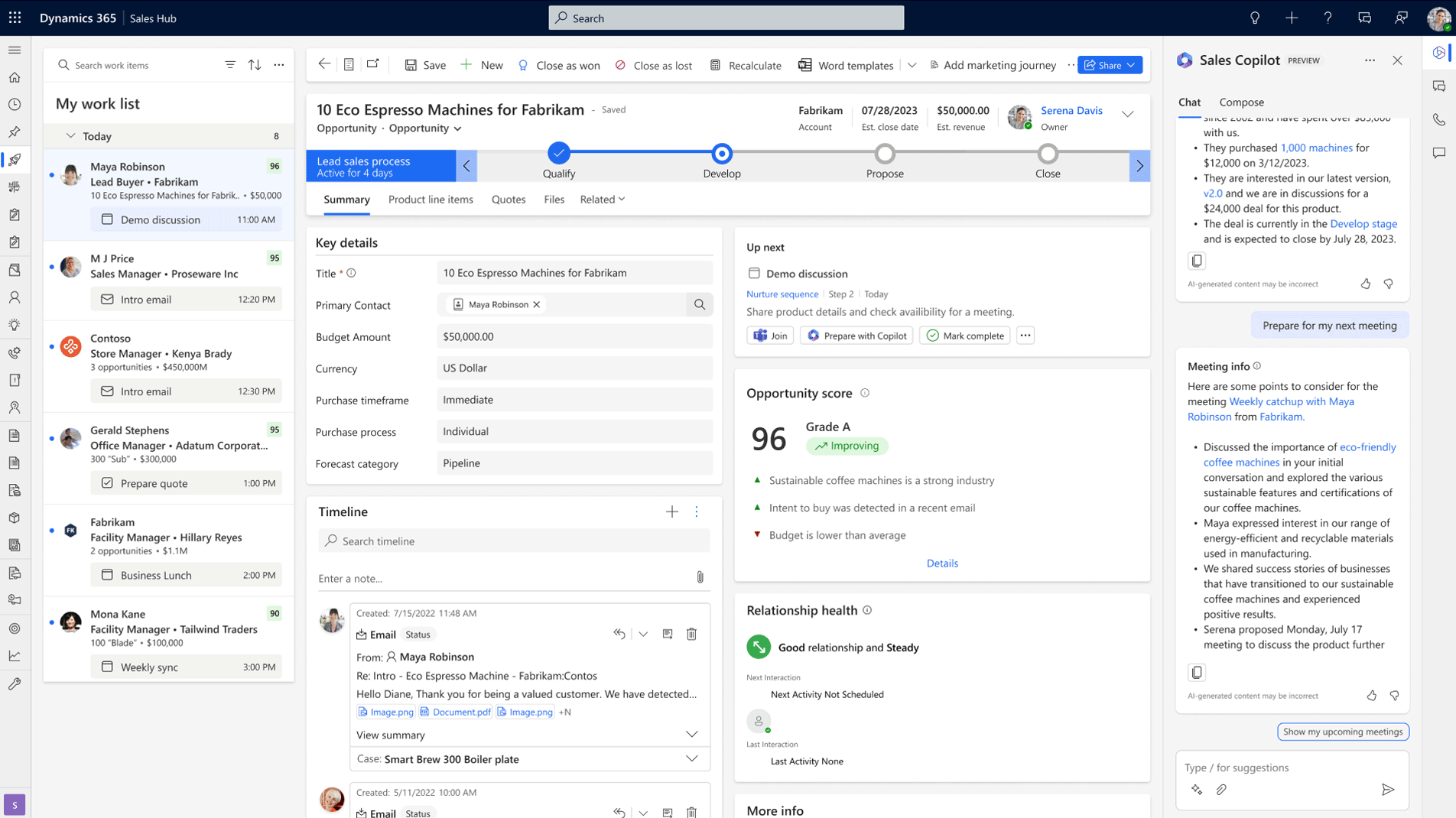
How AI and automation are changing the role of the CRM specialist
Artificial intelligence and automation are now built into most modern CRM platforms. Lead scoring can be automated, emails can be drafted, deal priorities can be suggested and forecasting models can be generated with a few clicks.
On the surface, that sounds like less need for human oversight.
But AI tools are only as good as the data they’re trained on and the structure they’re working within. If your CRM data is poorly organised, automation simply amplifies the mess. Instead of one incorrect field, you now have an automated workflow repeating the error at scale.
A CRM specialist ensures that automation supports the business in a way that actually makes sense practically. They review how AI recommendations are generated and check whether automated lead scoring reflects real sales behaviour. They adjust and optimise workflows so automation fits the company’s actual process rather than forcing the team to adapt to a default template.
In many small and mid-sized businesses, automation is switched on with good intentions. But without a clear strategy, tasks multiply, notifications increase and reports might look impressive but they often lack context. Over time, the system becomes more complicated instead of practically useful.
When managed properly, AI and automation can reduce manual work and highlight patterns that would otherwise go unnoticed. But for that to happen, they require configuration, monitoring and refinement.
The role of the CRM specialist is evolving. In the age of AI, it’s about designing intelligent systems that combine human judgment with automation in a way that supports real business growth.
AI doesn’t replace the CRM specialist. It raises the bar for what a good one can do.
What changes inside your business when a CRM specialist takes ownership?
When a CRM specialist properly takes ownership of the system, the first thing that changes is the atmosphere.
Meetings get shorter because the numbers are clear. Leadership isn’t asking three different people for the same report in three slightly different formats just to find clarity. Sales and marketing aren’t debating which data is “more accurate.” Reps stop relying on memory to follow up with leads. Managers stop building parallel spreadsheets “just in case.” There’s one source of truth, and it’s reliable.
That’s because a well-operated CRM provides clarity and a calmer operating rhythm.
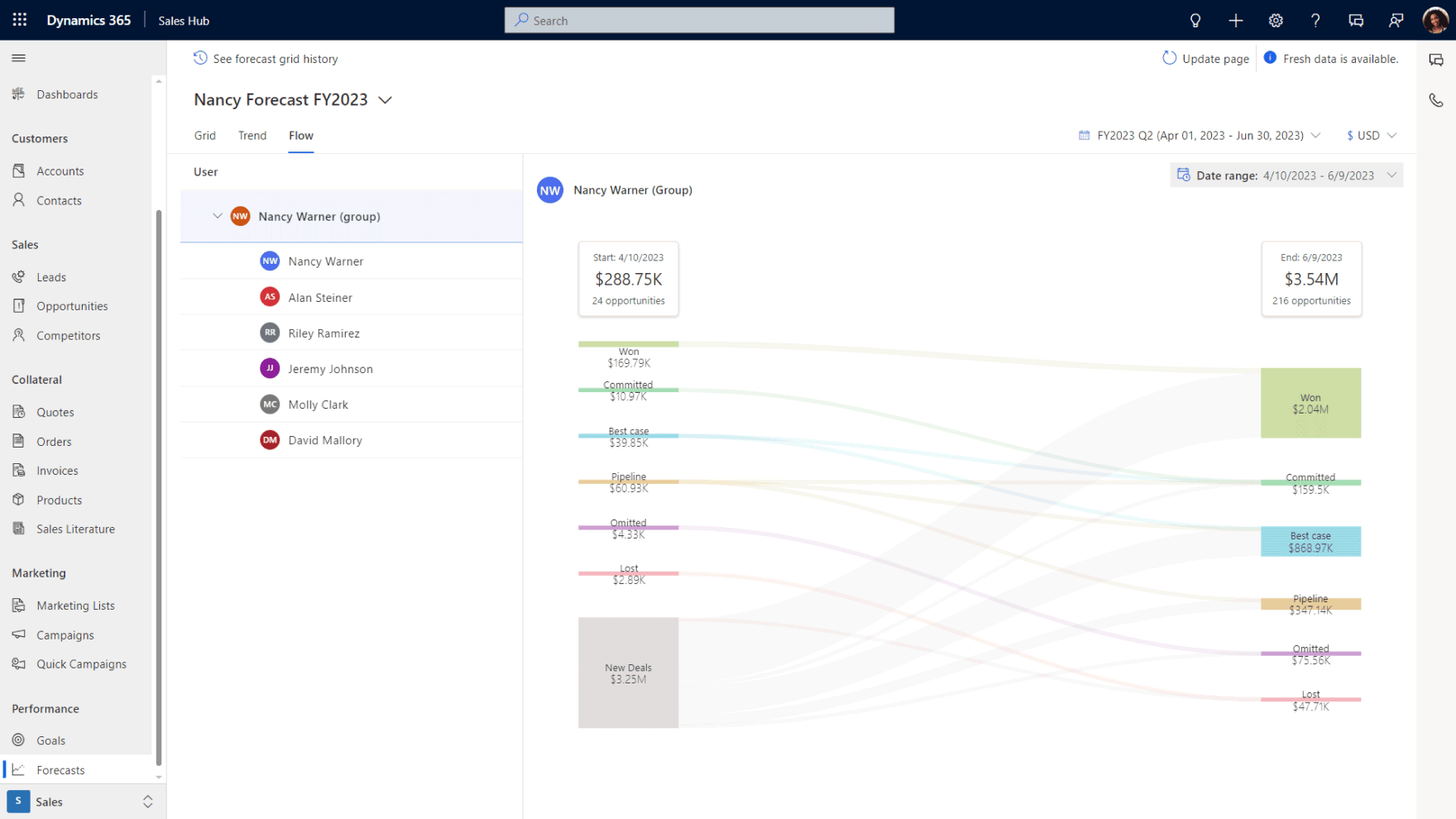
Accountability improves without anyone needing to micromanage. When pipeline stages are structured properly and data is consistent, it becomes obvious where deals stall or where processes break down and conversations shift from opinion to evidence.
How do you know when your business needs a CRM specialist?
For most companies, the need becomes obvious through friction as they enter a new phase of growth.
If your sales team has expanded, your marketing activity has increased, or you’ve added new services, your CRM structure needs to evolve with you. What worked when you had three sales reps often breaks down when you have ten. Pipelines become cluttered and leads are harder to track, with some starting to fall through the cracks. Workflows that once felt efficient start slowing people down and meaningful reporting becomes harder.
Another signal is decision hesitation. If you have to pull numbers manually when leadership asks, or even worse, you have no idea where to find them, your system isn’t serving you properly. A CRM should make performance clearly visible without last-minute scrambling to build spreadsheets.
You may also notice inconsistency creeping in. Data fields are optional when they shouldn’t be, and opportunities are categorised in slightly different ways by different teams. Over time, that inconsistency makes trend analysis unreliable, even if the data technically exists.
There’s also the question of underutilisation. If you’re paying for a sophisticated platform like Microsoft Dynamics 365 but only using it to track contacts and deals, you’re not getting the return you should be. At this point, the issue isn’t the software. It’s the lack of structured oversight by a CRM specialist.
Not sure if your CRM is working as hard as it should?
If you’re noticing friction, inconsistent reporting or feel you’re simply not using the full capability of your CRM, it may be time for a structured review. A short conversation can often reveal where small changes would make a measurable difference.
 Free discovery call
Do you need a full-time CRM specialist, or can you outsource?
Once you’ve recognised that your CRM needs active ownership, the next question becomes practical.
Do you hire someone internally, or do you bring in external expertise?
For larger organisations with complex internal systems and multiple departments relying heavily on the CRM every day, a full-time CRM specialist can make sense. There may be ongoing configuration work, cross-department coordination and continuous optimisation that justify a dedicated in-house role.
But for many small and mid-sized businesses, the workload doesn’t always require a full-time hire.
CRM systems typically go through cycles. There’s an initial phase of setup or restructuring, followed by refinement, and then ongoing monitoring and optimisation. The need is consistent, but not always at 40 hours per week.
That’s where outsourcing can be both practical and cost-effective.
An outsourced CRM specialist brings experience from multiple implementations and industries. They can identify structural issues quickly, recommend improvements based on proven patterns, and avoid the trial-and-error phase that often comes with hiring someone new internally.
As your business grows or changes direction, the level of support can scale accordingly. You’re not locked into a single skill set or dependent on one internal resource. Instead, you gain access to specialised knowledge when you need it, without carrying the fixed cost of a full-time salary.
The right choice depends on the complexity of your business, the size of your team and how central the CRM system is to daily operations.
What to look for when hiring a CRM specialist in Canada
Not all CRM specialists operate at the same level. Some focus purely on technical administration, for example, managing user permissions, updating fields and maintaining basic workflows. Others take a more strategic role, aligning the CRM structure with sales targets, marketing performance and long-term growth plans of the company. The best CRM specialists will build tailored solutions that reflect the specific needs of your business.
If you’re hiring, the first thing to clarify is the level of ownership you actually need.
Look for someone who understands business processes, not just software features. A strong CRM specialist should be able to explain how a pipeline structure impacts forecasting, how automation influences response time, and how data quality affects strategic decisions.
Experience with your specific platform also matters. Microsoft Dynamics 365, for example, offers deep configurability and integration capabilities. That flexibility is powerful, but it also means the system can become unnecessarily complex if it’s not designed carefully. A CRM specialist should understand not only how to configure the platform, but when to simplify it for even better outcomes.
You should also expect structured thinking. A capable CRM specialist will ask questions about your sales cycle, qualification criteria, reporting needs and growth plans before proposing changes. They won’t immediately suggest new tools or features without understanding how your team actually works.
Finally, consider accountability. Whether internal or external, a CRM specialist should take responsibility, not just to “manage the system”, but to ensure the system supports measurable business performance.
In Canada, where many small and mid-sized businesses are scaling quickly, hiring someone who combines technical expertise with commercial awareness makes a significant difference.

Why Microsoft Dynamics 365 CRM benefits from dedicated CRM specialist
Microsoft Dynamics 365 CRM is a powerful, multi-faceted business platform that brings sales, marketing, customer service and data insights together under one roof. It goes beyond merely storing customer information to helping teams understand behaviours, predict outcomes and optimise how they engage with prospects and customers.
That capability is undeniably valuable but it also introduces some complexity.
Unlike simpler plug-and-play CRMs, Dynamics 365 is deeply configurable. You can build tailored sales processes, integrate advanced analytics, unify customer service workflows and connect with broader business apps like Outlook, Teams and Power BI. Those capabilities are part of its strength and also the reason expert oversight matters.
A dedicated CRM specialist doesn’t just turn on software features. They make sure you’re using the right features for your business goals.
For example:
- Dynamics 365’s AI-driven insights can surface trends only if the underlying data is structured and complete.
- Automated sales processes and predictive forecasting can save time, but poorly aligned configurations can generate confusion instead of clarity.
- Customer service and marketing modules are only as effective as the workflows and segmentation strategies that tie them all together.
In other words, Dynamics 365 has capabilities that can create significant advantages, but only if the system is configured in a way that aligns with how your organisation actually operates. A generalist might set up basic fields and forms whereas a specialist understands how forecast models should reflect your sales motion, how automated actions affect user behaviour, and how to tailor dashboards so leadership can see everything that matters in one place easily.
What that expertise yields in practice looks less like “another admin task” and more like:
- Sales teams that spend more time actually making sales.
- Marketing that can confidently measure campaign impact against revenue.
- Service teams that respond faster because information is clearly connected and understandable.
- Leadership that can make decisions because they don’t have to assemble data from multiple systems.
This is why businesses that invest in Dynamics 365 with specialist oversight see measurable returns on their investment. When it’s thoughtfully configured and actively managed, it becomes a connected system that supports better decision-making across the organisation and gives teams the clarity they need to operate confidently.
Make your CRM work the way it was designed to
Microsoft Dynamics 365 is a powerful platform, but its impact depends on how it’s configured and managed. If you want your CRM to support forecasting, automation and smarter decision-making, expert oversight makes all the difference. Let’s talk about how your system is currently structured and where it can be strengthened.
 Free discovery call
Why choose Gestisoft as your CRM specialist?
If you’ve read this far, you already understand that a CRM system doesn’t create value on its own. The value comes from how it’s aligned with your business and how it’s managed.
Gestisoft works specifically with Microsoft Dynamics 365 CRM. Not just at the implementation stage, but throughout the lifecycle of the system. That includes configuration, optimisation, process alignment and ongoing oversight as your business evolves.
Dynamics 365 is powerful precisely because it can adapt to complex sales processes, detailed reporting requirements and multi-department workflows. Decisions made early in configuration affect forecasting, automation logic, reporting accuracy and user adoption months or even years later. An experienced CRM specialist understands those downstream effects.
Gestisoft approaches CRM as a business system first and a software platform second. That means starting with how your organisation sells to and serves customers, and then structuring Dynamics 365 to support those realities rather than forcing your team to adapt to a generic template.
For growing Canadian businesses, the combination of technical expertise and commercial understanding makes the difference between simply “having a CRM” and actually using it as a strategic tool.
And that’s exactly what a CRM specialist is meant to deliver.
-
A CRM specialist manages and optimises a company’s customer relationship management system so it supports sales, marketing and operational goals. Their role goes beyond technical setup. They structure pipelines, refine automation, ensure data accuracy and align reporting with business performance. The goal is to turn the CRM into a reliable decision-making tool rather than just a database.
Liked what you just read? Sharing is caring.

February 17, 2026 by Shelley Sunjka by Shelley Sunjka Copywriter & Marketing Strategist
Armed with a psychology degree and an irrational obsession with okapis, I've spent the last decade helping bold brands tell better stories. I believe the best writing bends grammar rules on purpose and makes people feel something. When I'm not deep in words or nerding out on buyer behaviour, I'm probably convincing my kids that impromptu kitchen dance parties are totally normal.
