

Three members whose credentials lapsed two months ago are still showing as compliant in your system and your registrar caught it during a manual audit, but only because she ran the report a week early.
The CRM for professional associations features that are most useful prevent that exact scenario, and when they fail it's because the feature that looked functional during evaluation doesn't operate at the level your regulatory obligations demand.
A CRM for professional associations that tracks compliance but doesn't enforce it won't protect a regulatory body when compliance reports need to be issued. That gap between what the software records and what it does with the information is where most associations get burned, and it's almost impossible to spot during a vendor demo because nobody thinks to test for it.
The membership management software features your association depends on daily deserve harder questions during evaluation than most vendors are ready for.
CRM for professional associations features should be tested with your data during the demo
Gestisoft helps Canadian regulatory bodies build an evaluation framework that exposes platform gaps before a contract is signed.
 Book a free consultation
CRM for professional associations features for compliance enforcement and what to ask the vendor
During the demo, the vendor will open a member record and show you a compliance status field that will say "compliant." It looks clean and functional and exactly like what your team needs but what you're looking at is a field someone on their team set manually ten minutes before you walked into the room.
The field itself is not the feature. The feature is what happens to that field when circumstances change with a member. Ask the vendor to walk you through what happens when a member's CE deadline passes without completion.
If the vendor can demonstrate the sequence using configurable rules inside the platform, the compliance enforcement is built into the architecture. If the answer involves the phrase "we can configure that" or "that would require custom development," you're looking at a platform that stores compliance data and leaves enforcement to your staff.
The difference in cost between those two answers compounds fast. Custom compliance configuration for a professional association typically runs upward of $50,000, and the build needs rework every time your provincial legislation changes or your membership model expands. The CRM for professional associations challenges that hit hardest after go-live almost always start with enforcement gaps the association didn't catch during evaluation.
The same enforcement logic extends into complaints, investigation, and discipline workflows. A disciplinary proceeding that reaches a stage requiring member notification should generate that communication automatically with the full procedural history attached to the record. If your team is manually drafting those notifications and filing the documentation separately, the CRM is creating administrative work.
CRM for professional associations features for CE tracking that connects to renewal workflows
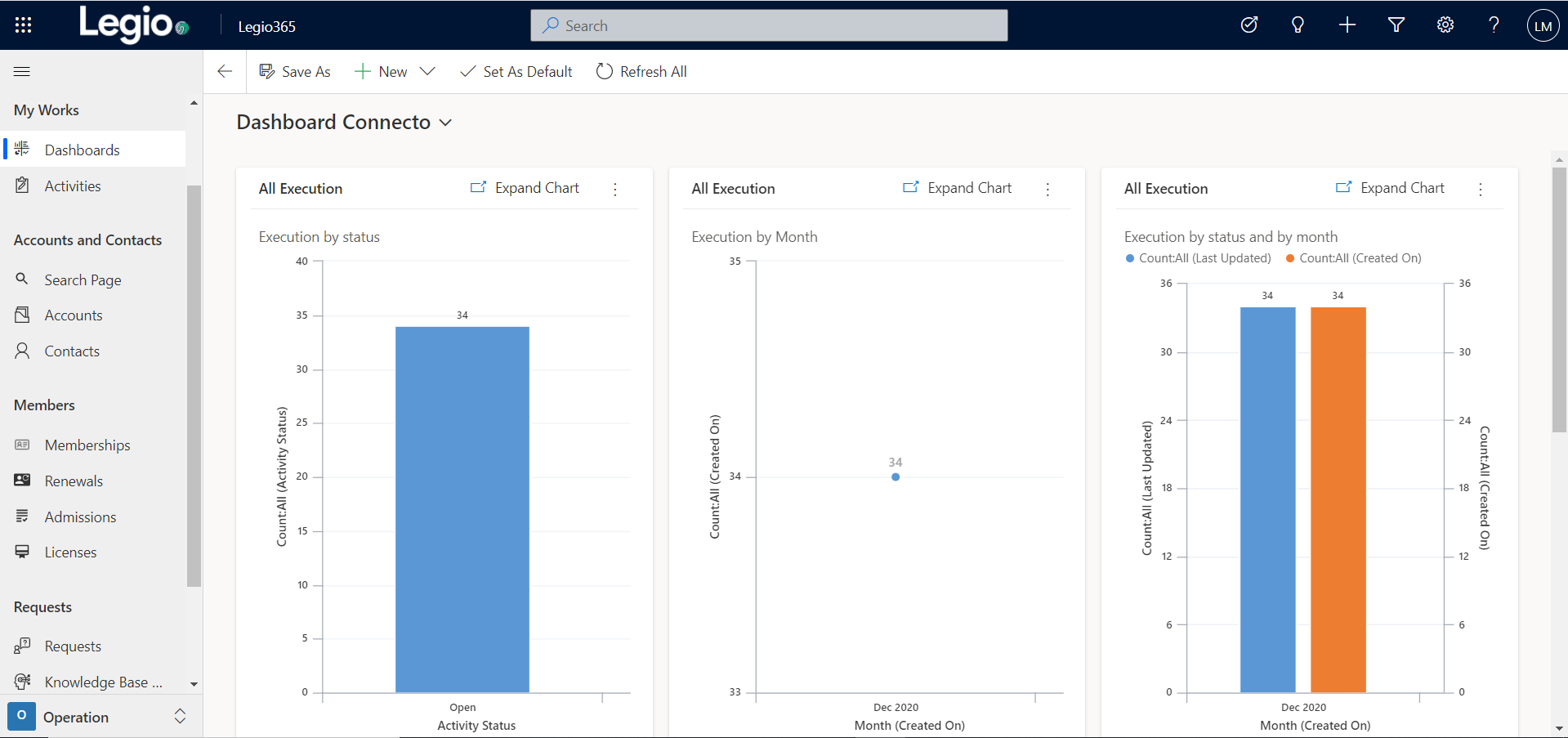
Most platforms will show you a CE credit tracking module where staff log credits against a member record. Credits appear on the profile and the demo shows you a report with completion percentages, so you think it’s one of the best AMS tools. What the demo skips is the moment a member hits their renewal date with only 14 of 20 required credits completed.
Ask the vendor to show you what happens in that circumstance.
- Does the system flag the gap automatically?
- Does the renewal pathway adjust based on outstanding credits?
- Can the member see their own progress, upcoming deadlines, and exactly what they need to complete through the portal without your staff generating individual reports and emailing them?
When CE completion and renewal operate as connected workflows, incomplete credits create a conditional hold the member resolves through self-service. Your staff never cross-reference a CE spreadsheet against the renewal list because the platform handles that connection natively. The CRM for professional associations benefits that show up fastest in real operations tend to come from exactly this kind of integration, where two workflows that should have been connected stop requiring a human in the middle.
The Sequence Consulting 2026 Association Trends Report identifies credential programmes as scalable revenue generators alongside membership dues. That revenue potential depends on CE tracking that functions as an operational programme the platform manages end to end. Continuing education as a growth accelerator for regulatory bodies only works when the tracking connects directly to the renewal cycle.
CRM for professional associations features for bilingual member portals and communications
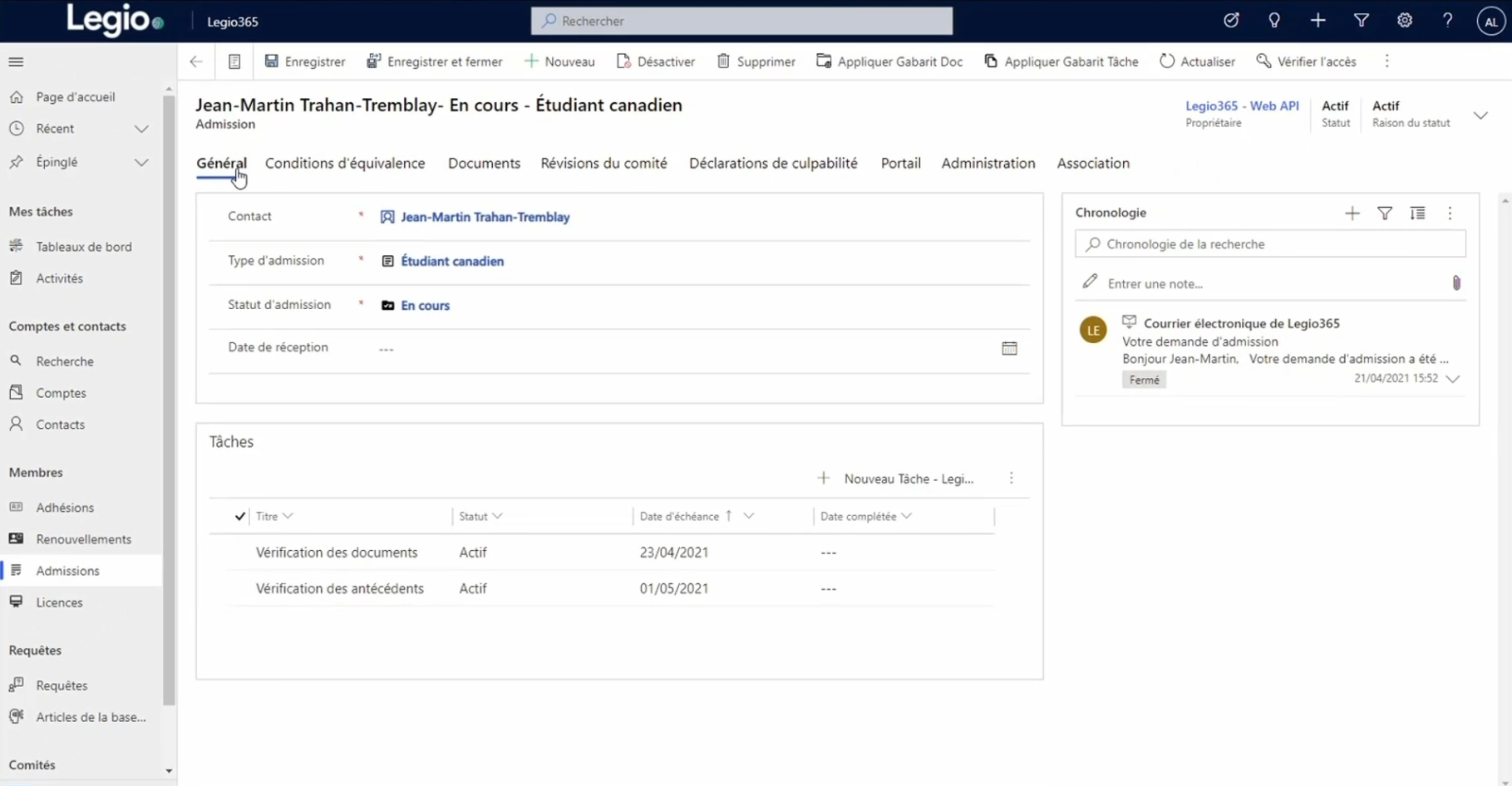
The simplest way to verify bilingual capability is to refuse the English demo entirely. Ask the vendor to run a complete member journey in French, from application through admission, renewal, CE tracking, and portal access. Watch what happens to the automated communications and check whether governance reports generate in French or require a workaround. A Canadian CRM vendor who has built bilingual capability natively will handle that request without hesitation.
Quebec's Law 25 pushes the verification deeper than language preference. How the platform collects consent, processes data requests, and handles privacy notifications in French all fall under provincial legislation, and data security for regulatory bodies under PIPEDA applies to how member data is collected and stored in both languages. Test those during the demo alongside the member-facing experience, because a portal that runs in French while the consent management defaults to English is a compliance gap your association owns the moment it goes live.
CRM for professional associations features should hold up in French as well as they do in English
Gestisoft can run your evaluation scenarios in both official languages so your Quebec members get the same experience from day one.
 Book a free consultation
CRM for professional associations features for governance reporting and regulatory accountability
Bring your most recent board report package to the demo and ask the vendor to produce it from the platform. Put the document on the table and ask them to show you where each number comes from.
A platform with governance reporting built into the architecture will pull those figures from the same data source that runs your renewals and compliance tracking. The numbers are current because they refresh on a schedule, and your executive director can drill into any figure during a board meeting using an embedded analytics and dashboards layer without asking someone to run a separate query.
If producing your board package requires Excel exports, manual formatting, or custom report development scoped as a separate project, the reporting feature won’t reduce the preparation time your staff currently absorbs before every meeting.
Canadian professional associations that report to provincial regulators at defined intervals on specific metrics need the CRM to produce those regulatory reports from the same system that generates internal board reports. Maintaining two reporting processes is exactly the kind of duplication that a well-configured membership management software platform eliminates on day one.

CRM for professional associations features for member lifecycle data architecture
All the other CRM for professional associations features on your evaluation list depend on the data model underneath it. Compliance enforcement, CE tracking, governance reporting, bilingual portals all run on top of how the platform structures member records and the relationships between them. Ask the vendor to build your hardest membership scenario in the demo environment while you watch.
If the vendor creates that structure through configuration settings, the data model was designed for professional association complexity. If it requires custom development or can't be demonstrated live, the architecture underneath was built for flat contact records and adapted for associations afterward. That adaptation is the root of the AMS CRM divide that forces so many associations into running two systems because neither one can hold the full picture alone.
A data architecture that handles 500 members with two membership tiers adequately may buckle at 2,500 members with five tiers and conditional renewal pathways between them. Ask the vendor for references from associations at the scale you expect to reach in five years, because rebuilding a data model after the platform is live costs significantly more than choosing the right one during membership management software selection. Every workaround layered on top of an undersized architecture introduces fragility that compounds.

CRM for professional associations features for Microsoft ecosystem integration
Most Canadian associations already run Outlook, Teams, and Power BI daily. The CRM for professional associations features that determine staff adoption are the ones that connect to those tools without asking your team to log activities manually in a separate system. Ask the vendor directly
- When a staff member sends an email to a member from Outlook, does that email automatically appear on the member's CRM record?
- When a Teams meeting is scheduled, does the CRM update?
- Can a board member open a Power BI dashboard on their phone and see current renewal projections without logging into the CRM at all?
If the integration is bidirectional and automatic, staff work inside the tools they already know and the CRM captures the data behind them. A CRM implementation consultant who configures that integration properly during deployment is what makes the difference between a system your staff adopts and one they treat as an obligation.
If the integration requires a third-party connector, a paid add-on, or manual activity logging, your CRM data will be incomplete within weeks because staff will default to the Microsoft tools they've used for years and stop updating the CRM separately. Associations running AMS software that sits outside the Microsoft ecosystem already know what that data gap looks like, and the CRM for professional associations features that prevent it are the ones built on the same platform your team already works in.
CRM for professional associations features verified during evaluation prevent problems that surface after launch
Gestisoft runs evaluation scenarios using your data so every feature claim is tested before your association commits.
 Book a free consultation
How Legio delivers CRM for professional associations features Canadian regulatory bodies evaluate most
The difference between implementing a product and commissioning a custom configuration is measured in months and budget. Associations that evaluate generic CRM platforms and then spend six months configuring compliance enforcement, CE-to-renewal connections, and governance reporting are paying to solve problems Legio solved years ago for regulatory bodies managing licensing and registration under provincial legislation. The CRM for professional associations features your evaluation team is verifying across multiple vendors are already running in production for Canadian associations managing thousands of members.
“Legio has allowed us to take a crucial step in our digital transformation. We have automated several processes, improved our data management, and increased efficiency.”
That production history is what changes the conversation with Gestisoft. Your association is not the pilot. The compliance cascades, the conditional renewal pathways, and the member portal architecture have all been tested under real operational pressure by regulatory bodies with real provincial reporting deadlines. When your evaluation team walks in with their hardest scenario, Gestisoft can demonstrate it with live data from an environment built for exactly that level of complexity rather than promising to build it after the contract is signed.
Gestisoft also covers both CRM and ERP under the same roof on Dynamics 365. When your association's member management platform needs to connect to financial reporting or dues reconciliation, that integration stays with one team who understands how both sides of the data relate to each other. Most implementation partners hand that work to a subcontractor, and the gap between those two teams is where timelines slip and configuration decisions get made by someone who wasn't in the room during discovery.
When your association is ready to verify CRM for professional associations features with your own data and scenarios, talk to Gestisoft about what that evaluation looks like for Canadian regulatory bodies.
-
Start with compliance enforcement. If the platform can't cascade status changes automatically when a credential lapses or a CE deadline passes, every other feature sits on top of a manual process your staff will be running indefinitely. Once enforcement is verified, test whether CE tracking connects to the renewal workflow natively and whether governance reporting produces board-ready analytics without an Excel export in between.
Liked what you just read? Sharing is caring.

June 08, 2026 by Shelley Sunjka by Shelley Sunjka Copywriter & Marketing Strategist
Armed with a psychology degree and an irrational obsession with okapis, I've spent the last decade helping bold brands tell better stories. I believe the best writing bends grammar rules on purpose and makes people feel something. When I'm not deep in words or nerding out on buyer behaviour, I'm probably convincing my kids that impromptu kitchen dance parties are totally normal.
