

Key Takeaways:
- Gestisoft, Umbrella Consulting, The Answer Company, Caron Business Solutions, Aqurus Solutions and BHC Group all deliver ERP consultant in British Columbia work from a BC base or into the province
- BC PST isn't a value-added tax, so a business pays it on its own equipment and supplies with no input credit to recover
- The production machinery and equipment exemption gets claimed by giving the supplier a FIN 492 certificate at the time of purchase
- That certificate has to be retained as audit support for four years, which makes it a records problem before it becomes a tax problem
- Manufacturers, loggers, mine operators, oil and gas producers and software developers each qualify under different tests
A business in Ontario or Alberta pays sales tax on its purchases and claims the credit back. A business in British Columbia does neither. BC PST falls outside the value-added system, so the 7% charged on a lathe, a forklift or a server is a cost the company absorbs unless it can prove an exemption applies.
That single difference changes what an ERP consultant in British Columbia has to build. The system has to hold exemption evidence against the purchase order and the item, then produce it years later when an auditor asks. Six firms deliver into this province, and each one gives a different answer to where that certificate goes and who keeps it findable four years on.
Get the Exemption Evidence Into the System
Gestisoft configures BC purchasing so the certificate stays attached to the transaction.
 Book a free consultation
Where each ERP consultant in British Columbia delivers
BC's ERP market runs from Burnaby and New Westminster out to Kelowna. Platform narrows the field faster than geography does, so what an ERP consultant in British Columbia builds on counts for more than its postcode. The wider field of top ERP systems in Canada runs past what any one province supports well.
1. Gestisoft
Gestisoft is a Microsoft Solutions Partner across Dynamics 365 Business Central and Dynamics 365 CRM, implementing ERP for Canadian businesses since 1997. BC delivery runs remotely from Montreal, Toronto, Ottawa and Quebec City.
Business Central handles document attachment natively at the purchase order and the item, which is the mechanism a PM&E claim needs. Dimensions carry the exemption test with the transaction, so the reporting comes off the same records that produced the purchase.
Four things separate the engagement for a BC manufacturer or distributor.
- Bilingual delivery in English and French, which counts for a BC business selling into Quebec
- Deployment into Azure's Canadian regions, so the records stay in the country
- Proprietary extensions built and maintained in-house for Canadian requirements
- One partner across the finance system and the CRM, so the customer record and the receivable share a data model
“The software is our working tool. With our previous solution, it was like having a stone hammer. We could accomplish our tasks, but the tool was outdated. With Business Central, if we decide to move into the Industrial 4.0 era, it’s possible. We now have an up-to-date solution that meets our needs.”
Gestisoft holds the Microsoft certification, does the build and stays on the account afterwards. The consultants who scope your BC exemption rules are still on the account in year three, which is the test any Business Central implementation partner should be held to.
Book a discovery call with Gestisoft and hear how a BC build holds exemption evidence.

2. Umbrella Consulting
Umbrella Consulting works from Burnaby, holding SYSPRO Elite Solutions Partner status and Acumatica Gold certification, with a team carrying over a hundred years of combined ERP experience. The practice is built around mid-market manufacturing and distribution, which is a narrower brief than most competitors work to.
SYSPRO is manufacturing-first by design, so bills of material, work orders, lot tracking and scheduling ship as the core product. That granularity is the same detail the PM&E exemption turns on, because it decides which parts of a plant fall inside the qualifying manufacturing site.
Umbrella sells both SYSPRO and Acumatica, so the platform recommendation waits until discovery is finished. The practice is deliberately boutique, which shapes what a BC buyer gets.
- Senior consultants on the project rather than a junior bench
- A narrow brief, so mid-market manufacturing and distribution get the depth
- A national multi-site rollout served less well than a single BC operation
Exempt status is held on the item master, so ask any ERP consultant in British Columbia who updates it when a production line moves.
3. The Answer Company
The Answer Company runs from a New Westminster head office with consultants across Canada, describing itself as the country's largest Acumatica practice. Its published figures are 30 years of trading, more than 60 ERP specialists and over 3,000 digital transformations.
Acumatica practice has joined Aktion Associates, announced on the company's own site, which is a material fact for a BC business signing this quarter.
Acquisitions change who owns the support relationship, and the role of ERP consultant named in your contract may not be the person answering the phone in year two.
Sector depth is the strength here. The Acumatica editions arrive pre-built for the industries BC runs on, so configuration starts further along than it would on a general build.
- Construction and real estate, with holdback management and Canadian payroll inside the edition
- Wholesale distribution, including custom SKU generation and mobile warehouse work
- Discrete and process manufacturing, with product configurator and MRP
- Field services, covering route optimisation and equipment maintenance
Acumatica holds document attachment natively, so the certificate can be filed against the purchase order here. The open question is who supports that configuration once the Aktion transition completes, and the answer belongs in writing before signature.
One Partner From Discovery to Year Three
Gestisoft keeps the same team on a BC account after go-live.
 Book a free consultation
4. Caron Business Solutions
Caron Business Solutions operates from West Vancouver and Lima, implementing Acumatica and Sage across mining, manufacturing, distribution and construction. The firm has been placing accounting and ERP systems for over 25 years.
Mining, and filing in two jurisdictions
Mining is the specialisation that separates this firm from every other ERP consultant in British Columbia. BC mine operators qualify for the PM&E exemption under their own bulletin, and this team has configured against it before, for named clients including Talisker Resources and Panoro Minerals.
The Lima office exists because Canadian mining companies run operations abroad and file in two jurisdictions. Exemption evidence gets harder to keep straight when one company files in two countries, and this team has answered that for its mining clients already.
That reach cuts both ways. A single-site BC distributor pays for capability it will never use, which an ERP pricing conversation should surface before the multi-entity modules reach the quote. Mining rules also sit in their own bulletin, so a manufacturer claiming under Part 5 should ask any ERP consultant in British Columbia to show the exemption configuration for its own test rather than an adjacent one.
5. Aqurus Solutions
Aqurus Solutions has been a Gold Certified Acumatica partner since 2010, with offices in Kelowna, Burnaby and Calgary. The practice concentrates on wholesale distribution, e-commerce and manufacturing across the Interior.
Kelowna is the reason to look here, since the Lower Mainland dominates this market and an ERP consultant in British Columbia with people in the Interior reaches the Okanagan and the Kootenays without a flight. Exemption configuration and retention rules are built in the system rather than in the room, so the geography matters most for the plant walks a manufacturer wants during discovery.
Delivery leans on templated implementations, which shortens the timeline and constrains how far the data model moves. What sits inside that template decides how much of the PST work is already done.
- Wholesale distribution and e-commerce are the core of the practice
- Manufacturing arrives through the Acumatica edition rather than a bespoke build
- Document attachment on purchasing either comes inside the template or gets priced as an extra
- Multi-site exemption rules, where a SKU is exempt in Prince George and taxable in Delta, sit outside most templates
Any best ERP software for distribution evaluation has to draw that line before the demos start, and an ERP consultant in British Columbia working to a template will say where it stops. Ask whether the template holds a certificate against the purchase order or expects it on a shared drive, since that answer decides who is looking for a FIN 492 in 2030.
6. BHC Group
BHC Group sells no software at all. The practice runs ERP evaluation, selection and implementation management for Vancouver clients, working the vendor side of the table on the buyer's behalf.
That independence is the reason to call, because a BC manufacturer weighing Acumatica against SYSPRO gets an argument from a firm with nothing riding on the answer.
- ERP evaluation and software selection run against a scorecard the buyer keeps
- Implementation management on the client side of the table
- Two engagements to budget for, since somebody else builds what gets chosen
- PM&E evidence handling either scores on that matrix or the implementer inherits it later
Independence costs time and buys objectivity, which is the trade a BC board weighs when it hires an ERP consultant in British Columbia to choose the platform and someone else to build it.
Knowing the types of ERP software in play narrows the brief before the first meeting.

Why does an ERP consultant in British Columbia have to understand PST?
BC left the HST in 2013 and went back to a standalone provincial sales tax. Every other province either harmonised with the federal system or, in Alberta's case, charges nothing at all.
So British Columbia is the outlier, and the consequence reaches into the purchasing module. An ERP consultant in British Columbia who treats PST as a rate on the sales side has understood half of it, because the bigger exposure is on what the business buys.
What PST does to a BC purchase order
Under a value-added system, tax paid on inputs comes back through the return. BC PST doesn't work that way, so an exemption missed at the moment of purchase is a cost the business never recovers.
On a $200,000 CNC machine the 7% is $14,000. On a $2 million equipment year it's $140,000 that either gets claimed or gets written off.
The buying process carries that consequence into ERP system accounting for every business in this province.
- Exemption status has to be settled before the purchase order goes out, since the supplier needs the certificate at or before the time of sale
- The claim attaches to the item and its use, so the same machine can qualify at one location and not at another
- Self-assessment applies to goods brought in from outside BC, which puts an obligation on the receiving side of the system
- Every claim needs documentation the business can produce on demand, filed against the transaction
Who qualifies for the PM&E exemption
Part 5 of the Provincial Sales Tax Exemption and Refund Regulation is the escape route. It's narrower than most buyers assume, and qualification turns on the activity, the site and the primary use of the equipment.
Five groups qualify under their own tests, each with its own bulletin and its own boundary.
- Manufacturers, where the exemption covers the qualifying part of the manufacturing site and begins at the point raw material is first received
- Loggers and mine operators, who work to separate rules in their own industry bulletins
- Oil and gas producers, covered under a further bulletin again
- Software developers, who qualify where development spending or sales pass a threshold
- Service providers to those industries, claiming on equipment used for an exempt purpose on a client's behalf
General office equipment stays taxable throughout, even for a business whose production line is fully exempt. Basic clean-up equipment in a manufacturing plant stays taxable too.
Getting that boundary wrong in the item master is the first thing to raise with an ERP consultant in British Columbia. A proper ERP software selection process surfaces it before contracts get signed.
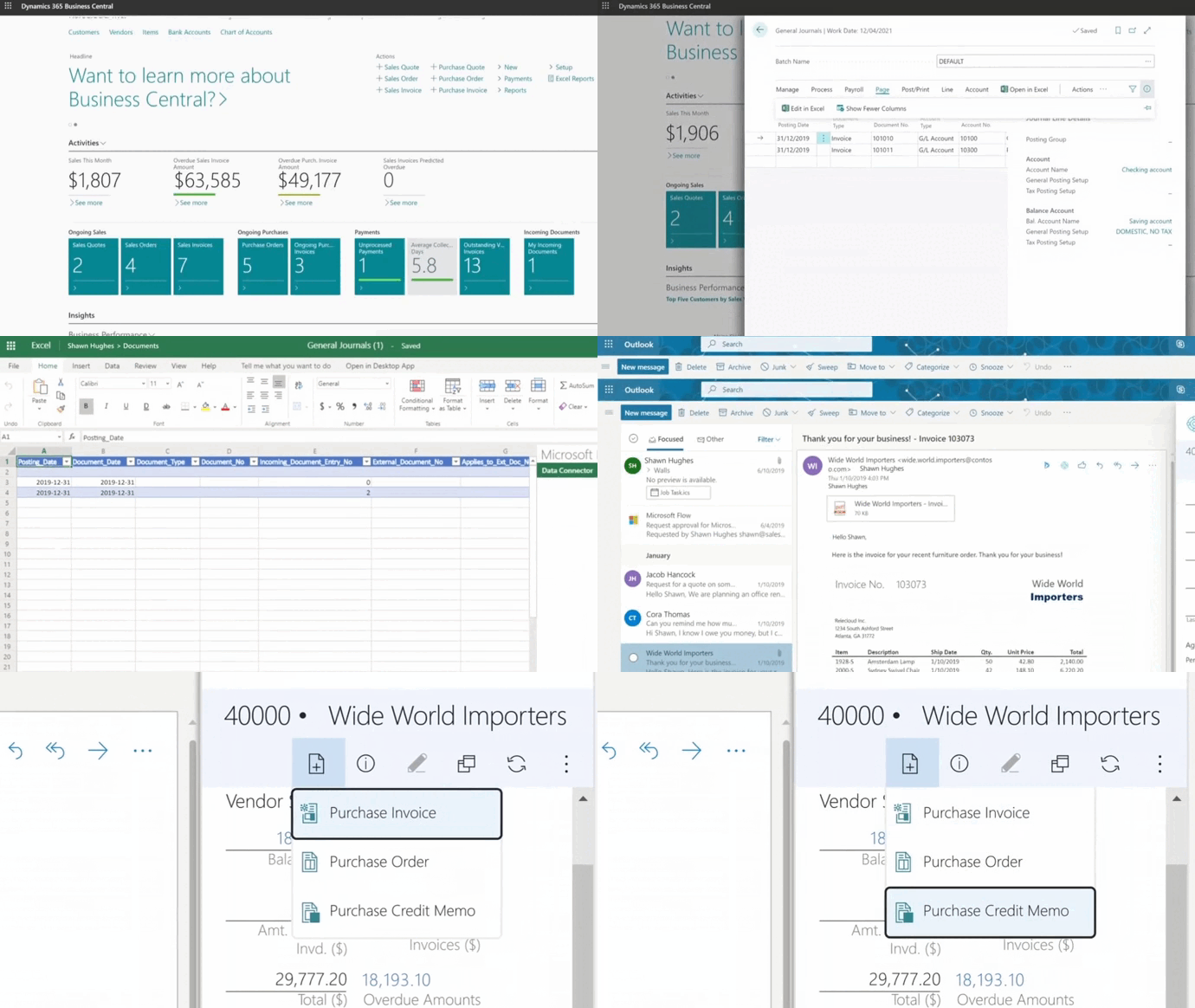
What an ERP consultant in British Columbia builds around the FIN 492 certificate
A buyer claims it by handing the supplier a completed Certificate of Exemption for Production Machinery and Equipment, known as FIN 492, no later than the sale itself. Both sides file a copy afterwards, and the purchaser holds onto it for four years.
That retention window turns a tax problem into a system one. A certificate signed today has to be findable in 2030, attached to the right purchase, by whoever holds the role then.
A scope document should name the capabilities that make retention survivable.
- Document attachment at the purchase order and item level, so the certificate travels with the transaction and never depends on a shared drive
- A flag on the item master recording exempt status and the test it was claimed under
- Retention rules that hold supporting documents past the four-year mark without anyone remembering to
- A report listing every exempt purchase in a period with its certificate attached, which is what an ERP consultant in British Columbia should be able to demonstrate on request
An ERP consultancy services conversation should cover each of those before a quote arrives, since retrofitting document handling onto a live purchasing module is its own project.
Where the boundary falls
Bulletin PST 110 was revised to clarify the qualifying part of a manufacturing site and to bring hydrogen and clean energy generation inside the exemption. Rules that move are rules a system has to follow.
The detail is where the exemption gets decided. A packaging step qualifies when it's combined with manufacturing at a qualifying site, while machinery used primarily to install finished goods into real property doesn't qualify at all. Each of those is a configuration decision.
An ERP consultant in British Columbia who has read the bulletin settles them during discovery, and the ERP implementation challenges that surface eighteen months later trace back to the ones who hadn't.
How much does an ERP consultant in British Columbia cost?
One platform here publishes what it charges. Business Central pricing for Canada has run at CAD $108.50 per user per month for Essentials and CAD $149.20 for Premium since 1 November 2025, with Team Members at CAD $10.90. Acumatica, SYSPRO and Sage all quote, so those numbers come out of a sales conversation.
Services carry most of the budget for an ERP consultant in British Columbia. A defined finance-and-purchasing scope for a BC SMB costs well under a mid-market build carrying manufacturing modules and migration off a legacy system, which runs $75,000 to $200,000 CAD or more. Support afterwards costs 15% to 25% of the implementation number each year.
Two things push a BC number up specifically.
- Multi-site operations, since a manufacturer with a plant in Prince George and a warehouse in Delta configures exemption rules that differ by location
- Travel, because a Lower Mainland consultant reaching Terrace or Fort St John charges for the day either way
Business Central implementation cost separates the licence from the services, and holding every other quote to that same split is what makes them comparable.
What to settle before an ERP consultant in British Columbia starts
Some decisions can be revisited later. These five can't, because everything built afterwards inherits them. An ERP consultant in British Columbia should settle each one in discovery.
- Which sites and which activities qualify for the PM&E exemption, documented before the item master gets built
- Where exemption certificates are stored and how they attach to the transaction
- Retention rules covering the four-year audit window, switched on at go-live and left running
- Self-assessment handling for goods brought into BC from outside the province, configured on the receiving side
- Who owns the item master after go-live and reviews exempt status when a plant layout changes
Settling those adds discovery time and removes considerably more from every phase afterwards. The ERP implementation phase that suits a BC business puts a working system in place before capability gets added, and the sorting work in an ERP system migration plan decides what the new system inherits.
Your Auditor Will Ask in 2030
Gestisoft builds BC retention rules before the first purchase order goes out.
 Book a free consultation
How Gestisoft works as an ERP consultant in British Columbia
Gestisoft scopes the BC engagement around the purchasing module, because that's where the 7% lands. The exemption flags and the certificate attachment points get configured before the first purchase order goes out, so a BC manufacturer is claiming from the moment the system is live. Retention rules follow on the same timeline.
Gestisoft builds those exemption positions into Business Central's dimension structure during discovery, tagging each item to its qualifying test under the relevant bulletin. A plant in Surrey and a warehouse in Prince George can carry different exempt statuses on the same SKU, and Gestisoft configures that distinction at the item-location level so the purchasing team doesn't have to remember it.
Gestisoft writes and maintains Canadian extensions where the standard product stops, so a BC business asking for retention automation or certificate reporting gets it from the team that will support it in year four.
A Business Central specialist from Gestisoft handles the PST configuration and stays on the account afterwards through a dedicated Customer Success Manager. That handover is when the exemption questions arrive from purchasing staff who weren't in the discovery workshops.
“Gestisoft had a knack for finding creative solutions. It wasn't easy, but the team never gave up and always managed to come up with solutions while trying to reduce costs as much as possible and bearing in mind the solution ecosystem's durability.”
Gestisoft runs Dynamics 365 Business Central consulting and the CRM practice under one roof, so a BC manufacturer selling exempt goods gets the customer record and the exemption position configured against one data model. The four-year retention window on a FIN 492 is a records problem the system has to outlast, and an ERP consultant in British Columbia who has built Canadian purchasing configurations for that long already knows which ones survive an audit.
-
Gestisoft suits BC businesses already on Microsoft 365, since finance and operations share one licence and the Canadian localisation is mature. Umbrella Consulting fits mid-market manufacturers on SYSPRO. Caron Business Solutions covers mining. The best ERP consultant in British Columbia follows from your platform and your industry.
Liked what you just read? Sharing is caring.

September 11, 2026 by Shelley Sunjka by Shelley Sunjka Copywriter & Marketing Strategist
Armed with a psychology degree and an irrational obsession with okapis, I've spent the last decade helping bold brands tell better stories. I believe the best writing bends grammar rules on purpose and makes people feel something. When I'm not deep in words or nerding out on buyer behaviour, I'm probably convincing my kids that impromptu kitchen dance parties are totally normal.
