

ERP integrators are the partners who make your ERP talk to the rest of your systems, and the choice you make here will decide whether Business Central becomes your engine or your bottleneck.
When integration goes well, orders flow cleanly, inventory is accurate, finance trusts the numbers, and teams stop living in spreadsheets. When it goes badly, you see double entry, broken reports, and "temporary" workarounds that never go away.
This guide walks through the top ten players, how they differ, and what to look for when it's time to pick your integration partner.
Talk To An ERP Integration Specialist
Get clear, practical advice on how to connect your systems, reduce project risk, and get value from your ERP faster.
 Free discovery call
Top 10 ERP Integrators in Canada
Before you compare proposals, it helps to know who's active in the market and what type of work each one is best at. This list focuses on ERP integrators who can handle the technical reality of connecting Business Central and other major systems to the rest of your business operations.
1. Gestisoft

Gestisoft focuses on Microsoft Dynamics 365 Business Central and the wider Microsoft stack. The team helps growing organisations connect Business Central with CRM, e-commerce sites, manufacturing systems, and reporting tools, so data flows in one version of the truth.
They bring strong change management, bilingual delivery, and long-term support plans instead of "install and disappear" projects. For companies that see Business Central as their central platform, Gestisoft acts as the integration partner that understands both the software and the day-to-day reality.
2. Namtek Consulting Services

Namtek Consulting Services specialises in Oracle NetSuite and helps mid-market organisations connect their cloud ERP with e-commerce, CRM, and warehouse systems. Their team works across retail, wholesale, and distribution sectors where inventory accuracy and order automation drive real business value.
Namtek often steps in when companies are scaling fast and need structured integration work to handle growing transaction volumes without hiring more people to manually transfer data. They are a strong fit if NetSuite is your ERP and you need partners who understand both the platform and practical business constraints.
3. Vision33

Vision33 is known for its work with SAP Business One and SAP S/4HANA, along with other mid-market solutions like Sage Intacct. They focus on end-to-end business processes, connecting ERP with shop floor systems, customer portals, and analytics tools. Many of their projects involve manufacturers and distributors that have grown through mergers and now run multiple systems.
Vision33 is a strong option when SAP is your centre of gravity and you need structured integration work to get consistent reporting and better process visibility across locations.
4. Britec Computer Systems

Britec Computer Systems works mainly with Sage and Acumatica in small and mid-sized organisations. They help companies link ERP with point-of-sale systems, inventory tools, and custom line-of-business apps. Britec often steps in when a business has outgrown entry-level accounting software but still needs practical, budget-aware guidance.
If you use Sage 300, Acumatica, or related tools and want to replace manual rekeying with automated flows, Britec can be a grounded partner that understands both the technology and the constraints of a lean internal team.
5. Clarkston Consulting

Clarkston Consulting works with enterprise ERPs like SAP and Oracle, focusing on life sciences, consumer products, and retail sectors. Their integration projects often involve complex regulatory requirements, serialization, traceability, and multi-country operations.
Clarkston brings deep industry process knowledge alongside technical integration skills, so they can map how compliance, quality, and supply chain systems should connect to the ERP. They are a fit when you operate in a regulated industry and need ERP integrators who understand both the technical and compliance side of data flows.
6. Pemeco Consulting

Pemeco Consulting is an independent ERP advisory and implementation firm with experience across Infor, Epicor, and other complex ERP environments. They focus on process design, system selection, and then integration work to tie new ERPs into existing operational systems.
Pemeco's projects often involve manufacturers and distributors with long histories, custom processes, and legacy tools that cannot simply be switched off. They are a fit when you need help untangling a multi-system landscape and want an advisor who isn't tied to a single ERP vendor.
7. Confianz

Confianz specialises in Odoo ERP implementation and customization for small and mid-sized businesses. Their team connects Odoo with e-commerce platforms, payment gateways, shipping providers, and third-party apps to create unified workflows.
Confianz often works with organisations that want open-source flexibility and need integration support without enterprise-level budgets. They suit companies that have chosen Odoo and want a partner who can adapt the platform and its integrations to their specific operational needs without forcing them into rigid templates.
8. ScienceSoft

ScienceSoft is a global IT consultancy that designs custom software and integrates ERPs such as SAP and Oracle with other business systems. They often work in industries with strict compliance or security needs, including healthcare, oil and gas, and logistics.
Their integration projects can span on-premise and cloud infrastructure, and connect ERPs with bespoke applications and data platforms. ScienceSoft is a good choice when you have unique operational requirements and need ERP integrators comfortable with custom development as well as off-the-shelf tools.
9. Gurus Solutions

Gurus Solutions specialises in Oracle NetSuite and cloud integration projects. They help organisations connect NetSuite to Salesforce, e-commerce platforms, warehouse systems, and third-party logistics providers. Their team often works in fast-growth environments where order volumes are rising and manual processes can't keep up.
Gurus Solutions is a good fit if NetSuite is your core ERP and you need experienced ERP integrators to stabilise and scale the data flows between finance, operations, and sales without building a fragile web of custom scripts.
10. OpenText

OpenText is a big player in the market. It offers platforms and services that connect ERP systems like SAP and Oracle to trading partners, EDI networks, and complex B2B environments. Their projects often involve high transaction volumes, strict service level agreements, and global supply chains.
OpenText can be a strong partner if your main challenge is orchestrating data flows between your ERP and hundreds or thousands of external parties. It's best suited to larger organisations with heavy B2B integration requirements.
This quick demo shows Business Central in practice…
How ERP Integrators Help Your Business Central System Work
Understanding the list matters, but what really counts is knowing how these partners operate once they join your team and start mapping your systems.
What ERP Integrators Actually Do Beyond Setup
Most people first meet ERP integrators when the ERP is being implemented or replaced. But their real value shows up once you connect that ERP to the rest of your stack. When you're evaluating ERP implementation cost, remember that integration often represents a meaningful portion of the total investment and directly affects how much value you extract from the platform.
They map how orders, inventory, payments, and customer data should move between systems. Then they design and build the data flows, error handling, and monitoring so those processes keep working when volumes go up or a team changes how it works.
Why ERP Integrators Matter So Much With Business Central
Business Central is flexible... That is a strength, but it can also tempt teams into bending the ERP to do things it should not. When that happens, you end up with a system that works today but becomes a nightmare to upgrade, support, or scale.
Good ERP integrators stop that from happening. Instead of hacking the core ERP to force it to behave like a CRM, a warehouse system, or a custom quoting tool, they use integrations and the Microsoft ecosystem to keep Business Central clean. That means using integrations to connect sales, operations, and finance, while using tools like Power Platform for workflows and light apps that sit around the ERP instead of inside it.
The result is a Business Central instance that still gets updates, still performs well, and still makes sense to the next person who has to support it.
How To Choose ERP Integrators When You Run Business Central
Once you know what these partners actually do, the next step is deciding who should work with you. The process feels similar to choosing ERP consulting companies, but the emphasis shifts from strategy to execution and ongoing technical reliability.
Key Questions To Ask ERP Integrators In Your First Call
A first conversation tells you more than a glossy proposal. Here are the questions that separate serious partners from generalists:
About their Business Central experience:
How many Business Central projects have you integrated in the past two years, and which systems did you connect?
About support and ownership:
When something breaks at two in the morning, who gets the alert and what happens next?
About knowledge transfer:
How will you document our integrations so that we are not dependent on a single consultant if they move on?
About tools and flexibility:
Do you work with multiple integration platforms, or are you locked into one vendor? Can you explain why you would choose one approach over another for our situation?
Red Flags That Suggest An ERP Integrator Isn't The Right Fit
Some warning signs are subtle, but they matter:
- They only talk about their favourite tool and never ask about your processes. Expect trouble when reality doesn't fit their template.
- They gloss over data quality. Your finance and operations teams will end up fixing messes by hand instead of trusting the system.
- They cannot explain how upgrades work. Business Central updates regularly. If your partner cannot describe how they handle breaking changes, your integrations may work today but fail after the first major update.
They avoid talking about what went wrong in past projects. Ask them for a story about a project that went sideways and what they did to fix it. If they claim everything always goes perfectly, they are either inexperienced or dishonest.
Choose The Right ERP With Confidence
Download our guide on 10 key ERP selection criteria so you can compare options, avoid costly mistakes, and pick a system that truly fits your business.

Common Mistakes Companies Make With ERP Integrators
Most organisations working with integration specialists for the first time make predictable missteps that cost time and trust. Knowing what typically goes wrong helps you plan better and set clearer expectations from the start.
Treating ERP Integrators Like One-Time Contractors
One of the most common mistakes is treating ERP integrators as if they are there for a quick build and then gone. Integration work is never finished. Your business adds new apps, launches new services, or changes pricing rules, and every change can affect data flows.
If you only budget for the initial build, you end up with an integration that slowly drifts away from how your business actually works, until people stop trusting it and fall back to manual work. The difference between working with a true integration partner and an ERP reseller who just moves boxes becomes painfully obvious six months after go-live.
Asking Partners To Customise Instead Of Integrate
When departments push for "just one more field" or "just one more screen" inside the ERP, it can feel faster to customise than to integrate. Over time, this creates a brittle, highly customised ERP that is painful to upgrade and hard to support.
A better pattern is to keep Business Central close to standard and let integrations and surrounding apps handle variations. Quality ERP consultancy services will push you toward this discipline, even when it feels uncomfortable in the short term. That way, you can still adapt to new needs without turning every change into a risky development project inside the ERP itself.
Ignoring Data Quality Until It's Too Late
Integration does not magically fix bad data. If your customer list has duplicates, your items have inconsistent codes, or your pricing rules live in someone's head, connecting systems will only expose those issues faster.
Many projects underestimate the effort needed to clean and standardise data before go-live. Some organisations attempt to solve this by bringing in vendor management software or other tools, but without clean master data, even the best tools deliver messy results.
The result is often angry users, wrong invoices, and dashboards nobody trusts. Strong ERP integrators push for data work early, even if it feels uncomfortable, because they know the pain of skipping it is always higher later.
-
An ERP integrator is a specialist partner that designs, builds, and maintains the connections between your ERP and other systems, such as CRM, e-commerce, WMS, and analytics tools. They focus on how data moves across your business, not just on installing the ERP itself. Good ERP integrators also set up monitoring and support so that the flows keep working as volumes grow and your organisation changes.
Why Gestisoft Is Different From Other ERP Integrators
After looking at the wider market, it helps to understand what makes one partner a better fit than another when Business Central is your ERP of choice.
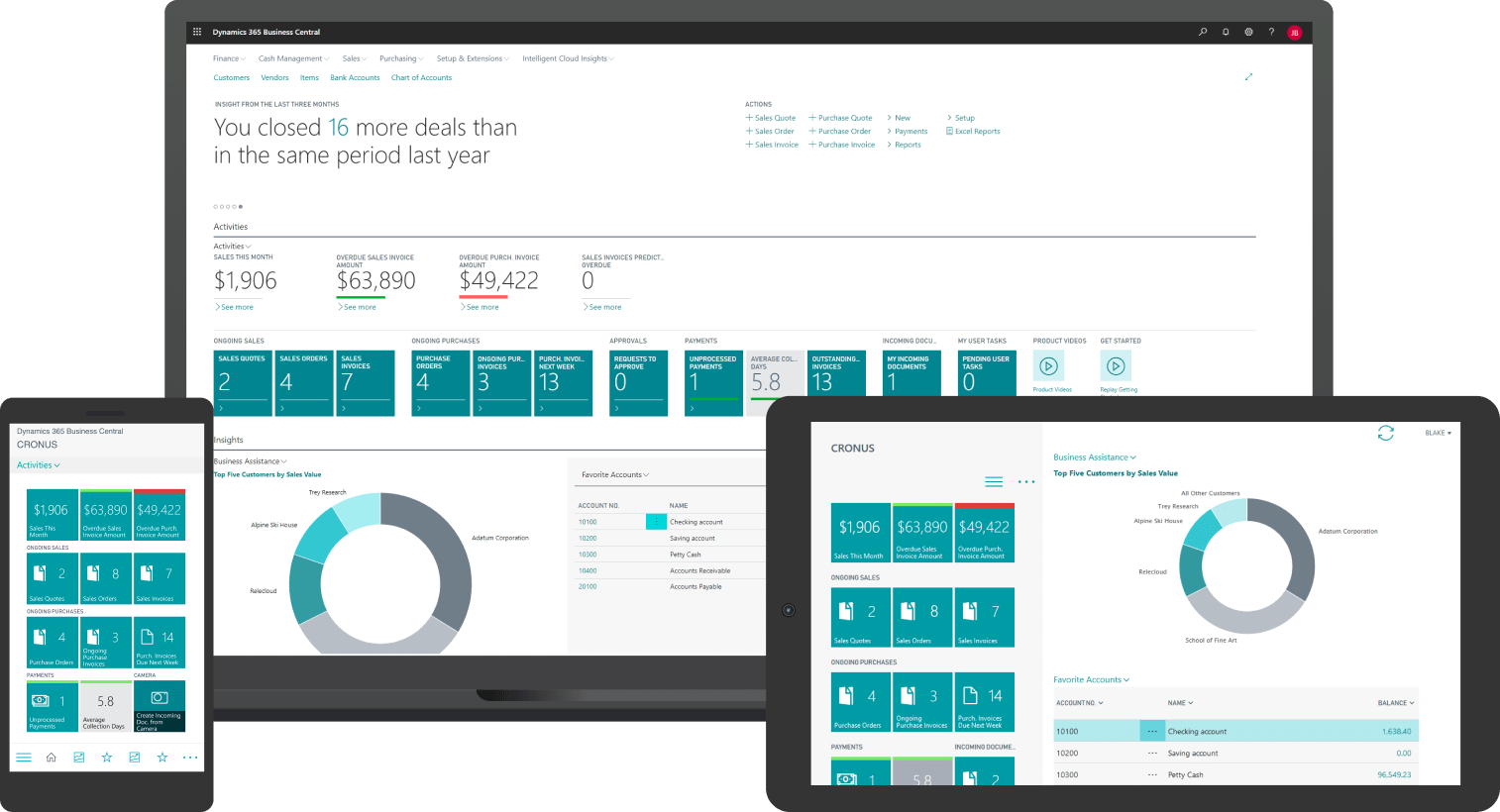
Gestisoft focuses on Microsoft Dynamics 365 Business Central as the core of your operations and builds the integrations that turn it into a single, trusted source of truth. The team works across ERP, CRM, and Power Platform, so they can connect sales, operations, and finance without forcing you to juggle multiple vendors or explain the same process three times.
What makes the Gestisoft approach different:
- Business Central at the centre: The team knows the data model, understands how updates affect integrations, and designs flows that respect how Business Central is meant to work instead of fighting it.
- Full Microsoft ecosystem: When you need automation, dashboards, or custom workflows, Gestisoft uses Power Platform, Copilot, and other Microsoft tools that integrate naturally with Business Central instead of forcing third-party bridges.
- Real industry scenarios: Whether you are connecting shop floor systems for real-time production visibility, linking e-commerce for automated order fulfilment, or tying CRM and ERP together so sales and finance see the same customer data, the team has walked those paths before.
- Structured support plans: Integration does not end at go-live. Gestisoft offers ongoing support, monitoring, and optimisation so your integrations evolve as your business grows instead of becoming brittle technical debt.
In real projects, that means things like linking Business Central with your e-commerce store so orders land in the ERP ready for fulfilment, instead of being retyped. It means connecting shop floor or service systems so you see actual costs and delivery performance instead of waiting for end-of-month surprises. It also means setting up dashboards that show what is happening now, not what happened last quarter.
When you need ERP integrators who understand both the technical reality of Business Central and the daily pressure of running operations, that combination is rare.
If that approach fits where you are now, the next step is to talk through your specific systems and timelines.
Start Your Business Central Integration The Right Way
Map your integrations, uncover risks early, and work with a team that understands both Business Central and the reality of your daily operations.
 Free discovery call
Liked what you just read? Sharing is caring.

May 19, 2026 by Muhammad Ali Iqbal by Muhammad Ali Iqbal SEO Content Strategist & Copywriter
Driven by a passion for search engine optimization, strategic content, and conversion-focused writing. A copywriter and content strategist who lives for content that ranks, engages, and delivers real business results.
