

There's a sentence that gets said in almost every Dynamics 365 sales cycle, and it causes more trouble than any other.
"Don't worry, that's just a configuration setting."
Sometimes it's true. A good chunk of any CRM build really is configuration work, and a competent implementation partner runs through it as standard. For most Canadian B2B companies that covers around 80% of what they need the platform to do.
Then there's the other 20%, and that's the part that sends people looking for a CRM technical consultant. The integration that was supposed to keep your CRM and your accounting system in step works fine in the demo. Then it goes live, and every week a few closed deals fail to land in the accounting system, so the revenue your sales team reports and the revenue finance sees don’t align.
None of those get fixed with a settings change. These are platform-level problems, found in the custom development layer where Dynamics 365, Power Platform, and Azure connect. Fixing them takes a developer's skill set, which is a different job from the one the CRM implementation consultant did when they set the system up. For a Canadian business there's a second layer on top, since the technical work also has to account for PIPEDA-compliant data architecture and bilingual system builds that a lot of partners don't staff for. Meeting all of that is what a CRM software consultant with real development depth is there for.
A CRM technical consultant solves the problems configuration alone can't reach
Gestisoft provides both business advisory and technical development for Canadian Dynamics 365 projects under one engagement.
 Book a free consultation
1. When your Dynamics 365 and Business Central integration needs a CRM technical consultant to stop the revenue mismatch
A sales rep closes a deal in Dynamics 365 and logs the value. A few days later, finance opens Business Central and the number sitting against that same deal is different.
It happens again the next week, and the week after. Before long the sales team stops trusting the CRM figures and finance rebuilds its own numbers in a spreadsheet. Two systems have two answers, and someone burns a day every month working out which one is right when leadership wants a report.
Why the Dynamics 365 Business Central connector drops records
The out-of-the-box connector between Dynamics 365 and Business Central syncs clean, standard data without complaint. It struggles on the parts of your business that aren't standard.
- A multi-currency deal needs the exchange rate from the close date, and the connector pulls it from the sync date, so the recorded value drifts
- A deal closes in the CRM as one figure and gets billed across four installments in Business Central, and the sync can't square one number against four
- A deal whose revenue should be split across two fiscal quarters gets booked entirely in the one where it closed, throwing off the numbers in both
- A deal gets edited in the CRM after it syncs, and the corrected figure never makes it across to Business Central
What a CRM technical consultant builds to fix the integration
This is where a CRM technical consultant comes in behind the implementation partner who first set the connector up. The consultant writes the custom logic that teaches the integration to handle your real financial workflows, with Power Automate flows that carry proper error handling, retry logic for syncs that fail on the first pass, and validation checks that catch a discrepancy and flag it before it reaches a finance manager's screen.
For a Canadian business there's a tax layer to be accounted for too. GST, HST, and PST each behave differently by province, so a deal closed in Alberta carries a different tax treatment than one closed in Quebec, and the integration has to pass every calculation correctly between the two systems with nobody fixing it by hand afterward. That's the kind of build a Microsoft consultant with development depth scopes up front, which is why the Dynamics 365 and Business Central pairing rewards a technical eye on the connection between them.
“Gestisoft had a knack for finding creative solutions. It wasn't easy, but the team never gave up and always managed to come up with solutions while trying to reduce costs as much as possible and bearing in mind the solution ecosystem's durability.”
2. Data migrations that lose the relationships between records and why a CRM technical consultant builds them differently
Most migrations off a legacy CRM run through export and import tools that are good at flat tables. Your contacts come across with their names, emails, phone numbers, and companies intact, your accounts land cleanly, and the migration report comes back green. The damage only shows the first time a rep opens an account and finds a contact with no deal history attached and no thread connecting them to the opportunity they're mid-negotiation on. Everything migrated except the part that made the data useful, which is how each record connects to the others. Legacy platforms store those connections in their own way, and the Dynamics 365 Dataverse expects them in a structure of its own, so a plain export drops the links somewhere in between. A CRM migration done at the tool level can move every row and still arrive with the relationships missing.
A CRM technical consultant treats the relationships as the payload. The work is custom migration scripts that map each association from the source schema onto the Dynamics 365 model, a validation pass that checks the links held after the transfer, and a flag on any orphaned record that lost its parent along the way. That difference is felt on the first day of go-live when a rep opens an account and reads the full history before dialing a client and walks into that call prepared. The same discipline applies when there's an ERP in the picture, where how to successfully migrate ERP data without breaking its links to the CRM is its own technical job.
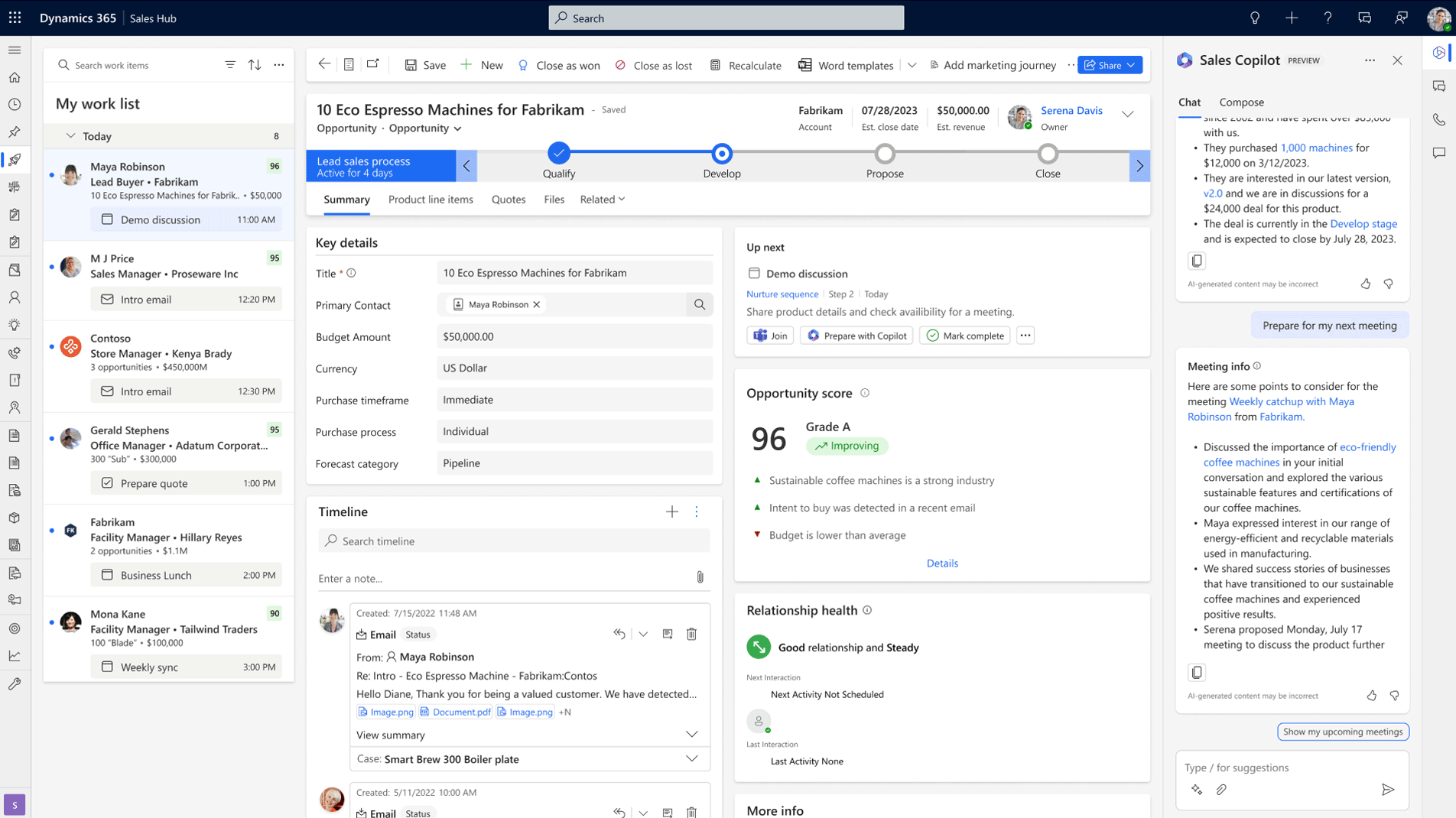
3. Power Automate flows that fail on edge cases a CRM technical consultant would catch before launch
Power Automate will run whatever logic you build into it, faithfully, including the flaws. That's the catch with automated workflows. They behave perfectly in testing, when the data is tidy and every field is filled. Then they go live, and your real data shows up full of blanks and exceptions the flow was never built to expect.
Why a Power Automate flow fails after go-live
The expensive failures are often the ones that leave no trace. Somewhere a required field comes through empty. When the rest of the flow hits that blank, it skips the step it can't complete, and carries on as if the job is done. The client's follow-up never goes out, and nobody catches it for days, usually when a rep wonders why a customer hasn't replied.
A CRM technical consultant works on the assumption that some of the data coming through will be incomplete, because in any real system some of it is. So the flows get built to handle the blanks and the exceptions instead of stalling on them. When a field comes through empty, the flow already knows what to do with it, and if something does go wrong, an alert goes straight to a person instead of failing in silence. That groundwork is what lets a team rely on their automated sales processes without second-guessing every one.
Handling a missing language preference in Dynamics 365 automation
A flow set up to send each contact a French or English template reads the language field and sends the matching version. The trouble comes with contacts imported from an older system that never stored a language at all. The field is empty, and the flow either errors out or defaults everyone to English. Now a French-speaking client is getting service emails in English. A CRM specialist who has built these flows writes the fallback for that empty field from the start, so the wrong-language email never goes out.
The technical problems on your Dynamics 365 project have solutions that configuration tools weren’t designed to deliver
Gestisoft's CRM technical consultant team builds custom integrations and Power Platform solutions for Canadian businesses.
 Book a free consultation
4. PIPEDA audit readiness gaps in your Dynamics 365 security model that a CRM technical consultant configures at the platform level
Most companies don't think about their CRM security model until someone outside the building asks about it. Usually it's a big client sending a security questionnaire, or a cyber insurer wanting to know how customer data is separated internally. Dynamics 365 ships with a set of standard security roles and they cover what each user can do across the platform. For a lot of Canadian B2B companies, those roles don't line up with how the business needs to divide access to data.
A few examples of where the standard roles fall short:
- A regional manager in Quebec should see the accounts in their own territory and none of the others
- A contract employee needs the contact records to do their job, with no view of the financial data attached to those same contacts
- A partner working a joint deal should see the relevant opportunity and nothing else in your pipeline
Where a CRM technical consultant configures Dynamics 365 security
Business units and teams cover some of this, and a good implementation will use them. The work that calls for a CRM technical consultant starts past that point. Row-level security restricts a record based on the values in its fields, so the Quebec manager's view is enforced by the data itself. Field-level security hides or masks specific fields from roles that shouldn't see them, which is how the contractor reaches a contact without its financial history. Custom audit trails record who opened which data and when, down to the field.
That last piece is what turns a Canadian CRM from compliant in principle into provable on demand. When a provincial auditor or an enterprise client asks how access is segmented under PIPEDA, the answer has to be specific and on paper. A CRM technical consultant builds the security so that documentation comes straight out of the platform, instead of someone on your team spending a week reconstructing it from system logs. For organizations under a regulator, the same logic carries into data security for regulatory bodies, where proof of access control is part of the mandate.

5. Copilot AI producing generic outputs because no CRM technical consultant connected it to your Dynamics 365 data
A company buys Copilot licences, switches it on across Outlook and Teams, and it does exactly what it says. It summarises threads, drafts replies, saves people a few minutes here and there. The drafts read well, too, but they're written from general context, so they could be about any company's deal rather than the specific client a rep is emailing. Copilot can do far more than that, once someone connects it to the customer knowledge inside your CRM.
What a CRM technical consultant connects Copilot to
Building that connection is specific work. A CRM technical consultant decides which Dynamics 365 entities Copilot is allowed to read, sets what surfaces while a rep is mid-email, and links a meeting summary back to the opportunity record it belongs to. From there it extends into custom Copilot Studio agents built for a single job, like triaging an inbound customer inquiry or running a first-pass qualification on a new deal. This is the work a Microsoft Copilot consultant does once the licences are in place.
You've already paid for the capability. Whether it returns anything depends on a developer connecting it to your data, which is why this is worth handing to Copilot consultants rather than leaving the licence to run on default settings and writing off the result as underwhelming AI.
Copilot can also write in French or English to match each contact's language preference, as long as it's reading that preference from the language field in Dynamics 365. Most standard deployments skip the step of wiring the CRM field to Copilot's output, and connecting it is part of how Copilot for Sales transforms the sales process when the configuration is done properly.
Every Dynamics 365 project has a line where configuration ends and custom development begins
Gestisoft's team covers both sides of that line for Canadian businesses so the project stays under one roof from start to finish.
 Book a free consultation
How Gestisoft provides CRM technical consultant capability inside every Dynamics 365 engagement
Every one of these problems is a custom development job at heart. Each got scoped too late, or handed to a technical team that never sat in on the conversations about how the business runs. The handoff from the advisory people who understand your operation to the developers who write the code, is where these problems start.
“Their fast implementing approach enabled us to start with basic assumptions and we put them into the CRM. Two months after implementation, we looked to see if it really made sense in our day-to-day work.”
At Gestisoft, the developer writing your Power Automate flows can lean over and ask the consultant who mapped your sales process why a deal skips a stage. They're on the same team from the start of your engagement. That proximity is how the custom work gets scoped into the plan during design, so it arrives as part of the build instead of an expensive add-on after go-live.
With both skill sets in the room from the start, the five problems get handled before they reach your team.
- The Dynamics 365 and Business Central integration is architected during discovery, while the financial workflows are still being mapped, so the revenue numbers line up from the first sync
- Migration scripts are written by people who already know which record relationships the business runs on, so the history survives the move
- Power Automate flows are tested against the real exceptions from your operations, the empty fields and the odd Friday cases included
- The security model is configured for PIPEDA during the build, so the audit documentation is ready the day a client or an auditor asks for it
- The Copilot setup is connected to your Dynamics 365 data during the build, so the AI drafts from real deal history instead of generic context from its first day in use
Custom development needs upkeep as your business changes, and a CRM business consultant who knows your build from the inside is who you reach when the operation grows into something new. That depth across the Microsoft stack, from the CRM side through to Business Central, is part of what puts Gestisoft among the top 10 CRM consultants in Canada.
-
A CRM technical consultant handles custom development on CRM projects that goes beyond standard configuration. This includes building integrations between the CRM and external systems, developing custom Power Automate workflows with complex logic, writing data migration scripts, configuring advanced security models, and building Copilot Studio agents connected to business data.
Liked what you just read? Sharing is caring.

June 26, 2026 by Shelley Sunjka by Shelley Sunjka Copywriter & Marketing Strategist
Armed with a psychology degree and an irrational obsession with okapis, I've spent the last decade helping bold brands tell better stories. I believe the best writing bends grammar rules on purpose and makes people feel something. When I'm not deep in words or nerding out on buyer behaviour, I'm probably convincing my kids that impromptu kitchen dance parties are totally normal.

