The ways to improve sales performance that get the most airtime tend to be the ones that sound good in a workshop.
- Set better goals.
- Coach more consistently.
- Build a winning mindset.
None of that advice is wrong, but it all assumes the infrastructure underneath the sales team is working properly, and for most B2B companies that assumption falls apart the moment you look at how their CRM is configured.
A sales team can have the best reps in the country and still underperform if the pipeline stages don't match how buyers move through decisions and the CRM feels like an admin chore rather than something that helps anyone sell. Those are structural problems, and no amount of motivational energy fixes a structural problem. The team just burns through their motivation faster.
The ways to improve sales performance that produce lasting results for Canadian B2B companies tend to be the ones nobody puts on a conference slide. They're about process, pipeline structure, data quality, and the systems behind the team. They're operational rather than inspirational and they're the reason some sales organizations compound performance improvements year after year while others keep resetting every quarter with a new initiative that fades by week six.
Ways to improve sales performance start with how your systems are configured
Gestisoft helps Canadian B2B companies build the CRM infrastructure that makes lasting sales performance improvement possible.
 Free discovery call
Why most ways to improve sales performance don't stick
Most sales performance improvement efforts target symptoms without examining what's underneath them. Reps aren't closing enough deals so the team gets a training session on objection handling. The forecast is off so leadership introduces a new reporting cadence. Both initiatives make sense on paper, and both fade within a few weeks because the infrastructure underneath the team didn't change.
A sales team running on broken infrastructure will revert to old habits faster than any training programme can build new ones. The CRM that was painful to use before the enablement session is still painful to use after it, which means the behaviours the training was supposed to reinforce have nowhere to take root. The reps go back to their workarounds because the workarounds are still easier than the system.
This isn't a criticism of coaching or enablement. Both are valuable once the foundation is solid. The ways to improve sales performance that stick are the ones that fix the infrastructure first so that every coaching investment has something solid to land on rather than sinking into the same broken system that undermined the last initiative.
The nine ways to improve sales performance below focus entirely on that infrastructure layer. Each one targets a specific part of the system your sales team operates on every day, from pipeline structure and data quality through to forecasting, automation, and the review cycle that keeps everything aligned as the business evolves.
1. Build a pipeline structure that reflects how your team sells
One of the most overlooked ways to improve sales performance is fixing the pipeline itself. Most CRMs ship with default stages like "Prospecting > Qualification > Proposal > Negotiation > Closed" that look logical on paper but fall apart once you compare them to how your sales process works in practice. If your deals involve technical discovery or legal review and none of those stages exist in the pipeline, the system is not going to work.
But when deal stages match the real buyer journey, your sales opportunity management software starts earning its place. Reps understand what progress looks like because the system reflects their reality. Managers can pinpoint where deals stall and the forecast becomes something leadership can plan around. If your pipeline stages haven't been reviewed since the original implementation, a CRM implementation consultant can audit whether the structure still reflects how your team sells.

2. Fix the data before you try to improve anything else
Performance metrics on your sales dashboard are only as reliable as the data behind them. If reps aren't logging activity consistently and deal values are rough guesses rather than qualified numbers, every report and dashboard built on top of that data is not accurate. One of the most effective ways to improve sales performance is to make the data underlying the CRM trustworthy enough that people actually use it as their source of truth rather than maintaining a shadow system on the side.
The data quality audit is unglamorous work but it pays for itself fast. Open the CRM, look at the last fifty deals. Check whether the contact records are complete with accurate deal values, and whether stage progression reflects what happened in reality. The patterns you find will tell you whether your performance problem is a selling problem or a data capture problem, and those two require very different solutions.
3. Make your CRM the place your team works, not a system they report into
One of the ways to improve sales performance through your CRM comes from configuring it so reps get value from using it in real time. When a rep opens the CRM and immediately sees their pipeline with next-step prompts attached to each deal and recent email activity already logged automatically, the system earns its place in their workflow. The adoption follows naturally because the CRM becomes the fastest way to find what they need about an account.
A CRM specialist who understands how sales teams work will build role-based views on top of that foundation so each rep sees their own pipeline and deals from the moment they log in.
Ways to improve sales performance that last are built into how your team works
Gestisoft configures Dynamics 365 so your CRM supports how your sales team sells instead of adding admin work.
 Free discovery call
4. Connect your sales data to your financial data
One of the ways to improve sales performance that rarely comes up in sales-focused conversations is connecting your CRM to your ERP. The reason it gets overlooked is that it crosses departmental lines, and most sales improvement initiatives stay firmly inside the sales team's territory. But when your sales pipeline lives in one system and your financial data lives in another, your reps quote deals without knowing the margin on what they're selling, and your finance team spends hours every month chasing invoices back to the original deal record because the two systems don't share data.
Dynamics 365 paired with Business Central eliminates that disconnect by putting sales and financial data in the same environment, though getting the connection configured properly requires a Microsoft consultant who understands both sides of the platform. For Canadian B2B companies where quoting accuracy and renewal visibility directly affect revenue, that connected view changes how the entire sales operation performs.
5. Give your sales manager a dashboard they can act on Monday morning
Sales managers drive performance, but only when they're spending their time coaching reps and unblocking deals. If the first hour of every Monday goes to building a spreadsheet because the CRM dashboard doesn't answer the questions that need answering, that's leadership capacity burned on data assembly. One of the most practical ways to improve sales performance is giving your manager a dashboard configured around the decisions they make weekly so the answers are already on screen when they sit down.
The default dashboards most CRMs ship with are designed to look impressive during a demo. They show a lot of data without connecting any of it to the specific decisions your sales manager is responsible for. A properly configured sales dashboard shows pipeline by stage alongside deals at risk and forecast against target, built for the person who needs to walk into a team meeting and know exactly where to focus the conversation. When that view exists and the data feeding it is reliable, the manager's role shifts from data gatherer to coach, which is where the performance improvement compounds week over week.
6. Automate the follow-up, not the relationship
Sales automation is one of the most cited ways to improve sales performance, and one of the most misapplied. The automation that moves the needle is the kind that prevents warm deals from going cold because a rep got busy and forgot to follow up or an automatic alert when a proposal email gets opened after two weeks of silence. These triggers protect pipeline momentum without replacing the human judgment that closes the deal.
Where automation goes wrong is when it replaces the relationship entirely. A prospect who receives a clearly templated email sequence feels like a number in a system, and for B2B sales where the relationship carries significant weight in the buying decision, that impersonal touch can cost you the deal you were trying to protect. The best automation sits underneath the rep's workflow, handling the administrative triggers so the rep can focus on the conversations that require a real human being on the other end.
Dynamics 365 handles this well through Copilot, which drafts follow-up emails based on previous conversation context and flags deals showing signs of stalling. A Microsoft copilot consultant can configure those capabilities around your specific sales cycle so the AI is surfacing relevant prompts based on how your team sells.
7. Use AI to surface insights your team would miss
AI is the newest addition to the ways to improve sales performance conversation and most of what's written about it is hype. The practical applications for B2B sales teams right now are narrower than the marketing suggests, though the ones that work well are worth paying attention to.
Dynamics 365 Copilot can flag deals showing signs of stalling based on activity patterns your manager wouldn't spot until the deal was already cold. It can summarise a thirty-minute Teams call into action items tied to the deal record and draft a follow-up email your rep can review and send in under a minute.
The prerequisite that rarely gets mentioned in the AI conversation is data quality. AI applied to a well-structured pipeline with consistent data produces insights your team can act on with confidence. AI applied to a CRM where reps log activity inconsistently and deal values are guesses produces recommendations that sound authoritative but point in the wrong direction.
That second scenario is worse than having no AI at all, because the team starts making decisions based on analysis that looks sophisticated but is built on unreliable foundations.
8. Structure your forecasting so leadership can plan around it
Unreliable forecasting is one of the biggest drags on sales performance because it erodes trust between the sales team and the rest of the business. When leadership can't trust the number, they hedge on hiring and delay investments, and that hesitation feeds back into the sales team as frustration and disengagement. The forecast gets less reliable over time because people stop taking it seriously, and the cycle reinforces itself quarter after quarter.
One of the ways to improve sales performance is to implement the right sales planning software. This structural improvement only works if you connect forecast projections to observable deal movement so everyone in the room is looking at the right data.
Ways to improve sales performance should be built into your systems
Gestisoft configures Dynamics 365 around your sales process so performance improvements are structural, not temporary.
 Free discovery call
9. Measure what changed and build a review cycle that compounds over time
Most sales teams measure outcomes like revenue, close rate, and quota attainment. Those numbers tell you what happened last quarter. They don't tell you why, and they don't help you prevent the same problems from showing up again. One of the most underused ways to improve sales performance is shifting focus to leading indicators that predict results before they show up in the revenue line.
Stage conversion rates tell you where deals stall and pipeline velocity tells you how fast revenue is moving through the system. When those metrics are visible in a dashboard your manager reviews weekly, problems surface early enough to fix.
The measurement piece only works if it feeds a regular review cycle. Set a quarterly cadence where you audit whether the pipeline stages still reflect how the team sells and whether the dashboards are still answering the right questions for the people using them. Each review should produce a short list of refinements. Small adjustments compounding over four quarters produce a dramatically different system from the one you started with, and the teams that sustain sales performance improvement over years are the ones that treat their CRM configuration as living infrastructure that gets tuned on a schedule.
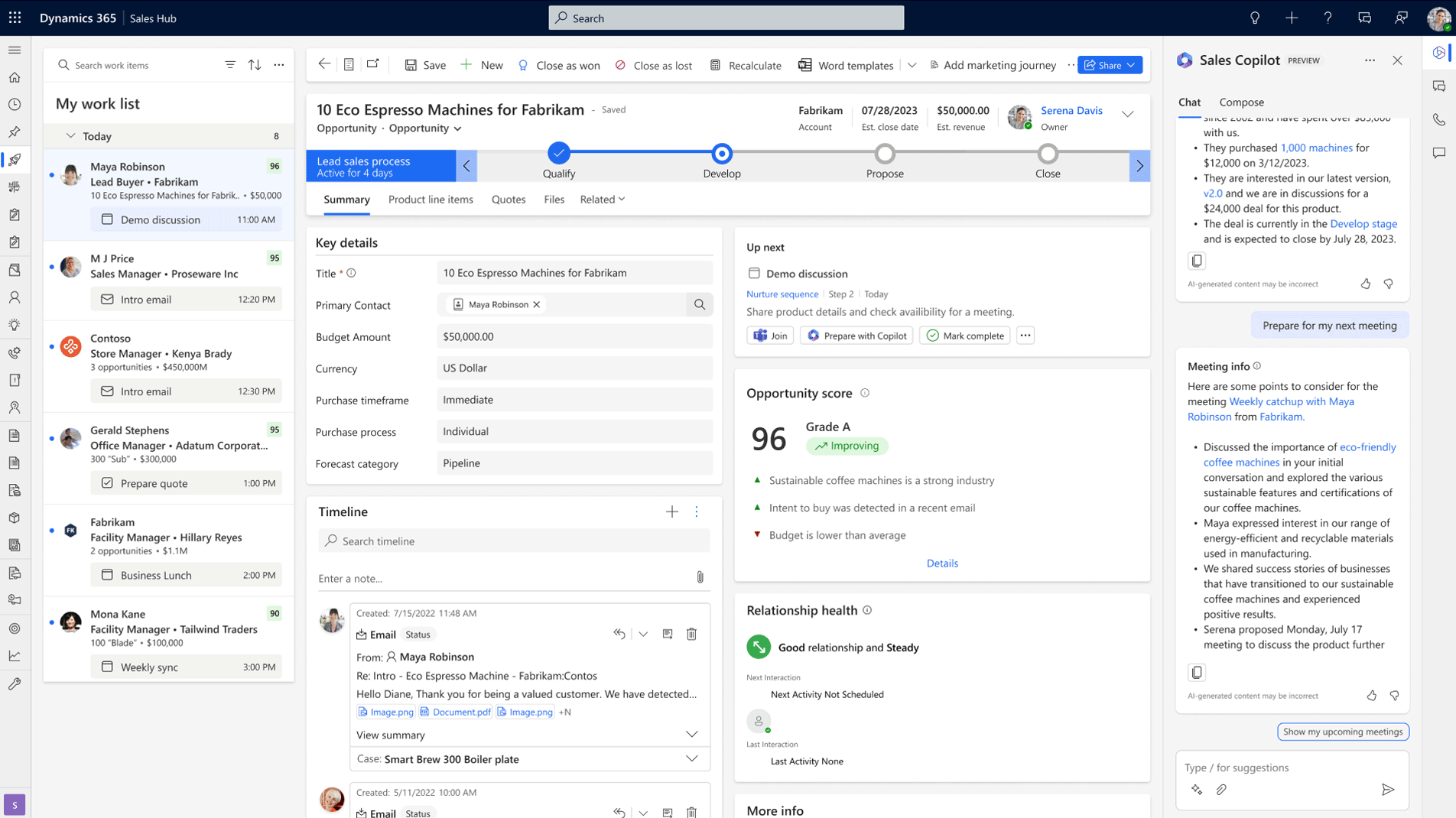
How Gestisoft helps Canadian B2B companies turn these ways to improve sales performance into permanent infrastructure
Most Canadian B2B companies know their sales infrastructure has problems. The reason those problems persist is that fixing them requires someone who understands both the sales operation and the technology deeply enough to work on both at the same time. That combination of skills is rare. Sales consultants understand the process but can't configure the CRM. Technology partners can configure the CRM but design it around software logic instead of how the team sells. The result is a system that works technically but never earns the trust of the people using it.
Gestisoft sits in the overlap. Our consulting team includes people who came from the industries they serve, which means the conversation about pipeline structure and forecasting happens in business language from the first meeting. That same team configures Dynamics 365 and Business Central, so the decisions made in that conversation translate directly into how the platform behaves. There's no handoff between a sales consultant who designed the process and a technical team who interpreted it differently.
The best sales management software performs at its highest level when that gap between strategy and configuration doesn't exist. For Canadian B2B companies where sales performance has been stuck despite repeated improvement efforts, closing that gap is usually what unlocks the progress that previous initiatives couldn't deliver.
-
The ways to improve sales performance that produce lasting results for B2B teams focus on infrastructure. Pipeline structure that matches the real sales process and reliable CRM data form the foundation, with dashboards and automation configured on top to support the decisions managers make weekly. Coaching and training deliver more when that foundation is solid.
Liked what you just read? Sharing is caring.

April 22, 2026 by Shelley Sunjka by Shelley Sunjka Copywriter & Marketing Strategist
Armed with a psychology degree and an irrational obsession with okapis, I've spent the last decade helping bold brands tell better stories. I believe the best writing bends grammar rules on purpose and makes people feel something. When I'm not deep in words or nerding out on buyer behaviour, I'm probably convincing my kids that impromptu kitchen dance parties are totally normal.