Sales planning usually starts with a burst of enthusiasm.
A spreadsheet gets built. Targets are entered. Territories are assigned. Someone volunteers to update it weekly and everyone leaves the meeting feeling like this quarter will be amazing.
Then three months later, you’re handed “version 9_final_FINAL.xlsx.”
This is usually the moment when sales planning software first enters the conversation.
There are multiple versions of “the plan” floating around the company. Finance has one. Sales leadership has another. One sales rep insists theirs is “the accurate one.” New deals come in that don’t quite fit the original assumptions. One territory turns out to be overloaded while another is quieter than expected. Forecasts get adjusted in side conversations at lunch. By the time someone asks for a reliable revenue projection, the answer depends on who you ask, because nobody is entirely sure which forecast is the up-to-date version.
When this confusion becomes SOP, it’s time to consider a more organised system for revenue planning.
Not for the sake of a shiny new tool to install, but as a structured way to align revenue targets with real pipeline data. When it’s properly connected to your CRM and actively managed, leadership can move from scattered forecasting to informed planning.
What is sales planning software?
At its core, sales planning software helps you make informed decisions about revenue before the quarter ends.
It gives leadership a structured way to forecast sales, assign territories, set quotas, and model different outcomes without relying on guesswork.
Instead of asking, “How do we feel about this month?” you can look at actual data and see what’s likely to happen.
A CRM records activity, tracks calls, emails, meetings, and opportunities. It tells you what has happened.
Sales planning software allows you to look forward. It helps you model what should happen, what could happen, and what needs to change on the ground so you can hit your targets.
In practical terms, that means you can forecast revenue using real pipeline data and adjust territories or quotas based on actual performance. When targets shift, you can test different scenarios and see clearly whether your current pipeline can realistically support your revenue goals.
Sales planning software tends to sit closer to leadership and revenue strategy. It connects performance data to decision-making and turns pipeline information into something you can plan around instead of react to.
Bring structure to your sales planning process today
If your revenue conversations still revolve around reconciling spreadsheets instead of shaping strategy, it may be time to rethink how your sales planning is structured. A short call can help you understand what’s possible with the right setup.
 Free discovery call
Is sales planning software the same as sales forecasting software?
You’ll often see these terms used as if they mean the same thing, but while they overlap, they are not identical.
Sales forecasting software focuses on predicting future revenue. It looks at your current pipeline, historical performance, close rates, and trends to estimate what is likely to come in over a given period.
Sales planning software goes a step further than this. It uses forecasting as an input, but it also helps you decide how to hit your targets.
Forecasting might tell you that you are likely to close $2 million next quarter.
Planning asks, “Do our current operations support this target? If not, what needs to change?”
That might mean adjusting territories, reviewing quotas against historical performance, or even reconsidering hiring plans. It may also force a hard look at whether your pipeline coverage is actually strong enough to support those targets.
For smaller teams, forecasting alone might feel sufficient. As revenue targets increase and complexity grows, planning becomes harder to manage in spreadsheets or disconnected tools. That is usually the point where dedicated sales planning software starts to make sense.
What’s the difference between sales planning software and sales opportunity management software?
This is where things can get confusing, especially since both systems sit inside or alongside a CRM and both deal with revenue.
The difference comes down to level.
Sales planning software operates at the strategic level. As mentioned, it looks at revenue targets, territory coverage, quota distribution, and overall planning. It helps leadership decide how much needs to be sold and what conditions need to exist to make that possible.
Sales opportunity management software works closer to the deal itself. It focuses on how individual opportunities move through the pipeline, from stage progression and next steps to stakeholder visibility and overall deal health.
You can think of it this way. Sales planning software helps you design the revenue engine, while sales opportunity management software helps you fine-tune that engine while it’s running.
As businesses grow, they usually need both. Strong planning sets realistic targets and allocates resources intelligently. Strong opportunity management ensures those targets are supported by disciplined deal execution.
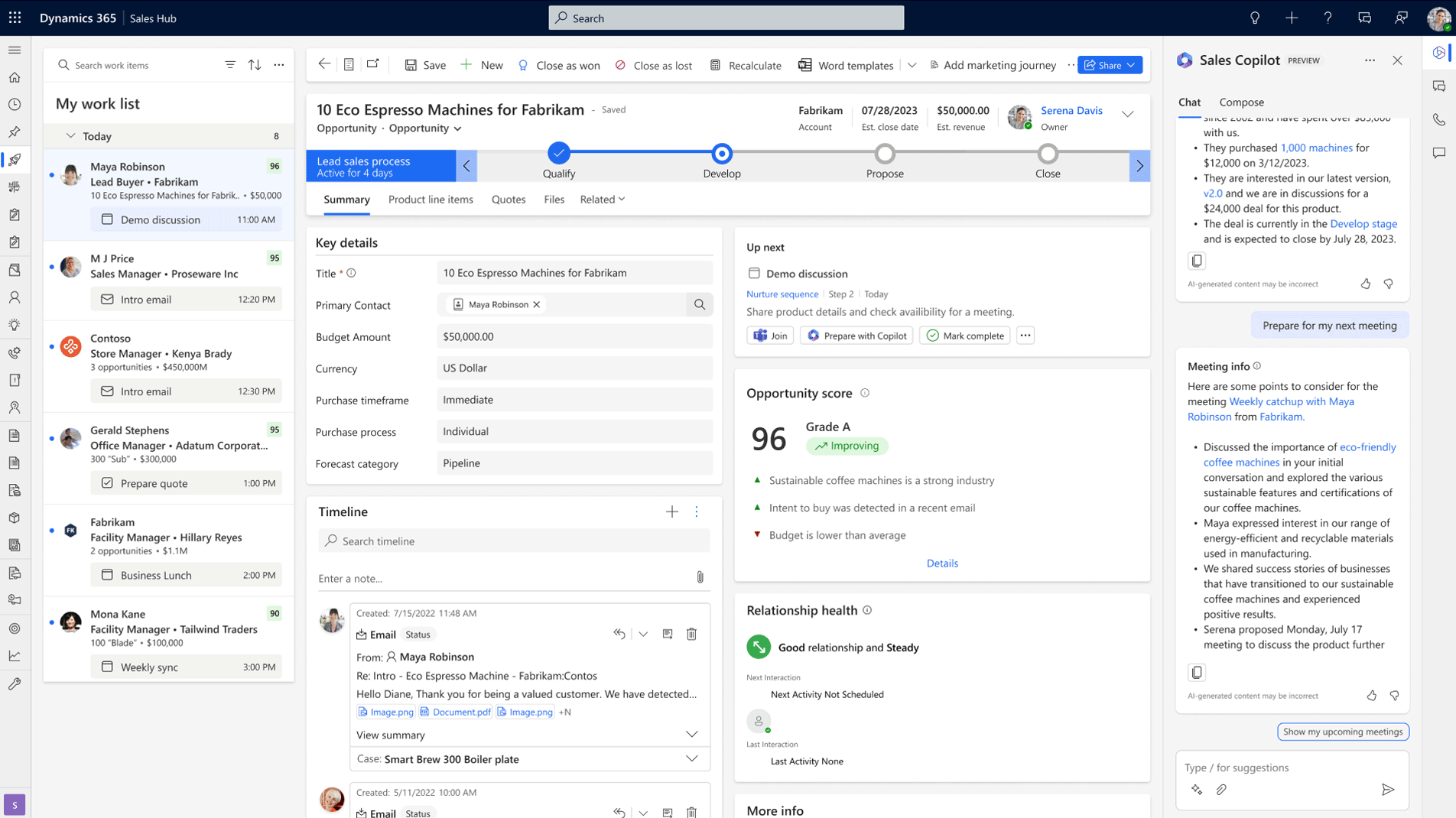
Why sales planning breaks down in growing businesses
Sales planning often veers off course as stakeholders get scooped up into the day-to-day of business operations.
What worked when the team was small starts to strain under more complexity as the team expands and targets increase. The spreadsheet that once felt manageable begins to morph and becomes impossible to keep track of.
Manual reporting makes everything harder (does anyone actually enjoy data capture?). Teams spend time exporting data, adjusting numbers, and reconciling different versions of the truth instead of analysing what needs attention. And the more people who are involved, the more room there is for inconsistency.
One of the most common issues is too much optimism baked into the plan. Sales leaders trust their team, and reps genuinely believe their deals will close. Over time, that confidence becomes the foundation of the revenue plan. But when several “almost certain” deals slip at the same time, the gap shows up quickly.
Another common problem is that marketing data and sales data often live in separate places. That disconnect makes it difficult to see whether pipeline growth is strong enough to support future targets.
Territories can quietly overlap as teams expand and quotas may be set based on ambition rather than tracking historical performance.
None of this feels dramatic in isolation, but together it compounds and erodes the overall plan.
When does your business need sales planning software?
If you’re unsure whether you have reached the point of needing sales planning software, use the checklist below as a quick reality check. Review the statements below and answer honestly. If several apply to your business, your current planning process may be under strain.
- Revenue targets are increasing year over year
- You’re hiring more sales reps and expanding into new territories
- Forecast accuracy consistently falls below acceptable levels
- Different teams reference different versions of the numbers during planning discussions.
- You’re using multiple disconnected tools to predict revenue
- You’ve got multiple spreadsheets drifting across departments
- You rely heavily on spreadsheets to model revenue scenarios.
- Leadership asks for updated projections, and it takes significant manual effort to prepare them.
If 3 or more of these ring true, it’s likely that sales planning software is no longer just “nice to have” but strategically necessary.
The structure that sales planning software can offer becomes more important as growth accelerates.
Still planning in spreadsheets?
It may be time to look at how your revenue planning is structured. A short conversation can quickly reveal whether your current setup is sustainable and able to support your growth.

How does sales planning software influence company-wide revenue strategy?
When sales planning is structured and implemented properly, it changes the tone of leadership conversations. This isn’t limited to the boardroom, but trickles down through the company and ultimately benefits everyone.
Revenue discussions move from defensive explanations to forward-looking decisions. Instead of spending time reconciling numbers, leadership teams can focus on resource allocation, hiring plans, and market expansion with clearer visibility into what the pipeline can realistically support.
Finance can more accurately calculate ROI and expected revenue, which improves budgeting and cash flow planning. Sales leadership can assess whether targets are aligned with capacity, rather than discovering misalignment halfway through a quarter, which means teams have to scramble and pivot on the fly.
Marketing can evaluate whether pipeline growth is strong enough to sustain future targets, instead of operating in isolation from revenue planning. When all departments in a company are flowing through a central hub, work becomes easier.
Over time, this alignment reduces internal friction across the board and company culture becomes more enjoyable. Leadership confidence increases because decisions are backed by structured data rather than intuition alone.
Now it’s important to note that sales planning software does not guarantee revenue growth. What it does is create a stable foundation for scaling revenue with intention. The structure makes it easier to spot bottlenecks early which in turn increases the likelihood that a company will succeed and hit their targets.
Common mistakes after implementing sales planning software and how to avoid them
Buying sales planning software is one decision. Using it properly is another. Here are the mistakes we see most often once the tool is in place:
- Treating it like a reporting tool instead of a planning system. Teams update forecasts but never adjust territories, quotas, or capacity assumptions based on what the data shows.
- Recreating the spreadsheet inside the software. Instead of improving structure, the old habits just get digitised.
- Setting quotas without tying them to historical performance or pipeline coverage. Ambition is healthy, but blind optimism is not a solid strategy.
- Failing to define clear ownership. If no one is accountable for maintaining territory logic, forecast assumptions, and data hygiene, there is no point to having the software.
- Ignoring integration. Leadership may believe planning is “handled,” while reps continue managing targets in spreadsheets because the system feels disconnected from daily reality.
- Overcomplicating the setup. Adding too many fields or custom rules can make the system harder to maintain, especially if an expert is not managing this.
None of these mistakes are dramatic. They are usually the result of good intentions and busy teams. But left unchecked, they quietly undermine the value of the software.
Sales planning software works best when it is set up properly for the reality of your company and actively maintained.
How sales planning software needs change as your business evolves
Sales planning should not look the same in every organisation. Let’s look at how the pressure points shift depending on team structure, sales cycle length, and your revenue model.
- For small and scaling teams
Planning is usually lightweight at first with simple targets and clear territories. Leadership can see most deals without formal reporting.
The challenge emerges when growth takes root. Hiring accelerates, new regions open, and the original structure can no longer contain it. At this stage, sales planning software helps to maintain clarity before complexity becomes overwhelming.
- For multi-team organisations with RevOps involvement
As teams expand, planning becomes cross-functional. Sales, finance, and operations all depend on the same revenue assumptions. Forecasts influence hiring and budgeting decisions.
Here, the value of sales planning software lies in alignment. Everyone works from the same structured model instead of reconciling numbers across departments and tools.
- For long sales cycles or multi-product businesses
Longer cycles introduce more uncertainty. Deals span quarters and so pipeline coverage must be assessed differently. A mix of different products also affects revenue predictability.
Planning becomes less about short-term targets and more about modeling various scenarios over time. Sales planning software helps leadership understand how current pipeline composition influences future revenue stability.
- For renewal and expansion revenue models
Subscription and expansion-based businesses face a different planning dynamic altogether. Retention rates, upsell opportunities, and contract timing all shape revenue planning.
Planning software needs to account for recurring revenue, churn risk, and expansion potential rather than focusing only on new acquisition.
No matter where your organisation sits today, planning complexity does not decrease as you grow.
Choosing a high-quality sales planning software early on that can evolve with you, gives your business room to grow without constantly rebuilding your planning structure from scratch. Instead of reacting to each new stage of complexity with a new tool, you can create a framework that can absorb change and support expansion.
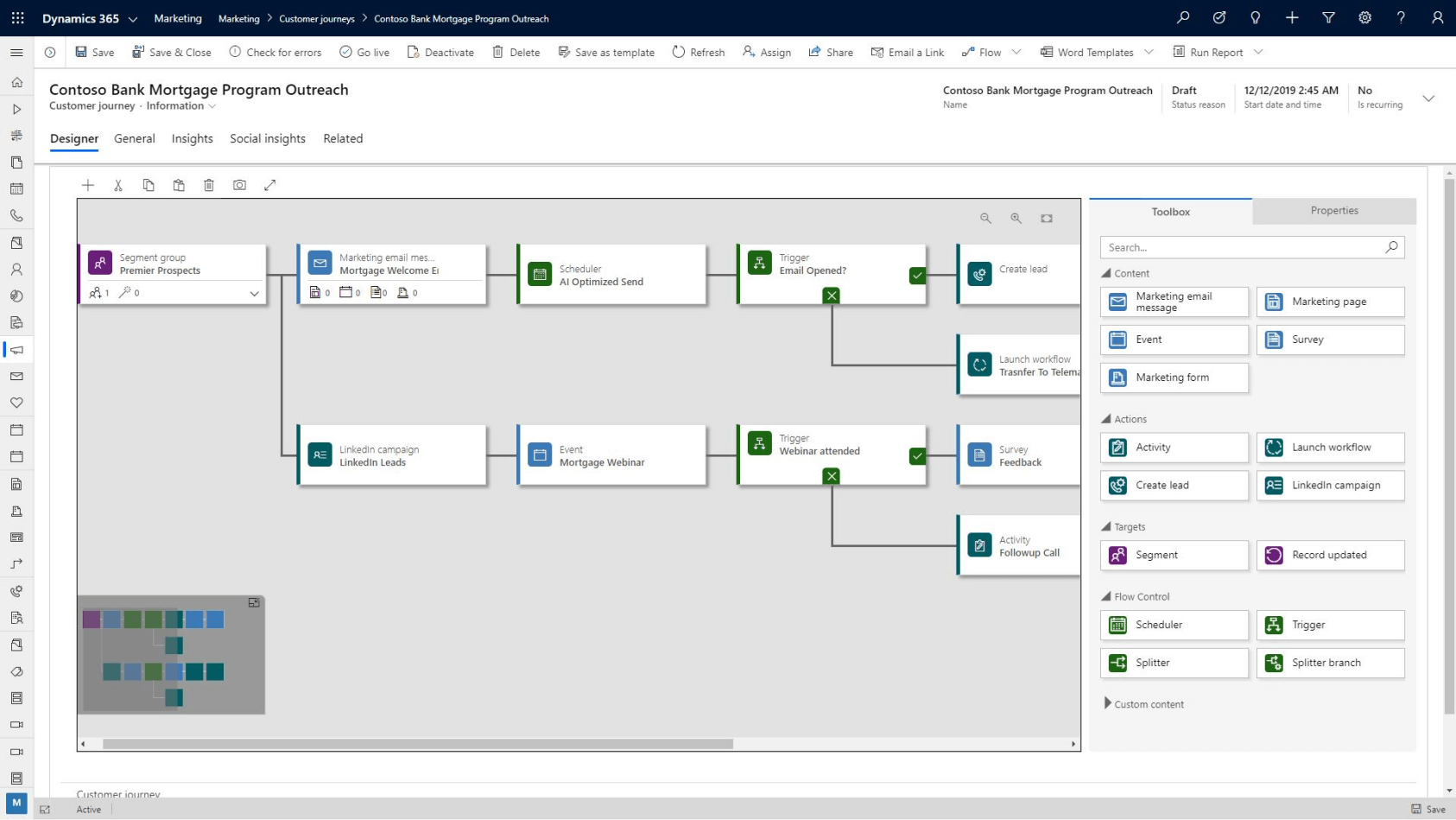
The right system should not just solve today’s sales planning challenges. It should be flexible enough to adapt as your sales model matures, your teams expand, and your revenue strategy becomes more sophisticated. Microsoft Dynamics 365 is an all-in-one CRM that evolves with you.
When Microsoft Dynamics 365 Sales works well as sales planning software
Not every business needs a standalone sales planning software platform.
In many cases, the capability already exists inside the CRM. The question is whether it has been configured to support structured sales planning and territory design at scale.
Microsoft Dynamics 365 Sales is often a strong fit for organisations that have outgrown spreadsheet-based planning but are not ready to introduce another disconnected system.
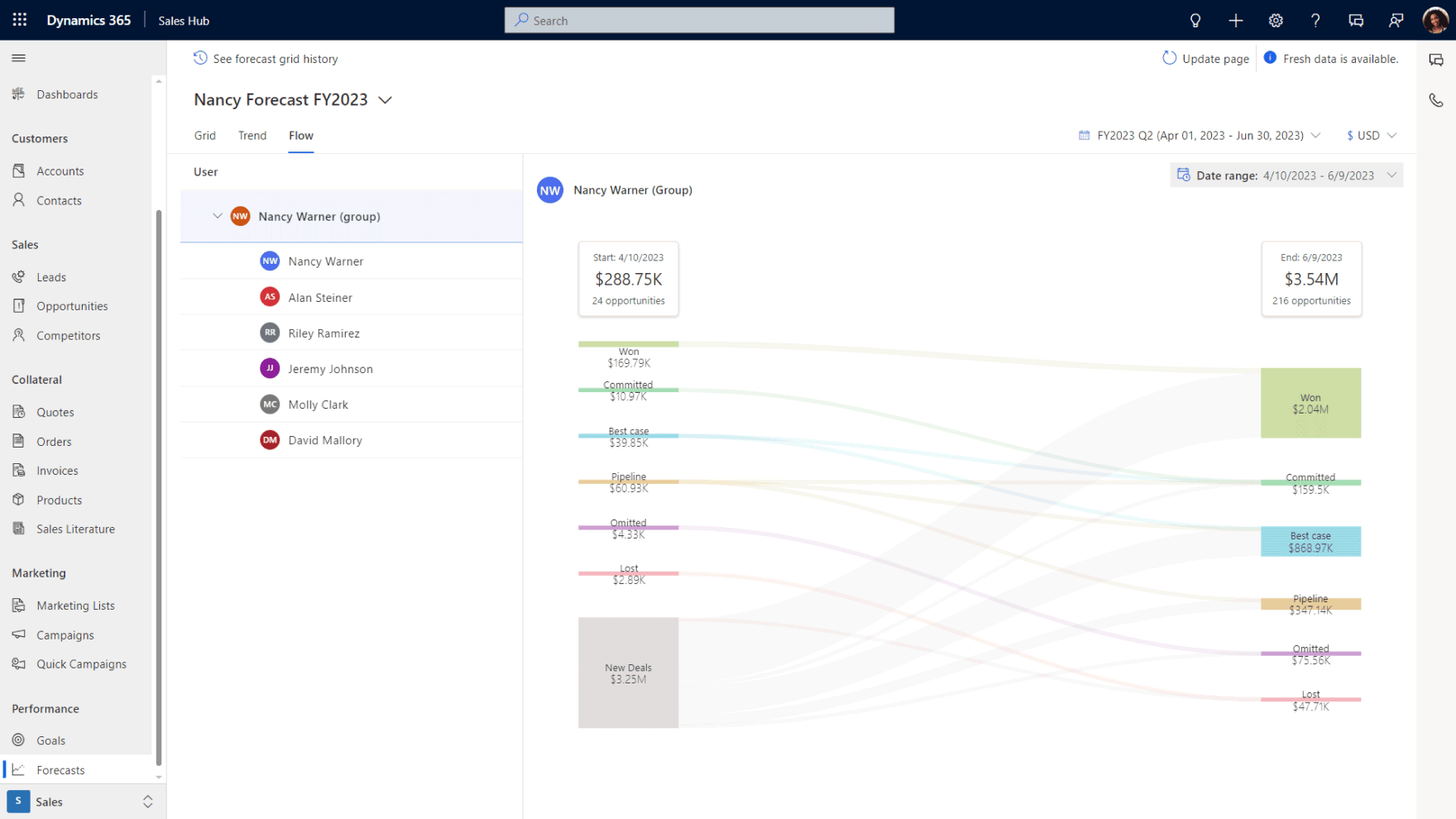
Because it sits directly on top of your opportunity data, forecasting models can pull from live pipeline information instead of exported reports. Territory structures, quota assignments, and revenue projections are in the same platform your sales team already uses.
That integration makes life easier for everyone.
Dynamics 365 Sales includes a dedicated sales forecasting module that allows leadership to build structured forecast hierarchies and compare expected revenue against targets. AI-driven predictive scoring can surface trends that might not be obvious in manual reports. Territory and quota management can be aligned with historical performance rather than static assumptions.
For organisations already using Microsoft tools like Outlook, Teams, or Power BI, the ecosystem becomes even more valuable. Real-time dashboards can be built without exporting data. Sales Enterprise and Professional editions allow businesses to scale functionality as their complexity increases. Features like Sales Accelerator and Relationship Analytics can support disciplined pipeline execution alongside strategic planning.
The strength of Dynamics 365 as sales planning software is not simply the feature set. It’s the ability to centralise forecasting, territory logic, and reporting inside one structured environment.
When implemented thoughtfully, it reduces fragmentation instead of adding complexity with another layer of tools.
Wondering if Dynamics 365 can handle your planning needs?
Before investing in another platform, it’s worth understanding what your existing CRM may already be capable of. We can review your current structure and show you what’s possible with the right configuration.
 Free discovery call
Do you need a CRM specialist to implement sales planning software?
Having a CRM specialist to help you set up and manage the software definitely makes the whole process a lot smoother because sales planning software on its own doesn’t magically fix messy data.
If the pipeline stages are inconsistent, if reps interpret “commit” differently, or if territories were assigned three reorganisations ago and never revisited, the software will faithfully calculate forecasts based on all of that chaos. It will look impressive and it will also be wrong.
In many cases, businesses already own the functionality they need inside their CRM. They just need it structured properly and managed regularly. That’s where a CRM specialist earns their keep.
A good specialist starts by asking better questions. Then they configure the system so it mirrors how your revenue engine actually works.
Practically speaking, that might involve:
- Auditing your current setup to spot gaps or blind spots
- Aligning pipeline stages with planning assumptions
- Configuring forecasting modules so they reflect real behaviour
- Connecting planning data to executive dashboards
To say it plainly, the software usually isn’t the problem. The setup is.
If you’re unsure whether your CRM is underused or misaligned, working with a CRM specialist can often unlock more value than buying another standalone platform. Sometimes the smartest move isn’t adding something new, but rather making what you already have work properly.
Why do businesses choose Gestisoft as their sales planning software partner?
Sales planning software is powerful when it’s configured around how your business actually generates revenue.
That’s where Gestisoft comes in.
As a Microsoft partner working with Canadian businesses, Gestisoft doesn’t just “install” Dynamics 365 then leave you to figure it out. We set it up to reflect exactly how your company runs.
That includes setting up the sales forecasting module so projections are tied to real pipeline behaviour. It means configuring territory and quota management so targets reflect actual capacity. We show you how to use AI predictive scoring responsibly, as a support tool rather than a magic 8 ball. Plus we can train your team to use the software so the adoption sticks.
For teams using Dynamics 365 Sales Enterprise or Professional, the goal isn’t to overwhelm you with all the features. It’s to activate the ones that matter for your business.
For growing Canadian businesses, that blend of technical expertise and commercial understanding is what turns sales planning software from a reporting tool into a strategic advantage.
-
A CRM records what your sales team is doing. It tracks calls, meetings, emails, and opportunities. It shows you activity and deal progression.
Sales planning software helps you look forward. You can forecast revenue, design territories, assign quotas, and model different outcomes before problems appear.
Liked what you just read? Sharing is caring.

February 25, 2026 by Shelley Sunjka by Shelley Sunjka Copywriter & Marketing Strategist
Armed with a psychology degree and an irrational obsession with okapis, I've spent the last decade helping bold brands tell better stories. I believe the best writing bends grammar rules on purpose and makes people feel something. When I'm not deep in words or nerding out on buyer behaviour, I'm probably convincing my kids that impromptu kitchen dance parties are totally normal.

