
No team leader wakes up thinking, “You know what would really energise everyone? Another software platform.”
Another login and password to remember. A new dashboard to learn and monitor. And a steady stream of pings disturbing the deep work each day.
That said, some software systems really are essential. And sales opportunity management software leads the pack (or the tech stack, if you will).
Despite the intimidating name, when it’s set up properly, it doesn’t feel like a separate tool bolted onto your process. It supports the daily workflow by organising how your team already sells and removes the guesswork around the opportunities in your pipeline.
There’s a specific kind of meeting that brings sales opportunity management software onto the agenda.
It usually begins with someone saying, “We’ve got plenty in the pipeline.”
And that’s technically true. But…
There are deals sitting in every stage. Notes are logged, emails are tracked and overall the activity in the CRM looks reassuring. But when someone asks, “What are we closing this month?”, the room goes uncomfortably silent because nobody can answer confidently.
As teams naturally expand and grow, that tension between visible activity and reliable predictability gets harder to ignore. More sales reps introduce more opportunities and in turn it just adds more complexity.
What growing teams need is disciplined organisation and this is where sales opportunity management software earns its place on the team.
What is sales opportunity management software?
In plain language, sales opportunity management software is the system that helps your team manage real deals properly once they’re qualified.
It manages the actual opportunities in your pipeline that are moving towards a decision. It is not for lead gen or the people who said they “might circle back next quarter.”
Once a deal is qualified and enters the pipeline, the sales opportunity management software provides the structure that guides the deal from the first serious conversation to closed-won or closed-lost. It defines what progress looks like, what information needs to be captured, and what must happen before a deal advances.
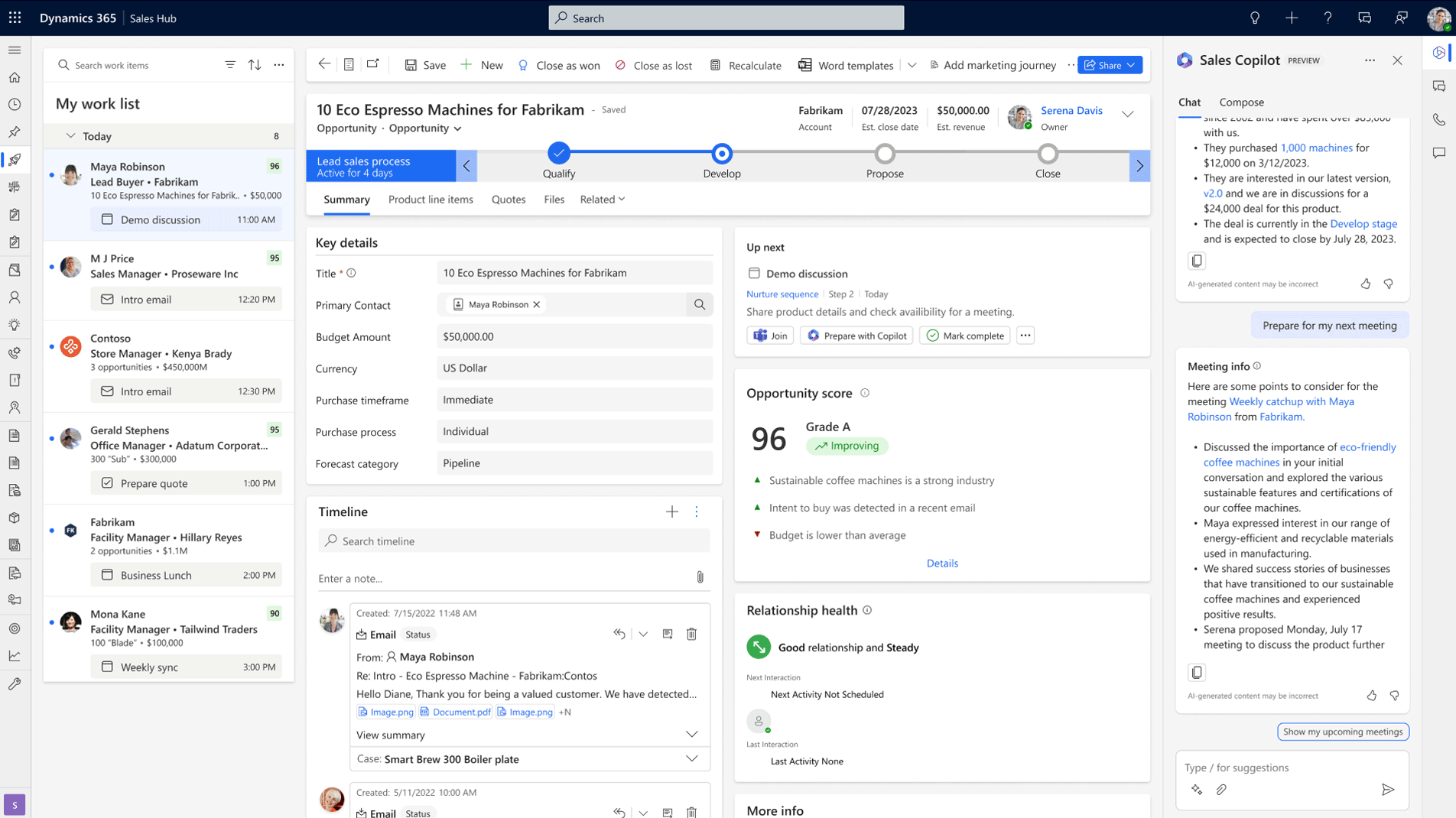
When it’s working properly, each opportunity has clear next steps that anyone can see. The right stakeholders are attached to the record and risks are identified early so they don’t derail the deal. Stage movement reflects buyer behaviour and forecasts are based on observable progress that is clearly tracked.
Sales opportunity management software does not generate new leads. But it does stop healthy-looking pipelines from collapsing under weak structure.
Build a Pipeline You Can Trust
Sales opportunity management works best when it’s designed around how your team actually sells. With the right structure in place, forecasting becomes clearer, deal progression becomes measurable, and managers gain real visibility into what’s closing. If you’re ready to strengthen how opportunities move through your pipeline, let’s take a look at your current setup.
 Free discovery call
Does sales opportunity management software generate more leads?
Short answer: no. And that’s where a lot of confusion starts.
Lead management is about getting someone to the point of qualification.
Sales opportunity management software doesn’t create more leads. It ensures qualified deals are managed with enough discipline that they actually close.
It does not increase website traffic or nurture cold prospects. If your pipeline is empty, this is not the tool that fills it. What it does well is take over once a prospect is qualified and becomes an opportunity.
When someone moves from “lead” to “opportunity,” the conversation shifts into commercial territory. The budget is discussed and allocated. Timelines are set. Decision-makers are identified. The deal now affects your forecast.
This is the handoff point where many CRM systems stop being helpful. The record exists, but there is no structure around how the deal should progress.
Sales opportunity management software fills that gap.
Sales planning software vs. sales opportunity management software
These two categories often get lumped together, but they operate at different altitudes inside your sales organisation.
Sales planning software sits at the strategic level. It focuses on revenue targets, territory allocation, quota modelling, and forecasting accuracy across the business. It helps leadership answer questions like:
- Are our targets realistic?
- Do we have enough pipeline coverage?
- Should we adjust headcount?
Sales opportunity management software operates much closer to the deal itself and answers a different set of questions.
- Is this opportunity progressing based on buyer action or rep activity?
- Are we relying on one contact or have we built relationships across multiple stakeholders?
- Is there a confirmed next step on the calendar?
- What is the real probability of closing?
Sales planning software shapes the revenue strategy for the quarter. Sales opportunity management software determines whether the individual deals inside that quarter are being run with enough structure to support that strategy.
As businesses grow, both of these layers matter. But if deal execution lacks structure and discipline, even the most sophisticated revenue plan will struggle to hold up.
Why sales opportunities stall inside most CRM systems
Most pipelines stall because there is no clear structure.
Opportunities advance in the CRM even when the buyer has not advanced their decision. A proposal is sent, so the deal moves forward. A meeting happens, so it feels like progress. But nothing meaningful has changed on the customer side. They’re still not ready to commit.
Close dates shift at the end of the month, then the quarter, then the next planning cycle. Instead of being tied to customer milestones, they reflect what the reps would like to have happen. Next steps are often vague, and when they do exist, they’re not tied to confirmed customer data or behaviour.
Complex deals move forward with only one contact attached. If that relationship weakens or loses influence internally, the entire deal slows down without warning and nobody else is positioned to move it forward.
None of this looks particularly dramatic in isolation. But together, across multiple active deals, it can materially impact the quarter’s revenue.
Signs your business needs better sales opportunity management software
You don’t need a 50-page evaluation framework to know when something feels off in your pipeline. Sometimes you just need a quick gut check.
We’ve put together a quick cheat sheet so you can assess whether your business is ready for sales opportunity management software. If you find yourself nodding along to the statements below, you probably need some structure in how your opportunities are managed.
- Your pipeline looks full, but your close rate has not improved in months.
- Your revenue does not reflect the volume of open deals.
- Deals tend to move forward only when a manager steps in.
- You cannot clearly explain why deals are slipping away.
- Forecast accuracy changes drastically month to month
- Your reps follow different approaches to moving deals forward.
- You sell more than one product or operate more than one sales motion, but your pipeline stages are identical for all of them.
- Revenue feels unpredictable even when pipeline volume appears healthy on paper.
If these feel familiar, you could benefit from sales opportunity management software.
Turn Opportunity Tracking Into Opportunity Control
When deal stages reflect real buyer progress and next steps are consistently structured, pipeline reviews become focused and productive. We help Canadian businesses configure Microsoft Dynamics 365 so sales opportunity management supports predictable revenue.
 Free discovery call
When evaluating sales opportunity management software, ask these 6 questions:
Before choosing a platform, pause and look beyond feature lists. The right system for your company should strengthen how deals move through your pipeline. Use these six questions as your evaluation framework.
1. Are deal stages tied to real buyer progress?
Deal stages should reflect what the buyer has done, not what the rep has completed. If stages are vague or interpreted differently by each rep, forecasting will always feel unstable.
Each stage needs clear exit criteria so the entire team shares the same definition of progress when moving deals to the next stage. Without that discipline, every deal appears to be making progress, even when the buyer has not committed to the next steps.
2. Can you see deal risk before it becomes a problem?
Good sales opportunity management software identifies and surfaces risk early.
- Stalled deals should be visible.
- Opportunities without a confirmed next step should stand out.
- Complex deals with only one active contact should be easy to identify.
- Early discount pressure or sudden competitive signals should not be buried or hard to find.
If the system cannot flag risk patterns, managers end up discovering problems at the end of the quarter.
3. Does it guide qualification without slowing reps down?
The structure provided by sales opportunity management software should not turn your reps into data entry clerks.
The best systems embed qualification checkpoints directly into the workflow, so required fields appear when they matter, not all at once.
If the process feels like admin work instead of deal support, adoption will suffer.
4. Are next steps structured and visible?
Every active opportunity should have a clearly defined next action.
That next step should be tied to stage movement, supported by task automation where appropriate, and visible to both the rep and their manager. Follow-up reminders should reinforce discipline without overwhelming the team with notifications.
Real opportunity momentum is easier to maintain when the system reinforces it automatically and protects the reps cognitive energy.
5. Is all deal communication connected to the opportunity record?
Emails, calls, and meetings should be linked to the opportunity itself, not scattered across inboxes and calendars.
Managers should be able to review the full history of engagement without chasing updates. Good sales opportunity management software should be set up in such a way that even when account ownership changes, the deal context should remain intact.
6. Can leadership trust the pipeline data?
Ultimately, sales opportunity management software must support decision-making.
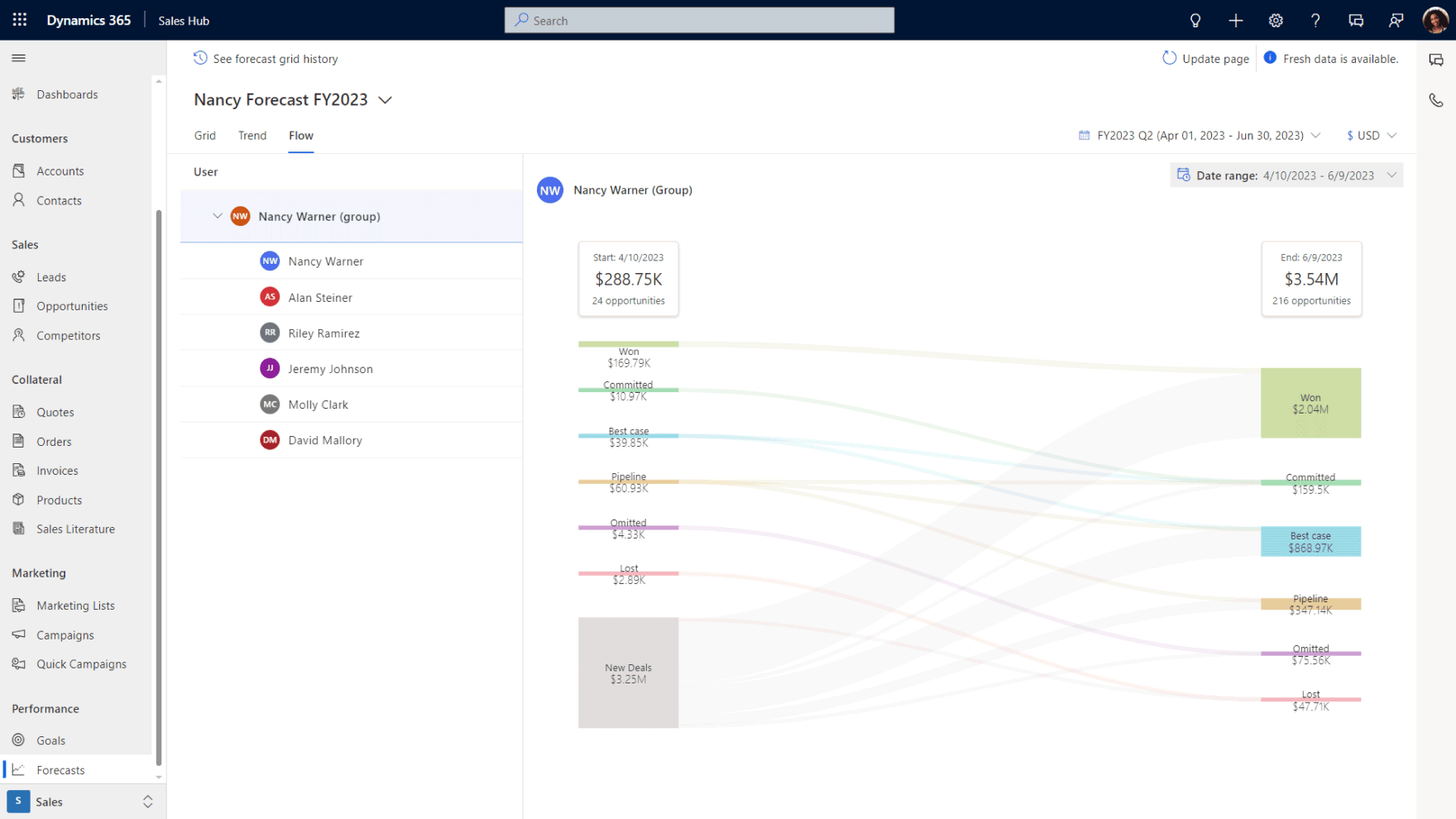
Stage conversion rates, average time in stage, deal velocity, win/loss reasons should be measurable, and forecast projections should reflect real movement inside the pipeline.
If leadership still needs side conversations to validate the numbers, the system is not doing its job.
Many businesses already use a CRM that technically includes opportunity tracking but it’s not set up and configured properly so you cannot leverage its full power. The issue is rarely the absence of software. It’s the absence of structure inside the software that causes the most issues. The right configuration by a CRM specialist turns opportunity tracking into real opportunity management.

Can Microsoft Dynamics 365 be used as sales opportunity management software
Yes, but only when it’s configured intentionally.
Microsoft Dynamics 365 Sales already includes the structural components required for strong opportunity management. The question isn’t whether the features exist, but rather whether they are aligned with how your team actually sells.
At the deal level, Dynamics 365 allows you to build structured opportunity records with clear stakeholder visibility. Business process flows can be designed to reflect meaningful stage gates, so advancement is tied to buyer progress rather than internal activity.
Required fields can be triggered at the right moment in the process instead of overwhelming reps upfront. Sales Accelerator can guide follow-up activity so next steps are not left to memory. Forecasting can be tied directly to opportunity data, giving leadership visibility grounded in real movement rather than commentary.
With dashboards and Power BI, deal health reporting becomes measurable. And because Outlook and Teams integrate directly with the platform, communication can be captured without forcing reps into duplicate admin work.
When these features are configured to drive sales management, you can start to fully leverage all Microsoft Dynamics has to offer to grow your business intentionally.
When implemented properly, Dynamics 365 functions as one of the best sales management software platforms on the market in 2026.
Make Microsoft Dynamics 365 Work at Full Capacity
Dynamics 365 already includes the components needed for disciplined opportunity management. When configured intentionally, it becomes a powerful foundation for structured deal execution and reliable forecasting. If you’d like to ensure your system reflects your sales motion, we can help you design it properly from the inside out.
 Free discovery call
How Gestisoft helps businesses in Canada implement sales opportunity management software properly
Most Canadian businesses don’t need another platform added to their stack. All they need is their existing system structured in a way that reflects how their customers actually buy.
Sales opportunity management software fails when stages are generic, qualification criteria are inconsistent, and dashboards do not show leadership the data they need to review deals. The technology may be capable, but the configuration does not support the reality of the sales motion.
Gestisoft works at this structural level to help you get the most out of your tools.
That means designing opportunity stages with clear exit criteria so progression reflects buyer commitment. It means building opportunity quality scoring inside Microsoft Dynamics 365 so risk is visible before quarter-end and configuring business process flows that guide reps without adding admin to their daily to-do list. It also means creating deal health dashboards that leadership can review weekly with ease. Sales opportunity management software only works when it becomes a habit across the team. That’s why we work with teams to train them up so adoption and retention are easier.
When implemented with intention, sales opportunity management software becomes a reliable operating layer inside your CRM rather than an underused feature set.
-
Sales opportunity management software is the system used to manage qualified deals from the moment they enter the pipeline until they close. It provides structure around stage progression, stakeholder visibility, next steps, and risk tracking so forecasts are based on buyer behaviour rather than assumptions.
Vous avez aimé ce que vous venez de lire? Partagez-le!

27 février 2026 par Shelley Sunjka par Shelley Sunjka Copywriter & Marketing Strategist
Armed with a psychology degree and an irrational obsession with okapis, I've spent the last decade helping bold brands tell better stories. I believe the best writing bends grammar rules on purpose and makes people feel something. When I'm not deep in words or nerding out on buyer behaviour, I'm probably convincing my kids that impromptu kitchen dance parties are totally normal.


