

Key Takeaways:
1. Discovery determines everything. The opening phase of a Dynamics CRM Consultant engagement is where successful implementations are built or where the problems that surface at go-live are quietly planted. Skipping or compressing it is the single most common reason Canadian CRM projects require expensive rework.
2. Configuration is only one of three jobs. The best Dynamics CRM Consultant carries business analysis, technical configuration, and change management skills simultaneously. Strength in one without the others produces a system that's either technically sound but unused, or widely adopted but built around the wrong processes.
3. Canadian context requires a Canadian specialist. PIPEDA, Quebec's Law 25, bilingual configuration, and provincial tax logic are not afterthoughts they're implementation decisions that need to be made during the project, not patched in after a compliance question surfaces.
4. Go-live is not the finish line. The first 90 days after launch are the highest-risk period of any CRM project. A consulting team that steps back at go-live hands you a stabilization problem that erodes adoption before the system ever finds its footing.
Most Canadian businesses that walk away from a Dynamics 365 implementation feeling burned don't blame the software. They blame the process. And when you dig into what actually went wrong, the same pattern keeps showing up: the Dynamics CRM Consultant role was either absent, underqualified, or handed off to someone who treated configuration as a checklist rather than a business problem.
This article is for companies that are about to hire a Dynamics CRM Consultant and want to understand what that person should actually be doing, how to evaluate whether they're doing it, and what the engagement looks like from discovery through to go-live.
If you're in Canada, bilingual requirements, Canadian data privacy law, and provincial tax configurations add a layer of complexity that a US-trained or offshore consultant won't always catch. We'll get into that too.
What a Dynamics CRM Consultant Actually Does
A Dynamics CRM Consultant is the person responsible for translating your business into Microsoft Dynamics 365. Not just technically configuring it, but understanding how your sales team works, where your data lives, what your pipeline actually looks like, and then building a CRM structure that maps to all of that.
The role spans three distinct skill sets that the best consultants carry simultaneously: business analysis, technical configuration, and change management. Most implementations that run into trouble do so because the consultant was strong in one area and thin in the others.
On the business analysis side, they spend real time inside your sales process before opening the platform. They sit with your sales team and ask questions about how leads come in, how deals move through stages, where handoffs happen, and what falls through the cracks. They talk to your customer service team about case volumes and escalation paths. They understand your reporting needs before they build a single dashboard.
On the technical side, the job of a Dynamics CRM Consultant handles configuration of pipelines, automation rules, user roles and permissions, data migration from your legacy system, and integrations with the tools your team already uses — whether that's Outlook, Teams, Power BI, or a third-party marketing platform.
On the change management side, a consultant who earns their fee knows that a beautifully configured system that no one uses is still a failure. They design training that goes beyond a two-hour demo on launch day, and they prepare your team for what daily life inside the new system actually looks like.
Not Sure Which CRM Modules You Actually Need?
A Dynamics CRM Consultant can scope that for you in a first conversation. Book a free consultation with Gestisoft and we'll walk you through what a right-sized Dynamics 365 implementation looks like for your team.
 Book a free consultation
The Discovery Phase of Dynamics CRM Consultant Is Where the Work Begins
Ask any experienced Dynamics CRM Consultant what separates a successful implementation from a painful one, and most of them will say the same thing: discovery.
Discovery is the opening phase of the project, usually two to four weeks for a mid-sized Canadian business. During this period, the Microsoft Consultant works through your business processes in detail before any configuration begins. They document your current state: where leads come from, how opportunities are tracked, what integrations exist, where data quality is poor, and what your team's day-to-day workflow actually looks like versus what the org chart says it looks like.
Organizations that try to skip or compress discovery consistently pay for it later. When the team building your system doesn't fully understand your business before touching configuration, it gets built around assumptions. Those assumptions require rework. Rework is expensive, and it erodes trust in the project before it's even live.
A well-run discovery process produces a clear requirements document: a written record of what the CRM needs to do, which modules will be activated, what data needs to migrate, and what integrations are necessary. This document becomes the scope of the project, and a good consultant won't let configuration begin until it's agreed upon by both sides.
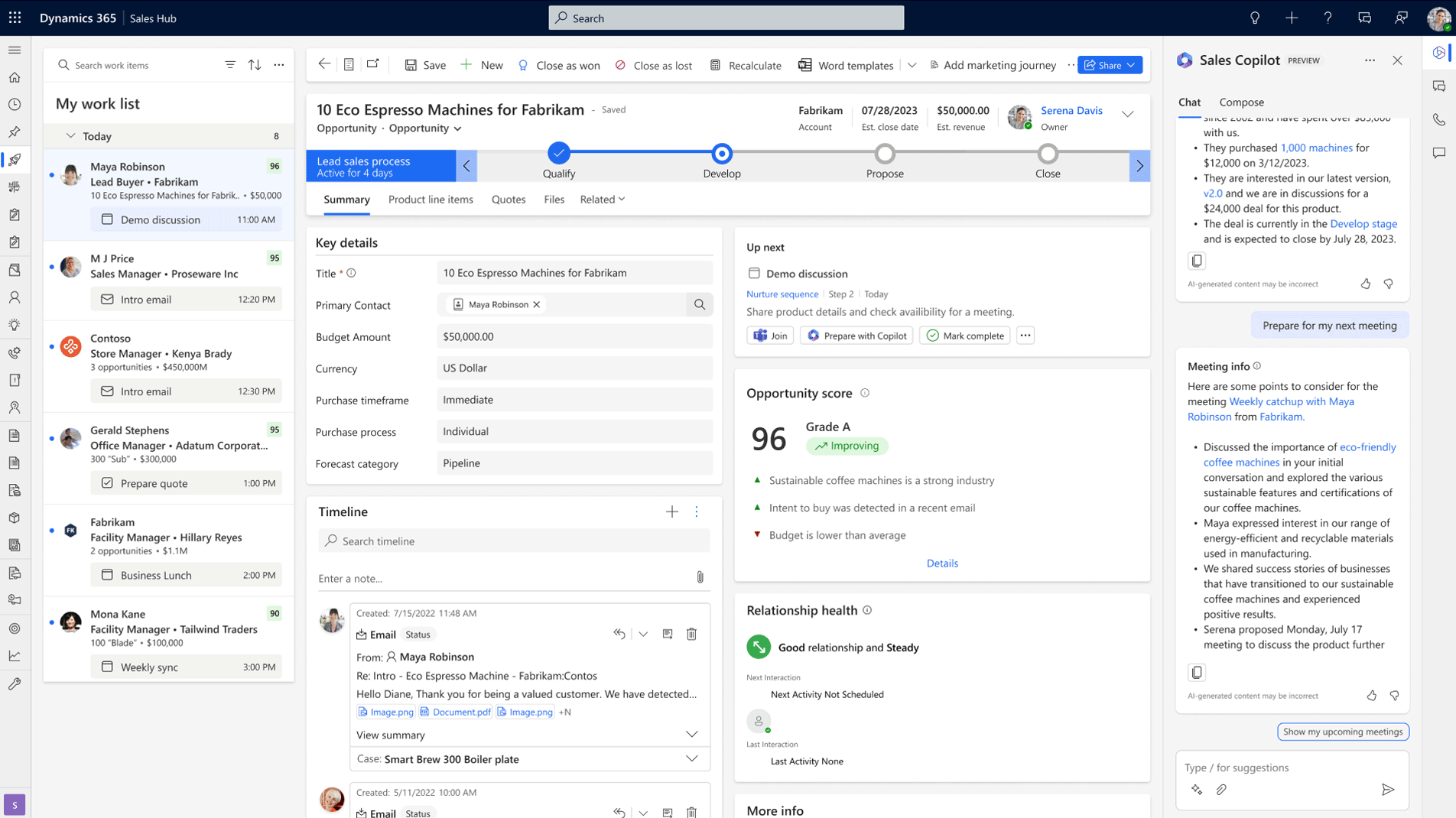
What a Dynamics CRM Consultant Configures
Once discovery is done, the consultant moves into design and configuration. For a Microsoft Dynamics 365 CRM implementation, this phase typically covers the following areas.
1. Pipeline and Sales Process Design
They map your actual sales stages into Dynamics 365, build lead and opportunity records to match what your team needs to see, and set up automated workflows for follow-ups, lead assignment, and status changes.
2. Data Migration
Moving your existing customer and pipeline data from a spreadsheet, an older CRM, or a legacy system into Dynamics 365 is one of the highest-risk parts of the project. A qualified Dynamics CRM Consultant runs test migrations before the live cutover, validates data quality at each stage, and builds a rollback plan. As our team at Gestisoft has seen across hundreds of Canadian CRM projects, organizations that treat data migration as a detail rather than a discipline end up with a system their team immediately stops trusting.
3. Integrations
Your team uses email. They likely use a quoting tool, a marketing platform, or an ERP system. A good consulting partner maps those integrations and makes sure information flows between systems. For businesses running Microsoft tools like Outlook and Teams, this integration layer is where Dynamics 365 starts showing its real value when it's been connected properly. For companies that also run Business Central on the ERP side, the Business Central CRM integration requires someone who understands both platforms well enough to configure the connection around your actual business processes.
4. User Roles and Security
The consultant configures who can see what, who can edit what, and how information is segmented across sales territories, teams, or business units.
5. Reporting and Dashboards
A properly configured Dynamics 365 Sales implementation gives sales managers real-time visibility into pipeline health, forecast accuracy, and individual rep performance. Those dashboards get built during configuration, not as an afterthought.
Want to see what a configured Dynamics 365 CRM looks like in practice? Gestisoft's team put together a detailed practical walkthrough of the Dynamics 365 CRM interface, covering the sales module, Outlook integration, marketing, and Power BI dashboards.
For Canadian businesses evaluating whether now is the right time to invest, it also helps to understand how the CRM implementation cost breaks down across licensing, consulting, and post-go-live support before the first consultant conversation.
What Separates a Good Dynamics CRM Consultant From a Weak One
This is the question Canadian businesses most often ask, and the most honest answer is: look at how they run discovery, not just what certifications they hold.
Microsoft certifications confirm that a consultant knows the platform. They don't confirm that they can sit with your VP of Sales and understand why deals are stalling at the proposal stage. Those are different skills, and the certification doesn't test for the second one.
Here's what to look for.
1. They ask questions before they propose solutions.
Someone who shows up with a prepared implementation plan before spending meaningful time inside your business is building around assumptions. Good consultants spend the first meetings listening, not presenting.
2. They can explain how they've handled your specific industry.
Someone with experience in manufacturing, nonprofit, professional services, or distribution will ask different questions than a generalist. They'll know where the common friction points are in your type of business and won't need the project to teach them. If you're evaluating top CRM consultants in Canada, industry depth is one of the strongest differentiators.
3. They talk about training before go-live.
User adoption is where CRM implementations succeed or fail in practice. A consulting team that doesn't have a concrete training plan and a change management approach is handing you a risk.
4. They have a post-go-live support model.
Go-live is not the end of the project. A good Dynamics CRM Consultant will tell you what the first 90 days after go-live look like, who handles support requests, and how configuration evolves as your business changes.
Julie Lachance, IT and Innovation Manager at Bedard HR, described what working with a consulting team that gets this right actually feels like: "Gestisoft had a knack for finding creative solutions. It wasn't easy, but the team never gave up and always managed to come up with solutions while trying to reduce costs as much as possible and bearing in mind the solution ecosystem's durability." Bedard HR first worked with Gestisoft on a CRM migration in 2018, and that relationship extended into a full Business Central implementation years later. The continuity happened because the team treated the project as a business partnership, not a delivery contract.

Dynamics CRM Consultant and The Canadian Context
If you're searching for a Dynamics CRM Consultant in Canada, there are a few considerations that a US-focused or offshore firm will often miss.
Privacy law → Quebec's Law 25 and Canada's PIPEDA both impose specific requirements on how customer data is collected, stored, and managed. Any consultant working with Canadian businesses should be configuring data residency, consent mechanisms, and access controls in line with these regulations from the start of the project, not patching them in after a compliance question surfaces six months later. This is especially relevant for businesses in Quebec, where Law 25 introduced specific obligations around data handling that your CRM configuration needs to reflect.
Bilingual operations → If your team works in both English and French, your consulting partner needs to configure the system to support both languages natively. This covers field labels, workflow notifications, email templates, and user interface settings. It also applies to training: a team onboarded in their second language adopts the system more slowly. For Quebec-based businesses, this isn't optional.
Tax configuration → Canadian businesses deal with GST, HST, and QST depending on province. A consultant integrating your CRM with Business Central or with billing systems needs to understand Canadian tax logic to configure product records, quotes, and invoices correctly.
Microsoft Partner status in Canada → Not all firms operating as a Dynamics CRM Consultant are certified Microsoft Partners, and the distinction is meaningful. A certified partner has access to Microsoft support channels, receives early access to platform updates, and carries credentials that an independent consultant doesn't. When evaluating options, look for a firm with a proven track record implementing Microsoft Dynamics CRM specifically in the Canadian market.
The Dynamics CRM Consultant's Role During and After Go-Live
Go-live is the moment the system opens to your full team. It is not the moment the consulting team steps back.
The first 30 days after go-live are typically the highest-risk period in a CRM implementation. Usage patterns don't match what was anticipated. Workflows that tested fine in a demo environment behave differently with real data and real users. Teams run into edge cases that weren't scoped during discovery. A consulting team that's built the system properly will have anticipated most of these, but some will still surface.
What good looks like in this period: the consultant is available, responsive, and already tracking early adoption metrics. They're running follow-up training sessions for users who are struggling. They're adjusting configuration where the design missed reality. And they're building a list of post-stabilization enhancements to tackle once the team is comfortable with the core system.
For organizations running Dynamics 365 Sales Professional or the Enterprise tier, this stabilization window matters enormously for the long-term health of the implementation. The investments made in the first 90 days post-go-live determine whether the system becomes infrastructure the team depends on or a system they log into because they have to.
This is also where the CRM implementation success story separates from the cautionary tale. Teams that received proper training and had an attentive partner through stabilization achieve adoption rates that justify the investment. Teams that were handed a go-live date and a user manual figure out workarounds.
Ready to Start Your Dynamics CRM Consultant Conversation?
Gestisoft's team of Microsoft-certified consultants works with Canadian businesses from coast to coast, in English and in French. Book a free consultation and let's figure out what a well-scoped Dynamics 365 implementation looks like for your organization.
 Book a free consultation
How to Choose a Dynamics CRM Consultant in Canada: A Decision Framework
Rather than reviewing a list of names and hoping one fits, use these questions to evaluate any consulting firm you're considering.
Can they describe their discovery process in detail?
A vague answer here is a red flag. A good consultant can tell you exactly what they do in weeks one and two, what deliverables come out of discovery, and how they handle disagreements about scope.
Have they implemented Dynamics 365 CRM in your industry?
Manufacturing, nonprofit, distribution, and professional services each have their own CRM dynamics. A firm with specific industry experience will configure the system differently than a generalist, and the difference shows up in how fast your team adopts it.
Do they cover both CRM and ERP, or just CRM?
If your business runs on Business Central or is considering it, a Dynamics CRM Consultant who doesn't understand ERP will configure the CRM without thinking about how data needs to flow into finance and operations. A consulting team with Microsoft implementation depth across both platforms prevents that integration failure before it happens.
What does their support model look like after go-live?
Ask specifically: who handles requests, what's the response time, and how does configuration evolve as your business changes? Anyone without a clear answer to this is planning to hand the system off and move to the next project.
Are they a certified Microsoft Partner in Canada?
Certification isn't everything, but it's a meaningful baseline. Gestisoft is a certified Microsoft Partner that has been implementing Dynamics 365 CRM for Canadian businesses since 1997, with a team of 110+ specialists and a 95% client renewal rate.
Also take time to evaluate how the firm handles CRM vendor selection conversations with you. Anyone who pushes toward a solution before understanding your business is prioritizing their delivery process over your outcomes.
What Does a Dynamics CRM Consultant Cost in Canada?
Pricing varies significantly based on the scope of the implementation, the number of users, integrations required, and the level of customization involved.
For a standard Dynamics 365 CRM implementation at a Canadian SMB with 20 to 50 users, a Dynamics CRM Consultant engagement typically runs between $25,000 and $75,000 CAD for the full project. More complex implementations involving Dynamics 365 upgrades from older CRM systems, deep integrations, or multi-country operations can run higher.
The Microsoft licensing fees are separate from consulting fees. Dynamics 365 Sales Professional runs approximately $88 CAD per user per month, while Sales Enterprise runs approximately $128 CAD per user per month.
One number to keep in mind: the cost of a failed implementation, or one that requires significant rework because discovery was rushed, typically exceeds the cost of doing it properly the first time. Choosing a partner based on the lowest implementation quote is often the most expensive decision a Canadian business can make.
Ready to talk about Dynamics CRM Consultant? We’re ready to chat with you and get you the answers you’re looking for. Book a free consultation today!
-
A Dynamics CRM Consultant designs and implements Microsoft Dynamics 365 CRM for your business. They handle discovery and business analysis, configure the platform to match your sales process, migrate your existing data, build integrations with your other tools, train your team, and support the system after go-live.
Explore More
What a CRM Implementation Consultant Does — A deep look at the implementation consultant's role from discovery through go-live, written for Canadian businesses investing in Dynamics 365.
Top 10 CRM Consultants in Canada — How Gestisoft evaluates and ranks the leading CRM consulting firms operating in the Canadian market.
Dynamics 365 for Customer Service: 2026 Buyer's Guide — An honest look at whether Dynamics 365 Customer Service fits your team's needs, from a Canadian Microsoft Partner's perspective.
8 Steps in a CRM System Implementation Project Plan — A practical breakdown of the implementation phases your Dynamics CRM Consultant should be walking you through.
Microsoft Dynamics CRM: What It Is and How It Works — The foundational overview of the platform your Dynamics CRM Consultant will be configuring for your business.
Liked what you just read? Sharing is caring.

June 30, 2026 by Conni Guido by Conni Guido Copywriter and Brand Strategist
I started with a degree in Professional Communications and never looked back. Now, I'm a professional storyteller who believes every brand has a story to tell, and every good story should leave you wanting more. You can find me lost in a book club or a writing sprint, baking words into pies...probably both.

