

If your finance team is still logging into Navision accounting software every morning, you're not alone. Thousands of Canadian SMBs built their financial operations on Microsoft Dynamics NAV, and many of those businesses are still running it today. The books balance. The reports go out. Nobody wants to touch what isn't broken.
But something changed. Microsoft stopped selling new Navision accounting software licenses and moved all new deployments to Dynamics 365 Business Central. Support timelines are tightening. And if you're on an older NAV version, you may already be past the point where Microsoft will pick up the phone.
This article is for finance leads, IT directors, and operations managers at Canadian companies who want a straight answer: what is Navision accounting software, where does it stand in 2026, and what are your real options going forward?
What Is Navision Accounting Software?
Navision accounting software began in Denmark in 1984, built by a company called PC&C A/S. The original product was a single-user accounting tool. By 1987, it had become a client-server system that multiple users could access at once, which was ahead of its time.
Microsoft acquired Navision in 2002 and rebranded it Microsoft Dynamics NAV in 2004. For the next 14 years, Dynamics NAV was Microsoft's flagship ERP solution for small and mid-sized businesses. It covered general ledger, accounts payable and receivable, inventory, purchasing, sales, and manufacturing. At its peak, over 100,000 companies worldwide ran their operations on it.
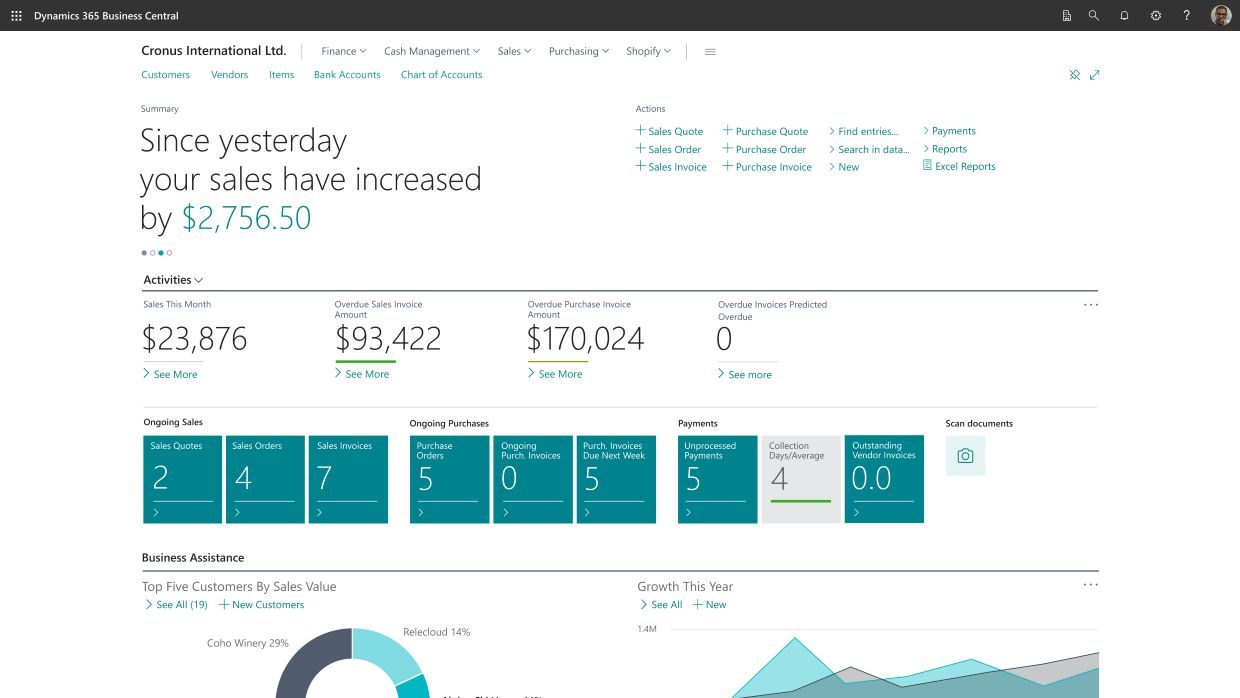
In 2018, Microsoft replaced Navision accounting software with Dynamics 365 Business Central. Business Central kept most of NAV's core functionality but rebuilt it for the cloud, added native Microsoft 365 integration, and moved to a continuous update model instead of annual releases.
Today, Navision accounting software is a legacy product.
Microsoft stopped licensing it to new customers. The last standalone version was NAV 2018, and while extended support exists for some versions, it's winding down across the board.
Talking to a Partner Makes This Simpler
Gestisoft has run NAV-to-Business Central migrations for Canadian organizations across manufacturing, distribution, and professional services. Let's map out what your migration looks like.
 Free discovery call
What Navision Accounting Software Does
Before we get into the "what now" question, it's useful to understand why so many Canadian companies built their operations on Navision accounting software in the first place.
It wasn't nostalgia. NAV solved real problems that basic accounting tools like QuickBooks couldn't handle.
1. Financial management
The software manages the full general ledger, cash flow, bank reconciliation, fixed assets, and multi-currency transactions. You can run detailed financial reports, compare actuals to budget, and track costs at the department or project level. For a mid-sized Canadian manufacturer or distributor, that's real capability.
2. Accounts payable and receivable
NAV automates invoice processing, payment runs, and aging reports. If your business deals with a high volume of vendor invoices or customer payments, the system handles that workload without needing a separate tool.
3. Inventory and purchasing
NAV connects your financial data to your warehouse. Purchase orders flow into the ledger automatically. Inventory valuation updates in real time. This integration between operations and finance is what separated it from standalone accounting software.
4. Multi-entity and multi-currency
Canadian businesses operating across provinces, or with U.S. or international subsidiaries, relied on Navision accounting software for consolidated reporting across multiple legal entities. That capability still exists in Business Central, and it's significantly more automated.
5. Customization
One of the reasons the platform stuck around so long is that it was highly customizable. Companies built vertical solutions on top of NAV for manufacturing, distribution, retail, and professional services. Some of those customizations are still running today.
Where Navision Accounting Software Stands in 2026
Microsoft ended mainstream support for all Navision accounting software versions prior to NAV 2018 between 2019 and 2023. Extended support for NAV 2018 runs until January 2028. After that, there are no more security patches, regulatory updates, or compliance fixes.
For Canadian businesses, that has a specific consequence: CRA requirements change. GST/HST rules get updated. Payroll tax regulations evolve. If you're running an older version of navision accounting software that Microsoft no longer updates, your finance team is going to be applying manual workarounds to stay compliant. That's the kind of risk that tends to stay invisible until it isn't.
There's also the integration problem. NAV was built before Microsoft Teams, Power BI, Azure, and Microsoft 365 became the standard operating environment for Canadian businesses. Connecting it to those tools is possible, but it usually requires custom development and ongoing maintenance. Business Central connects to all of them natively, out of the box.
The talent pool is shrinking, too. Navision accounting software consultants, developers, and administrators are retiring or retraining on Business Central. Finding someone who can maintain a heavily customized NAV environment is getting harder and more expensive every year.
Navision Accounting Software vs. Business Central: The Key Differences
Most Canadian SMBs researching navision accounting software in 2026 are really asking one question: how different is Business Central, and is the disruption justified?
The short answer is that Business Central is substantially more capable than NAV, but the functional core is familiar. If your team knows the system, they'll recognize Business Central's chart structure, posting groups, and financial workflows. The learning curve exists, but it's not starting from scratch.
Here’s where the differences lie:
1. Deployment.
NAV was installed on your own servers. Business Central runs on Microsoft Azure. That means no server maintenance, automatic updates twice a year, and access from any browser or the mobile app. For Canadian companies that went remote or hybrid, that's a material difference.
2. AI and automation.
Business Central has Microsoft Copilot built in. It can predict late payments, suggest purchase orders based on inventory levels, and automate AP processing through the Payables Agent. Navision accounting software has none of that. You can read more about how to automate accounting processes with Business Central on our blog.
3. Reporting.
Navision accounting software had SSRS-based reports that required developer involvement to modify. Business Central has Analysis Mode, financial report templates, and native Power BI integration. Finance teams can build their own dashboards without IT. Our ERP finance module overview covers this in detail.
4. Licensing.
Navision accounting software used a perpetual license model. You paid once for the software and annually for maintenance. Business Central uses subscription licensing: Essentials at around $70 CAD per user per month, Premium at around $100 CAD per user per month. For most SMBs, the total cost of ownership is comparable once you factor out server and IT infrastructure costs.
5. CRA compliance.
Business Central is updated twice a year by Microsoft. Canadian tax configurations, GST/HST handling, and payroll integrations stay current. With older NAV versions, that responsibility falls on your team or your partner.
For a deeper look at the technical comparison, our article on Dynamics NAV vs. Dynamics 365 Business Central walks through the differences module by module.
Navision Accounting Software: What Canadian SMBs Are Doing
The companies we talk to at Gestisoft fall into a few categories when it comes to their NAV situation.
Some are on NAV 2018 and feel relatively comfortable. They're on supported software, the system is stable, and they're planning their migration for 2026 or 2027 before the 2028 deadline.
Some are on NAV 2013, NAV 2015, or NAV 2016, which are already out of support. They're managing risk actively: careful with security, watchful on compliance, and usually aware that they need to move sooner rather than later.
Some are in the middle of a migration right now. They started the process, hit complexity around customizations, and are working through a phased approach.
And some are surprised to learn their version of NAV is out of support. That's not a criticism. These systems run quietly in the background, and IT teams are managing dozens of priorities at once.
If you're unsure which category you're in, that's the first thing to figure out. Our blog post on migrating from NAV to Business Central covers the decision framework in detail.
“Anytime I have requests, I've never had a problem with Gestisoft's team. I always get quick answers, and we always manage to solve what we wanted to solve.”
Navision Accounting Software and the Migration Question: How Complex Is It?
This is where Canadian businesses get nervous, and understandably so. Navision accounting software implementations were often heavily customized. Some companies have a decade of NAV-specific development sitting on top of the base product. The idea of moving all of that to a new platform feels enormous.
The reality is more nuanced. A significant portion of NAV customizations were built to compensate for limitations that Business Central has already solved natively. AP automation, project accounting, intercompany transactions, multi-currency posting: many of the things that required custom development now exist as standard Business Central features or certified AppSource extensions.
That said, the migration does require planning. Data needs to be cleaned and structured before it moves. Custom business logic needs to be assessed: keep it, replace it with a native BC feature, or rebuild it. The chart of accounts needs to be reviewed. And your team needs training on a new interface.
The biggest migration risk is underestimating that assessment phase. Companies that rush it tend to run into problems mid-project. Companies that treat it as proper discovery work, mapping what they have against what Business Central does natively, usually come through in reasonable shape.
We've written about the common ERP migration mistakes to avoid specifically because we've seen the same patterns repeat across client projects. If you're starting to plan, that article will save you time.
The question of how to choose an ERP system is also relevant here, particularly if your business has evolved significantly since you first implemented NAV.
Canadian-Specific Considerations for Navision Accounting Software
Navision accounting software was available with Canadian localization, and Business Central is too. But there are a few Canadian-specific considerations that often get overlooked when SMBs plan a migration.
Bilingual requirements → If your business operates in Quebec or serves French-speaking clients, Business Central supports full French-language interfaces, bilingual document output, and Quebec-specific reporting. This was always a pain point with heavily customized NAV environments where third-party localizations weren't always maintained. Our team at Gestisoft, headquartered in Quebec, handles bilingual implementations regularly.
GST/HST compliance → Business Central's Canadian localization includes built-in GST/HST tax configurations. It handles the differences between provinces, tracks input tax credits, and generates CRA-compliant reports. Staying current on regulatory changes is automatic when Microsoft pushes bi-annual updates, which is a contrast to the manual compliance management that older versions of navision accounting software require.
CRA audit trails → Business Central maintains detailed, tamper-resistant transaction logs that meet CRA audit requirements. Financial data is stored on Microsoft Azure in Canadian data centers, which addresses the data residency questions that come up regularly for Canadian organizations.
Multi-entity consolidation → Canadian companies with subsidiaries in multiple provinces, or with U.S. operations, often used NAV's multi-company features. Business Central's intercompany posting and consolidation capabilities are more automated and don't require the manual reconciliation steps that NAV often did. The financial management software overview on our site covers how this works in practice.
For businesses evaluating accounting software options more broadly, our top 5 accounting software in Canada for SMBs article puts Business Central in context alongside other platforms.
Let's Talk About Your Next Step
Whether you're on NAV 2018 planning ahead or on an older version managing risk right now, we can help you build a clear path to Business Central. No jargon, no pressure.
 Book a free consultation
Navision Accounting Software and what Gestisoft Does Differently
Gestisoft is a Microsoft Partner headquartered in Quebec, with over 27 years of experience implementing and migrating ERP systems for Canadian organizations. We've been involved in Navision accounting software implementations since the NAV era and have moved dozens of clients to Business Central.
What that means practically: we know where the migration complexity hides. We've seen the customization patterns that require real work to replicate in Business Central, and the ones that are straightforward. We know the Canadian compliance requirements that need to be configured from day one. And we work in both official languages, which is essential for Quebec-based businesses and national organizations with bilingual operations.
We're not a generic implementation shop. We focus on Microsoft's business applications stack, which means Business Central, Dynamics 365 CRM, and Copilot AI. That focus means our team is deep on the product, not spread across fifteen platforms.
If you're currently running NAV and trying to figure out your timeline and your risk, the conversation starts with understanding what version you're on, what customizations exist, and what your business has become since the original implementation. Those three things determine how complex and how urgent your migration is.
You can also explore what a Business Central partner does specifically to support you through that process.
To learn more about Navision Accounting Software, be sure to reach out to us at Gestisoft and book a free consultation. We’ll meet you where your business is at and get you the answers you’re looking for!
Explore More
- Dynamics NAV vs. Dynamics 365 Business Central: Key Differences
- Why Migrating from NAV to Business Central: A Complete Guide
- Migrate Navision to Dynamics 365: Challenges and Best Practices
- What Is Business Central? Complete Directory for Canadian SMBs
- Understanding the True Cost of Accounting Software Implementation
Liked what you just read? Sharing is caring.

June 16, 2026 by Conni Guido by Conni Guido Copywriter and Brand Strategist
I started with a degree in Professional Communications and never looked back. Now, I'm a professional storyteller who believes every brand has a story to tell, and every good story should leave you wanting more. You can find me lost in a book club or a writing sprint, baking words into pies...probably both.
