
Expanding into foreign markets can be an exciting opportunity for many businesses, and, to support their new endeavours, a systems upgrade is often required.
Of course, in the early stages, currency discrepancies are likely negligible. It’s usually enough for a business to handle single currency CAD transactions by using spreadsheets or a pen and paper. There’s typically no need to commit money and resources to financial software.
However, once a business expands sales or suppliers into another country or region, a dedicated financial tool is often needed to support multiple currency transactions. This is where an accounting software multi currency comes into the picture.
If you’re unsure about adopting an accounting software multi currency for your business, for this article, we want to immerse you in a fictitious business scenario where you’re the CEO of a medium-sized Canadian outdoor gear manufacturing company called MapleStride. By referring to this company throughout the article, we’ll use this company to better illustrate when a business may need an accounting software multi currency.
So, up until now, all of MapleStride’s sales have been domestic; meaning it’s operated solely in CAD. However, business has since boomed and, with agreement from your executive team, you’ve recently decided to expand sales into the United States. Suddenly, your business is now generating revenue in USD, but still reporting all transactions in CAD. You’ve heard of accounting software multi currency systems for businesses, but need more information to decide which one to adopt to support your new USD business ventures…
Scaling internationally?
If managing multiple currencies is starting to slow your business down, it may be time to rethink your systems.
 Free discovery call
Let’s Start With the Basics: What is Accounting Software Multi Currency?
To keep it short for you, accounting software multi currency refers to accounting systems that allow businesses to process, convert, and generate financial reports across multiple currencies, all within a singular platform.
This means that, instead of manually reconciling foreign transactions into a business’s base currency, accounting software multi currency automates the process. How? It records the original transaction currency, and then automatically converts this into the converted amount in your base currency.
What does this look like in practice?
Imagine your sales team at MapleStride has just secured a wholesale order from a U.S. retailer who has purchased 500 hiking backpacks at $85.00 USD each.
The total order value comes out at $42,500 USD. At an exchange rate of 1.34, this converts to approximately $56,950 CAD.
A robust accounting software multi currency system will then automatically:
- Record the $42,500 USD transaction,
- Convert and log the CAD equivalent, and;
- Reflect this accurately in future financial reports.
This end result ensures leadership can view this sale in the broader picture of business performance in a single, consistent currency.
What are the Key Features of Accounting Software Multi Currency?
When looking at accounting software multi currency platforms, it’s important to consider if they support these following key features:
a. Automatic Exchange Rate Conversion
As discussed above, arguably the most fundamental feature of accounting software multi currency is its ability to automatically convert foreign currencies upon transaction using up-to-date, real-time exchange rates.
So, instead of someone in finance needing to manually convert each foreign business transaction into your chosen base currency, the accounting software multi currency will do this for you automatically as the transaction occurs.
b. Financial Reporting
Simply put: without accounting software multi currency, financial reporting becomes significantly more complex and arduous for finance.
What could this look like in reality?
Imagine you want to launch a new product line at MapleStride in preparation for peak hiking season. You and leadership want a quarterly performance report to confirm this is a good investment and the financials align with your decision…
Before, to generate the report, your finance team would have had to retrospectively manually translate any foreign transaction into your chosen base currency, which is typically time-consuming, energy draining, and prone to human errors.
With an accounting software multi currency, the appropriate exchange rate will be automatically applied, and any income and expenses will be converted accordingly. Reports can thus be generated instantly, giving a clear and consolidated view of business performance. No delays, and no to and fro from finance checking if the report is ready.
Instead of finance spending 6-8 hours at the end of the month reconciling 120 USD transactions manually, this freed time can be used towards more strategic analysis and forecasting.
Instead of finance spending 6-8 hours at the end of the month reconciling 120 USD transactions manually, this freed time can be used towards more strategic analysis and forecasting.
c. Multi-Entity Consolidation
Now, let’s say that you decide to go ahead with this new product launch. As such, you want to open a new manufacturing operation in Denver, Colardo. You’ve consulted with legal to establish a U.S. entity to manage local distribution.
So, now, the business operates under both:
- Your main Canadian private limited entity and;
- Your new U.S. LLC entity
An accounting software multi currency can then seamlessly link these two structures together by consolidating financial data across both legal entities. Any potential legal complexity is removed from the picture.
d. Audit and Compliance
Perhaps an overlooked but essential aspect of accounting software multi currency is its assistance with regulation and tax.
Accounting software multi currency ensures:
- As discussed above but worth reiterating: entirely accurate reporting of exchange rate gains/losses, which might otherwise be vulnerable to human errors.
- Comprehensive audit trails for all transactions and;
- Full compliance with Canadian and abroad accounting standards
Ultimately, when tax season rolls around, finance will likely be thankful you invested the time and money into maintaining financial integrity as the business grows across borders.

So what are the Tangible Benefits of Accounting Software Multi Currency?
How do the above key features of accounting software multi currency translate into clear, tangible outcomes for business leaders?
1. Financial Accuracy
As discussed above, accounting software multi currency eliminates any and all manual conversion errors, ensuring financial data reflects reality across all operating regions.
2. Efficiency
Your finance team at MapleStride can eliminate the hours of potential laborious spreadsheet reconciliation in preparation for reports from leadership. Consequently, this frees up time for them to focus on strategies, models and more interesting work.
3. Visibility
You and your executive team gain a clearer view of how different markets across regions are performing without any delays caused by currency translation blockages.
4. Decision-Making
Perhaps one of the most important benefits: when evaluating expansion opportunities, such as entering a new market, you and leadership can rely on accurate, real-time financial data that can allow you to take strategic business decisions without delay.
But are there Any Limitations to Accounting Software Multi Currency?
Like with any tool, accounting software multi currency does have its limits, which particularly start to show as a business’s operational complexity surpasses a certain point.
For you at MapleStride, this point might look like:
- Operating in 3 or more currencies: for instance, CAD, USD, and EUR simultaneously;
- Managing a high volume of transactions: think 800+ transactions per month
- Coordinating transactions across multiple business departments, such as inventory, sales and finance teams.
At this stage, although accounting software multi currency can support the financial data, it lacks visibility into the wider operational view and how different departments impact each other in real-time…
When is Accounting Software Multi Currency Not the Right Fit?
With just its Canadian and U.S. operations, MapleStride’s two currencies can be supported by accounting software multi currency. However, if you decide to scale further, say, into Europe, the cracks of accounting software multi currency may start to show.
A hypothetical scenario at MapleStride could look like:
- $500,000 CAD monthly revenue
- 40% USD sales
- 25% EUR supplier costs
- Multiple warehouse locations across continents
At this point, financial currency conversion needs further support. Leadership needs a system that connects finance with broader business operations.
So it’s not so much about the multiple currencies, but about the operational complexity that comes with scaling. This is where an ERP solution might be better suited…
As such, the multi currency scope isn’t the limiting factor, but rather the natural operational complexity of conducting business in three or more currencies that demands integration of finances within the wider lens of operational reality.
Microsoft Business Central Excel ROI Calculator
Download our Microsoft Business Central ROI Calculator to estimate the potential return from implementing an integrated ERP system in your organisation.

An Alternative to Accounting Software Multi Currency: ERP Solutions
At its core, accounting software focuses on recording transactions and financial management.
However, if MapleStride wants to expand internationally, an even more robust system is typically needed. At this point, an Enterprise Resource Planning (‘ERP’) system is the answer.
In contrast to accounting software multi currency platforms, ERP systems take a broader approach to your business by integrating financial management (which includes multi currency transactions) across all business departments, including:
- Inventory management
- Supply chain operations
- Sales and purchasing
So, for you, the CEO at MapleStride, this could mean:
1. Real-Time Financial AND Operational Data
Instead of reviewing transactional financial reports retrospectively, you and your leadership team can see live data across currencies, inventory, and sales and how they impact each other all in real time.
So when strategising your next important business decision, instead of pulling just the converted finances, you can account for how your decision will impact your business across multiple sectors.
For MapleStride, picture this: you’ve grown internationally and now reviewing international transactions. A major British outdoor distributor has placed a $120,000 CAD (paid in GBP) for hiking clothing.
However, inventory data from your ERP dashboard shows only 320 units in stock across Canadian and U.S. warehouses; not enough to sustainably fulfil the order without significantly reducing your current stock levels.
With an ERP system, you can instantly see:
- The current GBP→CAD conversion rate (integrated with the financial management system),
- The accurate inventory shortfall (which in this case is 180 units), and;
- The production lead time (for this example is 18 days).
Thus, you and leadership can then immediately decide whether to accept the order and ramp up production or delay fulfilment and negotiate another deal with your British client.
Without an ERP solution, it would be considerably more arduous to reconcile many different business systems (financial, inventory and production), which could ultimately cost you this golden business opportunity.
2. Cross Continent Multi-Entity Consolidation
Although yes, accounting software multi currency platforms can consolidate legal entities across currencies, ERP systems do this whilst also including operational visibility.
For instance, your headquartered Canadian entity may record $750,000 CAD monthly revenue but the U.S. one records $410,000 USD (~$550,000 CAD equivalent).
Whilst the ERP consolidates both currencies automatically into a single financial view, it can also link your U.S. warehouse fulfilment costs with your Canadian production costs.
Consequently, leadership can see that U.S. sales are significantly growing, but margins are lower due to logistics and a potential supply bottleneck.
3. Reduced Business Tool Fragmentation
Accounting software multi currency is often one out of many tools in a business’s tool belt. Although separating applications can suffice in the early stages, growing businesses often find it beneficial to simplify all their platforms into one central system. This is what ERP solutions help achieve. Instead of your CRM, financial management system and inventory tracking scattered across different systems, for instance, ERP systems unify your entire business operation into a singular view.
Ultimately, this reduces inefficiencies when needing data from multiple systems, and improves decision-making clarity with one central view.
If you’re after a more granular breakdown between accounting software vs erp systems, we posted a full guide you can check out here!
Scaling internationally?
If managing multiple currencies is starting to slow your business down, it may be time to rethink your systems.
 Free discovery call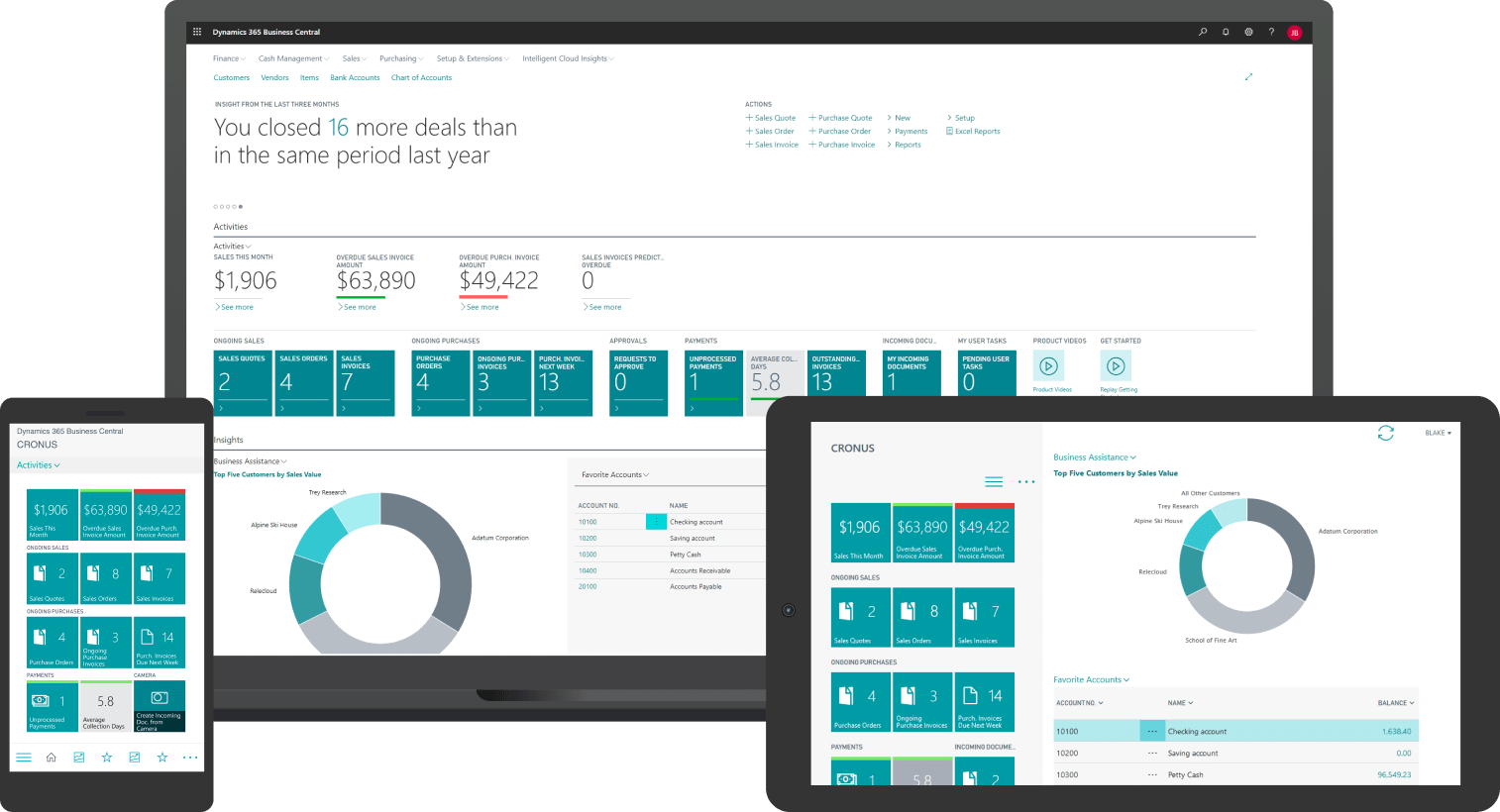
How to Choose Between an Accounting Software Multi Currency and ERP Solution for Your Business
Choosing between accounting software multi currency and an ERP system depends on your current scale but, perhaps more importantly, your future ambitions.
Here’s some common dividing factors:
- Number of currencies: If you’re operating in three or more currencies, complexity increases significantly. Although accounting software multi currency can handle the financial aspect of your business, scaling at this stage typically also brings multiple departments that the executive level needs a full picture of to make strategic business decisions that could impact multiple entities.
- Transaction volume: As a simple rule, if you’re operating at 1,000+ monthly transactions, an ERP solution is likely going to benefit you more than just accounting software multi currency. At this point, you’ll need full operational transparency that only an ERP can provide.
- Entities: Multiple legal business entities spanning across regions require consolidation in order to make sense of the entire business picture. At this stage, leadership needs to know how entities in different regions impact each other.
- Integrations: Multi currency translations are often just one piece of the puzzle for many businesses wanting to scale into foreign markets. Often, if you’re looking for a broader business system, an ERP has integrated tools that are purposefully designed to help businesses scale. For instance, Microsoft Dynamics 365 Business Central has integrated Copilot assistance, alongside other automations that make operational expansion considerably smoother.
Closing Thoughts: Accounting software multi currency or ERP solution?
We’ve shown in this article how and why MapleStride could benefit from an accounting software multi currency to scale their business into foreign markets. For businesses operating at two or three currencies, accounting software multi currency often suffices.
However, once businesses wish to expand past this point and operate at a fully international level, operating with three or more currencies, multiple cross border legal entities and country varying tax liabilities, it typically demands the adoption of a wider business expansion system such as an ERP.
-
Accounting software multi currency is a platform that can convert business transactions from foreign to base currencies in real time. The top three popular ones include: QuickBooks, Sage and Xero.
Scaling internationally?
If managing multiple currencies is starting to slow your business down, it may be time to rethink your systems.
 Free discovery call
Liked what you just read? Sharing is caring.

March 27, 2026 by Kooldeep Sahye by Kooldeep Sahye Marketing Specialist
Fuelled by a passion for everything that has to do with search engine optimization, keywords and optimization of content. And an avid copywriter who thrives on storytelling and impactful content.
