

If you are reading this, something about QuickBooks stopped working for you. Maybe it’s the price creeping up every renewal, or the third time this month you exported data to Excel because the report you needed does not exist inside the platform. Maybe Intuit retired QuickBooks Desktop in Canada and you are staring down a migration you never asked for.
Whatever brought you here, you are not alone. Thousands of Canadian businesses search for accounting software alternatives to QuickBooks every year, and the reasons cluster around the same complaints: rising subscription costs, thin inventory tools, weak multi-entity support, and a platform built for freelancers and small shops, not for a business that is starting to look like a real company.
This guide walks through the most credible accounting software alternatives to QuickBooks available to Canadian businesses in 2026: what each one does well, where each falls short, and how to figure out which lane fits your business. We will also tell you when QuickBooks itself is still the right call, since not every business has outgrown it. But if you are evaluating accounting software alternatives to QuickBooks because your operations have gotten more complex than invoices and expense tracking, this is where you start.
Why Canadian Businesses Start Looking for Accounting Software Alternatives to QuickBooks
QuickBooks Online works well for a specific kind of business: simple revenue model, one location, no inventory complexity, a small team. Once any of those conditions change, the cracks tend to show up in predictable places, and that is usually the moment businesses start researching accounting software alternatives to QuickBooks in earnest.
Inventory complaints come up constantly. QuickBooks tracks basic stock counts, but struggles with multi-location inventory, lot tracking, or landed cost calculations. Multi-entity accounting is another sore spot, since running more than one legal entity or operating across provinces with different tax obligations forces manual workarounds a real ERP handles natively. Reporting suffers too: built-in reports suit a tax preparer, not a finance team modeling cash flow six months out, and our piece on when a business outgrows the spreadsheet covers this turning point.
Then there is the QuickBooks Desktop situation specifically. Intuit ended sales and support for QuickBooks Desktop in Canada, which means anyone still running it is on borrowed time with no security patches and no help line. That deadline alone has pushed a wave of Canadian businesses to evaluate accounting software alternatives to QuickBooks they might not have considered otherwise.
None of this means QuickBooks is a bad product. It built its reputation for a reason, and millions of small businesses use it successfully. But "good for getting started" and "good for where you are now" are two different questions, and for a growing business, weighing real accounting software alternatives to QuickBooks is often the more honest answer.
Picking an Alternative Shouldn’t Leave You With More Questions than Answers
Talk to a Gestisoft expert about your current setup. We will help you figure out which of these accounting software alternatives to QuickBooks fits, a lighter tool or a full ERP. No cost. No pressure to you.
 Free discovery call
The 7 Accounting Software Alternatives to QuickBooks Canadian Businesses Are Comparing
Here is the field, organized roughly by who each tool fits, not by who has the biggest marketing budget.
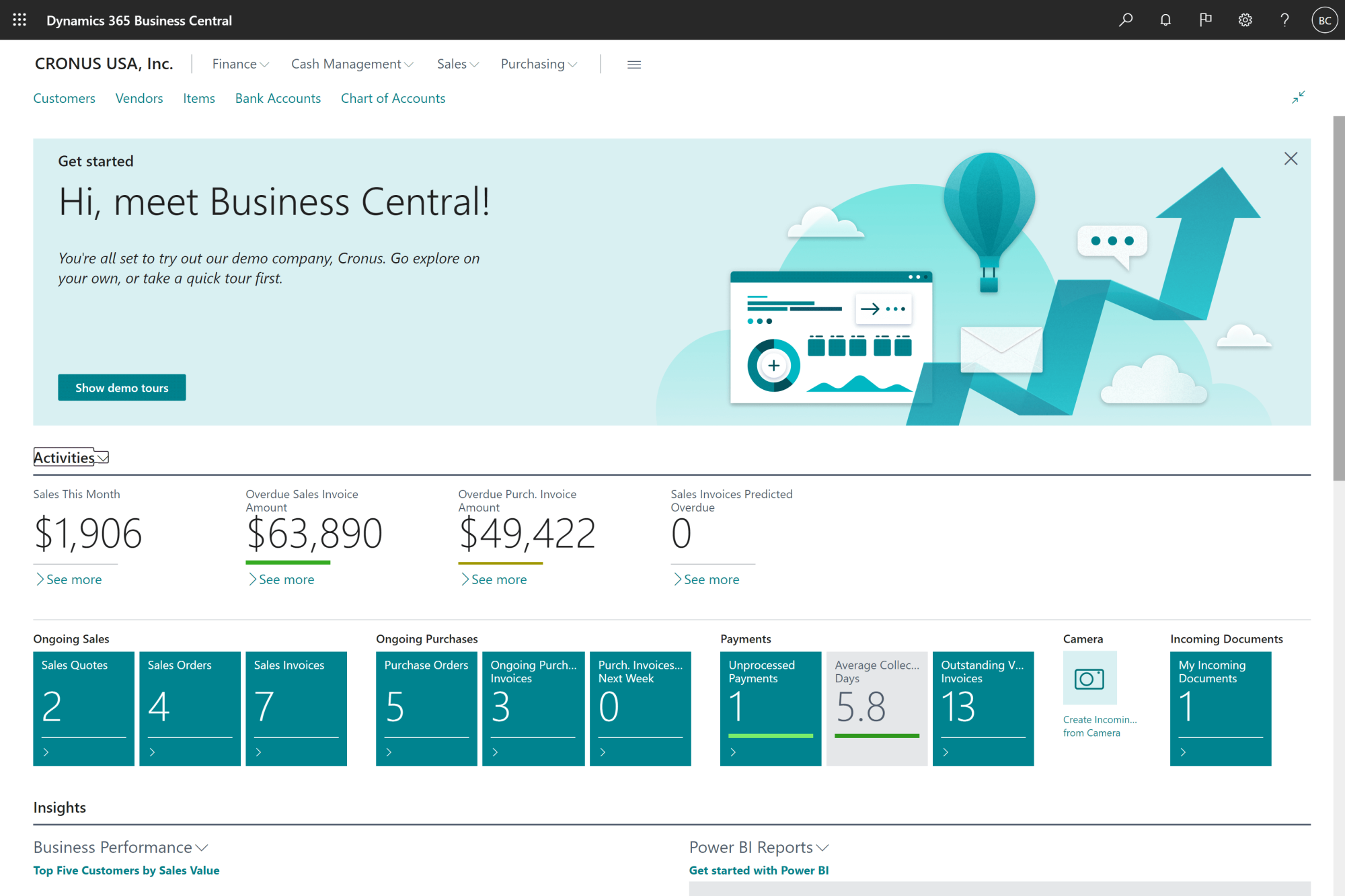
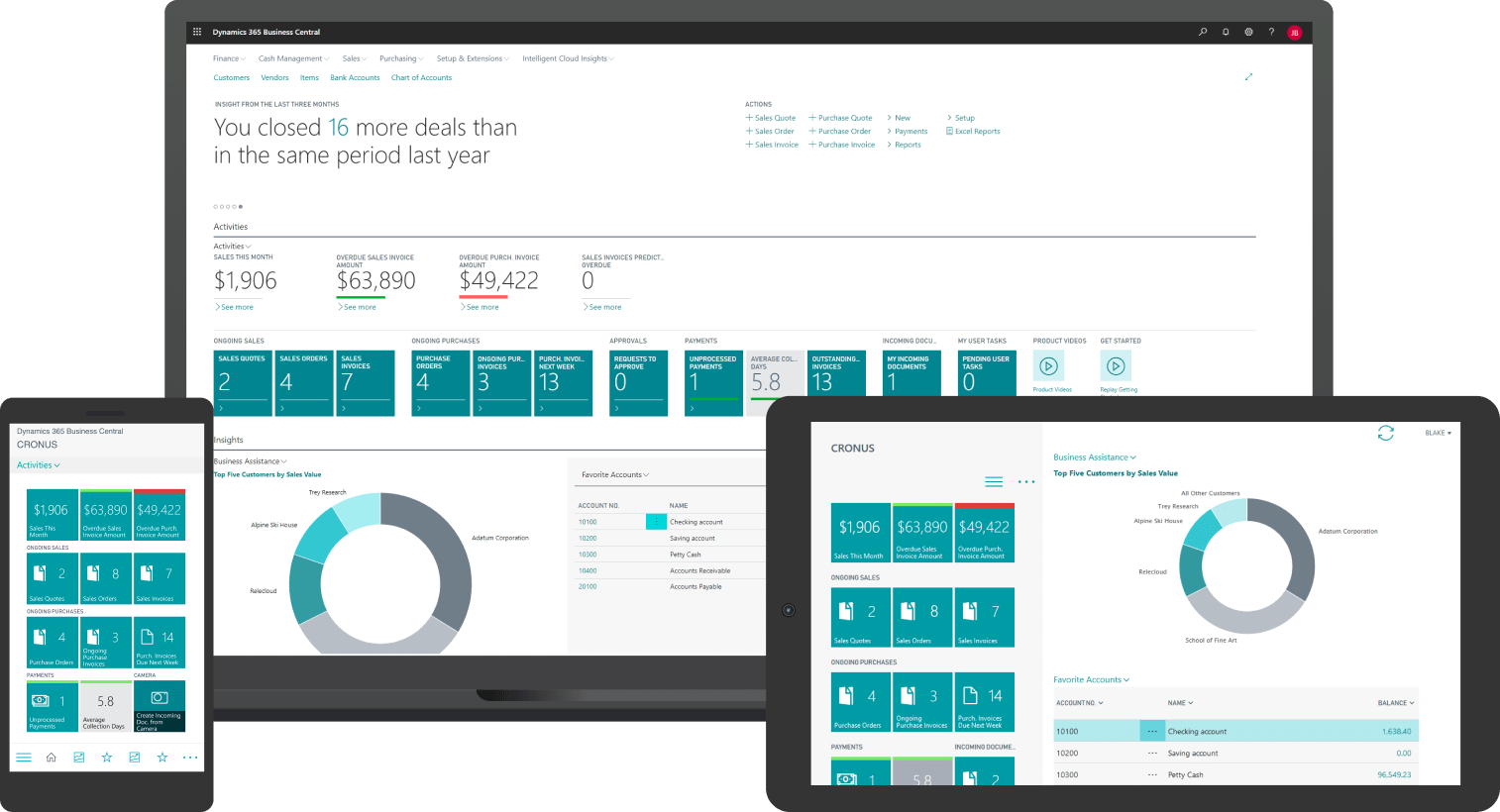
1. Microsoft Dynamics 365 Business Central
Business Central is the option for businesses that have outgrown "accounting software" entirely and need a real ERP, meaning finance, inventory, supply chain, and operations running on one connected platform instead of three disconnected tools held together with spreadsheets. Of all the accounting software alternatives to QuickBooks on this list, it is the only one built to be an operations platform first and an accounting tool second.
Business Central becomes the platform you graduate into once QuickBooks turns into the bottleneck rather than the tool. It handles multi-entity consolidation, multi-currency transactions, advanced inventory and job costing, cash flow forecasting, and native Power BI reporting, all inside the Microsoft ecosystem your team probably already uses through Outlook and Excel. For a side-by-side breakdown, our comparison of Business Central, QuickBooks, Xero, and FreshBooks lays it out in detail.
The honest tradeoff: this is not a same-afternoon setup like Wave or FreshBooks. Business Central is a real implementation project that needs a partner who understands Canadian tax rules and your industry, not a generic install. Our guide on migrating from QuickBooks to Business Central walks through what the process involves, timeline included.
Best for: Mid-sized and scaling Canadian businesses, especially in manufacturing, distribution, and professional services, that need accounting connected to operations rather than sitting beside it. For real numbers, see our breakdown of ERP implementation cost for mid-market businesses.
2. Xero
Xero earns its reputation as one of the cleanest, most intuitive accounting software alternatives to QuickBooks on the cloud market. It handles multi-currency well, has a strong mobile app, and bank reconciliation feels less like a chore than it does in most competitors.
The catch for Canadian users specifically is payroll. Xero has no native Canadian payroll, so you are bringing in a third-party provider, which adds a moving part to your stack that some businesses would rather avoid. Inventory is also thinner than what a product-based business will eventually need, which is the main reason it sits in the middle of most accounting software alternatives to QuickBooks comparisons rather than at the top.
Best for: Service-based businesses and consultants who want a clean, modern interface and do not need built-in Canadian payroll.
3. Sage 50 Canada / Sage Intacct
Sage covers two very different audiences under one brand, and it is one of the few accounting software alternatives to QuickBooks with a true desktop-first option. Sage 50 Canada suits businesses not ready to leave a local install behind, and it speaks fluent Canadian compliance out of the box. Sage Intacct is the cloud-based step up, aimed at mid-sized businesses with complex financial structures and a need for serious automation in close and reporting.
The interface on Sage 50 shows its age and the learning curve is real. Sage Intacct fixes that, but pricing reflects it: custom quotes typically start north of $400 a month, putting Sage Intacct out of reach for smaller teams looking at lighter accounting software alternatives to QuickBooks.
Best for: Businesses with complex inventory or job costing needs that want strong Canadian tax compliance without leaving the Sage family.
4. Wave Accounting
Wave is free, full stop, and it was built in Toronto with Canadian tax rules baked in from day one. Of all the accounting software alternatives to QuickBooks aimed at freelancers, it is the one with the lowest barrier to entry by a wide margin. For freelancers, solopreneurs, and very early-stage businesses, it covers invoicing, basic bookkeeping, and receipt tracking without a monthly bill.
The limitation is what you would expect from a free tool: no inventory management, no built-in payroll without an upgrade, and no real path to scale past a certain point. Among accounting software alternatives to QuickBooks, Wave is a starting line, not a destination.
Best for: Freelancers and micro-businesses that need the basics done well and want to spend zero dollars doing it.
5. Zoho Books
Zoho Books is the strongest middle option among these accounting software alternatives to QuickBooks, particularly for businesses already inside the Zoho ecosystem for CRM or project tools. It automates routine bookkeeping, supports multiple currencies and languages, and Canadian GST/HST tracking is solid.
It can start to feel complex once you lean into the automation features, and like Xero, payroll requires a separate integration. But for a small to mid-sized business that wants more horsepower than Wave without jumping straight to ERP territory, Zoho Books is among the more credible accounting software alternatives to QuickBooks in that middle tier. If Zoho's broader CRM suite is also on your radar, our breakdown of Zoho alternatives is a useful next read before you commit to the ecosystem.
Best for: Small to mid-sized businesses that want automation and multi-currency support without enterprise-level cost.
6. FreshBooks
FreshBooks was built for one job and does it well: invoicing and time tracking for service businesses. Built in Toronto as well, it handles Canadian tax basics competently and the client-facing invoices look polished.
It is not designed for businesses with physical inventory, and scalability tops out fairly early. If your business sells products rather than time, FreshBooks will fight you the whole way, and that is the cue to look further down this list of accounting software alternatives to QuickBooks.
Best for: Freelancers, consultants, and contractors whose business is built around billing for time, not moving inventory.
7. NetSuite ERP
NetSuite sits at the enterprise end of this list of accounting software alternatives to QuickBooks. It is a full ERP with deep financial management, multi-entity consolidation, and global tax compliance, built for companies that have already outgrown mid-market tools.
Pricing starts around $999 a month for the base ERP, and implementation is a serious undertaking. For a Canadian SMB still finding its footing, this is usually more horsepower than the job requires.
Best for: Larger Canadian businesses with global operations and complex multi-entity structures.
How Do You Pick the Right Accounting Software Alternatives to QuickBooks for Your Business?
Most lists of accounting software alternatives to QuickBooks stop at description and pricing. That helps, but it skips the real decision, which depends less on features and more on where your business sits right now.
If you are a freelancer or a one-to-three-person operation with simple invoicing needs, Wave or FreshBooks will cover you, and the cost savings against QuickBooks are immediate. If you are a small business with growing complexity but not yet ready for a full ERP, Xero or Zoho Books give you more horsepower without overwhelming your team. Once accounting, inventory, and operations need to talk to each other in real time, that is the line where Business Central and the heavier ERP options among these accounting software alternatives to QuickBooks start to make sense, where switching stops being about cost and starts being about capability.
A useful gut check: are you spending more time exporting data into Excel than working inside your current system itself? If so, you have outgrown your current tier, regardless of platform. Our guide on understanding the true cost of accounting software implementation breaks down what that transition costs across licensing, data migration, and training, and it is a good companion read before you commit to any of the accounting software alternatives to QuickBooks on this list.
We also walked through this exact decision with AmNor Industries, a Quebec-based industrial services company whose accounting team was buried in disconnected spreadsheets and PDFs before they made the switch to Business Central. Their Corporate Finance Director put it plainly:
“We had several systems, nothing was connected. Papers, PDFs, Excel files... it was long and tedious.”
Within months of going live, AmNor saw financial statement production speed up by more than 80%, and their team went from chasing data across five places to finding it in one. That is the practical difference between switching tools and committing to one of the heavier accounting software alternatives to QuickBooks on this list.
Accounting Software Alternatives to QuickBooks: The Things Generic Comparisons Miss
A lot of accounting software comparisons are written for a US audience and lightly localized. That distinction is bigger than it sounds, because Canadian compliance has its own rules that can quietly disqualify a tool that looks great on paper.
GST/HST handling needs to be native, not bolted on. Multi-province PST rules add another layer most American-built tools were never designed for. Payroll needs to integrate with CRA remittance requirements, including T4 and ROE generation, and not every option marketed as an accounting software alternative to QuickBooks handles this well in Canada. For configuring sales tax inside Business Central specifically, our step-by-step sales tax setup guide walks through exactly how that works.
Check out the demo below to see how sales tax configuration looks inside Business Central, since this is one of the most common friction points businesses hit when they move off QuickBooks.
This short walkthrough from Gestisoft shows how to configure GST/HST and provincial sales tax settings inside Business Central, including how tax groups and posting setup connect to your day-to-day transactions. It is a useful preview of what tax configuration looks like once you move past QuickBooks's simpler tax tools.
This is also where a bilingual implementation partner earns its keep. If your business operates in Quebec, or anywhere with English and French-speaking teams, a tool that technically "supports French" on paper is different from a partner who can configure and support your system in both languages every day.
QuickBooks Alternatives Still on Your Brain?
We get it, and we’re here to talk to you right now to clarify your options at no cost to you in a free consultation!
 Free discovery call
Accounting Software Alternatives to QuickBooks: When QuickBooks Is Still the Right Call
If your business is small, your accounting needs are simple, and QuickBooks does the job without daily friction, switching for the sake of switching wastes time and money. Migration always carries cost, in dollars and disruption, and that cost only makes sense when the platform you are leaving is the real source of the holdup.
The honest test is this: are you fighting your software, or just using it? If you are fighting it, one of the accounting software alternatives to QuickBooks above deserves a serious look. If you are not, there is no prize for switching early.
Last Things You Should Know About Accounting Software Alternatives to QuickBooks
QuickBooks got you here. Whether it gets you to where you are going next depends entirely on what "next" looks like for your business. For some businesses, the right pick among these accounting software alternatives to QuickBooks is a lighter, cheaper tool like Wave or FreshBooks. For others, especially those juggling inventory, multiple entities, or operations that have simply outgrown spreadsheets bolted onto a basic accounting app, the right move is a platform built to grow with the business rather than around it.
If you are weighing accounting software alternatives to QuickBooks and the complexity of your operations is the real driver, talk to a team that has handled this migration for Canadian businesses before, in both English and French, and knows where the compliance details really live.
If you’re still deciding which path makes sense, you’re not alone. Talk to a Gestisoft expert about your current setup in a free consultation. We will help you figure out which of these accounting software alternatives to QuickBooks fits, a lighter tool or a full ERP, with no pressure either way.
-
Among accounting software alternatives to QuickBooks, the right pick depends on size and complexity. Wave and FreshBooks suit freelancers and very small teams well, while Xero and Zoho Books fit small businesses that have outgrown the basics but are not ready for a full ERP.
Explore More
- Business Central vs QuickBooks, Xero & FreshBooks: a full comparison
- 15 Best Business Central Alternatives for 2026
- Top 10 Free Accounting Software in Canada for Small Businesses
- Understanding the True Cost of Accounting Software Implementation
- What Makes Business Central Such a Good Fit for Small Businesses?
Liked what you just read? Sharing is caring.

June 19, 2026 by Conni Guido by Conni Guido Copywriter and Brand Strategist
I started with a degree in Professional Communications and never looked back. Now, I'm a professional storyteller who believes every brand has a story to tell, and every good story should leave you wanting more. You can find me lost in a book club or a writing sprint, baking words into pies...probably both.
