

Choosing the right ERP is one of the most important decisions a growing organization can make. And while Microsoft Dynamics 365 Business Central is one of the most popular cloud ERPs for small and mid-sized businesses, it’s not the right fit for everyone. Companies often look for Business Central alternatives because they need deeper manufacturing capabilities, more complex multi-entity consolidation, greater customization, or different pricing structures.
To help you navigate this decision, this guide compares the 15 best Business Central alternatives based on features, scalability, industry strengths, deployment flexibility, pricing approach, and real-world suitability. Whether your company is in manufacturing, distribution, services, retail, or nonprofit, you’ll find solutions here that match your operational needs and growth stage.
What to Look For in Business Central Alternatives?
Before reviewing the top competitors, it’s important to understand what actually makes an ERP a viable alternative.
1. Industry Fit
Some ERPs are tailored to manufacturing, others to distribution, retail, or project-based organizations. A strong alternative must fit your industry’s workflows out of the box.
2. Cloud Maturity
Cloud-native platforms (NetSuite, Acumatica) tend to offer better vendor-managed upgrades and integrations than on-premise-first solutions.
3. Advanced Features
Companies often leave Business Central when they need:
- Advanced production planning
- MES-level integration
- Warehouse automation
- Complex subscription billing
- Robust multi-company financials
- Multi-country compliance
4. Total Cost of Ownership
Beyond licenses, ERP costs include implementation, addons, support, and customization. Some alternatives may cost significantly more—or less.
5. Implementation Ecosystem
Even the best ERP can fail without a strong implementation partner. A great partner matters as much as the software itself.
With these criteria in mind, let’s review the best Business Central alternatives for 2025.
Business Central still amongst the top ERP choice
Contact our team of experts to find out what makes Business Central an essential part of many companies and why integrating it into your processes is beneficial in the long run.
 Free discovery call
Top 15 Business Central Alternatives for 2025
1. Oracle NetSuite

Best for: fast-growing companies that want a mature, cloud-native ERP
NetSuite is one of the most widely adopted cloud ERPs for mid-market companies. As a true SaaS platform, it offers financials, inventory, eCommerce, manufacturing, and multi-subsidiary consolidation in a unified environment.
Strengths
- Strong multi-entity financial management
- Excellent for global expansion
- Deep accounting and inventory automation
- Highly customizable with SuiteScript and SuiteApps
- Large ecosystem of industry solutions
Limitations
- High implementation cost
- Customizations can require specialized consultants
- Users often report complex navigation and steep learning curve
When to choose it over Business Central:
You need global financial consolidation, advanced revenue recognition, or a pure cloud-native ERP.
2. SAP S/4HANA Cloud

Best for: upper mid-market and enterprises with high transaction volume
SAP S/4HANA Cloud is designed for organizations that need deep real-time analytics, enterprise-grade scalability, and complex manufacturing support.
Strengths
- Extremely powerful for manufacturing
- Embedded AI and predictive analytics
- Strong multi-country compliance
- Very scalable for high transaction industries
Limitations
- Expensive licensing and long implementation cycles
- Often too large for small and midsized companies
When to choose it over Business Central
You require large-scale enterprise capabilities or extremely complex manufacturing.
3. SAP Business One / SAP Business ByDesign

Best for: midsized organizations needing structured ERP with SAP’s ecosystem
Business One (on-premise or hosted) and ByDesign (cloud) are two smaller-scale SAP ERPs.
Strengths
- Rich manufacturing and distribution features
- Strong financial management
- Established global ecosystem
Limitations
- Less modern UX compared to newer cloud ERPs
- Add-ons often required to achieve full functionality
When to choose it over Business Central
You want SAP’s structure and industry add-ons without going to S/4HANA.
4. IFS Cloud

Best for: asset-heavy industries (field service, energy, aerospace, manufacturing)
IFS Cloud is a strong alternative if your business relies heavily on asset management and lifecycle operations.
Strengths
- Excellent field service and asset management
- Highly flexible and configurable
- Strong project management and manufacturing modules
Limitations
- Fewer implementation partners in North America
- Longer deployment cycles
When to choose it over Business Central
You need a comprehensive asset management or field service-first ERP.
5. Epicor Kinetic

Best for: manufacturing companies that need deep production control
Epicor Kinetic is well-known for discrete manufacturing and provides robust tools for BOMs, routings, MES integrations, and scheduling.
Strengths
- Very strong for complex manufacturing
- Flexible deployment (cloud, hybrid, on-prem)
- Highly customizable
Limitations
- Interface not as modern as cloud-native ERPs
- Requires experienced partners for successful implementations
When to choose it over Business Central
Manufacturing complexity is the top priority.
6. Acumatica Cloud ERP

Best for: businesses needing unlimited users and flexible customization
Acumatica is a fast-growing cloud ERP known for flexibility and customer-friendly licensing.
Strengths
- Usage-based pricing (unlimited users)
- Highly customizable via low-code tools
- Strong financials, distribution, CRM, and project accounting
Limitations
- Pricing can still become high depending on consumption
- Smaller partner ecosystem compared to Microsoft
When to choose it over Business Central
You want a flexible cloud ERP with many users and custom workflows.
7. Odoo Enterprise

Best for: startups and SMBs needing modular functionality at lower cost
Odoo is a modular ERP/CRM suite that provides cost-effective flexibility.
Strengths
- Low entry cost
- Highly modular with hundreds of apps
- Works for small businesses and growing companies
Limitations
- Not as robust for advanced manufacturing
- Heavy reliance on custom development
When to choose it over Business Central
You want a customizable ERP without enterprise-level pricing.
8. QuickBooks Online + Add-Ons

Best for: small organizations not ready for a full ERP
QuickBooks isn’t a true ERP, but many companies search for Business Central alternatives because BC feels too large for their needs.
Strengths
- Very easy to use
- Affordable
- Huge marketplace of add-ons
Limitations
- Not suitable for manufacturing
- Limited inventory, automation, and financial controls
When to choose it over Business Central
You only need accounting and light operational features.
How much can you save with Business Central?
Download your free Excel calculator to find out how much savings you can make when you implement Business Central today.


Best for: process manufacturing, chemicals, food & beverage
Infor M3 is built for global manufacturers with complex process workflows.
Strengths
- Excellent batch and process manufacturing
- Strong supply chain and global trade capabilities
- Stable and mature ERP
Limitations
- Expensive implementation
- Interface less modern than cloud-native competitors
When to choose it over Business Central
Your operations revolve around batch formulas and process manufacturing.
10. Sage X3

Best for: companies needing strong cost accounting and global finance
Sage X3 is a robust ERP offering financials, manufacturing, and supply chain management.
Strengths
- Strong cost accounting
- Scalable for mid-market companies
- Good for multi-site operations
Limitations
- Limited cloud-native capabilities
- Customizations can be costly
When to choose it over Business Central
You need strong financial management and industry-specific add-ons.
11. Plex Smart Manufacturing Platform

Best for: manufacturers wanting MES + ERP in one platform
Plex is a manufacturing-focused cloud platform used in automotive, industrial, and food sectors.
Strengths
- Real-time shop floor control
- Integrated MES
- Strong quality management
Limitations
- Limited flexibility outside manufacturing
- May require additional systems for finance
When to choose it over Business Central
You want ERP + MES together without third-party integrations.
12. Priority ERP

Best for: mid-sized global companies wanting flexible workflows
Priority ERP is a highly configurable cloud ERP popular in Europe and growing in North America.
Strengths
- Configurable workflows
- Strong mobile capabilities
- Multi-language and multi-currency support
Limitations
- Smaller partner ecosystem
- Less known in North America
When to choose it over Business Central
You want a flexible, configurable ERP with solid manufacturing features.
13. SYSPRO ERP

Best for: manufacturing and distribution companies needing hybrid deployment
SYSPRO is a long-standing ERP platform with deep manufacturing capabilities.
Strengths
- Strong for inventory-heavy businesses
- Good automation for supply chain
- Flexible deployment options
Limitations
- UX varies across modules
- Fewer modern cloud-native features
When to choose it over Business Central
You need a mix of on-prem and cloud deployment.
14. QAD Adaptive ERP

Best for: automotive and life sciences manufacturing
QAD is designed specifically for regulated industries that require consistent compliance and strict quality processes.
Strengths
- Excellent compliance and quality management
- Built for global manufacturers
- Highly reliable
Limitations
- Expensive
- Small partner ecosystem
When to choose it over Business Central
Your operations depend on regulatory compliance and global supply chains.
15. ERPNext

Best for: businesses wanting open-source ERP without vendor lock-in
ERPNext offers a highly customizable, open-source ERP alternative for budget-conscious companies.
Strengths
- Fully open source
- Low licensing cost
- Flexible modules
Limitations
- Less robust for advanced manufacturing
- Requires technical expertise
When to choose it over Business Central
You want a low-cost ERP that you can customize independently.
When Business Central Is Not the Right Fit?
Many organizations search for Business Central alternatives because of the following reasons:
1. Manufacturing Complexity
BC can be extended, but it often lacks MES features required by advanced manufacturers.
2. Global Expansion
Businesses needing multi-subsidiary financial consolidation may prefer NetSuite or SAP.
3. Extreme Customization
Some companies need low-code flexibility (Acumatica) or open-source customization (Odoo, ERPNext).
4. High Transaction Volume
Retail, eCommerce, or logistics businesses with millions of monthly transactions may need bigger systems like S/4HANA.
5. Niche Vertical Requirements
Industries like automotive, chemical manufacturing, and aerospace benefit from specialized ERPs.
Book your free consultation with our experts today
Contact us for more details about Business Central and what makes the ERP software the best choice for companies.
 Free discovery call
How to Choose the Right Business Central Alternative?
A structured ERP selection process should include:
1. Map Your Core Processes
List must-have competencies across finance, inventory, sales, procurement, manufacturing, and service.
2. Define Industry Requirements
For example:
- Batch traceability
- MES integration
- Project accounting
- Serialized inventory
- Global consolidation
3. Estimate Total Cost of Ownership
Include:
- Licensing
- Implementation
- Add-ons
- Customizations
- Training
4. Evaluate Integration Capabilities
Ensure compatibility with:
- CRM
- eCommerce
- Payroll
- BI tools
- MES/WMS
5. Select the Right Implementation Partner
Even the best ERP fails without the right deployment team—consultant expertise matters as much as the software.
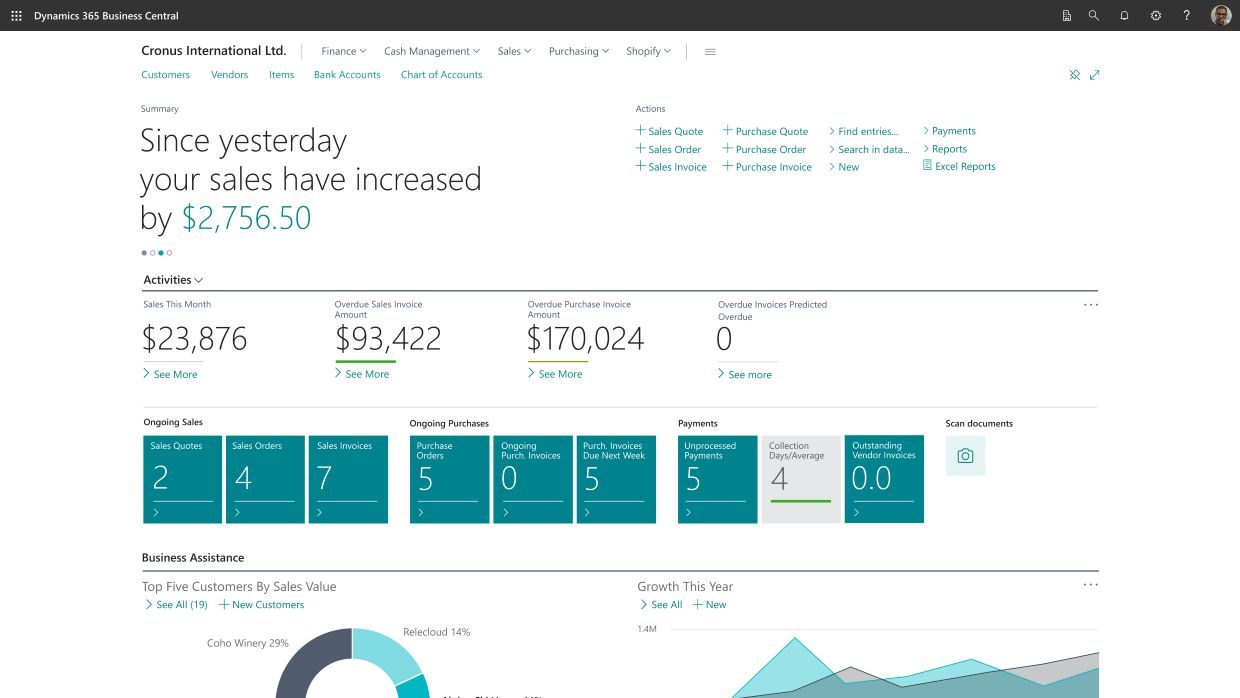
Why Many Organizations Still Choose Business Central?
Even with strong competition, Business Central remains one of the best ERPs for SMB and mid-market companies.
Benefits include:
- Seamless integration with Microsoft 365
- Power BI and Power Platform automation
- Strong usability
- Large partner ecosystem
- Good balance between cost and functionality
This explains why many businesses compare alternatives—but eventually choose BC because of Microsoft’s ecosystem and scalability.
Final Recommendation: How Gestisoft Helps?
Evaluating Business Central alternatives is complex, especially when each ERP solves different problems. As a Microsoft and ERP consulting partner, Gestisoft helps organizations evaluate, select, and implement the right system—whether that’s Business Central or another solution.
Our team guides you through:
- Requirements analysis
- System comparison
- ROI forecasting
- Implementation and change management
- Ongoing support
Liked what you just read? Sharing is caring.

November 24, 2025 by Kooldeep Sahye by Kooldeep Sahye Marketing Specialist
Fuelled by a passion for everything that has to do with search engine optimization, keywords and optimization of content. And an avid copywriter who thrives on storytelling and impactful content.
