

Warehousing isn’t “one thing.” The best setup for a small distributor with a single location won’t look like the best setup for a multi-warehouse business with thousands of SKUs, multiple order channels, and strict shipping cutoffs. That’s why understanding the types of warehousing system matters: it helps you choose a model that matches your real operational complexity, not just the tools you happen to be using today.
In this guide, we’ll break down the most common types of warehousing system, how they work, and how to decide what to implement first—especially if you want warehouse execution to stay aligned with your ERP and your supply chain processes.
What do we mean by “types of warehousing system”?
When people search for types of warehousing system, they’re often looking for one of these viewpoints:
- Process maturity (manual → barcode → directed picking → automation)
- Technology stack (inventory-only vs WMS vs WES vs robotics)
- Operating model (in-house, 3PL, hybrid, multi-site)
Most businesses actually use a combination. The goal is to choose a structure that:
- Improves accuracy and speed
- Supports growth without rebuilding everything
- Keeps inventory, orders, and shipping aligned across systems
Say hello to a new way of optimizing your distribution and logistics
Contact us for a free consultation to learn more about Business Central.
 Free discovery call
Types of warehousing system by process maturity
1) Manual warehousing system (spreadsheets + human memory)
Best for: very low volume, simple SKUs, early-stage operations
How it works: inventory is tracked with spreadsheets or basic lists; picking is “walk and find”; receiving is informal.
Common issues:
- Inventory in the spreadsheet doesn’t match reality
- Hard to scale new staff or new product lines
- Slow fulfillment and frequent exceptions
2) Paper-based warehousing system (printed pick lists + manual updates)
Best for: low-to-mid volume warehouses that need minimal structure quickly
How it works: orders are printed, staff picks items, and updates are entered later.
Strength: easy to start
Weakness: the delay between physical work and system updates creates gaps (overselling, picking errors, late shipping confirmations).
This is typically a transitional stage before barcode workflows or mobile execution.
3) Barcode-assisted warehousing (basic scanning for control points)
Best for: growing warehouses that need quick accuracy gains
How it works: scanning is used at key checkpoints (receiving, picking, cycle counts) to confirm what happened.
Why it works: it reduces manual entry and adds traceability without forcing advanced process complexity on day one.
For many distributors, barcode execution is the first big jump in accuracy and productivity—especially in receiving and picking.
4) System-directed warehousing (WMS-directed receiving, put-away, picking)
Best for: mid-to-high volume operations with increasing complexity
How it works: the system tells people what to do next (where to put away, what to pick, which route to follow, what to pack).
This type of warehousing system typically includes:
- Bin/location control
- Directed put-away
- Directed picking methods (batch, zone, wave depending on needs)
- Packing verification and shipping confirmation
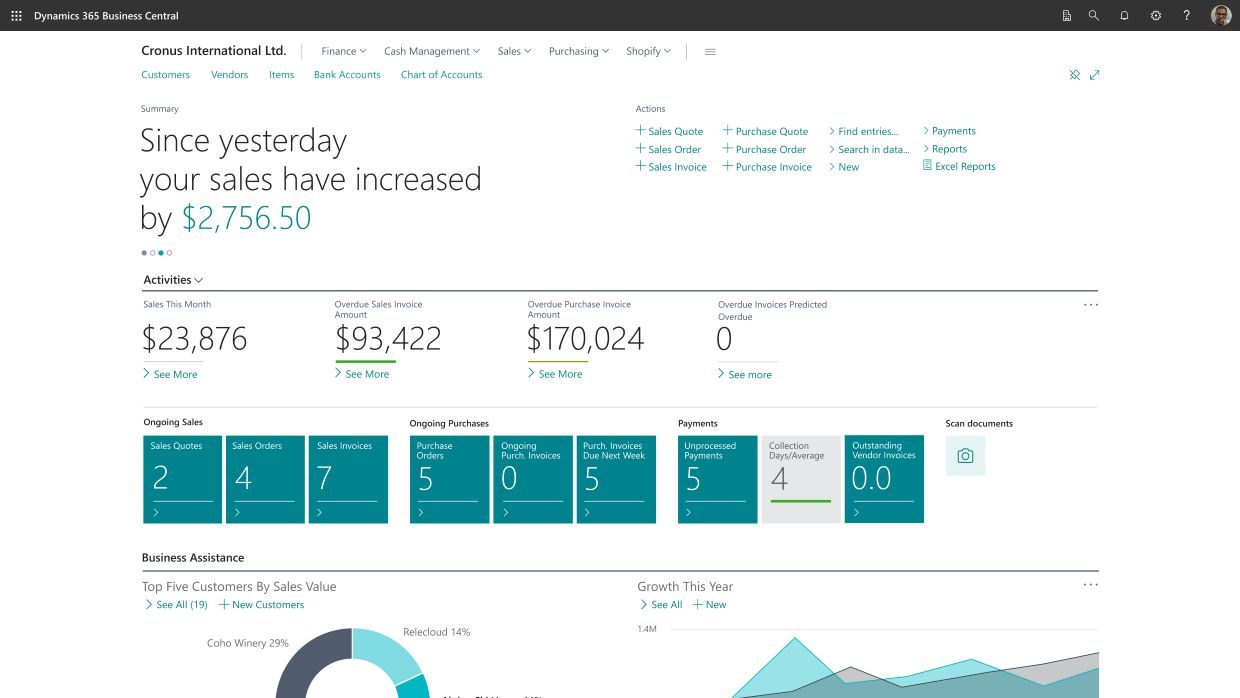
5) Multi-warehouse / multi-site warehousing system
Best for: companies managing multiple locations, cross-docks, or regional distribution
How it works: inventory and fulfillment must be controlled across sites with transfers, availability logic, and consistent processes.
Success depends on:
- Strong master data governance (items, locations, units)
- Consistent operating rules (or deliberately designed differences)
- Reliable integration with ERP so financial and operational truth match
[Internal link: ERP WMS]
Types of warehousing system by technology stack
6) Inventory management system (IMS) without WMS
Best for: companies that need visibility but not detailed warehouse execution
How it works: tracks on-hand inventory and basic movements, but doesn’t orchestrate warehouse tasks in detail.
This is common when:
- Warehousing is simple
- The priority is financial inventory visibility and replenishment
But when picking/packing/shipping complexity increases, an IMS-only setup usually hits a ceiling.
7) WMS (Warehouse Management System)
Best for: most distributors and product-based businesses that need execution control
How it works: manages receiving, put-away, picking, packing, shipping, cycle counts, and warehouse KPIs.
A WMS becomes even more powerful when connected to ERP so the business system reflects real warehouse execution (orders, inventory availability, shipment confirmation, and financial impact).
8) WES (Warehouse Execution System)
Best for: high-throughput environments with automation (conveyors, sorters, robotics)
How it works: coordinates real-time work between people and machines and optimizes execution sequencing.
Think of WES as the “orchestrator” sitting between planning (ERP/WMS) and physical automation.
If you’re not operating advanced automation, WES is usually unnecessary.

9) Automated warehousing systems (AS/RS, goods-to-person, robotics)
Best for: very high volume, labor constraints, or extreme speed requirements
How it works: automation handles storage/retrieval, transport, or picking assistance.
Important reality check: automation doesn’t replace process discipline. It amplifies it. If master data and workflow control are weak, automation can increase errors faster.
Types of warehousing system by operating model
10) In-house warehouse (self-operated)
Best for: businesses that want full process control, branded fulfillment, or specialized handling
Key requirements: strong processes, technology alignment, continuous improvement discipline.
11) 3PL warehousing system (outsourced fulfillment)
Best for: fast growth, seasonal volume spikes, new geographies
Trade-offs:
- Faster scaling and reduced capex
- Less direct control over processes and exception handling
- Integration becomes critical (orders, inventory, tracking)
12) Hybrid warehousing (in-house + 3PL)
Best for: mixed product lines, multiple regions, or channel-specific needs
Success depends on: clear rules for what ships from where, consistent data integration, and standardized exception management.
How ERP fits into the different types of warehousing system?
No matter which types of warehousing system you choose, you still need one source of truth for:
- Inventory availability and value
- Order processing
- Purchasing and replenishment logic
- Reporting and planning
That’s where ERP-led supply chain management matters. Microsoft positions Dynamics 365 Business Central supply chain management as covering capabilities like inventory management, order processing, and demand forecasting, and highlights integrations with Power BI and Microsoft Teams to support decisions based on real-time information.
If you run e-commerce, integration matters even more. For example, Microsoft’s documentation for the Shopify connector in Business Central describes synchronizing items, inventory, customers, sales orders, transactions, and payouts between Shopify and Business Central.
That’s why the most sustainable approach for many growing distributors is to design the warehouse system as part of an ERP-connected ecosystem instead of a disconnected set of tools.
Learn more about Business Central with our experts
Contact us for a free consultation today.
 Free discovery call
A quick decision framework: which type fits your warehouse?
Choose based on the drivers that actually create warehouse complexity:
Order volume and shipping pressure
- Low volume: paper-based or barcode-assisted can work
- Rising volume: directed picking/packing becomes valuable
- High volume: WMS + advanced execution methods (and possibly automation)
SKU complexity and inventory accuracy needs
- Few SKUs: simple processes can survive longer
- Many SKUs: location/bin control and scanning become essential
Number of warehouses
- One site: simpler execution
- Multiple sites: governance, transfers, and consistent ERP alignment become mandatory
[Internal link: Warehouse supply chain management]
Sales channels (B2B + e-commerce)
- Multi-channel increases exceptions (partial shipments, substitutions, returns)
- Integration prevents manual re-entry and mismatch between warehouse and storefront/ERP
[Internal link: Examples of warehouse management system]
How Gestisoft helps you choose and implement the right warehousing system?
Choosing among the types of warehousing system is not just a technology decision—it’s an operating model decision. Gestisoft helps businesses map real warehouse workflows (receiving, put-away, picking, packing, shipping, counts) to the right maturity level, then implement a phased roadmap that improves accuracy and speed without overwhelming teams.
If you want a practical plan that connects warehouse execution to ERP so your inventory and orders stay aligned, start with the ERP WMS foundation and build from there.
Related articles
- ERP WMS: a practical guide to warehouse management with ERP
- Components of warehouse management system
- WMS benefits: 12 outcomes you can expect from a modern warehouse management system
- Examples of warehouse management system: real workflows you can model in your warehouse
- Warehouse supply chain management: how to connect warehouse execution to the full supply chain
- WMS Software Cost: what it really includes (and how to budget accurately)
- Top 10 WMS systems to consider in 2026
- Disadvantages of warehouse management system: 10 risks to plan for (and how to avoid them)
- Inventory management company near me: how to choose the right partner for your warehouse and ERP
-
Manual, paper-based, barcode-assisted, WMS-directed warehousing, multi-warehouse systems, and automated warehousing (AS/RS or robotics). Many businesses use a hybrid of these.
Liked what you just read? Sharing is caring.

January 16, 2026 by Kooldeep Sahye by Kooldeep Sahye Inbound Marketing Manager
Specializing in SEO-driven pipeline growth, I combine keyword strategy, content optimization, and inbound tactics to turn organic search into a reliable source of qualified leads. I work at the intersection of traditional SEO and AI search — optimizing for LLMs and AI Overviews alongside Google — pairing data-informed strategy with sharp, story-led copywriting.
