

A warehouse management system can’t fix warehouse chaos if it only covers one slice of the workflow. The real value comes from assembling the right components of warehouse management system—the modules and capabilities that control inventory, guide warehouse execution, and connect fulfillment to the rest of the business.
For distributors, this matters even more: margins are tight, order volume is high, and fulfillment must keep pace across channels. Gestisoft highlights common pressure points like inventory confusion across sites, juggling shipping systems, and warehouse bottlenecks—often driven by disconnected tools and manual processes.
This article breaks down the key components of warehouse management system you should evaluate, how they fit together, and what to prioritize first—especially if you’re building your warehouse processes on an ERP foundation.
What “components of warehouse management system” really means?
When people ask about the components of warehouse management system, they usually mean two categories:
- Core execution components (the operational flow): receiving, put-away, picking, packing, shipping, replenishment, counting.
- Enablement components (what makes execution reliable): barcodes, mobility, integrations (ERP/carriers/e-commerce), analytics, and governance.
A practical WMS should connect the full chain from “first scan” to “final shipment.” Gestisoft’s consumer goods distribution frames warehouse performance exactly this way: optimizing warehouse automation end-to-end and reducing errors and delays.
Speak with our professionals today
Contact us for more details about Business Central.
 Free discovery call
The 12 essential components of warehouse management system
1) Item, location, and inventory master data
Before you touch picking rules or scanners, the WMS needs clean master data:
- Items/SKUs, units of measure, barcodes
- Locations, bins, zones, staging areas
- Stock statuses (available, damaged, quarantined)
- Handling constraints (weight, dimensions, serial/lot tracking rules if required)
This is the foundation for accuracy. If item data is inconsistent, every downstream process becomes slower and less reliable.
2) Real-time inventory visibility
A WMS must answer “what do we have, where is it, and is it actually available?” in real time.
For distribution teams, visibility is a daily operational need. Gestisoft explicitly calls out the need for a clear view across products and sites, plus real-time tracking to keep teams aligned and stock under control.
3) Receiving
Receiving is where accuracy is won (or lost). A strong receiving component supports:
- Receiving against purchase orders (and documenting discrepancies)
- Quality/inspection steps when required
- Put-away triggers and staging control
Gestisoft lists purchase receiving as part of warehouse operations that should be optimized and streamlined.
4) Put-away and internal transfers
Once items are received, the WMS must control where stock goes and how it moves:
- Put-away rules (by zone, velocity, storage type)
- Directed vs manual put-away
- Internal transfers and stock moves (staging → storage → pick face)
Gestisoft also highlights moving stock quickly from receiving to internal transfers and tracking inventory in real time with mobile devices.
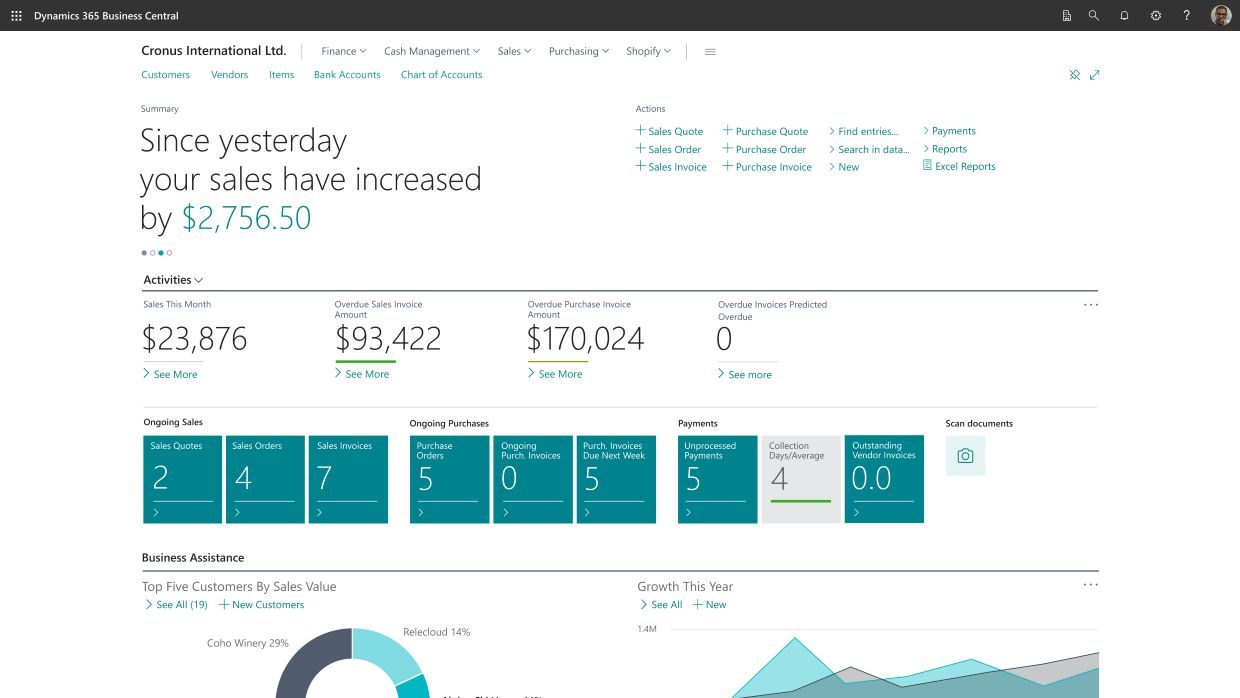
5) Barcode scanning and mobile execution
This is one of the highest-impact components for most warehouses:
- Scan-driven receiving and put-away confirmations
- Mobile picking, packing verification, and cycle counts
- Reduced manual entry and fewer mistakes
Gestisoft notes that mobile tools and barcode scanning help automate key tasks so teams can deliver faster and improve customer service.
If you’re thinking in maturity phases, Gestisoft’s packaged offer table shows a clear progression:
- Paper-based warehouse management (included)
- Basic warehouse automation with bar coding (included in Growth/Scale)
- Advanced warehouse automation (included in Scale)
6) Picking (directed picking logic)
Picking is where throughput and service levels live. A solid WMS picking component includes:
- Pick methods (single, batch, zone, wave—depending on your environment)
- Pick priorities (rush orders, carrier cutoffs, SLAs)
- Substitution rules and exception handling
- Pick confirmations (scan-based where possible)
7) Packing
Packing bridges warehouse execution and shipping accuracy:
- Pack verification (what’s in the box vs what should be in the box)
- Cartonization logic (basic or advanced)
- Packing stations, packing slips, documentation
Packing verification is often the final accuracy checkpoint before shipping.
8) Shipping execution and carrier integration
Shipping is often where tool sprawl appears: one system for orders, another for labels, another for tracking.
Gestisoft calls out the value of connecting your ERP to carriers for faster shipping, fewer errors, and better parcel tracking from one place. It also highlights carrier integration and the ability to connect to providers like Purolator, FedEx, or UPS.
A strong shipping component typically includes:
- Shipment confirmation (so the system reflects reality)
- Label/document generation
- Tracking capture and delivery confirmation visibility

9) Inventory counts and cycle counting
Inventory control isn’t a once-a-year event. The WMS should support:
- Cycle counts by bin, SKU, or zone
- Guided count tasks
- Variance review and approval process
- Audit trail
Gestisoft explicitly lists inventory counts among the warehouse activities to manage and optimize.
10) Returns and reverse logistics
Returns are not just customer service—they’re warehouse workload, inventory accuracy, and margin protection.
A returns component typically supports:
- Return receiving and disposition rules (restock, refurbish, scrap)
- Reason and condition tracking
- Integration to order/finance flows (so credits and inventory are aligned)
11) Reporting and warehouse KPIs
You can’t improve what you can’t measure. WMS reporting should cover:
- Inventory accuracy and variance
- Pick productivity and pick accuracy
- Order cycle time
- Shipping cutoff performance
- Inventory turnover and capacity utilization
12) Integrations (ERP, e-commerce, and collaboration tools)
A WMS rarely lives alone. Integration is a core component—especially for distributors with multiple order sources.
Two integration points matter most:
- ERP integration (inventory, order processing, purchasing receipts, shipment confirmation)
- Shipping/e-commerce integration (carriers and sales channels)
Gestisoft highlights the importance of keeping e-commerce and operations in sync and references the Shopify connector to Business Central to simplify order management and improve fulfillment accuracy.
Microsoft’s Business Central supply chain management description also emphasizes end-to-end supply chain tools (inventory management, order processing, demand forecasting) and integration with Microsoft products such as Power BI and Microsoft Teams to support decision-making with real-time information.
What to prioritize first (a practical sequencing)?
If you want quick, meaningful wins, prioritize the components of warehouse management system in this order:
- Inventory visibility + master data discipline
- Receiving + put-away confirmations
- Barcode/mobile execution for receiving and picking
- Picking + packing verification
- Shipping workflow + carrier integration
- Cycle counting + KPI dashboards
Ready to transform how your logistics and distribution functions?
Contact us for a free consultation and learn more about Business Central.
 Free discovery call
How Gestisoft supports the right WMS components for distributors?
If you distribute consumer goods, you typically need a connected approach that reduces paperwork, simplifies daily tasks, and scales without overwhelming your team. Gestisoft’s packaged distribution offer is positioned as structured, fixed-fee delivery designed to simplify operations for consumer goods distributors.
It also supports a maturity path for warehouse and shipping capabilities (paper-based → bar coding → advanced automation).
Related articles
- ERP WMS: a practical guide to warehouse management with ERP
- Types of warehousing system: how to choose the right model for your operations
- WMS benefits: 12 outcomes you can expect from a modern warehouse management system
- Examples of warehouse management system: real workflows you can model in your warehouse
- Warehouse supply chain management: how to connect warehouse execution to the full supply chain
- WMS Software Cost: what it really includes (and how to budget accurately)
- Top 10 WMS systems to consider in 2026
- Disadvantages of warehouse management system: 10 risks to plan for (and how to avoid them)
- Inventory management company near me: how to choose the right partner for your warehouse and ERP
-
For most distributors: inventory visibility, receiving, put-away, barcode/mobile execution, picking, packing verification, shipping + carrier integration, and cycle counting.
Liked what you just read? Sharing is caring.

January 16, 2026 by Kooldeep Sahye by Kooldeep Sahye Inbound Marketing Manager
Specializing in SEO-driven pipeline growth, I combine keyword strategy, content optimization, and inbound tactics to turn organic search into a reliable source of qualified leads. I work at the intersection of traditional SEO and AI search — optimizing for LLMs and AI Overviews alongside Google — pairing data-informed strategy with sharp, story-led copywriting.