

An ERP specialist is an expert who helps you choose, set up, and improve your ERP system so it actually fits how your business works. Instead of forcing your team to adapt to rigid software, this professional shapes the system around your real processes.
Many businesses reach a tipping point where spreadsheets break down, data gets lost between departments, and decisions take too long. That's when bringing in specialized ERP help becomes essential. These experts bring deep knowledge of business systems like Microsoft Dynamics 365 Business Central, combined with a clear understanding of your industry needs, from tax compliance to multilingual reporting.
Whether you're in manufacturing, distribution, services, or the public sector, an ERP specialist guides you through every phase: mapping your current state, selecting the right platform, implementing it safely, and optimizing it as you grow.
In this guide, you'll learn what this role actually does for your business, when to bring one in, and how to choose the right partner. At Gestisoft, we've helped companies transform their operations with Business Central, and we'll show you what that partnership looks like from day one to long-term success.
Find the ERP Specialist Your Business Needs
Connect with our Business Central experts in a free discovery call. We'll assess your project scope, discuss our methodology, and show you exactly how we guide implementations from start to success.
 Free discovery call
What Is an ERP Specialist and Why Your Business Needs One
An ERP specialist is a professional who understands both technology and business processes. They help companies implement and manage Enterprise Resource Planning (ERP) systems that connect finance, inventory, sales, operations, and more into one unified platform.
How They Differ from Your IT Team
You'll often hear the terms "ERP specialist," "ERP consultant," and "ERP expert" used interchangeably. They all refer to professionals with deep ERP knowledge. The key difference is focus: specialists typically work hands-on with your system, configuring modules, building reports, and solving daily challenges.
Your internal IT team is excellent at keeping computers, networks, and general software running. But most IT teams don't have specialized ERP experience, especially with platforms like Microsoft Dynamics 365 Business Central.
An expert consultant fills that gap with years of implementation experience, best practices, and industry-specific knowledge.
Signs You Need an ERP Specialist
Consider bringing in an ERP specialist if you're experiencing any of these challenges:
- Too many spreadsheets: Your team spends hours copying data between Excel files and different systems.
- No real-time visibility: You can't see your current cash position, inventory levels, or sales pipeline without waiting days for reports.
- Manual processes everywhere: Purchase orders, invoices, and approvals still move on paper or email.
- Growing pains: Your business is expanding to new locations, adding product lines, or hiring fast.. and your current tools can't keep up.
- Compliance worries: You're unsure if your financial data meets tax and audit requirements.
- Integration headaches: Your accounting software doesn't talk to your CRM, e-commerce platform, or warehouse system.
These are signals that your business has outgrown basic tools. A qualified professional helps you move to a modern, integrated system without disrupting your daily operations.
How an ERP Specialist Maps Your Business Before Any ERP Project
A smart ERP project doesn't start with software demos. It starts with understanding your business inside and out. This is where specialized expertise adds immediate value.
Understanding Your Processes First
The consultant will spend time walking through how work actually happens in your company. They'll follow the journey of an order from first contact to final payment. They'll see how inventory moves, how production gets scheduled, how expenses are approved, and how reports get built.
This process mapping reveals gaps, bottlenecks, and workarounds that your team may not even notice anymore.
- Maybe sales enters customer data twice.
- Maybe your warehouse can't see what's been invoiced.
- Maybe financial month-end takes a week because three people touch every transaction.
Good ERP consultants ask "why" questions that help you rethink how things could work better.
Translating Challenges into Solutions
Once they understand your current state, the expert translates your challenges into specific system requirements. For example:
- "We lose track of inventory" becomes a need for real-time stock tracking across multiple warehouses.
- "Financial reports take too long" becomes a need for automated dashboards with live data.
- "We can't forecast accurately" becomes a need for integrated sales pipeline and production planning.
This translation step is critical. Without it, you might buy ERP software with features you don't need while missing the ones that actually solve your problems. A skilled professional ensures your investment targets your real needs.
Regional and Industry Considerations
An experienced implementation partner pays attention to factors that affect how your system should be configured:
- Tax complexity: Proper handling of sales tax, VAT, or GST depending on your locations.
- Language needs: Multilingual reporting for businesses operating in multiple regions.
- Multi-entity structures: Many SMBs have multiple legal entities or operate across different jurisdictions.
- Currency management: If you buy or sell internationally.
- Industry regulations: Specific compliance for manufacturing, healthcare, associations, or public sector.
These factors shape how your ERP gets configured from day one. An ERP specialist with experience in your industry will know exactly what to watch for.
Not Sure Where to Start?
Let's talk about your business challenges. Our ERP specialists will map your current processes and show you exactly how Business Central can help…in plain language, with real examples.
 Free discovery call
How an ERP Specialist Guides Your ERP Implementation Step by Step
ERP projects fail when they're rushed or poorly planned. An experienced professional reduces that risk by following a clear, proven methodology.
Selecting the Right Platform
Not every ERP fits every business. Your consultant helps you evaluate options based on:
- Your company size and growth plans
- Your industry and specific workflows
- Your budget and IT resources
- Integration needs with existing tools
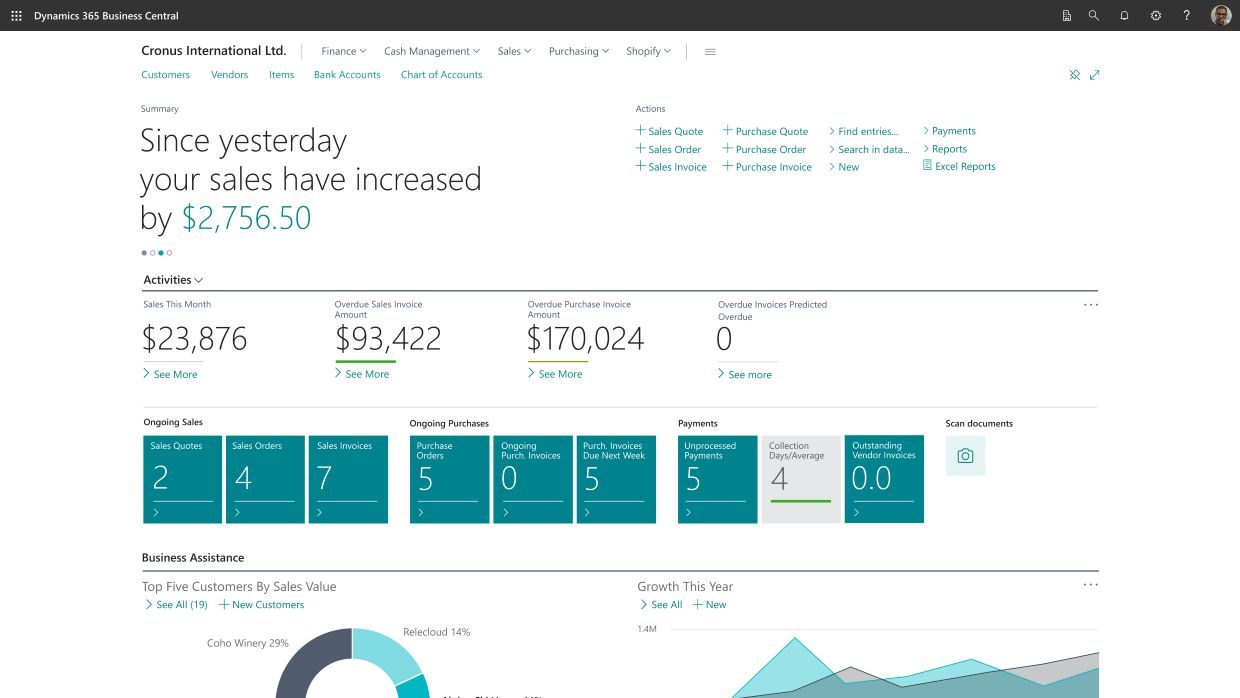
For many small and mid-sized businesses, Microsoft Dynamics 365 Business Central is the ideal fit. It's a cloud-based ERP that's flexible, scales with you, and integrates seamlessly with Microsoft 365 tools your team already uses. An expert with Business Central knowledge can show you exactly how it would work for your company.
Designing Your Future System
Once the platform is chosen, your implementation partner works with your team to design the solution. This includes:
- Configuring modules (finance, sales, purchasing, inventory, production, etc.)
- Setting up workflows and approval processes
- Designing custom reports and dashboards
- Planning integrations with other systems (CRM, e-commerce, payroll, etc.)
This phase involves workshops where your key users see prototypes and give feedback. A good ERP specialist makes sure the system feels intuitive, not foreign. They balance best practices with your unique needs.
Handling Data, Integrations, and Testing
Moving data from old systems to your new ERP is delicate work. Your partner ensures:
- Historical data is cleaned and accurate
- Customer records, products, and transactions migrate correctly
- Nothing gets lost in translation
They also build and test integrations so your ERP connects smoothly with other tools. Then comes rigorous testing…running real scenarios to catch issues before your team depends on the system. This careful approach is what separates successful implementations from failed ones.
Training and Change Management
Technology is only half the battle. People need to feel confident using the new system. An ERP specialist develops training programs tailored to different roles:
- Finance team learns month-end close and reporting
- Sales team learns quoting and order entry
- Warehouse staff learn receiving and shipping
- Managers learn dashboards and analytics
Training happens in multiple formats: hands-on workshops, videos, quick reference guides, and practice environments. The specialist also helps manage the human side, addressing concerns, showing quick wins, and building excitement about the improvements ahead.

How an ERP Specialist Supports and Optimizes Your ERP After Go-Live
Go-live is not the finish line. It's the starting point for getting real value from your ERP investment. This is where the ongoing relationship with your partner becomes crucial.
Ongoing Support and Quick Fixes
In the first weeks and months after launch, your team will have questions and encounter small issues. Professional support provides responsive help:
- Fixing posting errors or permission issues
- Adjusting workflows that need refinement
- Creating additional reports users didn't realize they needed
- Optimizing system performance
This ongoing relationship means you're never stuck waiting days for help from a distant support queue. Your consultant becomes an extension of your team.
Building on Your Foundation
As your team gets comfortable with the basics, the expert helps you unlock more advanced capabilities:
- Building custom reports for specific decision-making needs
- Creating role-based dashboards so everyone sees relevant metrics
- Automating repetitive tasks with workflows (like purchase order approvals or low-inventory alerts)
- Adding new modules as your needs evolve
This continuous improvement ensures your ERP grows with your business instead of becoming outdated. Many companies find they only use 60% of their ERP's power at first. An ERP specialist helps you tap into the other 40% over time.
Leveraging AI and Modern Features
Modern ERP systems like Business Central now include AI-powered features such as Microsoft Copilot. Your partner helps you take advantage of these tools:
- Faster financial close with AI-suggested journal entries
- Smart forecasting based on historical patterns
- Natural language queries (asking your system questions in plain English)
- Automated invoice matching and anomaly detection
These AI features can save hours each week, but only if configured correctly. The right expert ensures you're using them effectively, not just turning them on and hoping for the best.
Planning for Growth
As your business changes, your ERP needs will too. An ERP specialist helps you plan ahead:
- Expanding to new locations or warehouses
- Adding e-commerce integration
- Implementing advanced manufacturing or project management modules
- Connecting field service or retail point-of-sale systems
This proactive partnership means you're always ready for what's next. Your implementation partner becomes a trusted advisor who understands your business and your system equally well.
Already Have an ERP That's Not Working?
Many businesses struggle with systems that were poorly implemented or have outgrown their needs. Talk to our ERP specialists about rescue projects, optimization, or migrating to Business Central.
 Free discovery call
How to Choose the Right ERP Specialist for Your Business
Picking the right partner is as important as picking the right software. The wrong choice can lead to budget overruns, missed deadlines, and a system your team refuses to use. Look for these characteristics when evaluating potential partners:
- Industry experience: Have they worked with businesses like yours? Manufacturing, distribution, services, and retail all have unique needs. An ERP specialist with relevant experience will understand your challenges immediately.
- Deep platform knowledge: If you're considering Business Central, choose an ERP specialist who is a certified Microsoft partner with proven implementation experience, not someone who dabbles in many systems.
- Clear methodology: Ask them to explain their implementation process. You want structure, not chaos. Good specialists follow proven frameworks that reduce risk.
- Communication skills: Technical expertise means nothing if they can't explain concepts in plain language and listen to your concerns.
- Local presence and references: Working with local specialists means they understand your region's business practices, tax rules, and time zones. Ask for references from clients you can contact.
- Long-term partnership mindset: The best ERP specialists think beyond implementation. They want to support you for years, not just collect a project fee and disappear.
Questions That Reveal Quality
Here are practical questions to ask potential partners:
- "Can you show us examples of projects similar to ours in our industry?"
- "Who will be our main point of contact throughout the project?"
- "What does your typical implementation timeline look like for a company of our size?"
- "How do you handle change requests or scope adjustments during the project?"
- "What kind of training and documentation do you provide?"
- "What does your support look like after go-live?"
- "How do you measure project success?"
- "What are the most common mistakes you see businesses make with ERP, and how do you avoid them?"
The answers will reveal how they work and whether they're a good fit for your team.
Warning Signs to Watch For
Watch out for these red flags:
- Over-promising: Be wary of specialists who promise impossibly short timelines or claim their solution will solve everything instantly.
- No references: If they can't provide client references, that's a concern.
- Poor communication: If they're unresponsive or unclear during the sales process, that won't improve during implementation.
- Rigid approach: Every business is different. Avoid specialists who insist there's only "one right way" to do things.
- Hidden costs: Make sure the pricing is transparent with no surprise fees down the road.
Trust your instincts. If something feels off during early conversations, it probably is. Finding the right ERP specialist is worth taking your time.
-
An ERP specialist helps small businesses choose and implement ERP systems that connect accounting, inventory, sales, and operations. They configure the system to fit your processes, train your team, and provide ongoing support as you grow.
Why Gestisoft Is Your Trusted ERP Specialist Partner
At Gestisoft, we specialize in Microsoft Dynamics 365 Business Central implementations. Our team of ERP specialists brings deep expertise in both the technology and the business processes it supports.
We follow a proven methodology, from discovery through long-term optimization, that reduces risk and ensures your investment delivers real results.
Whether you're implementing ERP for the first time, rescuing a troubled project, or optimizing an existing system, our ERP specialists are here to help. Our focus is on education, partnership, and sustainable success for your business.
Ready to explore what's possible? Book a free discovery call with our ERP specialists today.
Liked what you just read? Sharing is caring.

February 24, 2026 by Muhammad Ali Iqbal by Muhammad Ali Iqbal SEO Content Strategist & Copywriter
Driven by a passion for search engine optimization, strategic content, and conversion-focused writing. A copywriter and content strategist who lives for content that ranks, engages, and delivers real business results.

