

An ERP advisor is the person you hire before you choose an ERP, not after. Their job is to help you understand what you actually need, evaluate vendors without bias, and avoid the costly mistakes that come from buying software that doesn't fit. An ERP advisor is not the same as an ERP consultant. The advisor sits on your side of the table. The consultant builds what the advisor recommends.
That distinction matters more than most Canadian buyers realise. Hire in the wrong order and you end up shaping your business around the software a vendor wanted to sell you. Hire in the right order and the software shapes around your business.
This guide walks you through what an ERP advisor really does, how they differ from a consultant, when you should hire one, and what's changed in 2026 now that AI is part of every serious ERP conversation.
Plan Your ERP Project With a Gestisoft Advisor
Before you evaluate vendors, get a clear roadmap from advisors who've guided Canadian SMBs through 27+ years of ERP projects.
 Free discovery call
What an ERP Advisor Actually Does (and What They Don't Do)
An ERP advisor is the strategic role that sits before implementation. Most buyers don't realise the job exists until they're already deep in a vendor sales cycle and starting to feel pressured.
The Core Job of an ERP Advisor
Here's the thing: this role exists to make sure you're solving the right problem before anyone starts solving it. That means running a proper needs assessment, building a business case with honest ROI modelling, evaluating vendors on platform fit, designing the RFP, shortlisting the right two or three options, and sometimes staying on to oversee the implementation.
In practice, the work breaks into six phases: discovery, business case, vendor evaluation, RFP design, oversight, and a post-go-live audit. A good advisor doesn't skip steps. They also don't promise speed for the sake of speed.
ERP selection done well takes weeks, not days, because the decisions made here will shape the next seven to ten years of operations. Skipping discovery to "save time" usually adds twice that time back during implementation, when assumptions get tested against reality and break.
The other thing a good ERP advisor brings is calm. ERP projects are stressful… multiple stakeholders, big budgets, long timelines, and a lot of opinions. A seasoned advisor lowers the temperature by giving leadership a clear framework to make decisions inside, instead of leaving every choice up for debate. That alone is often worth the engagement fee.
What an ERP Advisor Doesn't Do
This role doesn't write code. It doesn't configure modules, run end-user training, or build data migration scripts. That work belongs to the role of an ERP consultant or the implementation team that takes over once the platform is selected.
Mixing the two roles is a common mistake. When the same firm advises and implements without separation, the advice tends to lean toward what that firm is best at delivering. Good advisory creates a clean handoff. Bad advisory creates a sales pipeline. The distinction sounds small… But it isn't… it shapes every recommendation you'll be given for the next six months.
ERP Advisor vs ERP Consultant: Why the Difference Matters
Most people use "ERP advisor" and "ERP consultant" interchangeably. They shouldn't. The difference shapes the entire outcome of your project.
An advisor evaluates. A consultant executes. The advisor's job is to make sure you're picking the right platform for the right reasons. The consultant's job is to take that decision and turn it into a working system. Mix them up and you'll likely optimise for the wrong vendor before you even start.
Here's a practical example... A consultant who specialises in one ERP platform will, naturally, find reasons that platform is a good fit. That's not dishonest. It's just human. Someone working as a dedicated advisor, especially one who handles selection as a defined service, structures the work to compare options on real criteria, not on what's easiest to sell next.
There's another angle worth flagging. When you bring in a consultant first, the discovery process tends to focus on "how do we make our processes fit this platform." When you bring in an advisor first, discovery focuses on "what does this business actually need, and which platform supports it best." Different starting questions produce very different end answers.
If you're earlier in the process and unsure about the role split, what to look for in an ERP software consultant covers the consultant side in detail.
When to Hire an ERP Advisor (and When You're Wasting Money)
Not every ERP project needs an advisor. Here's how to tell whether yours does.
You're Replacing a Legacy ERP With No Clear Successor in Mind
If you know you're moving off your current system but can't name two platforms you'd seriously evaluate, this is the moment to bring in outside help. The market has shifted significantly in the last three years, and the platform you'd have picked in 2022 may not be the right answer in 2026.
Leadership Can't Agree on What the New System Should Do
When the CFO wants better financial reporting, operations wants better inventory visibility, and the CEO wants AI productivity, you don't have an ERP problem. You have an alignment problem. A good advisor surfaces that disagreement early and helps leadership land on shared priorities before anyone watches a single demo.
You've Never Run an ERP Project Before
First-time buyers consistently underestimate the change management work. You don't know what you don't know, and the cost of finding out mid-implementation is steep. Even one or two advisory sessions early in the project will pay back in avoided rework.
The Cost of Getting It Wrong Is Operationally Severe
If the ERP runs your production scheduling, compliance reporting, or month-end close, a failed implementation isn't an inconvenience. It's a business event. An ERP advisor pays for themselves by reducing that risk before it's locked in.
Imagine a mid-sized distributor evaluating three ERPs at once. Two vendors quote based on a 30-minute call. The third asks for 18 months of inventory turn data first. The third one is already acting like an advisor. That's the kind of thinking a buyer needs in their own corner from day one.
When You Don't Need an ERP Advisor
Skip this step if your project scope is small, you already have strong in-house ERP experience, and you've made a confident single-vendor decision based on a real evaluation. There's no point paying for advisory work you can do yourselves. A good advisor will tell you this in the first conversation, not the third.
10 Key ERP Selection Criteria
Get the same evaluation framework Gestisoft advisors use to score and shortlist ERPs for Canadian SMBs. A practical guide covering the 10 criteria that actually predict project success.

What an ERP Advisor Should Evaluate in 2026 (AI Changed the Job)
The job looked different two years ago. Copilot and AI agents inside Microsoft Dynamics 365 Business Central added a whole new layer to evaluate, and most evaluation frameworks haven't caught up.
Copilot isn't a feature… it's a surface that shows up across the ERP. Drafting sales orders, summarising chats, reconciling bank statements, suggesting product descriptions. A good ERP advisor doesn't just check whether Copilot is "available." They check where it's available, how mature each surface is, and whether your team will actually use it.
AI agents are the bigger shift. The Payables Agent in Business Central, for example, can process invoices semi-autonomously. That changes the scoring rubric. An advisor in 2026 has to evaluate not just "does the ERP have AI" but "how mature are the agents, what do they actually do without a human, and what's the vendor's roadmap for adding more?"
There's also a data-readiness question that gets skipped too often. AI in your ERP is only as useful as the data feeding it. If your master data is messy, your AI assistant will be confidently wrong. The advisor flags this before the contract gets signed, not after.
The short version: in 2026, an evaluation rubric has to weight AI readiness, Copilot integration, and your own data readiness for AI alongside traditional fit criteria. Skipping that part is how you end up with an expensive ERP that can't run the AI features you bought it for. The longer version is covered in AI in ERP: from Copilot to autonomous agents in Business Central.
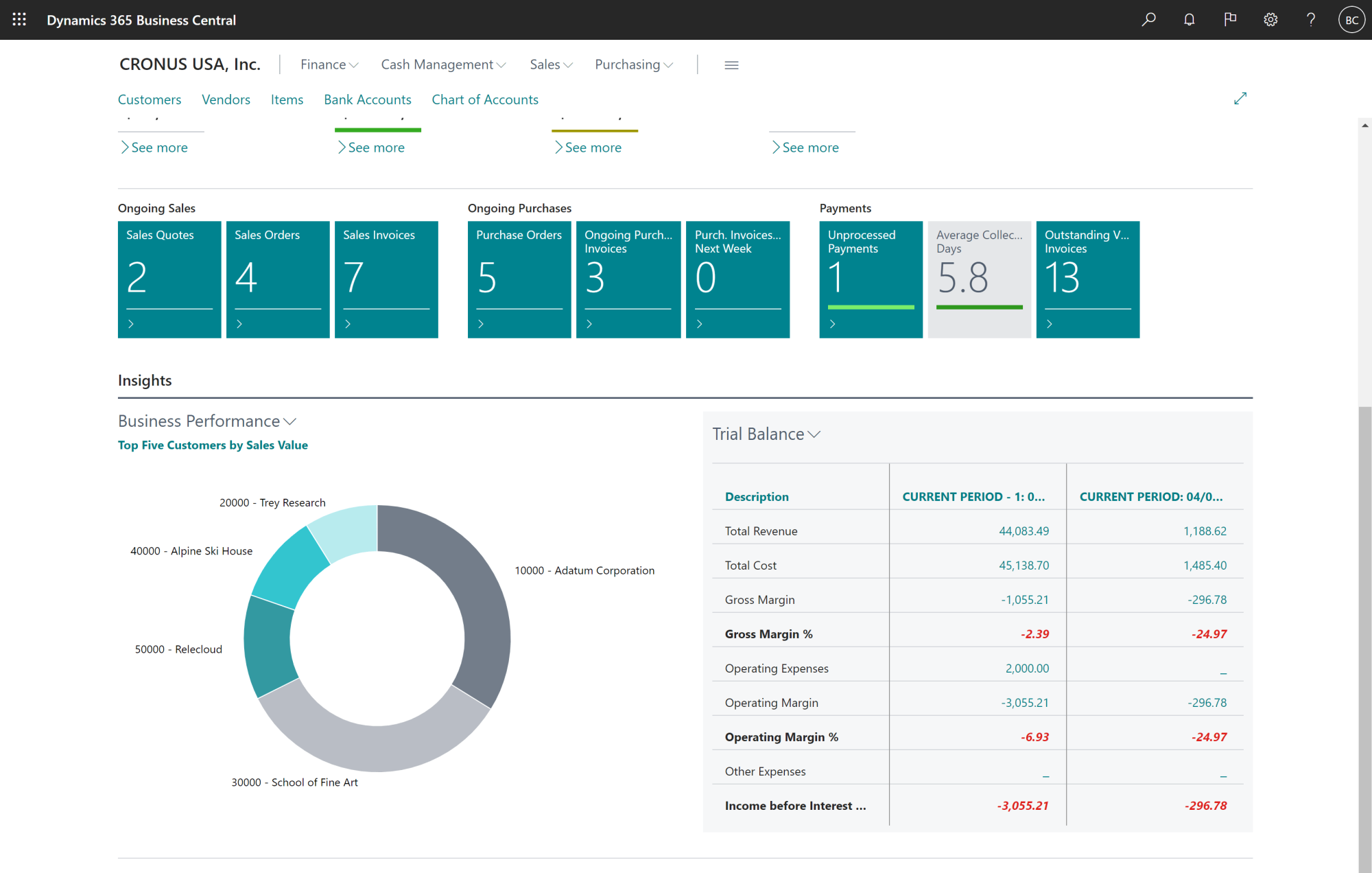
Watch a quick Business Central demo below…
How to Spot an ERP Advisor Who's Actually on Your Side
This is the trust question. Here's how to answer it before you sign anything.
- Vendor-neutral selection methodology. A good advisor evaluates multiple platforms on real criteria, not just the one they sell. They should be able to walk you through their selection framework in the first meeting.
- Track record on projects of comparable size and industry. Ask for case studies, not logos. Logos prove a vendor was in the building. Case studies show what they actually did and what changed for the client.
- Bilingual capability and Canadian regulatory familiarity. If you operate in Quebec or have bilingual staff, EN/FR delivery isn't optional. The same goes for PIPEDA, GST/HST handling, and provincial payroll rules. An advisor who doesn't know the Canadian regulatory layer will miss things that matter at go-live.
What an ERP Advisor Should Tell You About Their Vendor Relationships
Be honest about what they sell. Most advisors have commercial relationships with vendors. That's not a problem, it's reality. The problem is when they hide it.
Gestisoft, for example, is a Microsoft Partner specialising in Microsoft Dynamics 365 Business Central. That's not hidden… it's the first thing a Gestisoft advisor will tell you. The honest version sounds like this: "We advise on selection, and if Business Central is the right fit, we're also your implementation partner. If it isn't, we'll say so." Advisors who can't say that out loud are the ones to watch out for.
- AI and Copilot evaluation experience. Ask how they score AI maturity in a vendor. If they don't have a clear answer, they're not doing 2026 advisory work.
- Transparent pricing. Flat-fee assessments, hourly rates, or fixed-scope packages… whichever model they use, they should state it clearly. Open-ended advisory engagements get expensive fast.
- Willingness to stay on as an ERP specialist through implementation. Some advisors hand off completely after selection. Others stay on for oversight. The right choice depends on your in-house capability, but the option should be on the table.
A small test that works well: ask for a written summary of the first conversation. Real advisors send something thoughtful within a few days. Sales-led firms send a proposal. The difference tells you everything.
ERP Advisor Red Flags: Five Things That Should End the Conversation
Not all advisors deserve the trust they're asking for. Five signals should make you walk.
They Pitch a Specific ERP Before Learning About Your Business
If the first meeting includes a product demo, you're not being advised. You're being sold to. A real first meeting asks questions. A sales first meeting answers them.
They Can't Name Their Methodology or Selection Framework
Good advisors have a repeatable process. If they describe their approach as "it depends," it actually does… on whatever they happen to be selling that quarter. Ask them to walk you through how they shortlisted the last three ERPs they evaluated. Listen carefully.
They Won't Disclose Their Vendor Relationships
Refusing to disclose commercial alignments is the single biggest red flag in this space. Every advisor has them. The question is whether they're honest about them. An advisor who won't answer the question "which vendors do you have a commercial relationship with?" is not an advisor. They're a sales channel.
They Underestimate Change Management
Change management is the human side of an ERP project… getting users to actually use the new system, building confidence in the new process, and managing the inevitable resistance to change. It's the leading cause of failed ERP implementations, and Canada's Digital Adoption Program exists precisely because so many SMBs underestimate it. If your advisor treats it as a two-day training session, find another one.
They Want to Start Implementation Before Discovery Is Done
Speed is a sales tactic, not an advisory virtue. Skipping discovery means theERP implementation consultant who takes over has to make assumptions… and those assumptions become your scope creep three months in. The 10 criteria laid out inhow to choose an ERP software using 10 criteria only work if discovery is done properly first.
-
This is a specialist who helps you evaluate, select, and plan an ERP project before implementation begins. They focus on strategy, vendor evaluation, and risk reduction. Their job ends roughly where the consultant's begins.

Why Gestisoft Is the ERP Advisor Canadian Buyers Trust
If you've read this far, here's the honest version of who Gestisoft is and how we work...
Gestisoft was founded in 1997 and has been a Microsoft Partner for over 27 years. Our team of 110+ specialists handles 220+ projects a year, maintains a 95% renewal rate for 2024, and is B Corp certified. We specialise in Microsoft Dynamics 365 Business Central, Dynamics 365 CRM, and Microsoft Copilot… and we serve Canadian SMBs from our Montreal headquarters, with clients across the country.
Advisory comes first... If Business Central is the right fit after a proper evaluation, we're your implementation partner. If it isn't, we'll say so. That transparency isn't a marketing line… it's how we've maintained a 95% renewal rate for 27 years.
Here's how one of our clients described the experience:
“The Gestisoft team offered a high level of both business and technical experience to the project and actively listened to and grasped all needs. Their recommendations enabled our client to make the best choice and have access to Business Central's greatest features. Along with this knowledge, Gestisoft consistently maintained strong communication.”
If you're at the start of an ERP decision and want a clear-headed second opinion before talking to vendors, a free discovery call is the easiest place to start.
Talk to a Gestisoft Advisor Before You Talk to a Vendor
A free discovery call clarifies whether advisory, implementation, or both is the right next step for your ERP project.
 Free discovery call
Liked what you just read? Sharing is caring.

May 20, 2026 by Muhammad Ali Iqbal by Muhammad Ali Iqbal SEO Content Strategist & Copywriter
Driven by a passion for search engine optimization, strategic content, and conversion-focused writing. A copywriter and content strategist who lives for content that ranks, engages, and delivers real business results.
