

Key takeaways
- Distribution ERP solutions are the connected software layers (inventory, warehouse, orders, finance) that keep a distributor's sales, pickers, and books in sync in real time.
- The right fit depends on your SKUs, warehouses, and order channels, not on the vendor's logo.
- Most Canadian distributors on QuickBooks, Sage 50, or Microsoft Dynamics GP software hit a wall around 20 users or 5,000 SKUs.
- Gestisoft has been a Microsoft Solutions Partner since 2004, is B Corp certified, and serves Canadian distributors from Montreal, Toronto, Ottawa, and Québec City.
Distribution ERP solutions are the connected business systems a wholesaler or importer uses to run inventory, warehouse, orders, and finance in one place. They replace the mix of spreadsheets, QuickBooks, and bolt-on tools most mid-market distributors outgrow. The right set gives you real-time stock across sites, cleaner costing, and faster order flow without more staff.
That is the short version. Here is how one Canadian distributor describes what it felt like to actually get there.
“Flexibility is crucial. There were established models in procedures and processes, but we don't fit into that mold for several reasons. Gestisoft met these expectations brilliantly”
Dandurand did not land on that fit by luck. They had a partner who shaped the ERP around the business, not the other way around.
Talk to a Distribution ERP Specialist Who Knows Canadian Operations
Get real-time stock across every warehouse and cut hours of daily admin with a Microsoft Solutions Partner that has served Canadian distributors since 2004.
 Free discovery call
Here is what pushes most Canadian distributors to look in the first place…
It is 7:40 a.m. in the warehouse. The picker opens a bin the system said had 48 units. He counts 11. A sales rep already promised 40 to a customer last night. The warehouse lead walks to the office. Someone picks up the phone to the customer. The day is already behind.
That is one morning. It repeats until the software catches up with the business, or the business starts losing margin, orders, and good people in that order.
This article is for the moment just before you book a demo. It is a buyer's guide, not a vendor list. If you want the product shortlist instead, our breakdown of the 8 best ERP software for distribution covers vendor-by-vendor comparisons.

What Are Distribution ERP Solutions, in Plain Words?
Distribution ERP solutions are the single operating system for a company that buys goods, holds them, and ships them to customers. They pull together inventory, purchasing, sales, warehouse, and accounting so one change updates everyone.
Why Distribution ERP Solutions Are Never Just One Tool
Distributors buy a stack: an ERP core, a warehouse layer, an EDI tool, a shipping connector, and reporting. All on day one.
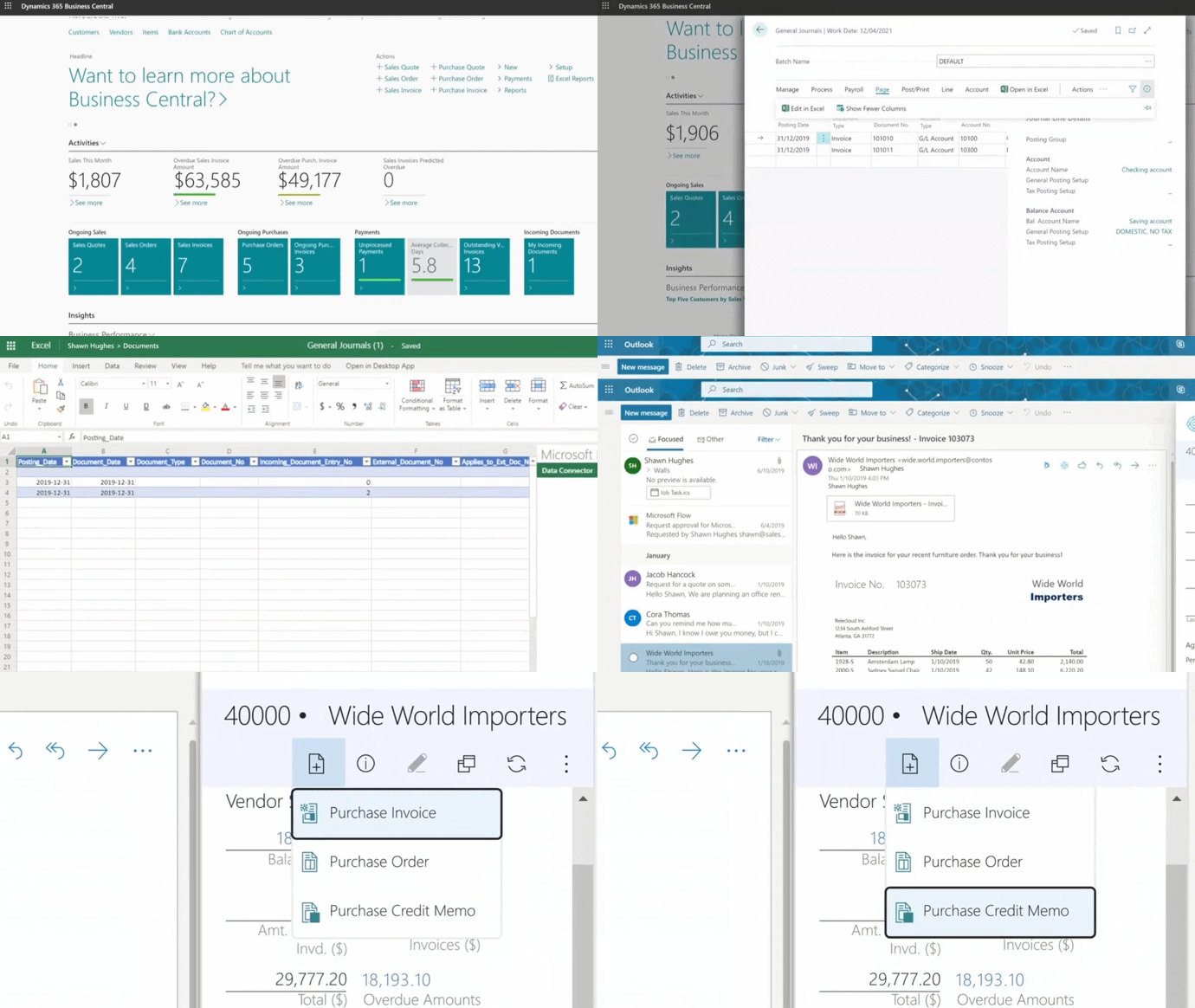
For most Canadian wholesalers, the core sits inside a cloud ERP like Microsoft Dynamics 365 Business Central, surrounded by wholesale distribution software tools that cover the industry-specific parts.
Who Actually Needs Distribution ERP Solutions (and Who Doesn't Yet)
You likely need distribution ERP solutions if you run more than one warehouse, carry more than 2,000 SKUs, or your sales team spends time asking the warehouse, "Do we actually have this?"
You probably do not need one yet if you are under 10 users, single-location, and your spreadsheet still answers every question in under a minute.
A distributor is different from a maker, and the best manufacturing ERP solves different problems. Know which one you are.
The next 7 sections are the real questions distributors raise on their first vendor call. Keep reading!
1- "What Does Our Inventory Actually Need to Track?" (The Core of Distribution ERP Solutions)
Everything that moves, where it is, what it cost to get there, and when it needs to be replaced. If your current tool cannot answer those four in real time, that is the first problem distribution ERP solutions solve.
Real-Time Multi-Location Visibility
Every warehouse, every bin, every unit, same screen.
If a sales rep in Toronto cannot see live stock in a Montreal warehouse without a phone call, you are losing orders you do not know about. A real distribution ERP connects locations so one scan at receiving updates head office in seconds.
This is also the foundation for ERP in inventory management, which goes deeper into cycle counting, lot and serial tracking, and inventory costing if you want the full picture after this.
The "Open PO" Blind Spot Most Distributors Miss
Most distributors obsess over on-hand stock and ignore what is already on an open purchase order (PO), in transit, or at customs.
The number that actually matters is often called available to promise (ATP): on-hand stock, plus inbound stock due before the promise date, minus demand already on other orders. Business Central tracks the same idea as Projected Available Balance.
Sales reps who promise against on-hand only do one of two things, both costly:
- Say "no" because today's stock is low, even though 500 units land tomorrow (lost sale).
- Say "yes" because today's stock looks fine, forgetting half is reserved for another customer (chargeback or split shipment).
The fix is simple and often ignored: train sales to look at Projected Available Balance, not just on-hand, and surface it on the sales order screen by default. Business Central exposes this on its Item Availability pages, per Microsoft's inventory availability docs. Most distributors never put it in front of sales.
Dashboards That Finance and Ops Will Both Use
Numbers only help if people look at them. Modern distribution ERP solutions push live data into Power BI so sales, ops, and finance see the same screen. Teams that connect Power BI to Business Central usually stop running the Friday-afternoon export altogether.

2- "Can It Handle the Way Our Customers Actually Order?" (Order Capture in Distribution ERP Solutions)
Your customers do not care which system you use. They care that the orders they placed by EDI, phone, email, or your web portal show up correctly, on time, and with the right paperwork. Your ERP has to meet orders from wherever they come from.
The Order Channels Your System Has to Speak
Most Canadian wholesalers juggle at least four:
- EDI for big-box retailers (an 850 becomes a sales order, a 940 goes to the 3PL, an 856 goes back as the shipment notice).
- Email and phone for long-tail accounts.
- A B2B web portal where resellers log in and place their own orders.
- A direct eCommerce storefront for a growing share.
If the ERP can only ingest one of those cleanly, your team is retyping the other three. That is where the day disappears.
The right distribution ERP solutions take the order from any channel and drop it straight into the same workflow.
Drop-Ship, Consignment, and Kits
Three cases that break weak systems: drop-shipping (vendor ships to your customer), consignment (you hold stock you do not own), and kits (one SKU made of several).
If your software needs a workaround for any of these, you pay for that workaround every single order. A proper system handles them as standard features.
3- "Will It Give the Warehouse the Right Paper?" (Pick, Pack, Ship Inside Distribution ERP Solutions)
Yes, and the picker never has to think about it. A modern system turns an order into a pick list, a pack slip, and a shipping label without a human copying numbers between screens.
What Good Pick, Pack, Ship Looks Like
A clean flow has four moments: the order lands, the system assigns bins and a pick route, the picker scans items into a tote, and the pack station prints label and invoice together.
No clipboard. No retyping. The team learns it in one shift.
Watch how it looks inside Business Central:
Wave Picking, Cross-Dock, and the Things That Save Hours
As volume grows, batch (wave) picking lets one trip clear ten orders instead of one. Cross-docking skips the putaway step when goods go in one door and out another in the same day.
These are not nice-to-haves at 500+ orders a day. They are the difference between one shift and two.
Modern cloud based distribution software runs this on mobile devices your warehouse staff already know how to use.
4- "What About Landed Cost, Duty, and the Canadian Stuff?" (Where Distribution ERP Solutions Earn Their Keep)
The uncomfortable truth most comparison articles skip: QuickBooks and Sage 50 cannot carry landed cost cleanly for a Canadian importer, no matter how many add-ons you bolt on.
Freight, duty, brokerage, and currency conversion end up as a journal entry three weeks after the container cleared. That means your margins on paper and your margins in reality are two different numbers.
Landed Cost, GST/HST/QST, and Multi-Currency
A proper distribution ERP treats landed cost as part of the receipt, not a cleanup task. Duty, freight, and brokerage get applied to the right SKU at the right exchange rate when the container arrives.
Then provincial tax codes do their job automatically for inter-provincial transfers, per the Canada Revenue Agency's place-of-supply rules for which GST/HST rate to charge, and multi-currency keeps CAD and USD separate without a Friday-afternoon reconciliation.
Bilingual Documents and Québec Compliance
If you ship into Québec, your packing slips, invoices, and quotes need to render in French. Distribution ERP solutions built for Canada handle bilingual output as a setting, not a custom build.
Pair that with the Microsoft stack (Teams, Outlook, SharePoint, Microsoft 365 consulting services) and your bilingual team keeps one source of truth. For Western Canadian distributors adding AI to the roadmap, running the ERP rollout alongside an AI consultant in Edmonton or your own region keeps both tracks moving.
Spot Where Your Current System Is Bleeding Margin
See where landed cost and currency are quietly eating your margin, with a team that has moved Canadian wholesalers off QuickBooks, Sage, and GP for twenty years.
 Free discovery call
5- "How Do I Know We've Outgrown What We Have?" (Readiness Signals for Distribution ERP Solutions)
If you are reading this article, you are probably past the signal. Distribution ERP solutions become a real conversation when the business is clearly running the software instead of the other way around.
The Five Signals Most Canadian Distributors Hit
- Sales keeps promising stock that is not actually there.
- Month-end close takes more than 10 business days.
- The item master lives in someone's head, not the system.
- You have hired two more admins just to copy data between tools.
- Your software vendor stopped shipping meaningful updates two years ago.
None of these five signals is fatal on its own. Together they mean the software is now a tax on the business, not a lift. In a Canadian distributor doing even a few million a month, that tax shows up on every order you ship short, every chargeback from a big-box customer, and every emergency air-freight you did not plan for.
Most owners still defer the decision one year at a time, which lines up with BDC's finding that technology adoption remains a real barrier for Canadian SMBs. The signals get louder. The decision does not get easier.
The One Thing to Do This Week
Print the top-20 SKU exception report in your current system this week. Count how many lines had manual overrides (price change, quantity override, allocation override).
If it is more than a quarter of them, your team is already carrying the system on their backs. That number is the honest readiness score. Not a demo. Not a feature list.
Dynamics GP Users: The Clock Is Running
Microsoft has confirmed end of support for Dynamics GP on December 31, 2029, with security updates stopping April 30, 2031, per the Microsoft Learn lifecycle page.
"Waiting one more year" works right up until it does not. We see distributors defer the GP migration three or four years, then try to run it in 90 days when a renewal hits. That compressed timeline is where most ERP projects go wrong.
6- "What Do Real Distribution ERP Solutions Cost in Canada?" (Honest Pricing Shape)
Software is the smallest line. Implementation, data cleanup, and the people time your team gives up during go-live are the real cost.
The Four Line Items of a Realistic Budget
- Software subscription. For Business Central in Canada, licences list at CAD $108.50 per user per month for Essentials, CAD $149.20 for Premium, and CAD $10.90 for Team Members (billed annually), per Microsoft's official Canadian pricing page.
- Implementation services. The partner's time to configure, migrate, train, and go live. This varies with complexity, number of warehouses, and how clean your data starts out.
- Third-party add-ons. EDI, WMS extensions, shipping connectors, bilingual print extensions.
- Internal time. The hours your team spends on testing, training, and parallel-running the old system. In our experience, this is the single most underestimated line in a Canadian SMB's ERP budget.
For a deeper look at how ERP for SME buyers typically size the full package in Canada, that guide breaks down the three cost buckets and typical Canadian ranges.
The 10 Key Criteria for Choosing Distribution ERP Solutions
Score any vendor on the same ten criteria our team uses on real buyer calls.

7- "What Breaks If You Pick the Wrong Distribution ERP Solutions?"
Everything that was supposed to get easier. Picking the wrong system costs you not just the software fee but the second migration two years later when the team quietly stops using it.
The Three Common Failure Modes
- The ERP does not fit how you actually sell, so the team keeps a shadow spreadsheet alongside it.
- The partner disappeared after go-live, so you have no one to call when a tax code breaks.
- You customized too much upfront, so every Microsoft update becomes a mini project.
The fix for all three is boring and consistent: start with standard features, pick an experienced ERP software distributor with strong ERP support, and bring in independent ERP consultants early if you want a second opinion on scope before you sign.
-
A distribution ERP solution is business software that handles inventory, warehouse, sales orders, purchasing, and accounting in one connected system. It replaces the mix of spreadsheets and single-purpose tools most wholesalers and importers start out with.
Why Choose Gestisoft for Your Distribution ERP Solutions
Choosing the right software is half the job. The other half is the partner who implements it and stays with you after go-live.
Gestisoft has been a Microsoft Solutions Partner since 2004 and B Corp certified. We work in English and French, with offices in Montreal, Toronto, Ottawa, and Québec City.
We have helped Canadian distributors in wine, packaging, consumer goods, and industrial products move off legacy stacks into Business Central without burning out the team along the way.
What That Looks Like in Practice
- We shape the ERP around the business, not the business around the ERP.
- We stay with you after go-live. The team you work with during implementation is the team you call six months later.
- We give you honest answers about scope. If you do not need something yet, we will say so.
“One of our core values is partnership. And that’s exactly how we see Gestisoft: as a business partner. We have great collaborative discussions, something I haven't always experienced with other integrators. It gives me confidence.”
If you want a straight read on whether distribution ERP solutions are the right next step for your business, our team is a short call away.
See Where Your Distribution Business Fits in Business Central
See how real-time stock, bilingual documents, and a faster month-end close show up in your business, delivered by a B Corp certified Business Central partner.
 Book a free consultation
Liked what you just read? Sharing is caring.

October 26, 2026 by Muhammad Ali Iqbal by Muhammad Ali Iqbal SEO Content Strategist & Copywriter
Driven by a passion for search engine optimization, strategic content, and conversion-focused writing. A copywriter and content strategist who lives for content that ranks, engages, and delivers real business results.
