

Manufacturing inventory control software is what stands between a clean month-end close and a frantic week of variance hunts. If your raw material shortage caught you off guard last quarter, or nobody on the floor can say what's sitting in WIP right now, you already know the gap.
This guide compares 8 manufacturing inventory control software options Canadian SMB manufacturers shortlist in 2026. You get honest feature breakdowns, fit recommendations, pricing ranges, and a realistic implementation timeline.
Talk to a Manufacturing ERP Specialist About Your Inventory Control
Bring your current inventory pain points to a Gestisoft consultant and see exactly what Business Central can solve for your plant.
 Book a free consultation
8 Best Manufacturing Inventory Control Software Tools for Canadian Plants in 2026
Below are eight options Canadian manufacturers shortlist most often in 2026. Each solves a different version of the inventory problem.
1. Microsoft Dynamics 365 Business Central
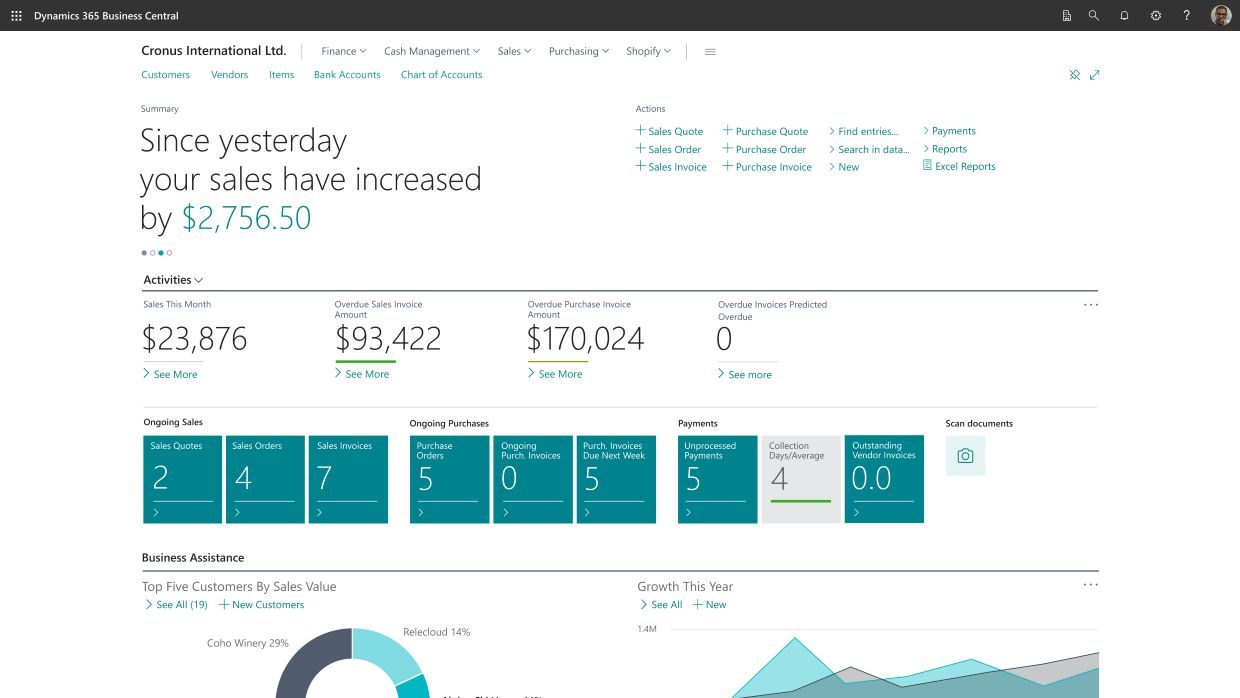
Business Central is a cloud ERP for SMB and mid-market manufacturers. Deployed by Gestisoft, it integrates production, costing, finance, and inventory in one Microsoft-stack platform.
Key strengths:
- Unified ledger where finance, costing, and inventory operate without sync gaps.
- Multi-location, lot/serial traceability, full BOM management built in natively.
- Embedded Copilot AI for demand forecasting and variance reporting.
Best fit: SMB and mid-market Canadian manufacturers on Microsoft 365 or consolidating finance and production.
Watch-out: Best deployed with a Canadian Microsoft Partner. Out-of-the-box without configuration leaves manufacturing value on the table.
2. Katana Cloud Inventory
Katana is a cloud manufacturing platform built for small product makers and DTC brands. It handles live inventory, production scheduling, and BOMs across multiple sales channels.
Key strengths:
- Clean interface with strong Shopify and QuickBooks integrations.
- Built-in shop floor app for live work order updates.
- Multi-channel inventory sync for ecommerce-driven manufacturers.
Best fit: Small DTC product makers selling across Shopify, Amazon, or retail with light to medium production complexity.
Watch-out: Limited finance depth and reporting flexibility. Mid-market manufacturers tend to outgrow Katana once SKU count or compliance demands climb. You may also check out some Katana alternatives in our breakdown.
3. MRPeasy
MRPeasy is a cloud MRP system built for small-to-medium manufacturers with 10 to 200 employees. It centralizes production planning, multi-level BOMs, inventory, and procurement in one connected system.
Key strengths:
- Real-time shop floor reporting through a mobile-friendly operator interface.
- Multi-level BOM management and batch/lot traceability for quality control.
- Transparent per-user subscription tiers that scale predictably.
Best fit: Small, growing manufacturers moving off spreadsheets who need true MRP-grade planning without a full ERP project.
Watch-out: Limited standalone financial depth. Teams needing deeper reporting typically pair MRPeasy with QuickBooks or Xero.
4. Fishbowl Manufacturing
Fishbowl Manufacturing is a long-standing inventory and manufacturing platform known for its tight QuickBooks integration. It serves US and Canadian SMBs across consumer goods, food, and light industrial.
Key strengths:
- Strong QuickBooks Online and QuickBooks Canada integration.
- Work orders, BOMs, MRP, and time tracking included.
- Both hosted and on-premise deployment options.
Best fit: QuickBooks-anchored Canadian manufacturers who want inventory and production without changing accounting platforms.
Watch-out: Heavier UI than newer cloud tools. Implementation timelines can stretch if customizations stack up.
5. NetSuite Manufacturing Edition
NetSuite Manufacturing Edition is Oracle's cloud ERP for mid-market and upper-SMB manufacturers. It bundles inventory, production, finance, and supply chain into one connected suite.
Key strengths:
- Mature multi-entity, multi-currency, and multi-location support.
- Strong advanced inventory and demand planning modules.
- Wide global partner network for enterprise-grade implementations.
Best fit: Growing manufacturers expecting international expansion or multi-subsidiary consolidations down the road.
Watch-out: Pricing scales quickly. Implementation cost often surprises Canadian SMBs comparing it against mid-market Microsoft options. You may also check out our NetSuite ERP alternatives guide for more useful information.
6. Acumatica Manufacturing Edition
Acumatica Manufacturing Edition is a cloud ERP for discrete and batch manufacturers. It connects shop floor, inventory, costing, and finance under a resource-based pricing model.
Key strengths:
- Resource-based pricing instead of per-user license fees.
- Strong production scheduling and product configurator features.
- Tight integration between manufacturing, distribution, and CRM modules.
Best fit: Mid-market manufacturers wanting cloud ERP without per-user license drag.
Watch-out: Smaller Canadian partner footprint than Microsoft or NetSuite. Local implementation quality depends heavily on the partner you pick. You may also check out our article on Acumatica alternatives.
7. Cin7 Core
Cin7 Core, formerly DEAR Systems, is an inventory and light-manufacturing platform for product brands and multichannel SMBs. It handles BOMs, assembly, and omnichannel order fulfillment in one cloud platform.
Key strengths:
- Native integrations with Shopify, Amazon, QuickBooks Online, and Xero.
- Scales from kitting up to an Advanced Manufacturing add-on with MRP and capacity planning.
- B2B portal and EDI available as paid add-ons.
Best fit: Product brands selling D2C and wholesale needing real-time inventory, assembly, and multi-warehouse workflows.
Watch-out: Best for assembly and batch production. Heavy discrete or continuous process manufacturing strains its routing limits.
8. Odoo Manufacturing
Odoo Manufacturing is the production core of Odoo's open-source business suite. It connects MRP and BOMs with optional apps for Quality, Product Lifecycle Management (PLM), and Maintenance.
Key strengths:
- Modular open-source architecture with strong customization potential.
- Tablet-friendly Shop Floor app for clock-ins, work orders, and scrap reporting (Enterprise only).
- Flat per-user Enterprise pricing that unlocks all native apps.
Best fit: Mid-market and SMB discrete manufacturers with technical ownership or a dedicated Odoo partner.
Watch-out: Shop Floor, MPS, Quality, and PLM need Enterprise. Without disciplined management, customization can spiral into upgrade-breaking configuration debt. You may also read on our Odoo alternatives.
Get a Real Implementation Timeline and Cost Breakdown for Your Business
Bring your SKU count, location setup, and current pain points to a Gestisoft manufacturing consultant and walk away with an honest scope, timeline, and budget range for Business Central.
 Book a free consultation
What Is Manufacturing Inventory Control Software and How Does It Work?
Manufacturing inventory control software tracks what stock you have, where it sits, what's been consumed, and what's about to ship.
It works by capturing each transaction at its source. Receipts, work order issues, scrap postings, and shipments all update inventory, costing, and finance at the same time. That single source of truth keeps the floor and the back office in sync.
For a deeper look at manufacturing ERP and how it differs from generic ERP, our guide on manufacturing ERP software is a useful next stop.
Where Manufacturing Inventory Control Software Fits in Your Production Process
The software sits at every hand-off point. A PO arrives, the receipt posts. Material gets pulled for a job, a consumption transaction posts. Output hits the floor, WIP closes and finished goods open.
These postings are where Excel falls apart. Manufacturing inventory control software ties each transaction to a work order, lot, location, and cost. Nothing floats.
What "Control" Actually Means in Day-to-Day Operations
Control is not a status board. It's a set of disciplined actions repeated daily:
- Cycle counts done weekly instead of once a year.
- Item reclassifications when a count comes back wrong.
- Scrap postings when a part is dropped or rejected.
- Lot and serial capture when something traceable moves.
- Location moves recorded in real time.
If those actions happen, you have control. If not, you have a guess.
How Manufacturing Inventory Control Software Handles Raw Materials, WIP, and Finished Goods
There are three stock states, three different control problems, and one system that has to hold all of them in sync. Each state asks different questions.
Raw Material Tracking From PO Receipt to Production Issue
This is where shortages get caught early or too late. Manufacturing inventory control software watches reorder points, vendor lead times, and committed quantities against open work orders.
When a PO arrives, the posting is immediate. When a job needs material, the system reserves and issues, and the cost flows into the work order automatically.
Work-in-Process (WIP) Visibility on the Production Line
WIP is the stock state spreadsheets pretend doesn't exist. The job started, materials are gone, but the finished part isn't ready.
Good manufacturing inventory control software posts each operation as it completes. Operators report scrap, partials, and yield. Supervisors see what's running, behind, or waiting.
Finished Goods Inventory Costing and Posting
Once the build closes, the finished part moves into stock at actual cost. Variance against standard cost gets flagged for finance.
Shipping pulls from the same record. No second system to reconcile. Month-end close is faster because postings already match.
Manufacturing Inventory Control Software vs MRP vs ERP: Which One Do You Need?
Three categories, three different problems. The right answer depends on what's actually breaking in your operation today.
For a fuller breakdown of where each one starts and stops, our guide on ERP vs MRP key differences and benefits covers it cleanly.
When a Standalone Inventory Tool Fits
If you have a few hundred SKUs, simple BOMs, one location, and accounting handled elsewhere, a standalone inventory tool can carry you for years.
It's time to move when month-end ties take days, lot recalls become panic events, or finance keeps asking questions inventory can't answer.
When You Need MRP (Not Just Inventory)
MRP fits when production scheduling, multi-level BOMs, and capacity planning drive the day. Pure inventory tools only track stock… they can't tell you what to make or when.
Look at MRP-grade options once you forecast material needs against production demand, not just sales orders.
When a Full ERP Makes Sense
Multi-plant operations, complex BOMs, compliance audits, and tight finance integration are the usual triggers. At that point, an ERP with inventory built in removes more friction than a best-of-breed stack.

How to Choose Manufacturing Inventory Control Software for Your Plant
Three things drive the right pick: matching the workflow, picking real criteria, and asking the questions vendors don't volunteer.
Map Your Actual Production Workflow Before Vendor Demos
Sit on the floor for half a day. Watch receiving, production, and shipping. Write down every hand-off, count, and signature.
Take that map into vendor demos. Most vendors run a happy-path scenario. Your map forces them to show how the software handles the edge cases that actually break your week.
Decision Criteria That Matter Beyond the Generic Feature Checklist
Skip the generic comparison matrix. The criteria that matter:
- Multi-location support if you have more than one stocking site.
- Lot and serial traceability for food, pharma, automotive, or aerospace.
- Costing method flexibility (standard, FIFO, average, specific).
- Barcode and RFID support if your team scans.
- Native integration with your accounting and shipping tools.
If a vendor checks every box but can't show you these working live, the checkmarks don't mean much.
Questions to Ask Every Vendor Before You Sign
These surface real differences:
- What's a realistic implementation timeline for a company our size?
- What's included in the base license versus add-ons?
- Do you have Canadian-based support or partners?
- How is multi-currency handled, including CAD and USD?
- Is bilingual French/English UI available for Quebec operations?
- What happens to our data if we leave in three years?
If a vendor gets vague on any of these, that's information.
Manufacturing Inventory Control Software for Discrete, Process, ETO, and MTO Production
Not every tool fits every manufacturing mode. The mode you run in changes what "control" needs to do.
Discrete and Make-to-Stock Manufacturers
Repeated SKUs, defined BOMs, predictable runs. Most platforms handle this well, including Business Central, Acumatica, NetSuite, MRPeasy, and Katana.
Our guide on discrete manufacturing ERP software covers this mode in depth.
Process Manufacturers (Food, Chemicals, Coatings)
Recipes instead of BOMs. Batch yield variance, expiry rules, regulatory traceability. The list narrows here.
You need native recipe and batch features, not bolt-ons. Business Central with the right add-ons, NetSuite, and process-specific niche tools are usual options.
Engineer-to-Order and Make-to-Order Shops
Each job has a unique BOM. Quote, design, source, and build stay linked. Project-based costing matters more than standard cost.
ETO-fit options include Business Central configured for ETO and a few niche specialists.
The Black Hole of Manufacturing
Read about the industry challenges in the manufacturing sector and how a manufacturing inventory control software like Business Central can help out.

Common Manufacturing Inventory Control Software Mistakes That Cost Real Money
The expensive mistakes aren't in the demo. They show up six months in, when the team is committed and the workaround is already painful.
Buying an Inventory Tool When You Actually Need a Full MRP
The "we just need to track stock" framing gets a lot of teams in trouble. If you run BOMs, do production scheduling, or post WIP, you don't have an inventory problem. You have an MRP problem in disguise. Inventory tools don't grow into MRP. You'll pay twice when you migrate.
Skipping Lot and Serial Traceability Until a Recall Forces It
Until you need to trace a contaminated batch back to a supplier, traceability feels like overhead. The day you need it, the cost shows up in days of manual research, lost customer trust, and regulatory exposure. Turn it on at go-live. The software supports it. Use it.
Letting BOM Changes Happen Without Governance
An engineer updates a BOM. The new version costs more or substitutes a part. Nobody tells finance. Costing drifts and margins shrink without anyone able to pinpoint why.
For more on fixing the process gaps that cause this, our guide on improving your manufacturing process with ERP walks through the bottlenecks worth tackling first.
How Much Does Manufacturing Inventory Control Software Cost in Canada?
Pricing covers a wide range. Excel still feels free, but once SKU count climbs into the hundreds and posting errors cost real hours, the math flips. Our guide on Excel vs ERP for inventory management walks through that comparison.
Standalone Tools and Their Monthly Subscription Ranges
Tools like Katana, MRPeasy, and Cin7 Core typically start in the low-to-mid hundreds of USD per month, scaling up with users, order volume, and add-on modules.
Watch for caps on order volume, SKUs, or shop floor users. The "starting at" price rarely matches what you'll pay.
Full ERP With Manufacturing Inventory Control: Licensing and Implementation
Microsoft Dynamics 365 Business Central Essentials lists at USD $80 per user per month. Premium, which includes the manufacturing module, lists at USD $110 per user per month.
Implementation through a Canadian Microsoft Partner usually runs from CAD $30,000 for a clean SMB deployment to over CAD $100,000 for multi-plant or complex scopes.
Hidden Costs Most Vendors Don't Quote Up Front
Line items often added later:
- Data migration from your old system.
- Integrations to accounting, shipping, or ecommerce.
- Custom reports beyond the standard library.
- Hardware: barcode scanners, label printers, mobile devices.
- Training time pulled from production hours.
Ask for these in the quote, not after.
How Long Does It Take to Implement Manufacturing Inventory Control Software?
For an SMB manufacturer, a realistic timeline is three to six months. Larger or multi-plant rollouts can push past nine months. Anything promised faster usually defers work to post-go-live.
Phase 1: Discovery and Process Mapping
This is where the project's success gets decided. The implementation partner walks the floor, documents current workflows, and identifies gaps between today's process and the future system. Cutting this short is the biggest cause of failed implementations.
Phase 2: Configuration, Data Migration, and Integration
Item master, BOMs, locations, opening balances, vendors, and customers all get loaded. Integrations to accounting and shipping get built and tested. This phase usually takes longest because clean data is harder than vendors admit.
Phase 3: Cutover, Training, and Go-Live
Training happens before go-live, hypercare after. Plan for a parallel run if risk justifies it. Expect a slow first week of postings and a faster second.
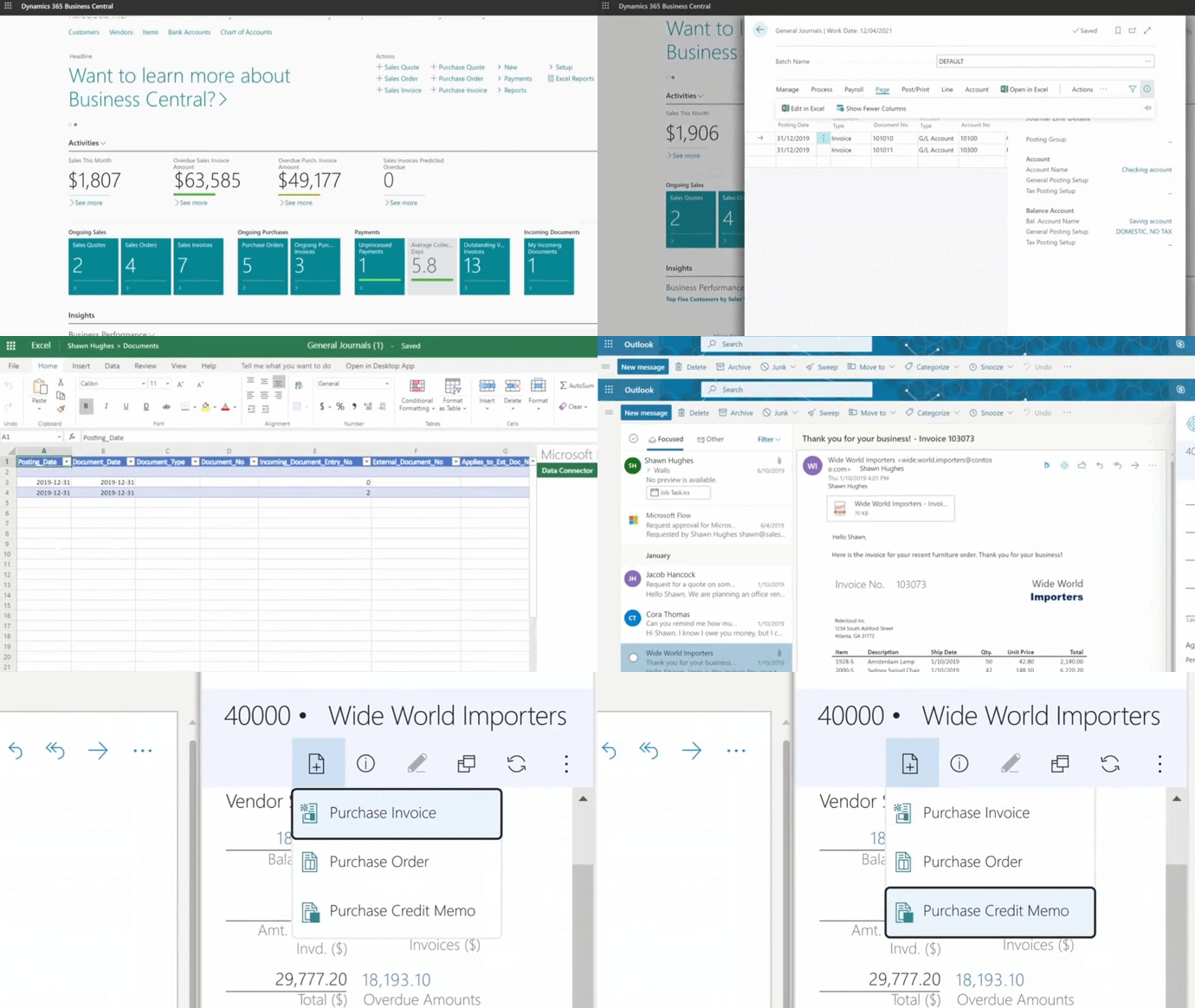
Every concept above comes down to one mechanic: posting an inventory adjustment cleanly. This Gestisoft tutorial walks through it inside Business Central.
-
Manufacturing inventory control software tracks stock across raw materials, work-in-process, and finished goods on a production floor. It posts every receipt, consumption, scrap, and shipment to one source so finance, production, and warehouse stay in sync.
Why Gestisoft Is a Trusted Partner for Manufacturing Inventory Control Software in Canada
Gestisoft has been a Canadian software firm for nearly three decades and a long-standing Microsoft Solutions Partner. We're B Corp certified, with offices in Montreal, Quebec City, Toronto, and Ottawa, serving manufacturers across Canada in English and French.
Our team has implemented Business Central for manufacturers across discrete, process, and ETO modes, with deep experience in production deployment, BOM and costing setup, lot traceability, and multi-plant rollouts.
Here's how one of our manufacturing clients describes the change after going live:
“The solution delivered to us has significantly improved our production visibility. We are now able to track our production in real time, and have more accurate data on the costs of each production run.”
Production visibility, real-time tracking, and costing accuracy are what manufacturing inventory control software exists to deliver. The next step is mapping what your floor needs.
Map Your Inventory Control Gaps With a Microsoft Partner
Walk through your current manufacturing inventory setup with a Gestisoft consultant and see exactly where Business Central fits and where it doesn't.
 Free discovery call
Liked what you just read? Sharing is caring.

June 22, 2026 by Muhammad Ali Iqbal by Muhammad Ali Iqbal SEO Content Strategist & Copywriter
Driven by a passion for search engine optimization, strategic content, and conversion-focused writing. A copywriter and content strategist who lives for content that ranks, engages, and delivers real business results.
