

Searching for a free warehouse management system usually means one of two things:
- You’re trying to fix warehouse chaos (inventory errors, slow picking, manual updates) without committing to a full project yet, or
- You’re validating workflows before you scale into a more complete ERP/WMS setup.
A free tool can absolutely help—if you choose it based on your real warehouse execution needs, not just the fact that it’s $0. Many “free WMS” products are actually inventory apps with limited warehouse execution, and that mismatch is where most teams get stuck.
This guide gives you:
- A Top 10 list (to match your search intent)
- A 2026 checklist to choose safely
- The hidden costs of “free” and the upgrade triggers to watch
- A clear path towards ERP WMSto scale without rework
What is a free warehouse management system?
Most free offers fall into one of these categories:
- Freemium cloud tools: Forever-free tiers with strict limits (users, orders, locations, features).
- Open-source/self-hosted WMS: Free to download, but you own hosting, security, updates, and support.
- “Free” warehouse features inside broader platforms: One module might be free; serious warehousing and integrations often become paid.
That’s why you should evaluate a free warehouse management system by workflows (receiving → put-away → pick/pack/ship), not by marketing labels.
Want to upgrade your free warehouse management system?
Choose a more powerful solution in Business Central. Contact us for a free consultation today.
 Free discovery call
Top 10 free warehouse management system options in 2026
Important note: this list mixes “true WMS” options and inventory tools that can behave like a basic WMS for simple operations. That’s intentional—because that’s what most “free WMS” searches surface in practice. Capterra’s free-WMS category also highlights how commonly buyers evaluate tools through features like barcoding/RFID, inventory tracking, multi-location, reporting, and integrations.
But before we dive into the top 10 free warehouse management systems, you may also check out our article on the top 10 free inventory management software here.
1. Square Inventory — best for beginners and retail-style stock control

Best for: very small teams, simple stock counts, basic item tracking
Why it’s on the list: fast to start, easy UI, works well for beginners; frequently mentioned as a top free option.
Main “free” limits: it’s not a deep warehouse execution system (directed put-away, complex picking, advanced replenishment).
When to upgrade: when you need bin-level control, barcode-first workflows, or multi-warehouse governance.
2. Zoho Inventory (Free plan) — best for a simple order + inventory flow

Best for: small operations that need basic order + stock tracking and a clean UI
Why it’s on the list: widely ranked among top free choices.
Main “free” limits: Zoho’s free plan is capped (for example, Zoho lists a free tier with 50 orders, 1 user, and limited locations).
When to upgrade: when warehouse execution becomes your bottleneck (barcode picking at scale, complex shipping flows, multi-site operations).
3. Sortly — best for simple barcode/QR organization and visibility

Best for: teams that want a lightweight way to label, track, and organize stock
Why it’s on the list: often ranked for UX and simplicity.
Main “free” limits: free tiers usually restrict records/users/features and are better for “inventory visibility” than full warehouse execution.
When to upgrade: when you need standardized receiving/put-away, packing verification, and integrated shipping processes.
4. myWMS (open-source) — best for IT-ready teams who want control

Best for: organizations with internal IT capacity that want to self-host and customize
Why it’s on the list: frequently cited as an open-source free WMS option.
Main “free” limits: the software might be free, but the real cost is hosting, updates, security, and internal support ownership.
When to upgrade: when you want vendor-backed reliability, structured support, and predictable operations without internal maintenance burden.
5. Odoo Inventory — best for flexible workflows inside a broader platform

Best for: teams that like modular platforms and want inventory + operational apps in one ecosystem
Why it’s on the list: commonly surfaced in free-WMS research and directories.
Main “free” limits: “free” can depend on deployment model and app selection; advanced warehousing and integrations often require paid tiers or extra setup.
When to upgrade: when you need stronger warehousing governance, advanced shipping, and a tighter ERP-aligned warehouse execution model.
6. RightControl — best for small business basics (with an important caveat)

Best for: simple inventory tracking where legacy tools still fit the environment
Why it’s on the list: often cited as “free to use.”
Main “free” limits: some “free forever” tools are no longer actively updated (risk: security, compatibility, support).
When to upgrade: when you can’t afford operational risk from outdated software and need modern integrations and auditability.
7. SalesBinder — best for basic reporting and permissions in small setups

Best for: small teams that want structured records, basic reports, and controlled access
Why it’s on the list: often included in free-WMS roundups.
Main “free” limits: free tiers typically cap records/users and won’t cover advanced floor execution for medium-volume warehouses.
When to upgrade: when you need barcode execution as the default, not a nice-to-have.
8. OpenBoxes (self-hosted) — best for multi-location and controlled workflows (if you can self-host)

Best for: organizations needing structured processes and multiple locations, with IT support for hosting
Why it’s on the list: commonly mentioned as an option when self-hosting is acceptable.
Main “free” limits: you trade subscription cost for internal IT overhead (maintenance, upgrades, security).
When to upgrade: when uptime, support, and faster change delivery become critical.
9. ABC Inventory — best for simple “inventory control” foundations

Best for: basic inventory control processes and master item organization
Why it’s on the list: often cited as free to use.
Main “free” limits: usually limited in modern integration depth and advanced warehouse execution.
When to upgrade: when you need tight order-to-ship execution and integration with finance/supply chain planning.
10. Boxstorm (Forever Free) — best for QuickBooks Online-friendly inventory basics

Best for: small businesses wanting cloud inventory basics with a QuickBooks Online connection
Why it’s on the list: Boxstorm is positioned as a no-cost option with QuickBooks Online integration in its “Forever Free” plan.
Main “free” limits: some third-party summaries note caps such as one user/location and low item/transaction limits on free plans (verify current limits before committing).
When to upgrade: when you outgrow free-tier caps and need a warehouse-first execution model (receiving discipline, bin control, barcode picking at scale).
Free warehouse management system checklist (what to require in 2026)
Before you commit to any free warehouse management system, validate these essentials.
Core warehouse execution
- Receiving workflow (what gets recorded at the dock)
- Put-away logic (where stock should go and how you confirm it)
- Locations/bins (even if simple)
- Pick/pack/ship flow (how orders become shipments)
- Transfers, adjustments, and an audit trail
[Internal link: Components of warehouse management system]
Accuracy + speed enablers
- Barcode/QR support that your team can actually use on the floor
- Mobile usability (warehouse work isn’t a desk job)
- User permissions + activity history (who changed what and when)
Reporting that drives action
- Inventory on hand by location
- Stock movement history
- Backorder / fulfillment status
- Simple performance indicators (errors, returns, late shipments)
Integration basics
- E-commerce (if applicable), shipping tools, accounting/ERP alignment
- Basic API/connectors (even limited) to avoid double entry
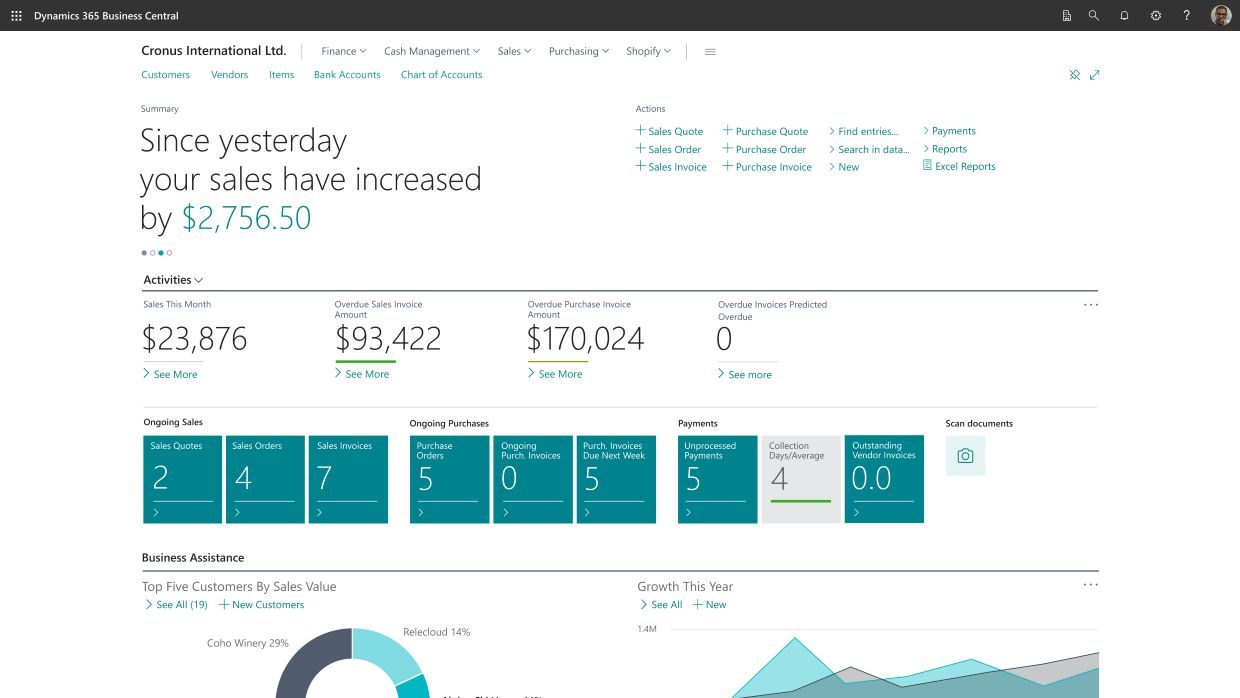
The hidden costs of “free” (and how they show up)
A free warehouse management system can still be expensive—just not on a subscription invoice.
Common “free” pitfalls:
- Double entry (orders in one tool, inventory in another, finance elsewhere)
- Weak traceability (returns, recalls, lot/serial/expiry needs)
- Limits that arrive at the worst time (order caps, user caps, location caps)
- Workarounds that become permanent (spreadsheets, manual adjustments, side processes)
This is where projects derail—even with “good software.”
When to upgrade from a free warehouse management system?
Here are the clearest triggers that your free tier is now costing you more than it saves:
- You have more than 1–2 locations/warehouses
- You have more than ~3–5 warehouse users
- Picking/packing errors and returns are increasing
- You need directed picking/put-away, or more consistent replenishment
- You need better shipping control and integrations
- You want warehouse execution aligned with purchasing, sales, and finance (one source of truth)
At this stage, the decision isn’t “free vs paid.” It’s whether you can keep scaling without operational friction and constant reconciliation.
How to scale without rework: from free tool to ERP-aligned warehouse execution?
The safest scaling path is to treat “free” as a phase, not a destination:
- Phase 1: stabilize inventory discipline + basic workflows
- Phase 2: introduce barcode-first execution and shipping discipline
- Phase 3: integrate warehouse execution tightly with ERP operations (purchasing, sales, finance, planning)
This is why many growing distributors and manufacturers move toward an ERP-aligned WMS approach instead of stacking more tools.
Book your free consultation with our experts today
Contact us to learn more about Business Central, a powerful ERP WMS that transforms your distribution and logistics.
 Free discovery call
-
Usually the subscription is free, but you still “pay” through limits (users/orders/locations), manual work, weak integrations, and added admin time—especially as volume grows.
A free warehouse management system can be a smart way to prove a process and bring order to inventory—as long as the tool matches your workflows and your growth plan. The moment you’re fighting caps, double entry, and rising fulfillment errors, the “free” option starts costing you more than it saves.
Liked what you just read? Sharing is caring.

January 20, 2026 by Kooldeep Sahye by Kooldeep Sahye Inbound Marketing Manager
Specializing in SEO-driven pipeline growth, I combine keyword strategy, content optimization, and inbound tactics to turn organic search into a reliable source of qualified leads. I work at the intersection of traditional SEO and AI search — optimizing for LLMs and AI Overviews alongside Google — pairing data-informed strategy with sharp, story-led copywriting.