
In construction, your reputation gets you in the room. CRM software for construction is what makes sure you don't leave empty handed.
Somewhere in a construction company right now, there's a bid that went cold because nobody followed up. Not because the team wasn't capable of winning it, but because the estimator who was tracking it had seventeen other bids on the go and this one slipped.
This happens constantly in construction and barely anyone talks about it because it's embarrassing. So everyone keeps the dirty secret and hopes that next time they’ll be “luckier”.
The worst part is that this is happening in companies where the work is solid but the business is leaving money on the table because the sales process lives across a few spreadsheets and an inbox that’s overflowing. Remembering the details of every active bid without a CRM software for construction relies on the collective memory of three people who are all referencing different data.
CRM software for construction changes this by giving the whole business a structured way to see what's in the pipeline, where each bid stands and which client relationships need attention to get them over the line.
Construction sales is relationship-driven and long-cycle, which means the companies that manage their pipeline well have a compounding advantage over time that spreadsheets and memory simply cannot replicate.
What is CRM software for construction?
CRM software for construction is the system that manages the sales side of a construction business. Not the project execution or the site management, but the part that happens before a shovel hits the ground.
Construction companies generate opportunities from a lot of different directions. Leads can come from referrals from past clients, relationships with architects and developers, tender notifications or repeat enquiries from longstanding contacts with new projects. Without a proper system to organise those leads, it’s not hard to see how some of them disappear before anyone realises they were worth pursuing.
Once you start bidding, things get complex fast. It’s not unrealistic for a construction company to be running forty active bids at any given time. It’s impossible to know the status of each one without some way to keep track. And no, chasing down different people for updates is not a system.
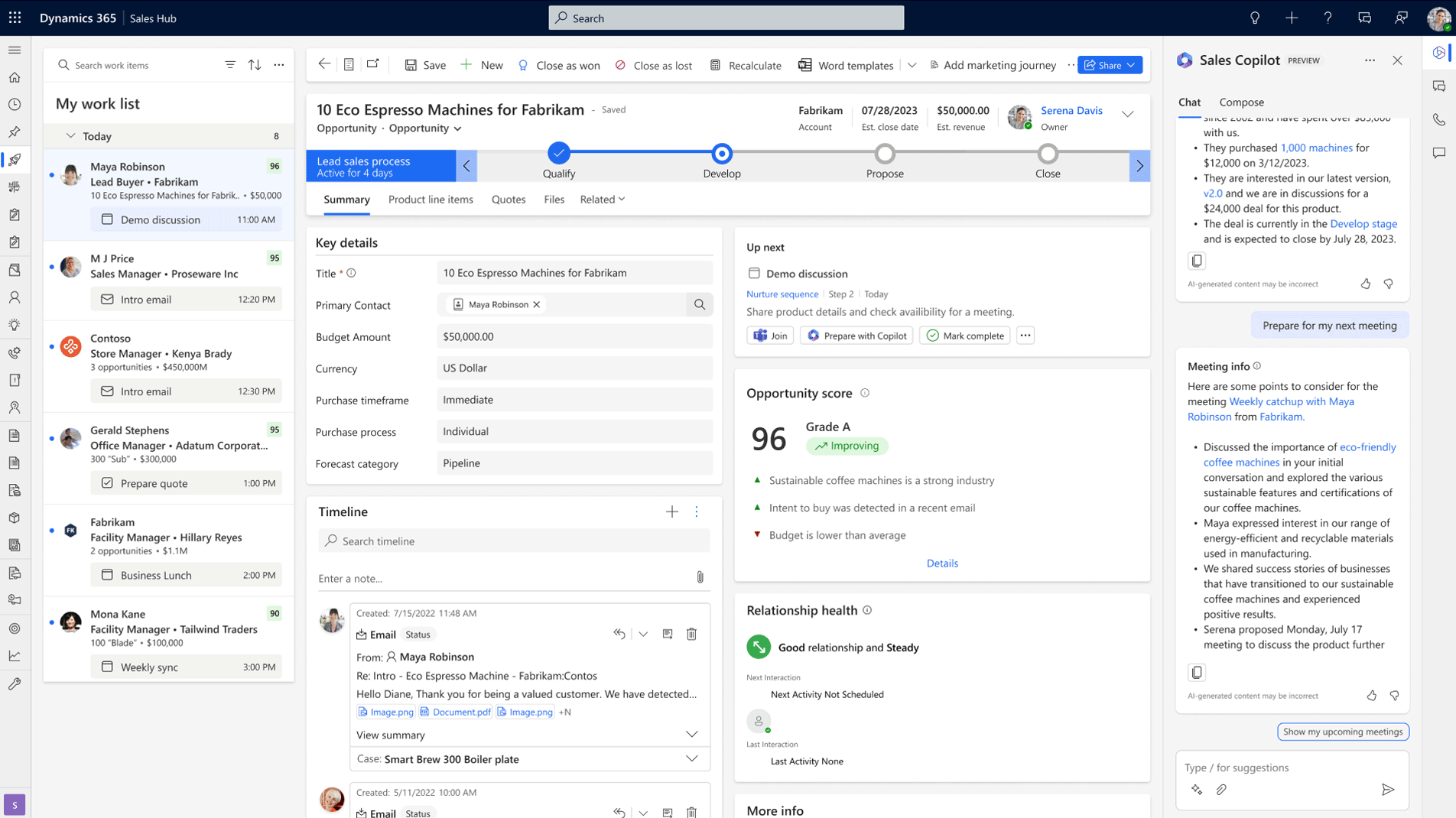
CRM software for construction gives each bid its own record and its own set of contacts so nothing gets lost between the initial conversation and the final decision.
Construction is a repeat business industry and client relationships are really the whole point. The companies that grow sustainably are usually the ones that manage those relationships deliberately rather than hoping that past clients will remember to call.
When all of that information is in one place, leadership gets a pipeline they can plan around and winning work becomes more predictable.
CRM software for construction vs construction management software
The most common source of confusion in the construction software market is Procore. It's an excellent platform and a lot of construction companies use it well. The problem is that it gets positioned and sometimes sold as a solution to the bid and client relationship side of the business, which is not what it was built for.
Procore is project management software. Once a project is won, it's hard to beat. It handles scheduling, document control, RFIs, submittals, cost tracking, and site coordination across teams and subcontractors. That's where it shines.
CRM software for construction operates in the stage before any of that. It's the system that tracks a potential client from the first conversation, manages the bid process, monitors the health of the relationship during the long gap between submitting a proposal and hearing back, and makes sure that when a project does get won the sales team has documented everything the delivery team needs to know.
Procore picks up where the CRM software for construction leaves off. The two aren't competing with each other.
The reason this distinction matters at all for growing construction companies is that the gap between winning work and delivering it is where a lot of revenue gets lost. A company with excellent project management but no structured sales process is essentially crossing their fingers and hoping that good work generates enough word of mouth to keep the pipeline full. Sometimes it does. But it's not a strategy you can scale or depend on.
What CRM software for construction gives you is control over the front end of the business. The part that determines whether there's anything for Procore to manage in the first place. The companies that connect both sides, CRM handling the sales process and a project management platform handling delivery, tend to have much better visibility across the whole business lifecycle than those running only one or the other.
A full pipeline means nothing if nobody's tracking it properly.
Gestisoft helps Canadian construction companies build a CRM structure that reflects how they win work.
 Free discovery call
How CRM software for construction supports your sales process
Construction sales has longer cycles and more complex decision making than most B2B industries, and the gap between submitting a bid and hearing back can stretch for months where a lot can go wrong.
The best CRM software for construction tracks exactly what happens at each stage so deals don’t fall apart. Construction sales don't follow a neat linear path, but they mostly follow a predictable one.
Here's where CRM software for construction makes the biggest difference at each stage.
Day one. The lead comes in.
A developer calls you about a potential commercial fit-out or an architect sends an email recommending you for a hospital renovation. Without a CRM, both of these conversations start in different places and depend on someone remembering to record it and follow up.
A CRM gives every lead a record from the moment it arrives. You can enter where the lead came from, what was discussed, what the next step is and when a follow-up needs to happen. That sounds simple because it is. Now every person in the company has a system for potential leads all captured in the same way.
Week three. The bid is active.
This is where single-contact risk starts to matter and almost nobody talks about it. Construction projects often involve multiple decision makers. The project manager who brought you in is not necessarily the person who signs off on the budget. The procurement lead has their own criteria and the board has its own timeline.
CRM software for construction maps all of those contacts against the bid record so the sales team knows who influences the decision and who hasn't been spoken to recently. Losing a bid because the relationship was only maintained with one person, and that person lost internal influence, is a very specific kind of frustrating because it's entirely avoidable.

Month two. The silence.
Every construction sales team knows this phase. The bid went in and it was strong, but now the client has gone quiet. Nobody is sure whether to follow up or whether that would seem desperate. And guaranteed in another few weeks when the team gets busy on another project, this lead will slip through the cracks because nobody will remember to follow-up.
The CRM doesn't resolve the awkwardness of the silence but it does make sure someone follows up at the right moment rather than two months too late. CRM software for construction can be configured to send automated reminders and keeps a clear record of where the relationship stands. When the client does come back, the conversation picks up rather than starting again.
Project signed. The sales team disappears.
This is the failure point that almost no CRM software for construction implementation addresses properly, and the reason it happens is structural rather than intentional. The moment a project gets signed, the delivery team takes over and the record stops getting updated because the project manager works in Procore. By the time the project completes, the sales team has lost the thread entirely and the client relationship that should be the warmest lead in the pipeline becomes a cold call six months later.
CRM software for construction that's set up properly keeps that thread alive through delivery because project milestones can trigger relationship check-ins. When the job finishes, the sales team knows exactly when to re-engage and what to say. That's where repeat business comes from and it's also where most construction companies leave the most money behind.
Repeat business in construction doesn't happen by accident.
Gestisoft configures CRM software for construction companies so the system reflects how you actually win work, not how a generic template assumes you do.
 Free discovery call
Key features to look for in CRM software for construction
Here's what to prioritise in your CRM for construction and why each feature matters in a construction context.
Pipeline management for bids and opportunities
A construction pipeline is not a standard sales pipeline. Bids can sit in a pending state for months, get reactivated, get cancelled and come back again. The pipeline management in a CRM needs to reflect that reality rather than forcing bid status into stages designed for a software sales cycle. Good pipeline management for construction gives leadership a live view of total bid value, close probability and expected timing so revenue planning is realistic.
Contact and stakeholder tracking
Every bid in construction involves more than one decision maker, and the CRM needs to track all of them. Most construction bids are lost at the relationship level rather than the price level. Tracking every stakeholder against a bid record means the sales team knows who hasn't been spoken to recently before it becomes a problem.
Document and estimate management
In most construction companies proposals, revised estimates, scope change documents, and previous bid submissions live across email and in shared drives. Connecting document management to the CRM record means the full history of a bid or client relationship is in one place, which matters enormously when a client calls eighteen months after a previous project and expects you to remember the details.
Workflow automation for follow-ups
Automation doesn't replace the relationship but it does make sure nobody drops the ball on a follow-up because the estimating team got buried in a new tender. Configured well, automation in a CRM feels less like a robot and more like a very reliable colleague who never forgets to send a reminder.
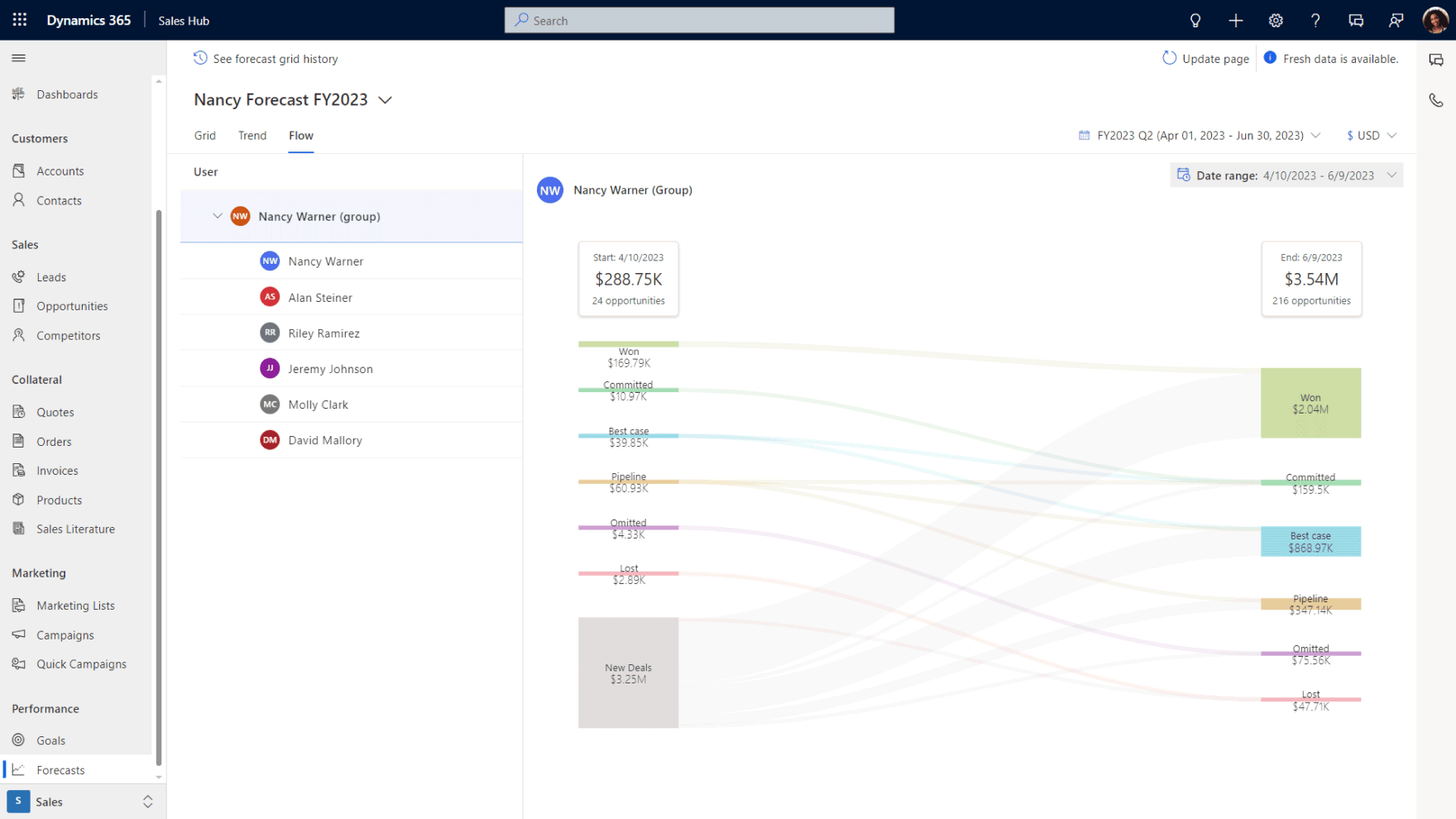
Reporting and forecasting
Reliable data means better decisions. Leadership needs answers to questions like:
- How many bids are active right now?
- What's the total value of work in tender?
- What's the win rate on projects above a certain size?
Without a CRM, answering those questions requires pulling data from several places and hoping it’s right. With a properly configured CRM software for construction that information is always current and always consistent, which means revenue forecasting stops being a quarterly exercise in educated guesswork.
Why Microsoft Dynamics 365 works well as CRM software for construction
Most construction companies that outgrow their spreadsheets start looking at purpose-built construction CRM tools. A lot of them were built for residential contractors or trade businesses and start showing their limitations when the sales process gets more complex.
Dynamics 365 was built for complex B2B sales cycles, which is exactly what commercial construction is. Long timelines, multiple stakeholders, high-value bids that require detailed tracking and a sales process that doesn't fit neatly into a standard pipeline template. The configurability that makes Dynamics powerful in other industries is what makes it especially well-suited to construction.
The Microsoft ecosystem connection is worth mentioning too. Most construction companies are already running on Outlook, Teams and Excel. Dynamics 365 connects to all of those natively, which means bid history, client communications and pipeline data all live in an environment the team already uses rather than requiring a completely separate login and workflow. This makes life a lot easier when you’re tracking multiple active bids.
And for construction companies that also want to connect their CRM to financial and operational data, Dynamics 365 sits alongside Business Central ERP in the same Microsoft environment. That's the version of the business where a signed contract in the CRM can trigger a process in finance without anyone manually transferring information across. Not every construction company needs that level of integration immediately but it's worth knowing the capability is there when the business is ready for it.
Microsoft Dynamics 365 works better for construction companies when it's configured properly.
Gestisoft specialises in building Dynamics 365 environments that reflect how construction businesses win work.
 Free discovery call
How Gestisoft helps construction companies implement CRM software
Construction companies come to us at different stages. Some have never had a proper CRM and are running everything manually. Others have had one for years that nobody uses because it was set up by someone who understood software but not the construction sales cycle. Both situations are fixable with the right CRM software for construction and the right partner.
We don't start with the software. We start with your sales process.
That means sitting with the people who run bids and taking the time to understand how they qualify opportunities. We then map who the decision makers are and figure out what information leadership actually needs to see to make good decisions about where to focus. Only then do we set up the software.
Our CRM specialists have configured Dynamics 365 for businesses with complex B2B sales processes across a range of industries, and construction has some of the most specific requirements of any sector we work with. The stakeholder complexity, the bid lifecycle, the handoff between sales and delivery and the repeat business dynamic all means that getting it into a system that people will use every day requires more than technical knowledge. It requires an understanding of how construction businesses operate. Our CRM experts have extensive knowledge and experience in setting up CRM software for construction.
We also stay involved after implementation, which matters more in construction than most industries because the value of a well-configured CRM compounds over time. If you want to talk about what that looks like for your business, we'd love to hear from you.
-
Small construction companies often resist CRM software because the team is tight and everyone knows what's happening. That works until the bid volume increases or two people are managing the same client relationship without knowing it. The earlier a company builds a proper system, the less painful the transition is and the quicker the benefits are apparent.
Liked what you just read? Sharing is caring.

March 25, 2026 by Shelley Sunjka by Shelley Sunjka Copywriter & Marketing Strategist
Armed with a psychology degree and an irrational obsession with okapis, I've spent the last decade helping bold brands tell better stories. I believe the best writing bends grammar rules on purpose and makes people feel something. When I'm not deep in words or nerding out on buyer behaviour, I'm probably convincing my kids that impromptu kitchen dance parties are totally normal.


