

Oracle alternatives are showing up on more shortlists than ever in 2026, and the reason is simple. License costs keep climbing, audit pressure has not eased, and roadmaps move on Oracle's timeline instead of yours.
Whether you are running NetSuite, Oracle ERP Cloud, Oracle Database, or Oracle Cloud Infrastructure, mature Oracle alternatives exist that can replace each one without the lock-in.
This guide walks through the seven Oracle alternatives most Canadian businesses are evaluating right now. We will cover what each one does well, why teams are switching, and how to pick the right fit for your size and stack.
Cut Your Oracle Spend Without Cutting Capability
Our team will help you map a realistic switch from Oracle, scope your data and integrations, and outline the Microsoft path that actually fits.
 Free discovery call
The 7 Best Oracle Alternatives to Consider Right Now
Each of these Oracle alternatives solves a different Oracle pain. Read through the full list before shortlisting, because the right pick depends on which Oracle product is causing the most friction.
1- Microsoft Dynamics 365 Business Central: The Top Oracle Alternative for SMBs and Mid-Market
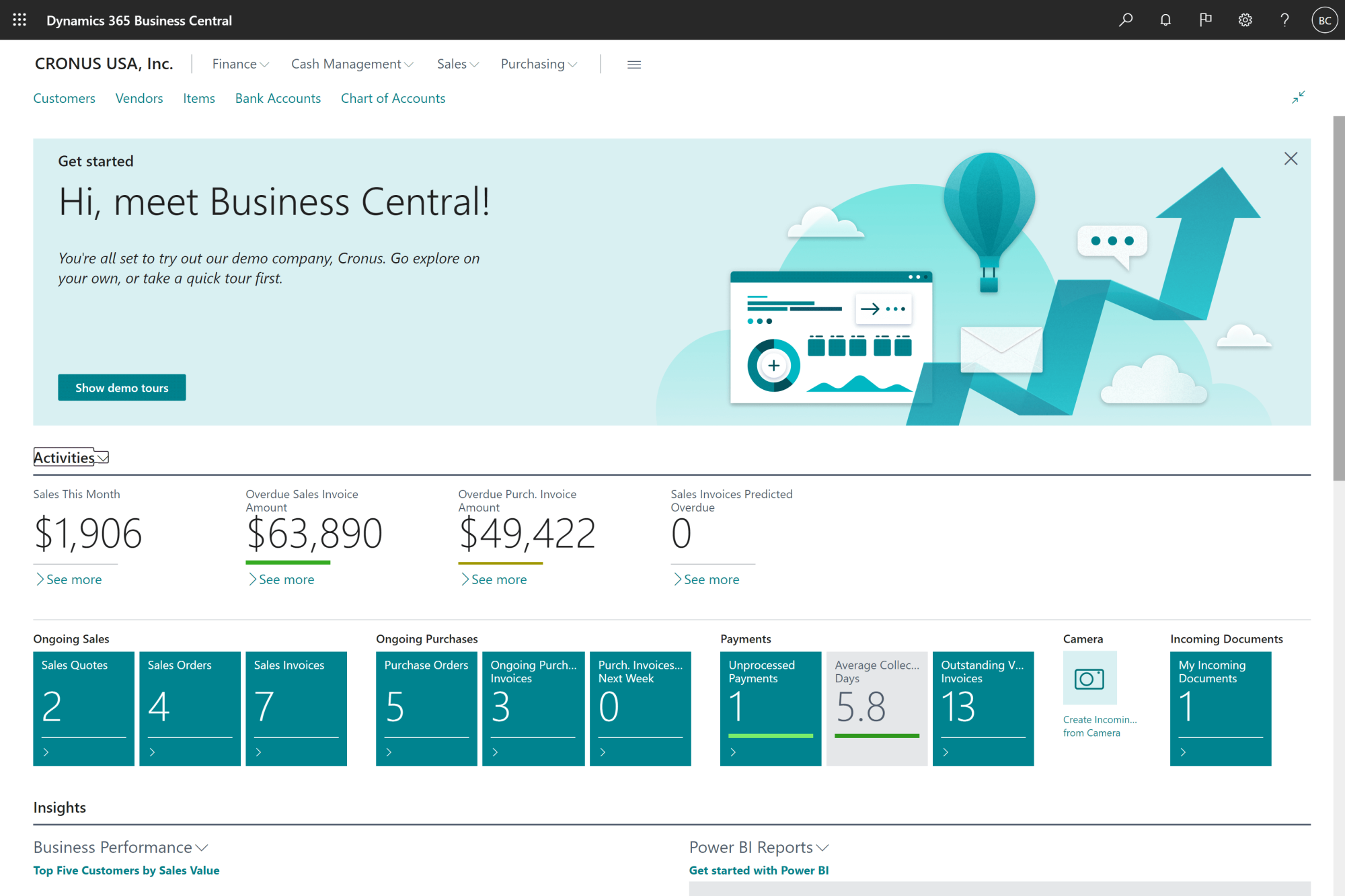
For Canadian SMBs and mid-market companies evaluating alternatives to NetSuite or Oracle ERP Cloud, Microsoft Dynamics 365 Business Central is usually the first name on the shortlist. It handles finance, inventory, sales, purchasing, and projects in one cloud platform.
Pricing is per-user, which is easier to predict than Oracle's mix of named-user, processor, and module fees. It plugs into Microsoft 365, Teams, Power BI, and Copilot.
For teams under 500 employees, Business Central is the strongest all-around Oracle alternative on cost and speed. If you need more depth, Dynamics 365 Finance and Operations sits one tier above.
2- SAP S/4HANA: The Enterprise-Scale Oracle Alternative for Global Operations
SAP S/4HANA sits at the opposite end of the spectrum from Business Central. It is built for large enterprises with complex supply chains, multi-country operations, and heavy compliance demands. If you run Oracle ERP Cloud at scale and need the same depth, SAP is one of the few Oracle alternatives that can match it feature for feature.
The trade-offs are real. Implementations run eighteen to twenty-four months, and licensing costs can rival Oracle. It fits organizations with dedicated SAP talent in-house or a strong implementation partner. If SAP is on your shortlist, our breakdown of the top SAP alternatives in the ERP space is worth a read too.
3- Workday: The Best Oracle Alternative for HR and Finance Teams
Workday earned its reputation by replacing Oracle PeopleSoft and Oracle HCM in mid-sized to large organizations. Its sweet spot is HR, payroll, talent, and finance in one cloud platform with a clean modern interface that employees actually like using.
For Canadian companies running Oracle HCM today, Workday is the most natural lift-and-shift. It handles bilingual workforces, multi-province payroll, and the reporting standards Canadian finance teams need.
The downside is that Workday is not a full ERP. If you also need strong inventory, manufacturing, or distribution capabilities, you will likely need to pair it with another platform, which adds integration cost.
4- Acumatica: The Flexible Cloud Oracle Alternative for Growing Businesses
Acumatica is a cloud ERP that has been quietly winning NetSuite migrations for years. Its biggest differentiator is licensing based on resource consumption rather than per-user fees, which can save fast-growing teams a meaningful amount as headcount expands.
It covers finance, distribution, manufacturing, project accounting, and field service in one platform. Acumatica is strongest for companies running NetSuite who want to keep the cloud-first model but stop paying NetSuite's renewal price hikes.
The flip side is that the partner ecosystem in Canada is smaller than Microsoft's, so finding a strong local implementer with bilingual delivery takes a bit more effort.
5- Infor CloudSuite: The Industry-Specific Oracle Alternative for Manufacturing
Infor CloudSuite is a family of industry-specific ERPs built for manufacturing, distribution, food and beverage, fashion, and healthcare. If your Oracle frustration comes from how generic the platform feels for your vertical, Infor often closes that gap right out of the box.
The trade-off is that you are buying into a smaller, more specialized ecosystem. Infor implementations work best when your industry exactly matches one of their pre-built editions. Otherwise, customization costs creep up quickly.
For Canadian manufacturers running Oracle JD Edwards or Oracle Fusion Cloud, Infor is worth a serious look before committing to a more general-purpose alternative.
6- Amazon Web Services: The Cloud Infrastructure Oracle Alternative to OCI
Amazon Web Services is the obvious answer when the Oracle product you want to replace is Oracle Cloud Infrastructure. AWS dominates cloud market share globally, and the catalog of services covers everything OCI does and more, usually with better documentation and a much larger talent pool.
For database workloads, Amazon RDS and Amazon Aurora are widely used as Oracle Database replacements, particularly for workloads that do not depend on Oracle-specific PL/SQL features.
The main thing to plan for is migration complexity. Moving a production Oracle Database to AWS is rarely a weekend project. Most organizations budget six to twelve months for a full migration.
7- PostgreSQL: The Open-Source Oracle Alternative for Database Workloads
PostgreSQL is the most popular open-source Oracle Database alternative, used by companies of every size. It supports most of the SQL features Oracle teams know, and managed versions are available through every major cloud provider, including Azure, AWS, and Google Cloud.
The compelling part is licensing. You pay nothing for the database engine itself, only for the infrastructure that runs it.
The catch is that any application code tightly coupled to Oracle PL/SQL will need refactoring, and complex Oracle-specific features may not have a direct equivalent. For database-only workloads where the schema is reasonably portable, PostgreSQL can deliver large cost savings without sacrificing capability.
Get the 10 ERP Selection Criteria Guide
A practical checklist for evaluating ERP options without falling for vendor demos. Use it as your scorecard while comparing alternatives.

Why Businesses Are Actively Looking at Oracle Alternatives Today
Most teams do not wake up one morning and decide to leave Oracle. The push toward Oracle alternatives builds over months, usually triggered by one of three pressure points.
License Costs and Surprise Audit Fees
Oracle's pricing model is built around named-user counts, processor metrics, and module add-ons that interact in ways most buyers do not fully grasp at signing. Three years in, audits often surface usage you did not realize counted.
Stack that on top of the standard eight percent annual support uplift Oracle builds into contracts, and renewal quotes can climb sharply without a clear ROI story attached. For finance leaders trying to forecast software spend, that level of unpredictability is hard to defend to the board.
Forced Cloud Moves on Oracle's Timeline, Not Yours
Many Oracle on-premises customers are now being pushed toward Oracle Cloud or Oracle Cloud@Customer with limited flexibility on timing. If you were planning a measured cloud migration over two or three years, that pressure does not fit your operational reality.
The benefits of cloud ERP are real, but they only land when the move happens on a schedule your team can actually execute.
Painful Implementations and Slow Upgrade Cycles
Oracle ERP implementations are known for being long, expensive, and technically heavy. Once you are live, upgrades follow the same pattern. Teams that used to deploy quarterly improvements end up batching changes into annual or biannual releases, which slow everything down.
Modern cloud ERPs ship updates on a continuous basis with backward compatibility, which keeps you closer to the latest features without taking the whole business offline.
How to Compare Oracle Alternatives Without Getting Lost in Demos
Demos are designed to make every platform look like the right answer. The way to cut through that is to score Oracle alternatives against a small set of factors that actually predict success.
Total Cost of Ownership Across Oracle Alternatives
Licence fees are only the start. The full picture includes implementation, integration, training, support, infrastructure, and the cost of internal time during the rollout.
Build a three-year TCO model for each shortlist option and pressure-test the assumptions. A platform with cheaper licences but a longer implementation often costs more in year one than a more expensive platform with a faster path to value.
Deployment Flexibility: Cloud, On-Prem, or Hybrid
Not every business is ready for a pure cloud move. Manufacturers with shop-floor systems, regulated industries with data residency rules, or organizations with significant on-prem investments often need hybrid options.
Confirm your shortlist supports the deployment model your operations actually run on, both today and over the next five years. Locking in cloud-only when you still need on-prem will hurt you later.
Ecosystem Fit and Day-to-Day Usability
The best ERP on paper is the wrong choice if your team will not use it. Look at how each option integrates with the tools your business already runs on, whether that is Microsoft 365, Google Workspace, Slack, or industry-specific systems.
Usability matters too. A system your finance team grumbles about every Monday morning will quietly erode adoption no matter how powerful the back-end is. For a deeper look, our guide on how to choose an ERP using 10 criteria walks through the full evaluation framework.
Here is a quick look at what Business Central actually feels like in use, which helps make the comparisons above more concrete:
Best Oracle Alternatives for NetSuite, Database, CRM, and Cloud
The right Oracle alternatives depend on which Oracle product you are trying to replace. The four most common starting points are below.
Replacing Oracle NetSuite or Oracle ERP Cloud
Most NetSuite migrations land on Business Central for SMB and mid-market firms, while Oracle ERP Cloud customers at enterprise scale typically shortlist SAP S/4HANA or Dynamics 365 Finance and Operations. For the deeper Business Central versus NetSuite comparison across pricing, features, and long-term strategy, the full breakdown has the side-by-side detail.
Replacing Oracle Database
For Oracle Database, the alternative depends on what your applications actually need. PostgreSQL is the leading open-source choice, especially when paired with a managed cloud service like Azure Database for PostgreSQL, Amazon RDS, or Google Cloud SQL.
Microsoft SQL Server is the natural pick for organizations standardizing on the Microsoft stack, and Amazon Aurora is popular for cloud-native workloads. For very large analytical workloads, Snowflake or Microsoft Fabric handle data warehousing that previously sat in Oracle Exadata.
Replacing Oracle CX (CRM)
If Oracle CX or Oracle Sales is the system you want off, Microsoft Dynamics 365 CRM and Salesforce are the two dominant alternatives. Microsoft tends to win when ERP integration matters and the organization already runs Microsoft 365.
Salesforce typically wins when the CRM use case is dominant and the AppExchange ecosystem fits your industry. HubSpot is a third option for smaller teams where the CRM workload is mostly sales and marketing rather than complex service operations.
Replacing Oracle Cloud Infrastructure
For Oracle Cloud Infrastructure, the three obvious replacements are Microsoft Azure, Amazon Web Services, and Google Cloud. Each has a richer service catalog, broader regional coverage, and a much larger Canadian talent pool than OCI.
The choice often comes down to which ecosystem your existing applications already live in. Microsoft-heavy stacks gravitate to Azure, while open-source and Linux-heavy stacks often land on AWS.
Get a Clear Plan for Leaving Oracle
We will walk through your current Oracle setup, identify the gaps, and recommend the right Microsoft solution for your business size and budget.
 Free discovery call
What Canadian Businesses Should Watch For When Picking Oracle Alternatives
Most ranking articles on Oracle alternatives write for a global audience. Canadian buyers face specific factors that change the shortlist meaningfully.
Bilingual Support When Evaluating Oracle Alternatives
If you operate in Quebec or have French-speaking customers, employees, or suppliers, bilingual support is not optional. The platform itself needs proper French language coverage, but the implementation partner matters even more.
A bilingual partner can run workshops in French, train end users in their first language, and translate process documentation. Confirm both upfront. A platform with French screens but an English-only implementation team is not a complete bilingual solution.
PIPEDA, Data Residency, and Canadian Compliance
Personal data handled by Canadian businesses falls under PIPEDA and, depending on your province, additional rules like Quebec's Law 25. Some Oracle alternatives offer Canadian data residency by default, while others require careful configuration.
Confirm three things before signing: where your production data physically sits, where backups sit, and which jurisdiction governs the contract.
If you handle health data, financial records, or government work, also confirm SOC 2, ISO 27001, and any sector-specific certifications. An ERP data migration strategy should address residency from day one.
-
For most Canadian small businesses, Microsoft Dynamics 365 Business Central is the strongest of the Oracle alternatives on the market. It is purpose-built for SMBs, integrates with the Microsoft tools they already use, and offers predictable per-user pricing. Acumatica is a strong second choice, particularly for growing companies that want consumption-based licensing.
Why Gestisoft Is the Canadian Partner You Want for Oracle Alternatives
Gestisoft has spent nearly 30 years helping Canadian businesses pick, implement, and run Microsoft business platforms. We are a B Corp certified Microsoft Solutions Partner with bilingual teams across Canada and North America, focused on Dynamics 365 Business Central, Dynamics 365 CRM, and Microsoft Copilot AI.
What that means in practice for an Oracle migration is straightforward. We start with your current Oracle stack, your pain points, and your budget, then map a realistic path forward.
We will not push you toward a platform that does not fit. Our ERP consulting process covers analysis, implementation, migration, support, and ongoing optimization, all delivered in English and French.
Here is how one client described the experience:
“The Gestisoft team offered a high level of both business and technical experience to the project and actively listened to and grasped all needs. Their recommendations enabled our client to make the best choice and have access to Business Central's greatest features. Along with this knowledge, Gestisoft consistently maintained strong communication.”
Map Your Migration With a Microsoft Partner
Bring your questions. We will map a realistic migration path and the Microsoft solution that fits your size, budget, and timeline.
 Free discovery call
Liked what you just read? Sharing is caring.

June 19, 2026 by Muhammad Ali Iqbal by Muhammad Ali Iqbal SEO Content Strategist & Copywriter
Driven by a passion for search engine optimization, strategic content, and conversion-focused writing. A copywriter and content strategist who lives for content that ranks, engages, and delivers real business results.
