
Microsoft competitive advantage is the set of strengths that keeps customers coming back to Microsoft products and services year after year. These strengths include a massive global cloud infrastructure, familiar tools that work together seamlessly, constant innovation in AI and security, and a trusted brand that has been around for decades.
But what does this really mean if you're a business leader choosing an ERP system to run your finance, operations, inventory, and reporting for the next 5 to 10 years?
The answer is simple: Microsoft's competitive advantage flows directly into products like Dynamics 365 Business Central. When you choose an ERP built on Microsoft's platform, you're not just buying software. You're gaining access to a stable ecosystem that keeps improving, connects with tools your team already knows, and reduces long-term risk.
This guide explains Microsoft competitive advantage in clear, simple terms. Then it shows how those advantages appear in Business Central and why working with an experienced partner like Gestisoft helps you turn platform strength into real business results.
Start Your Business Central Implementation Journey
Talk with a Gestisoft expert about your current systems, growth plans, and how Dynamics 365 Business Central can transform your operations.
 Free discovery call
Understanding Microsoft Competitive Advantage in Simple Terms
Before diving into how this affects your ERP decision, it helps to break down what Microsoft competitive advantage actually means and why it matters.
What "Microsoft Competitive Advantage" Actually Means
Competitive advantage is why customers choose one company over another and stay loyal over time. For Microsoft, this advantage comes from several key factors…
The company operates one of the largest cloud computing platforms in the world. It builds products that connect easily with each other. Most employees already know how to use Microsoft tools like Excel, Outlook, and Teams. And Microsoft invests billions every year in security, compliance, and new features like AI.
These strengths make it easier for businesses to adopt Microsoft products. They also make it harder to switch away once you're using them. That's the core of Microsoft competitive advantage: strong products, deep integration, and long-term reliability.
Core Pillars of Microsoft Competitive Advantage
Here are the main pillars that make up Microsoft competitive advantage:
- Cloud and data center scale: Microsoft Azure runs on a global network of data centers. This gives Business Central fast performance, strong uptime, and the ability to scale as you grow.
- Ecosystem integration: Business Central connects natively with Office 365, Teams, Power BI, and Power Platform. You don't need complex middleware or custom code to link your ERP with email, reporting, or workflows.
- Familiar interface and skills: Your team already knows Microsoft tools. This reduces training time and makes adoption smoother compared to niche ERP systems with unfamiliar interfaces.
- Ongoing AI and automation investment: Features like Copilot in Business Central help with forecasting, late payment predictions, and smart suggestions. Microsoft funds this innovation at a scale most ERP vendors can't match.
- Strong partner network: Microsoft works with experienced partners like Gestisoft who understand both the platform and your business needs. This gives you access to local expertise and support.
- Security and compliance focus: Microsoft invests heavily in security certifications, data protection, and compliance frameworks. This is critical when your ERP holds financial and operational data.
These pillars work together. They create a platform that's not only powerful today but will keep improving for years to come. This combination is what defines Microsoft competitive advantage in the ERP and business applications space.
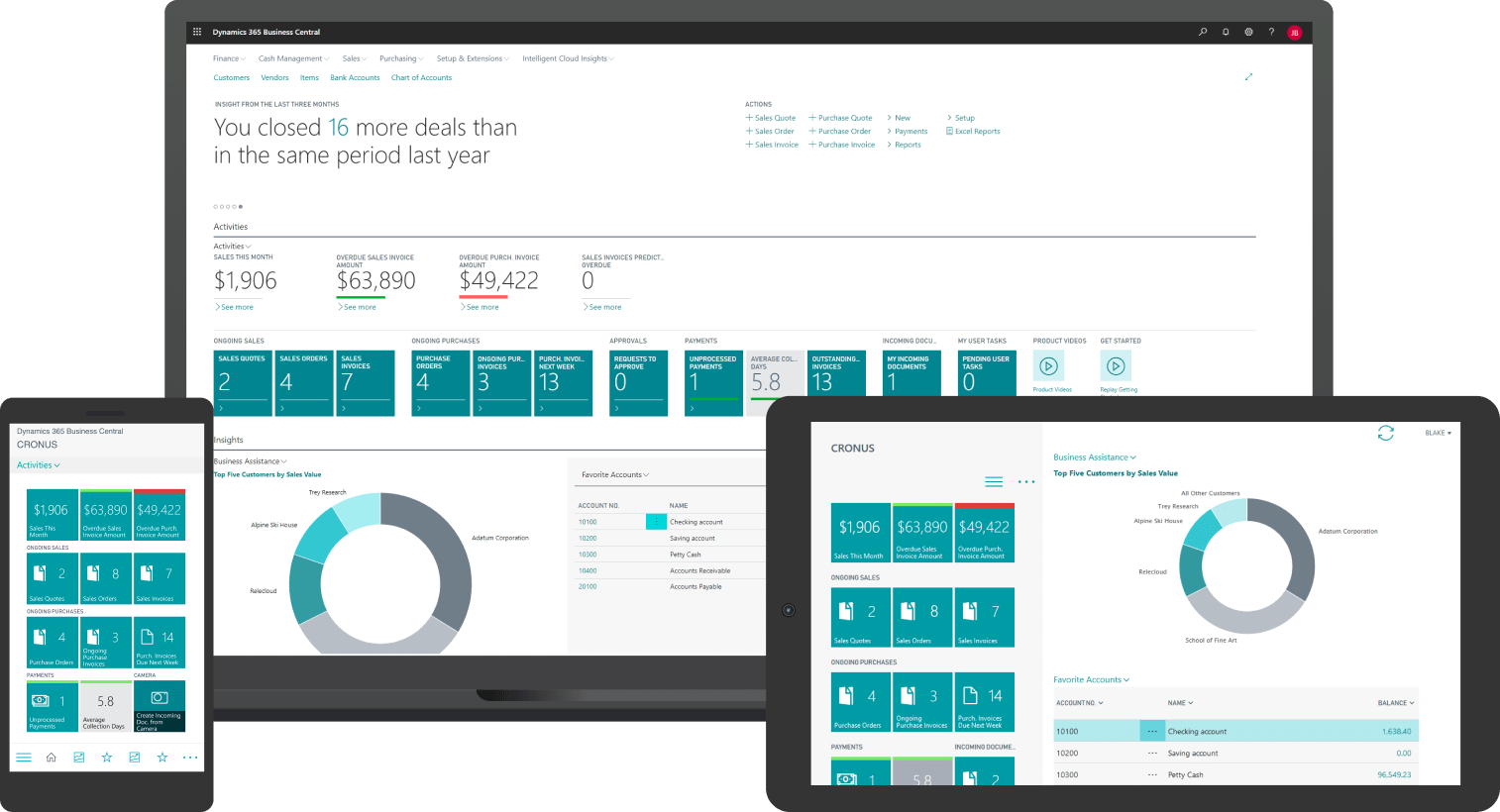
Here's a short visual walkthrough of what Business Central looks like in action and how it brings Microsoft's strengths together in one system:
How Microsoft Competitive Advantage Shows Up in Dynamics 365 Business Central
Microsoft's big-picture strengths aren't just theory. They show up in concrete ways inside Business Central, the ERP solution built for growing mid-market companies.
Business Central as a Product of Microsoft's Ecosystem
Business Central isn't a standalone system. It's built on the same cloud platform and tools your team already uses. This means one login for ERP, email, and collaboration tools. It means shared data across apps without manual exports and imports. And it means consistent design and navigation, so your team doesn't need to learn a completely new way of working.
For example, you can approve purchase orders from Teams. You can view live financial dashboards in Power BI. You can automate workflows between Business Central and Outlook using Power Automate. These connections happen because Business Central sits inside the Microsoft ecosystem, not outside it. That's Microsoft competitive advantage at work in daily operations.
AI, Automation, and Copilot Inside Business Central
Microsoft has embedded AI directly into Business Central through Copilot and other smart features. Copilot can help with tasks like predicting which invoices might be paid late, suggesting inventory reorder levels, or drafting product descriptions for e-commerce.
This doesn't mean AI runs your business on its own. You still need clean data, clear processes, and human judgment. But AI assistance speeds up routine work and helps teams make better decisions faster. And because Microsoft invests billions in AI research, these features keep improving with every update. Smaller ERP vendors simply can't keep pace with that level of ongoing innovation.
It's also worth noting that companies using engineer to order manufacturing software or complex production workflows can benefit from AI-driven planning and scheduling features that learn from past orders and suggest optimal timelines.
Get the 10 Key ERP Selection Criteria Guide
Download our free guide that walks you through the 10 most important factors to consider when choosing an ERP system for your growing business.

How Microsoft Competitive Advantage Reduces ERP Risk for Your Business
Choosing an ERP is a long-term decision. You need a system that will still be supported, updated, and relevant in 5 or 10 years. Microsoft competitive advantage directly reduces that risk in several important ways.
Lower Vendor Risk and a Long-Term Roadmap
Microsoft is one of the largest and most stable technology companies in the world. It's not going out of business. It's not going to suddenly discontinue Business Central or stop investing in it. The product has a clear public roadmap with regular updates released twice a year.
Compare that to smaller ERP vendors who might be acquired, pivot to a different market, or sunset older products. When you choose Business Central, you're choosing a platform backed by Microsoft's scale and commitment. That stability is a core part of Microsoft competitive advantage and matters deeply when you're investing time, money, and business processes into an ERP system.
Integration, Skills, and Support You Can Actually Find
Because Business Central is part of the Microsoft ecosystem, it's easier to find people who can help you. There are thousands of certified partners worldwide. There are active online communities, documentation, and training resources.
If you need to hire an ERP software consultant or bring on a new finance manager, you'll have a much larger talent pool to choose from compared to niche ERP platforms.
This also reduces internal training costs. Your team already knows Excel, Outlook, and Teams. Learning Business Central feels more like an extension of tools they use every day, not a completely foreign system.
The Limits of Microsoft Competitive Advantage
It's important to be realistic. Microsoft's competitive advantage does not guarantee a perfect ERP project. It doesn't remove the need for process mapping, data cleanup, change management, or user training... And that doesn't mean Business Central will magically fit your business without any configuration or planning.
Common risks still exist… You can over-customize the system and create maintenance headaches. You can skip training and end up with low user adoption. You can rush the data migration and carry messy information into the new ERP. Microsoft's platform strength gives you a solid foundation, but success still depends on how you implement and use the system.
This is why choosing an experienced ERP reseller and implementation partner is just as important as choosing the right platform. The platform gives you potential. The partner helps you realize it.

Turning Microsoft Competitive Advantage into Real Results with Business Central
The goal isn't just to buy software. The goal is to improve how your business operates, makes decisions, and scales. Here's how to turn Microsoft competitive advantage into actual outcomes.
From Strategy to Screens: Aligning ERP with Your Business
Business Central is flexible by design, reflecting how Microsoft competitive advantage includes adaptability alongside power. It provides building blocks for finance, operations, inventory, sales, and reporting. But those blocks need to be shaped to match your specific processes.
This means mapping your chart of accounts, approval workflows, and reporting needs during the planning phase. It means deciding which standard features to use and which areas might need add-ons or light customization. It means training users on how the new system handles tasks they do every day.
A good implementation partner helps with all of this. They've seen dozens of similar projects. They know which approaches work and which create problems down the road. They can guide you toward using standard Business Central features effectively instead of jumping into expensive custom code.
Understanding ERP pricing early in the process is also key. Business Central uses a per-user subscription model, and costs can vary based on the modules you need, the number of users, and any add-ons or integrations. A transparent partner will help you budget realistically from the start.
Common Mistakes When Adopting an ERP on the Microsoft Platform
Even with a strong platform, ERP projects can go off track. Here are the most common mistakes to avoid:
- Treating ERP like a quick software install: ERP is a business transformation project, not just an IT task. It touches finance, operations, inventory, sales, and reporting. Plan accordingly.
- Skipping change management and training: If users don't understand why the new system helps them, they'll resist it. Invest time in explaining the benefits and training people properly.
- Leaving data messy during migration: Migrating bad data into a new ERP just gives you bad data in a new system. Clean up master data before you move it.
- Over-customizing instead of adapting processes: Sometimes it's better to adjust your process to match ERP best practices rather than coding the ERP to match old habits.
These mistakes are avoidable. They require planning, communication, and honest conversations with your implementation team.
-
Microsoft competitive advantage is the combination of strengths that makes customers choose and stay with Microsoft products. These include cloud scale, ecosystem integration, familiar tools, ongoing AI innovation, strong security, and a large partner network. Together, these factors reduce risk and improve long-term value for businesses.
Why Gestisoft Is a Strong Partner for Your Microsoft Competitive Advantage
Microsoft's platform is powerful. But turning that power into results for your business requires the right partner. Here's how Gestisoft helps.
Deep Focus on Dynamics 365 Business Central
Gestisoft specializes in Microsoft Business Applications, with a strong focus on Dynamics 365 Business Central. This means our team understands the platform deeply. We know how to configure it for different industries, from manufacturing and distribution to professional services and regulatory bodies.
We've helped companies across Canada implement Business Central successfully. We understand the common challenges, the smart shortcuts, and the areas where businesses often get stuck. That experience saves time, reduces risk, and helps you avoid expensive mistakes.
From Analysis to Support: A Long-Term ERP Relationship
Gestisoft offers services across the entire ERP lifecycle. This includes strategic analysis, implementation, data migration, ongoing optimization, training, and support plans. You're not just buying a one-time project. You're building a relationship with our team who will help you get more value from Business Central over time.
This matters because ERP needs change as your business grows. You might add new modules, integrate with other systems, or adjust workflows as your team evolves. Our team knows your setup and can respond quickly to help you adapt without starting from scratch.
A Culture of Partnership, Not Just Projects
We're a certified Microsoft partner and a B Corp, with recognition as a Great Place to Work. These certifications signal stability, quality, and a commitment to doing business the right way. Our team brings both technical expertise and a genuine focus on understanding your business, not just implementing software.
Whether you're a mid-market manufacturer looking for better production visibility, a distributor managing complex inventory, or a growing service business that needs tighter financial controls, we work to align Business Central with your real-world needs. The goal is to reduce risk, improve insight, and build a system that can grow with you.
Plan Your Business Central Project the Right Way
Work with Gestisoft to map your current systems, define clear goals, and build a realistic ERP roadmap that reduces risk and maximizes value.
 Free discovery call
Liked what you just read? Sharing is caring.

March 20, 2026 by Muhammad Ali Iqbal by Muhammad Ali Iqbal SEO Content Strategist & Copywriter
Driven by a passion for search engine optimization, strategic content, and conversion-focused writing. A copywriter and content strategist who lives for content that ranks, engages, and delivers real business results.
