

List of vendor management systems can feel overwhelming when you run a small or mid-size distribution business juggling a hundred suppliers, razor-thin margins, and constant pressure to keep inventory moving without tying up too much cash.
You are not just comparing software features. You are trying to prevent late deliveries that kill customer trust, quality issues that eat your margins, and pricing inconsistencies that make every reorder a negotiation battle.
Many distributors still manage supplier relationships through spreadsheets, email threads, and phone calls. When a shipment arrives with the wrong SKUs before a busy season or an invoice does not match the purchase order, the scramble begins.
This guide gives you a focused top 10 list built for small to mid-size distributors, plus clear guidance on how these systems work with Microsoft Dynamics 365 Business Central.
Bring Order To Vendor Chaos In Your City
Get a clear plan to connect vendor management, purchasing, and payments inside Microsoft Dynamics 365 Business Central.
 Free discovery call
Top 10 List Of Vendor Management Systems For Small To Mid-Size Distributors
Here is the list you came for. These ten platforms show up repeatedly in distribution and mid-market projects.
1. Microsoft Dynamics 365 Business Central

Microsoft Dynamics 365 Business Central becomes a powerful entry on any list of vendor management systems when configured with the right workflows, approvals, and supplier controls.
For distributors, it centralizes vendor records, purchase orders, inventory receipts, and payments in one place. Operations teams appreciate the direct link between purchasing and stock levels, while finance values the clear audit trails.
Business Central is ideal when you want vendor management tied directly to inventory, margins, and customer fulfillment without adding another disconnected platform to your technology stack.
2. Ordoro

Ordoro belongs on any list of vendor management systems for small to mid-size distributors who need vendor management tightly connected to inventory and order fulfillment.
It combines supplier purchase orders, inventory tracking, dropshipping coordination, and warehouse management in one platform. Distributors can manage vendor relationships, track shipments, and automate reordering without jumping between systems.
Ordoro integrates cleanly with Business Central and ecommerce channels. It fits best when you need basic vendor management connected to multichannel fulfillment without enterprise complexity or cost.
3. Unleashed Software

Unleashed Software earns its place in a list of vendor management systems for distributors who manage complex inventory across multiple suppliers and locations.
It combines supplier management, purchase orders, inventory tracking, and B2B sales in one cloud platform. Finance teams can track landed costs, supplier pricing history, and inventory valuations in real time.
Unleashed integrates with Business Central and accounting systems to keep supplier and inventory data synchronized. It makes sense when you need vendor management that understands inventory turns, reorder points, and multi-warehouse distribution workflows.
4. Cin7

Cin7 stands out in a list of vendor management systems because it is built for inventory-centric distributors who need vendor management tightly connected to stock levels and demand planning.
It combines supplier purchase orders, inventory management, B2B ordering, and warehouse operations in one platform. Distributors can automate reorder points based on stock levels, track supplier lead times, and connect vendor data directly to sales channels.
Cin7 fits best when your biggest pain is coordinating purchasing decisions with real-time inventory movement across multiple warehouses or sales channels.
5. Fishbowl Inventory

Fishbowl Inventory deserves mention in any list of vendor management systems for small to mid-size distributors who need inventory and vendor management working together seamlessly.
It handles supplier records, purchase orders, receiving, inventory tracking, and warehouse management in one platform. Distributors can track vendor performance, manage reorder points, and automate purchasing workflows without enterprise complexity.
Fishbowl integrates with QuickBooks and Business Central to keep financial and operational data aligned. It fits when you want proven inventory-centric vendor management at a realistic price point for growing distributors.
6. Medius

Medius earns its place on a list of vendor management systems by focusing on accounts payable automation and invoice management.
It captures invoices, matches them to purchase orders and receipts, routes approvals, and flags discrepancies or potential fraud. For distributors drowning in paper invoices or struggling with three-way matching, Medius reduces manual work and payment errors. The platform integrates with Business Central and other ERPs to ensure vendor payment data stays synchronized.
Medius makes sense when your finance team spends too much time chasing approvals and reconciling mismatched invoices.
7. Gatekeeper

Gatekeeper earns its place on a list of vendor management systems by focusing on what many distributors struggle with most: contract visibility and renewal management.
It offers a central, searchable repository for supplier contracts, with automated alerts for expirations, pricing changes, and compliance deadlines. Purchasing, legal, and finance can all see the same version of each agreement, and nothing slips through the cracks.
For a distributor that has lost track of automatic renewals, outdated pricing terms, or conflicting clauses, Gatekeeper acts as a safety net without requiring a full procurement suite.
8. Acctivate

Acctivate rounds out this list of vendor management systems as a proven platform for small to mid-size distributors who need vendor and inventory management tightly integrated with accounting systems.
It handles supplier relationships, purchase orders, multi-warehouse inventory, and multichannel sales in one solution. Distributors can track vendor performance, manage stock across locations, and coordinate purchasing with real-time inventory visibility.
Acctivate integrates with QuickBooks and Business Central to keep supplier, inventory, and financial data synchronized. It makes sense for growing distributors who want proven, affordable vendor management without enterprise complexity.
9. Procurify

Procurify belongs in a list of vendor management systems for smaller distributors that need better purchasing control but have limited staff and IT resources.
It centralizes purchase requests, multi-level approvals, vendor records, and budget tracking in a simple, intuitive interface. Warehouse managers can request goods, while finance keeps control of who spends what and with which suppliers.
For distributors that still run much of their purchasing by email, phone calls, and paper forms, Procurify can be a realistic first step toward better visibility and control.
10. Tipalti

Tipalti belongs in a list of vendor management systems for distributors that work with global suppliers or need to automate complex payment workflows.
It handles supplier onboarding, tax compliance, multi-currency payments, and payment method preferences in one platform. Distributors can pay domestic and international suppliers without manual data entry, wire transfer paperwork, or currency conversion headaches.
Tipalti integrates with Business Central and other ERPs to ensure payment data flows cleanly. It makes sense when you manage dozens of suppliers across different countries or payment methods.
This quick tutorial shows how vendor payments flow from invoice to payment in Business Central…
List Of Vendor Management Systems And How To Choose The Right One For Your Distribution Business
Now that you have the names, the harder work begins: choosing what actually fits your distributor size, supplier volume, systems, and operational complexity.
List Of Vendor Management Systems By Distributor Size And Complexity
A small distributor with one warehouse and fifty suppliers cannot use the same setup as a multi-location operation managing five hundred suppliers across different product categories. The same list of vendor management systems delivers very different outcomes depending on your context and resources.
Here is how distributor size shapes your choice:
- Small distributors (1-2 locations, 50-150 suppliers):Lean heavily on Microsoft Dynamics 365 Business Central as your core engine. Add a light tool like Procurify if you need to formalize purchase approvals, or Gatekeeper if you are struggling with contract tracking. Add Ordoro only if you need to simplify high-volume multichannel fulfillment across ecommerce sites.
- Mid-sized distributors (2-5 locations, 150-300 suppliers): At this stage, you choose a single operational "source of truth." Either stick with Business Central and add a warehouse extension for multi-location coordination, or move to an inventory-focused platform like Cin7 or Unleashed Software if you prefer a cloud-native tool with built-in supplier performance tracking.
- Larger distributors (5+ locations, 300+ suppliers): Keep Business Central (or a similar ERP) as your operational backbone, but layer on specialized financial automation. Add Medius to handle the massive volume of incoming invoices through AI matching, or Tipalti to manage complex, multi-currency global supplier payments while reducing manual finance work.
When you evaluate vendor management tools, ask direct questions:
- How many active suppliers do we have?
- How many SKUs do we manage?
- How many locations do we operate?
- Who owns supplier relationships day to day?
The answers shape your shortlist faster than any feature matrix.
List Of Vendor Management Systems And Your Microsoft ERP
Many distribution finance directors ask: if we invest in Microsoft Dynamics 365 Business Central, do we still need a separate platform from the list of vendor management systems?
The honest answer is: sometimes yes, sometimes no. In some distributors, Business Central plus solid configuration is enough. You use its vendor master, purchasing module, multi-level approvals, and accounts payable.
For distributors, Business Central can handle vendor master records, purchasing workflows, receiving processes, and accounts payable. You extend it with inventory management integrations or supplier portal add-ons when your vendor complexity grows.
A helpful test: if your main pain is basic control, visibility, and linking purchases to inventory and budgets, let Business Central do the heavy lifting. If your main pain is multichannel inventory coordination, global supplier payments, or contract lifecycle management, a dedicated vendor management software platform is worth the investment.
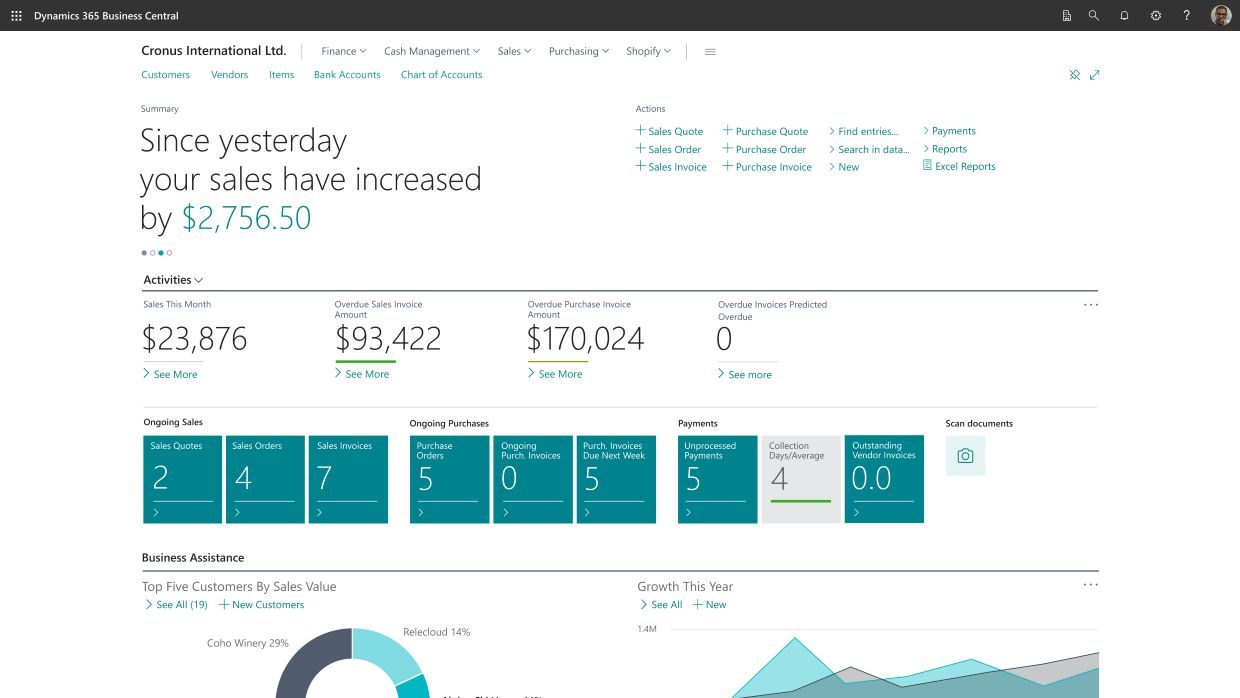
Building vendor control on Business Central lets you tap into the Microsoft competitive advantage: a familiar interface, tight integration with tools like Excel and Teams, and a cloud platform your IT group already knows how to secure.
List Of Vendor Management Systems Features That Matter Most For Distributors
Not every feature advertised by vendor management software vendors is equally important when margins are thin and operations teams are small. Some capabilities can wait. Others are basic hygiene you cannot skip.
Core Features Every Distributor Needs From A List Of Vendor Management Systems
At a minimum, your chosen platform should give you a clean vendor database, consistent approvals, and clear links between purchase orders, receiving, and invoices.
Think about a real scenario... A supplier ships SKU number 4782 instead of SKU number 4728. Your warehouse receives the pallet, scans it quickly, and stores it. Three days later, a customer orders 4728 and discovers you sent the wrong part. Now you are scrambling to expedite a replacement order, manage a return, and explain the delay.
Without a system, you dig through emails and paper packing slips to find out where the breakdown happened. With Business Central and a vendor management platform, you can show exactly what was ordered, what was received, what was invoiced, and which receiving clerk signed off.
Core features that matter most include:
- One single source of truth for supplier records.
- Tight links between purchase orders, receiving documents, and invoices.
- Simple ways to flag quality issues or late deliveries.
- Role-based permissions so only authorized staff can change supplier data or payment terms.
If a platform does not deliver these basics reliably, move on.
Advanced Capabilities Some Distributors Need From A List Of Vendor Management Systems
Some platforms in a list of vendor management systems advertise advanced features that go beyond the basics. These genuinely help, but only when your foundation is solid.
Here are the advanced capabilities worth considering:
- Dynamic vendor risk scoring that updates automatically based on delivery performance, quality metrics, and financial health.
- AI-driven spend anomaly detection that flags duplicate invoices, pricing variances, or suppliers being paid outside approved purchase orders.
- Multi-entity and multi-currency management for distributors managing procurement across subsidiaries or working with cross-border suppliers.
- Integration with inventory systems that trigger automatic reorder workflows based on stock levels and supplier lead times.
Here is a simple test to know if you are ready for advanced features:
Can you answer these questions in under two minutes without opening a spreadsheet or searching email?
- Which supplier delivered late in the last thirty days?
- Which purchase order has not been invoiced yet?
- Which contracts expire in the next sixty days?
If you cannot answer those questions quickly, you need better basics, not advanced analytics. Start with clean vendor records, clear approval workflows, and tight links between purchase orders, receiving, and invoices. Add intelligence only after those foundations are solid.
5 Reasons To Adopt A Cloud ERP
Learn how a cloud ERP like Business Central improves vendor control, inventory visibility, and margin protection.

List Of Vendor Management Systems Implementation Steps For Distributors
Buying software is the easy part. Getting it to work smoothly with your operations, people, and existing systems is where projects often stumble.
Phasing A List Of Vendor Management Systems Into Your Operations
A phased approach to rolling out platforms from the list of vendor management systems reduces risk and protects your team from overload.
One practical roadmap looks like this:
- Clean your vendor records in Microsoft Dynamics 365 Business Central. Remove duplicates, update contact details, verify payment terms, and align supplier categories.
- Configure approval workflows and budget controls so no purchase order escapes without proper sign-off.
- Add one specialist tool, such as Gatekeeper for contract renewals or Medius for AP automation, and integrate it carefully with Business Central.
- Train purchasing and warehouse teams one group at a time, using real examples from your own operations instead of generic scenarios.
Imagine a regional distributor that starts by tightening purchasing controls in Business Central, then adds Cin7 to coordinate inventory across three warehouses, and later layers on Tipalti for international supplier payments. Each phase delivers value without overwhelming staff. For complex projects, working with an ERP implementation consultant who understands both distribution operations and Dynamics 365 can prevent costly missteps.
Avoiding Common Pitfalls With Any List Of Vendor Management Systems
Many distributors buy a platform, celebrate go-live, and then watch adoption fade. The reasons are almost always the same and have little to do with the software itself.
Here are some common pitfalls to avoid:
- Ignoring warehouse and operations staff: If they still order by phone or email, your new purchasing controls never stick.
- Treating vendor management as a one-off IT project: Vendor management requires shared ownership across purchasing, operations, finance, and IT.
- Skipping data clean-up: If you migrate old supplier records, dormant vendors, and duplicate entries without cleaning them first, bad data leaks into your new system.
Set clear ownership before you start. Who is accountable for keeping vendor master data accurate? Who tracks supplier performance? Who manages contracts and pricing agreements? Without clear answers, the system becomes another underused tool people work around.
-
An ERP like Business Central runs your core finance, inventory, and operations. A vendor management system focuses on supplier selection, performance tracking, and contracts. In most distributors, ERP is the operational source of truth; vendor management software adds structure and intelligence around supplier relationships.
List Of Vendor Management Systems And Why Work With Gestisoft
You can pick any tool from a list of vendor management systems, but it will only deliver value if it fits your ERP, your people, and your distribution operations without creating another silo.
Gestisoft focuses on Microsoft Dynamics 365 Business Central as the backbone for vendor, inventory, and finance data. For distributors, that means using Business Central to anchor operational control, then extending it with targeted vendor management tools where they add real value.
We work with regional distributors, industrial suppliers, and specialty wholesalers who want vendor management anchored in Business Central without adding disconnected platforms. Our team helps you decide what belongs in your ERP, what belongs in a dedicated vendor management solution, and how to connect everything without overcomplicating your technology stack or overwhelming your staff.
If that kind of clear, Microsoft-based roadmap sounds like what your distribution business needs, the next step is a short conversation with our team.
Align Vendor Management With Business Central
Explore a Microsoft-first vendor management setup tailored to your distribution operations, supplier relationships, and margin protection.
 Free discovery call
Liked what you just read? Sharing is caring.

May 05, 2026 by Muhammad Ali Iqbal by Muhammad Ali Iqbal SEO Content Strategist & Copywriter
Driven by a passion for search engine optimization, strategic content, and conversion-focused writing. A copywriter and content strategist who lives for content that ranks, engages, and delivers real business results.
