
Garment software helps fashion brands and manufacturers move from spreadsheets and disconnected tools to systems that actually talk to each other. If you design, source, produce, or sell apparel, you know the challenge: tracking styles, colors, sizes, orders, inventory, and costs across different apps and files.
This guide explains what garment software is, the main types available, and how an ERP solution can become the backbone of a growing fashion business. By the end, you will know what to look for, what it costs, and how to take your next step with confidence.
Get Clarity on Your Next ERP Move
Talk to a team of experts who specialize in the fashion industry. Discover how garment software can integrate your design, production, inventory, and sales, and identify where it eliminates your biggest bottlenecks.
 Free discovery call
Garment Software Explained in Simple Terms
Let's start with a clear definition and why this matters now for fashion businesses...
Garment software is any digital tool or system that helps fashion companies manage their work, from the first sketch to the final sale. Common pieces include design and pattern software, production planning tools, inventory systems, and sales platforms.
Many fashion brands start with separate apps for each job. But as you grow, those separate apps create more work, not less. Data gets entered twice. Reports do not match. You lose time hunting for the truth.
What Makes Garment Software Different from Generic Business Tools
Fashion is unique. You do not sell one product. You sell one style in five colors and eight sizes… that is 40 separate items to track. You run seasonal collections. You take preorders months before production.
Returns are common because fit and color matter. Generic business software was not built for this. You need systems that understand matrix items (style, color, size), collections, and fast changes. That is what makes garment software different.

Types of Garment Software and Where ERP Fits In
Now let's map the landscape so you know what is out there and how the pieces fit together.
Garment Software for Design and Product Development
Design and pattern tools help you create and visualize garments. They include 3D design software like CLO3D (for virtual samples and draping), pattern-making software like Gerber (for grading and fit), and PLM (product lifecycle management) tools like TRIMIT.
These are important for creative work and speed up sampling. But they do not run your business. They do not handle orders, inventory, costing, or accounting.
TRIMIT: Garment Software Built for Fashion Operations
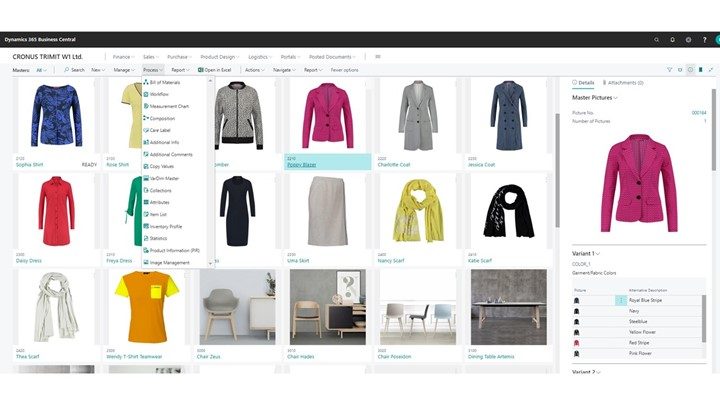
TRIMIT is a complete ERP solution designed specifically for the fashion and apparel industry. It handles everything you need to run your apparel business: finance, inventory, production planning, purchasing, sales, and customer management.
What makes TRIMIT different from generic ERP systems is that it comes built for fashion. It includes style-color-size matrix management, seasonal collection tools, customer-specific pricing, bill of materials for garments, and design-to-delivery workflows, all ready to use from day one.
TRIMIT is built on the Microsoft Dynamics 365 Business Central platform. Business Central is a modern, cloud-based ERP foundation that gives you scalability, security, and integration with other Microsoft tools.
TRIMIT takes that foundation and adds the garment-specific intelligence your apparel business needs. Together, they give you an ERP system that fits how fashion companies actually work.
What Problems Do You Face Without Garment Software?
Here are the real-world pains that drive fashion businesses to look for better solutions.
Stock-Outs, Overstock, and Constant Fire-Fighting
You run out of a popular size and color just as orders pick up. Or you order too much from a slow seller and it sits in your warehouse for months. Both cost you money, lost sales on one side, tied-up cash and discounts on the other. When inventory data lives in different places, it is hard to see the full picture in time to act.
Manual Work, Double Entry, and Reporting That Never Matches
Your team enters order details into one system, then re-enters them into another for production or accounting. Every time data moves by hand, errors creep in. When month-end reports do not match, someone spends hours finding the difference. This wastes time your team could spend on growth, not cleanup.
No Single Version of the Truth for Style, Color, and Size
A single style can exist in different forms across your design files, your sales spreadsheets, and your inventory app. When numbers do not line up, planning breaks down. Production makes the wrong thing. Sales over-promises. Finance cannot close the books with confidence. That is why an ERP system built around a single database matters.
10 Key Criteria for Choosing the Right ERP System
Download a practical guide that walks you through 10 essential criteria to compare ERP solutions and partners, so your next system fits your processes, budget, and growth plans.

What Are the Benefits of Garment Software?
Let's talk about the practical changes you see when you move to an ERP-based solution like TRIMIT.
One Place to See Orders, Materials, and Production
With TRIMIT, your production manager opens one screen and sees all open orders, current material stock, and work in progress. No more switching between apps or waiting for someone to send a spreadsheet. Decisions get faster because the data is live and in one place. Your team spends less time looking for information and more time acting on it.
Clear Cost Picture from Fabric to Finished Garment
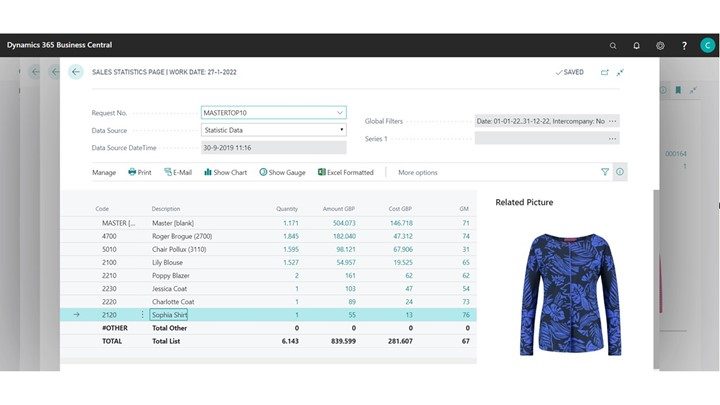
TRIMIT tracks your bill of materials for each style. You see fabric, trims, labor, and overhead in one view. Landed cost tools add freight and duties. This gives finance and ownership a true cost per unit.
You can price with confidence and spot margin problems before they hurt you. If you work with an ERP specialist, they can help you set up costing flows that match your real-world process and ensure accuracy from the start.
Garment Software That Connects Sales Channels to Inventory
Your wholesale customers, online store, and retail locations all need accurate stock numbers. TRIMIT gives every channel real-time access to the same inventory data.
When a sale happens online, your warehouse sees it right away. When you reserve stock for a big wholesale order, your website shows the updated availability. This cuts overselling and speeds up fulfillment. Strong inventory management means fewer customer complaints and less time fixing mistakes.
Modern ERP-based fashion software like TRIMIT can also use AI to save time on routine work. For example, Microsoft Copilot can suggest next steps, pre-fill purchase orders, or summarize key numbers in plain language. This is automation that eliminates low-value tasks, and allows your team to focus on important decisions.
To see how TRIMIT works in practice, you can watch this short demo for fashion businesses…
Garment Software Selection Checklist for Fashion Brands and Manufacturers
Here is how to choose the right solution for your stage and goals.
Start with Your Core Goals, Not with a Feature List
Do not begin by listing every possible feature. Start with your top three to five business goals. Examples:
- Reduce stock-outs by 30 percent.
- Cut time to close the monthly books from five days to two.
- Speed up production planning so you meet more delivery dates.
- Connect your online store and warehouse so inventory is always accurate.
Once you know your goals, you can translate them into software capabilities. A goal around stock-outs means you need real-time inventory visibility and demand forecasting. A goal around month-end close means you need integrated accounting and automated reconciliation.
TRIMIT vs. Stand-Alone Garment Software Tools
Stand-alone tools are cheaper and faster to start. You can buy an inventory app or a simple accounting package. But each tool lives in its own world. Moving data between them takes time and creates errors. As you grow, you hit limits.
TRIMIT is an integrated ERP solution. It costs more up front and takes longer to set up. But it gives you one shared database. Everyone works from the same numbers. Your production manager sees live inventory. Your finance team pulls reports without waiting. Your sales team knows what is available to promise. Over time, this saves more time and money than you spend. It also scales with you: add users, locations, or modules as you grow.
Match Garment Software Types to Your Growth Stage
Your stage shapes what you need now:
- Early stage (1–10 people): You may need simple tools for pattern design, basic inventory tracking, and online sales. A full ERP might be too much too soon.
- Growing (10–50 people): You need integrated systems. TRIMIT gives you inventory, production, finance, and sales in one place. This is when most fashion brands make the jump to an ERP-based solution.
- Mature (50+ people, multiple locations): You add advanced planning, B2B portals, warehouse management, and deeper automation. You may also explore ETO manufacturing approaches if you do custom or made-to-order work.
Shortlist Vendors and Ask the Right Questions
When you talk to apparel ERP vendors, ask:
- Do you have fashion-specific features (style-color-size matrix, collections, seasonal planning)?
- Can your system integrate with our existing tools (eCommerce, accounting, shipping)?
- What does implementation look like: timeline, team involvement, training?
- Do you have clients in our region with similar needs? (For example, if you operate in Canada, ask about local support and references.)
- What ongoing support and updates do you offer?
These questions help you move past marketing language and see how each vendor really works.
Garment Software Costs, Timelines, and What to Expect with an ERP Project
Let's set realistic expectations around budget and schedule.
What Garment Software Typically Costs
Costs fall into three buckets:
- Licenses or subscriptions: Most modern ERP systems charge per user per month. Small teams might pay a few thousand dollars a month. Larger teams pay more.
- Implementation services: This includes setup, data migration, configuration, and training. For small businesses, implementation services for an ERP project commonly start around $25,000 to $75,000. For mid-sized companies with production, warehousing, and multiple integrations, budgets in the $50,000 to $250,000+ range are typical. Complex, multi-site or heavily customized projects can go beyond that. A realistic budget for professional services is often the deciding factor between a smooth launch and a challenging one.
- Internal time: Your team will spend time in meetings, testing, and learning. Plan for this. It is an investment, not a distraction.
Total cost depends on your size, complexity, and how much customization you need. Ask vendors for clear estimates and compare total cost of ownership over three to five years, not just year one.
How Long a Garment Software Project Usually Takes
Timelines vary:
- Light projects (basic inventory and accounting): 4 to 12 weeks.
- Full ERP with production, warehousing, and integrations: 3 to 9 months.
- Large, multi-site implementations: 9 to 18 months, often done in phases.
A phased rollout is often safer. Start with core modules (finance, inventory, orders) in one location or one product line. Learn. Improve. Then roll out more modules or more sites. This lowers risk and keeps your team from feeling overwhelmed.
Measuring Value Without Overpromising
Track a small set of key performance indicators (KPIs) before and after your ERP implementation:
- On-time delivery rate: Are more orders shipping when promised?
- Inventory accuracy: Does your system match physical counts?
- Time to close the month: How many days does month-end take?
- Order processing time: How long from order entry to invoice?
Use these numbers to show real improvement. Some vendors offer tools like ROI calculators to help estimate savings before you commit. These can be helpful, but remember: real value comes from better decisions, fewer errors, and faster work, not just from the calculator.
For fashion businesses that also handle logistics and distribution, working with a logistics software consultant can help you connect warehousing, shipping, and fulfillment into your ERP backbone.
-
Garment software is any digital tool or system that helps apparel companies manage design, production, inventory, sales, and finance. It includes design tools, pattern software, inventory apps, and ERP systems like TRIMIT.

Why Gestisoft for Garment Software Projects
Choosing the right partner matters as much as choosing the right software…
Gestisoft specializes in implementing TRIMIT for fashion and apparel businesses. With deep experience in both the Microsoft Dynamics 365 ecosystem and the unique workflows of garment operations, Gestisoft helps you move from evaluation to a working system that fits your team and your goals.
Gestisoft follows a clear three-stage process:
- Needs assessment: Understand your goals, map your current processes, and design a solution that fits.
- Implementation: Set up the system, migrate data, train your team, and launch in phases if needed.
- Evolution: Optimize over time, add new modules, and adjust as your business grows.
This is a realistic, long-term approach. Projects are paced to fit your team's capacity. The focus is on building an apparel ERP solution you can grow with, not a one-time setup.
Gestisoft serves fashion brands and manufacturers across industries and regions, including strong experience in Canada. You work with a team that knows both ERP and the unique needs of apparel businesses.
Plan Your Garment Software Project With Gestisoft’s Team
Walk through your fashion operations with consultants who specialize in TRIMIT and garment ERP. Get a clear picture of what an integrated system could mean for your business and your next steps.
 Free discovery call
Liked what you just read? Sharing is caring.

March 20, 2026 by Muhammad Ali Iqbal by Muhammad Ali Iqbal SEO Content Strategist & Copywriter
Driven by a passion for search engine optimization, strategic content, and conversion-focused writing. A copywriter and content strategist who lives for content that ranks, engages, and delivers real business results.
