

ERP in distribution is the system that connects every moving part of your operation: purchasing, inventory, warehouse, sales, and finance, into one place, so your team stops working from different versions of the truth. If your warehouse team, your sales reps, and your finance team are currently answering the same questions with different numbers, that's the problem it's built to fix.
Most distributors don't realize how much that gap is costing them until they actually start counting. Late shipments, oversold stock, invoices that don't match what went out the door, month-end closes that drag into the third week. The good news is that these aren't business problems. They're data problems. And data problems have a solution.
Start Your ERP in Distribution Journey Today
Stop losing time and money to disconnected systems. Walk away with a clear plan that actually fits your business.
 Book a free consultation
What Does ERP in Distribution Actually Mean?
The phrase gets thrown around a lot, but most explanations either drown you in jargon or stay so vague they tell you nothing useful. So let's be direct.
What Is ERP in Distribution, Really?
ERP stands for Enterprise Resource Planning. In plain terms, it's one software system that runs your whole business instead of five separate tools that don't talk to each other. For a distributor, that means your purchase orders, your warehouse activity, your customer orders, and your financial records all live in the same place and update in real time.
When a customer calls asking if a product is in stock, your sales rep doesn't need to call the warehouse. They can see it right there. When a shipment comes in, the inventory count updates automatically. No one needs to key it into a spreadsheet. When an invoice goes out, it's already matched to the pick list and the shipping record. That's what ERP in distribution looks like when it's working.
Why ERP in Distribution Is Different from Regular ERP
A generic ERP is built for a business that makes things or sells services. Distribution is neither of those. You're buying finished goods from suppliers, moving them through one or more warehouses, and getting them out to customers as fast as possible, often with complex pricing tiers, multiple ship-to addresses, and volume-based commitments.
ERP in distribution is designed around that specific flow. It handles things a generic system won't: lot tracking, multi-warehouse transfers, landed cost calculations, demand-based replenishment, pick-and-pack workflows, and EDI connections with suppliers and retail partners. Generic ERP can technically be configured to do some of this, but the effort and cost to get there is usually higher than just starting with a distribution-native system.
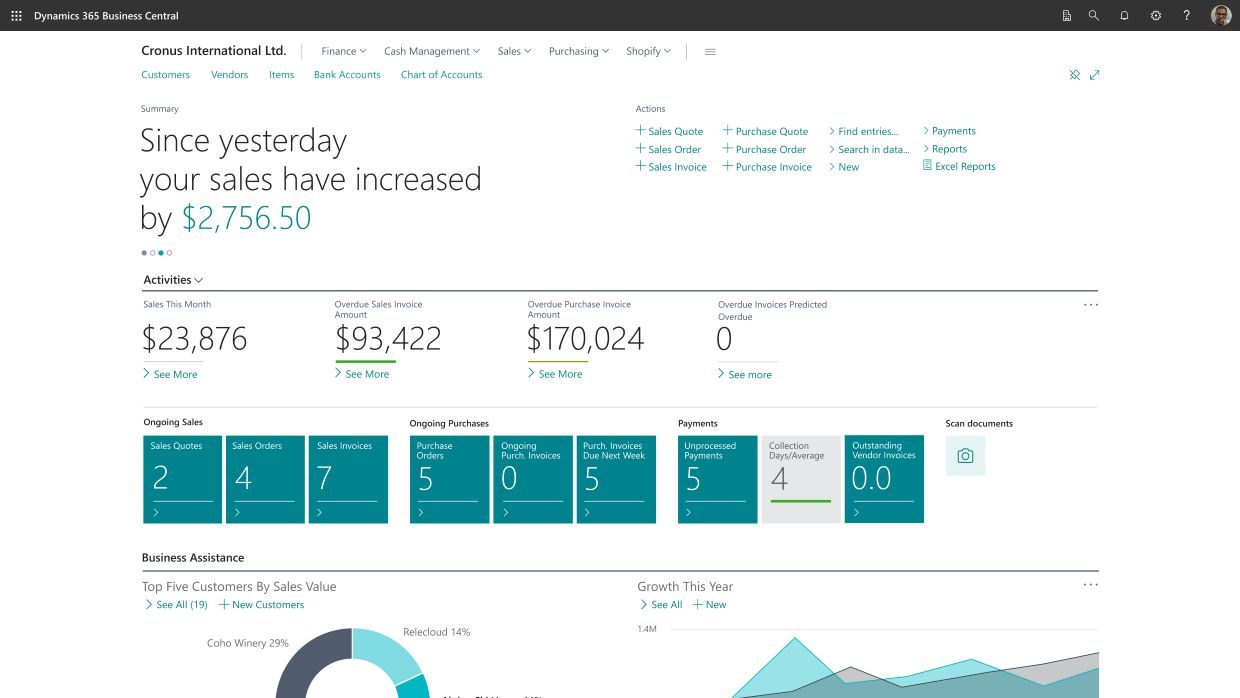
What Does ERP in Distribution Do During a Normal Day?
Most articles list features. This is what actually happens inside a distribution business running ERP versus one that isn't.
Morning: Receiving and Put-Away
A truck pulls in at 7:30 AM with 14 pallets. Without ERP, someone prints the PO, walks the dock, checks off items by hand, and keys the receipt manually. If something doesn't match, it becomes a phone call and a paper trail that may never get resolved.
With the right system, the receiving clerk scans items as they come off the truck. Quantities are verified against the PO automatically. Discrepancies are flagged immediately. Inventory updates before items hit the shelf, and the warehouse module directs put-away to the right bin. No guesswork.
Midday: Picking, Packing, and Shipping
By midday, your team is pulling orders. Without ERP, a pick list gets printed and someone walks the warehouse manually. Shorts get discovered at the pack station, or by the customer. Sales doesn't know until it's too late.
The right system generates optimized pick lists by bin location, so pickers move efficiently without backtracking. Shorts are flagged before the order ships. Shipping confirmation triggers the invoice and updates the customer automatically. No double entry.
Afternoon: Invoicing and Customer Updates
In a disconnected operation, invoicing is a manual step done at the end of the day, pulling from three different places. Wrong prices, wrong quantities, and missed invoices pile up until AR aging shows the damage.
But with ERP, it handles invoicing as a direct output of fulfillment. When a shipment is confirmed, the invoice generates automatically: correct price, correct quantity, correct customer terms. Tracking updates go out without anyone hunting for information.
End of Day: Inventory, Cash, and the Books
At the end of the day, a non-ERP distributor has no clear picture of what actually happened. Inventory is only as good as the last spreadsheet update. Cash position is a day or two behind. Month-end is a source of low-grade dread.
With a connected system, the books reflect the day in real time. Every receipt, every shipment, every invoice is already recorded. Inventory valuation is live. You can run a margin report by product, by customer, or by warehouse without waiting for anyone to build it. That's not a nice-to-have. For a distributor managing thin margins across hundreds of SKUs, it's the difference between making decisions and guessing.

How Do You Know When ERP in Distribution Is What You Actually Need?
Here's where most vendors just say "if you're growing, you need ERP." Not helpful. The real answer is more specific. You're probably ready when at least three of the following are true:
Your Warehouse and Sales Team Are Working from Different Numbers
You're managing more than 500 active SKUs and inventory accuracy is already a weekly argument. One department says you have stock. The other says you don't. Someone always loses. And it's usually the customer.
Stock Transfers Between Locations Happen in the Dark
You have more than one warehouse, but moving inventory between them is a manual process with no real-time visibility. By the time the transfer is recorded, the data is already stale.
Month-End Close Regularly Drags Past Five Days
Finance is waiting on warehouse to confirm final counts. Operations still has open shipments to reconcile. Nobody is being slow on purpose. The data just isn't centralized enough to close cleanly.
You've Oversold the Same Product More Than Once This Quarter
Promising a customer stock that wasn't actually available isn't a sales problem. It's a visibility problem and a direct sign your systems aren't talking to each other in real time.
Purchasing Decisions Still Run on Gut Feel
Reorder decisions are based on a spreadsheet someone built two years ago, or simply on instinct. Actual demand data lives nowhere useful. Stockouts and overstock happen in the same week.
You're Keeping Three or More Systems in Sync Manually
Accounting in one place, inventory in another, orders somewhere else. Someone spends real time every week just making sure they agree. That's a workaround, not a workflow.
If only one of those is true, you may not be there yet. If four or five are true, every month you wait is costing you more than ERP would.
Evaluate Your Current System Before You Switch
Find out if your current setup is costing you more than a new one would. Free guide, takes a few minutes.

What ERP in Distribution Does NOT Fix
This is the part nobody wants to say out loud, but it matters.
It Won't Fix Bad Decisions. It'll Surface Them Faster
If your purchasing decisions are consistently wrong, ERP gives you faster access to bad data. If your warehouse team doesn't follow the process, ERP surfaces the consequences more quickly. It doesn't eliminate them. Garbage in, garbage out, just faster.
It Won't Fix Problems That Live Outside the System
Pricing strategy, customer relationships, product selection, sales team performance... these are business decisions, not software problems. ERP gives you better information to make those decisions. It doesn't make them for you. If customer relationship management is part of your gap, CRM for distribution is a separate but complementary layer worth exploring.
It Won't Save a Poor Implementation
A well-designed system, configured badly for your specific workflows, will create more confusion than it solves. This is one of the most common reasons distributors replace systems within three to five years. The software wasn't wrong. The setup was.
It Won't Fix Unreliable Suppliers
ERP helps you see supply chain disruptions sooner and react faster. But it can't make your suppliers ship on time or keep their lead times consistent. Better visibility isn't the same as better vendor performance.
What it does fix, reliably and when implemented well, is the data layer. Fragmented information, manual processes, double entry, phantom inventory counts, invoice errors, late closes. Those it handles.
Get an Honest Assessment of Your Distribution Setup
Know exactly what to fix, what to keep, and what ERP will actually solve for your business, before you spend a dollar.
 Book a free consultation
How ERP in Distribution Handles the Parts That Break First
Every distribution business has a breaking point. Usually it's not one catastrophic failure. It's a slow accumulation of friction in the same three or four spots. This is exactly what it's built around.
Inventory Accuracy Across Multiple Warehouses
Inventory inaccuracy is the most common pain point in distribution. It shows up as phantom stock. The system says 40 units, you actually have 11. Shrinkage nobody can explain. Reorder decisions made on numbers that are already wrong.
A properly configured ERP in distribution addresses this at the transaction level. Every movement, whether receipt, transfer, pick, or return, is recorded in real time against specific bin locations. When a discrepancy appears, you can trace it back through the transaction history. That's not possible when your inventory management lives in a spreadsheet.
ERP in Distribution and Real Landed Cost
Most distributors know their purchase price. Far fewer know their actual landed cost: what a product truly costs after freight, customs, and handling. When you don't know that number, you don't know the real margin. You could be selling certain products at a loss and not know it until year-end.
A distribution ERP captures landed costs as part of the purchasing process. Freight, brokerage, and import duties are allocated across shipment items automatically, so margin calculations reflect what you actually paid, not just the supplier invoice line.
Month-End Close and Why It Always Slips
In most non-ERP distribution businesses, month-end close is a negotiation between departments. Finance waits on warehouse for final counts. Warehouse waits on operations to close open shipments. Nobody is deliberately slow. The data just isn't in one place.
The right system eliminates that back-and-forth. Transactions recorded in real time throughout the month mean there's no reconciliation gap to close. Hard close becomes a confirmation, not a discovery. For a deeper look at how warehouse management and ERP work together, that connection is worth understanding before you evaluate systems.
What ERP in Distribution Looks Like for Canadian Businesses
Distribution businesses operating across Canadian provinces face complexity most US-focused ERP content ignores. GST/HST treatment varies by province and product type. Selling into Quebec means QST applies. Cross-border shipments bring CBSA documentation and landed cost calculations into every order. And if you're shipping between provinces, the tax treatment on the same product can change depending on where it lands.
Payroll for warehouse staff adds another layer. Canadian payroll rules, including CRA remittance schedules and provincial employment standards, need to tie into the same system your operations run on. Doing that manually across departments is where errors quietly build up.
Bilingual operations add yet another dimension. Packing slips, customer documents, and internal reporting may need to work in French and English depending on the region. A properly configured system handles all of this natively, without manual workarounds bolted onto something that wasn't designed with the Canadian regulatory environment in mind.
If you want a broader look at how distribution management software fits into this picture, that's a useful next read.
See exactly how picking and shipping works inside Business Central…
When ERP in Distribution Is the Wrong Answer
ERP in distribution is a significant investment in money, time, and organizational change. It's not always the right move.
When Your Operation Is Still Small and Simple
Single location, fewer than 200 SKUs, small team. A solid accounting system with an inventory add-on may serve you better for the next few years. ERP's implementation overhead can outweigh the benefit at that scale.
When Your Business Model Hasn't Grown Complex Yet
One product type, one supplier, a handful of customers. ERP may be more than you need. Complexity justifies it. A system built for 10 warehouses when you have one is just cost without value.
When Your Team Isn't Ready for the Process Discipline It Demands
ERP only works when people use it consistently, every transaction, every time. If that culture isn't there yet, implementing early creates friction that undermines the system from day one. Build the habits first.

A Short ERP in Distribution Readiness Check
Before you evaluate software, ask your team four honest questions. No hedging. Just yes or no.
Can Your Warehouse Give You an Exact SKU Count Right Now?
Without physically going to check. If the answer involves opening a spreadsheet, calling someone, or saying "roughly," that's a no, and a clear signal your inventory visibility has a gap.
Can Finance Close the Books Within Five Days of Month-End?
If the close regularly bleeds into week two because someone is still chasing numbers, the data isn't centralized enough. A connected system makes this a confirmation step, not a scavenger hunt.
Can Sales Promise a Delivery Date Based on Real Available Inventory?
Not what the system shows... what's actually on the shelf, uncommitted, and ready to ship. If sales is guessing or double-checking with the warehouse before every promise, that's a visibility gap this kind of system is built to close.
Can You Calculate True Landed Cost and Margin in Under Five Minutes?
If margin analysis requires pulling freight invoices, customs documents, and a calculator into the same spreadsheet, that's time and accuracy you're losing every single day.
If most of those answers are no, the system will make a real difference. If most are yes, the gains are smaller, and the decision deserves more careful thought about exactly where the friction is.
-
To connect purchasing, inventory, warehouse, fulfillment, and finance in one system, so every team works from the same real-time data instead of different versions of it.
Who Actually Helps You Get ERP in Distribution Right?
Choosing the right system is one decision. Getting it implemented well is the harder one. Most businesses underestimate that part.
The software matters, but a great system in the wrong hands still fails. You need a partner who has done this in distribution specifically, not just ERP in general. That's where Gestisoft comes in.
What Makes Gestisoft Different for ERP in Distribution
Gestisoft is a certified Microsoft Partner founded in 1997, with more than 500 implementations across manufacturing, distribution, professional services, and more. Our team of 110+ specialists supports over 6,200 users and delivers in both French and English, which matters if your distribution operation spans Quebec and English Canada.
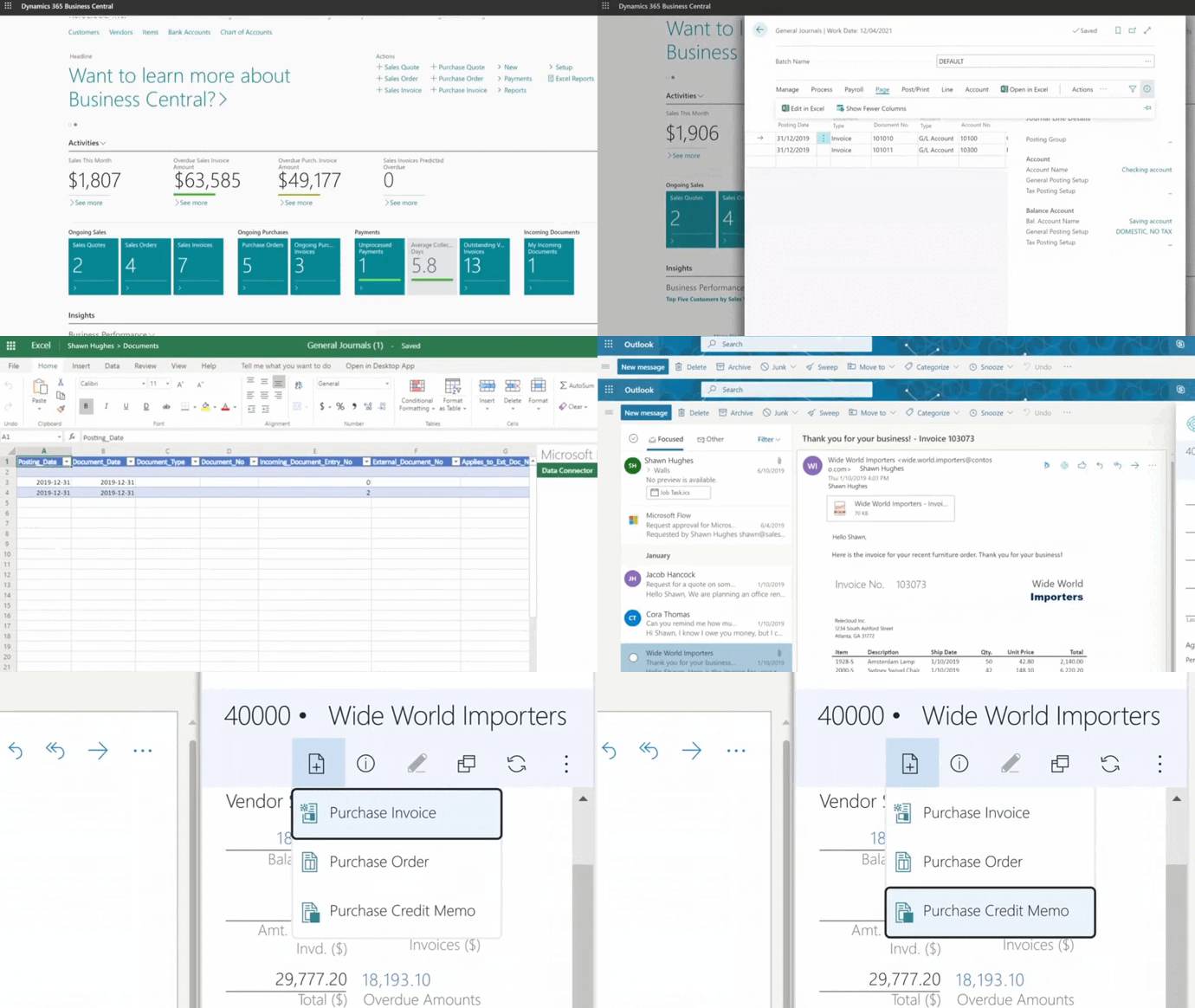
On the distribution side specifically, we configure Microsoft Dynamics 365 Business Central around the workflows that actually define distribution: multi-warehouse inventory, landed cost allocation, demand-based replenishment, pick-and-ship operations, EDI integration, and Canadian tax compliance, including GST/HST and QST, built into the system from day one rather than patched in after the fact.
We start every project by understanding how your business actually runs before a single configuration decision is made. That's the step most implementations skip when they're under schedule pressure, and it's where most of the problems come from.
Here's what one of our clients had to say:
“The solution delivered to us has significantly improved our production visibility. We are now able to track our production in real time, and have more accurate data on the costs of each production run.”
If that's the kind of partner you've been looking for, the next step is simple:
Your ERP in Distribution Implementation Starts Here
Get faster order fulfillment, fewer stockouts, and cleaner books, with an ERP built around how your distribution actually runs.
 Book a free consultation
Liked what you just read? Sharing is caring.

May 20, 2026 by Muhammad Ali Iqbal by Muhammad Ali Iqbal SEO Content Strategist & Copywriter
Driven by a passion for search engine optimization, strategic content, and conversion-focused writing. A copywriter and content strategist who lives for content that ranks, engages, and delivers real business results.
