

Running distribution operations with disconnected tools eventually creates the same problems: inventory uncertainty, slow fulfillment, pricing complexity, margin leakage, and too much manual work between sales, warehouse, purchasing, and finance. ERP for distributors exists to solve that by bringing your core distribution workflows into one system—so your team can move faster, serve customers better, and protect profitability.
This guide explains what ERP for distributors is, who needs it, the features that matter most, how to evaluate options, and how to implement with less risk—using a practical, distributor-first approach.
What is ERP for distributors?
ERP for distributors is an enterprise resource planning system designed to manage the end-to-end operational and financial processes of a distribution business in a single platform. Instead of running inventory in one tool, accounting in another, and order fulfillment in spreadsheets, an ERP connects your “finance-to-warehouse” reality:
- Purchasing and replenishment
- Inventory and warehouse operations
- Sales order management and fulfillment
- Pricing and profitability controls
- Returns and credits
- Financials and reporting
Book a free consultation with our experts today
Contact us to learn more about Business Central: the number one choice of ERP for distributors.
 Free discovery call
A strong ERP for distributors provides real-time visibility across procurement through delivery, so decisions are made with accurate data—not assumptions.
ERP for distributors vs WMS vs accounting software
It’s common to confuse the roles of different systems:
- Accounting software focuses on financial reporting, AR/AP, and compliance—but usually lacks deep distribution workflows (multi-warehouse inventory, picking processes, order promising, pricing rules).
- A WMS (Warehouse Management System)focuses on warehouse execution (picking, packing, scanning, bin logic) but typically doesn’t replace accounting, purchasing, pricing, or full order-to-cash management.
- ERP for distributors is the operational backbone that connects warehouse activity to purchasing, sales, and finance—and can include warehouse capabilities or integrate with a dedicated WMS depending on your complexity.
Who needs ERP for distributors?
Not every distributor needs a full platform on day one. But most growing companies reach a point where the cost of “making it work” with disconnected tools becomes higher than the cost of an ERP program.
You likely need ERP for distributors if you recognize several of these triggers:
Your inventory complexity is rising
- You manage many SKUs, variants, units of measure, or substitutions
- You operate multiple warehouses, branches, or third-party logistics partners (3PLs)
- Inventory accuracy is inconsistent, and cycle counts feel constant
Your order and fulfillment volume is stretching your team
- You process high order volume or frequent partial shipments and backorders
- Picking and shipping mistakes are increasing (and returns are rising)
- Customer service spends too much time answering “Where is my order?”
Pricing rules and margin control are becoming a serious challenge
- Customer-specific pricing, contract pricing, promotions, rebates, or volume breaks are hard to manage
- You can’t reliably calculate true margin by item, customer, or channel
- Freight, duties, and landed cost aren’t consistently captured
Your business runs on integrations
- EDI is required by major customers
- eCommerce, marketplaces, and inside sales must stay synchronized
- You need clean handoffs between CRM, ERP, shipping, and finance
You’re scaling but don’t want to scale headcount the same way
A modern ERP for distributors is often the difference between “growth with control” and “growth with chaos.”
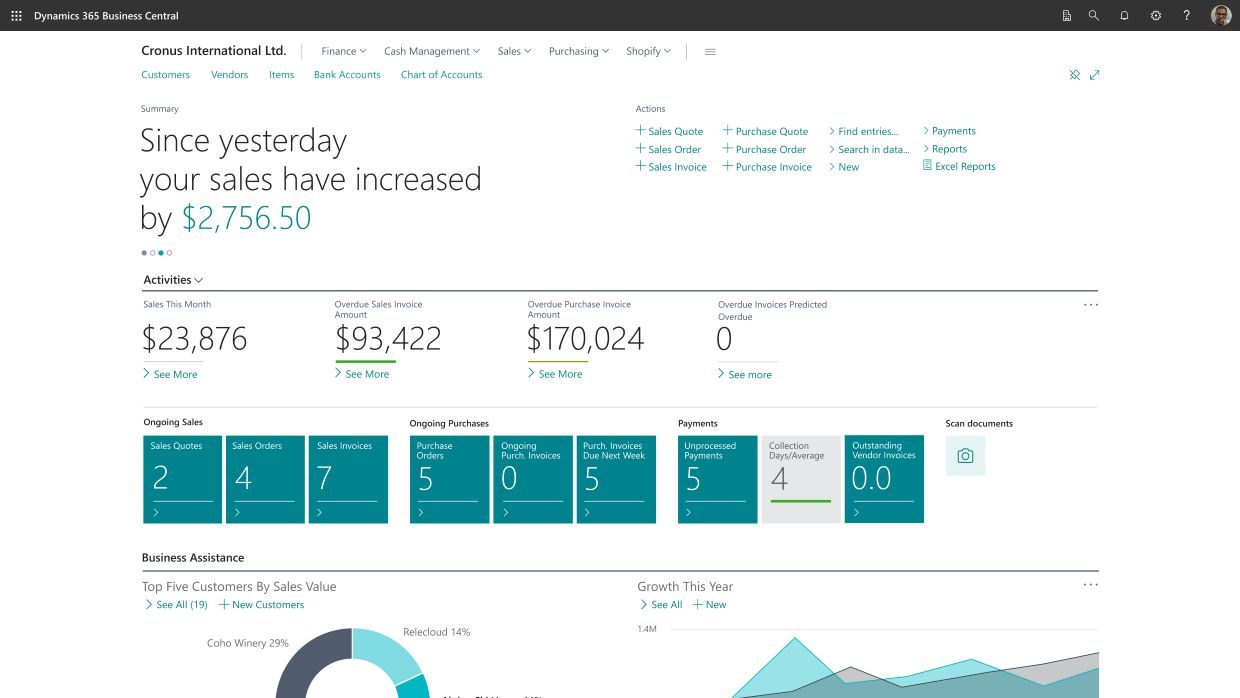
The biggest challenges ERP for distributors must solve
Distribution is operationally intense: small process inefficiencies become expensive when multiplied across orders, lines, warehouses, and customer demands. Good ERP for distributors targets these recurring pain points.
1) Manual work and rekeying slow everything down
When quotes, orders, invoices, and purchase orders live in different systems, your team spends time copying information instead of improving performance. Manual rekeying also increases errors, delays, and disputes.
2) The inventory truth problem
Many distributors know the difference between “inventory on hand” and “inventory actually available.” Stock might be:
- allocated to other orders
- in transit between warehouses
- reserved for key accounts
- stuck in receiving or returns
- unavailable due to quality issues
ERP for distributors should help you build a dependable inventory picture that supports accurate fulfillment.
3) Stockouts and overstocks driven by weak replenishment
Without reliable demand signals and lead time logic, you end up reacting:
- Expediting purchases and paying premium freight
- Missing service levels due to stockouts
- Carrying excess inventory that ties up cash
A strong ERP for distributors supports structured replenishment rules and visibility into inventory health (turns, aging, excess, and obsolescence).

4) Warehouse productivity and accuracy issues
Warehouse execution is where distribution wins or loses. If picking logic, bin management, and shipping workflows are unclear or inconsistent, you see:
- mis-picks and short shipments
- overtime spikes
- slow order cycles
- higher return rates
5) Complex pricing and margin leakage
Contract pricing, discounts, promotions, freight, rebates, and deductions can hide margin problems. Many distributors can’t answer basic questions quickly:
- Which customers are truly profitable?
- Which products look profitable until freight and rebates are included?
- Which channel is winning on margin, not just revenue?
This is where ERP for distributors becomes a profitability system—not just an operations tool.
6) Returns, credits, and reverse logistics chaos
Returns aren’t just a customer service process. They affect:
- inventory integrity
- profitability
- warranty and vendor claims
- restock decisions
ERP for distributors should support consistent return authorization (RMA), inspection outcomes, and credit workflows.
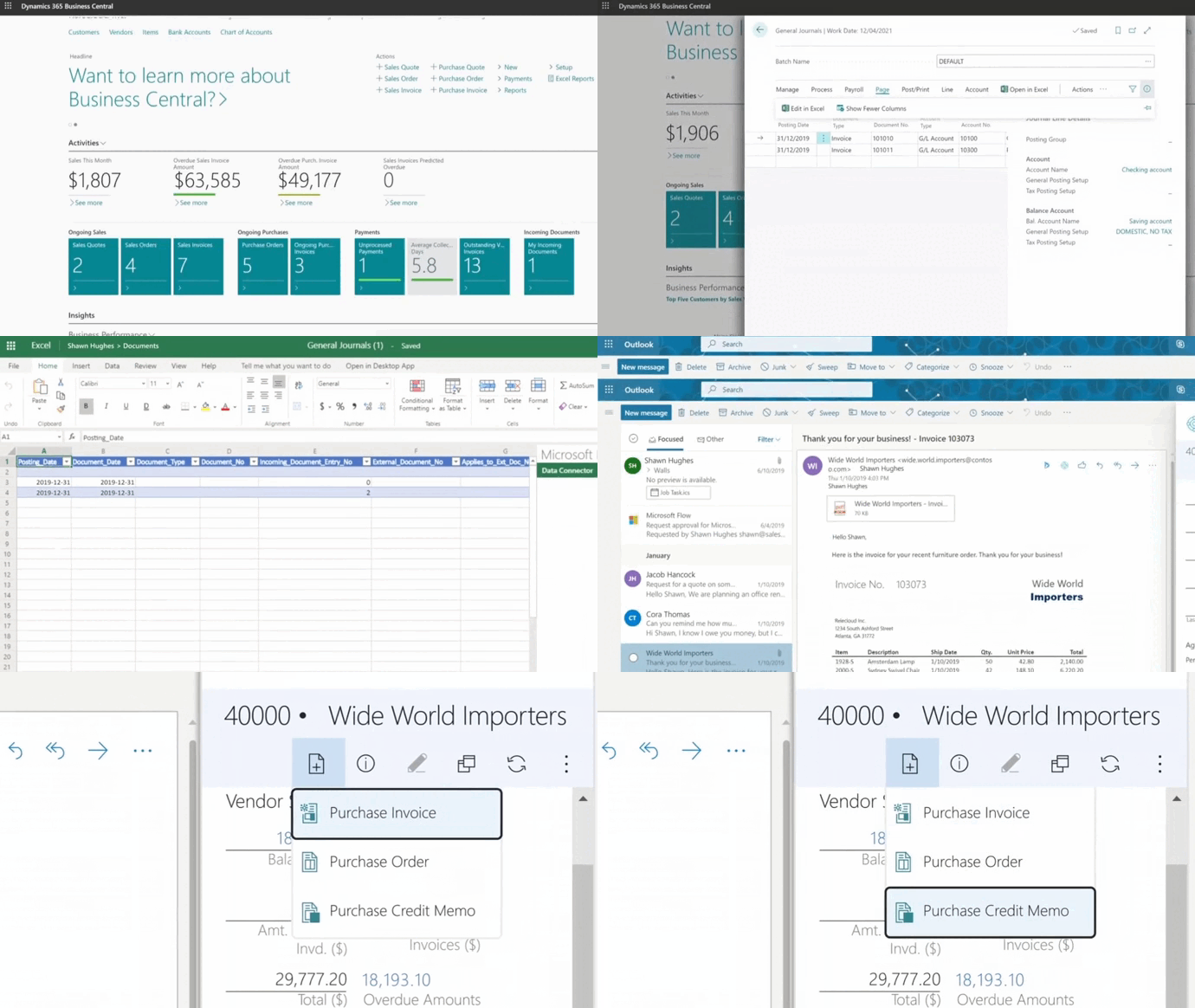
Benefits of ERP for distributors
The benefits of ERP for distributors are best measured in operational outcomes and decision quality—not just feature lists. Here’s what typically improves when the system is implemented properly and adopted by the teams who use it daily.
Faster order-to-cash
When orders, shipping, invoicing, and AR are connected:
- fewer delays between shipment and invoice
- fewer disputes caused by inconsistent data
- faster cash conversion due to cleaner billing workflows
Lower carrying costs and better inventory performance
With structured replenishment, better forecasting inputs, and visibility:
- reduced excess and obsolete inventory
- fewer emergency purchases
- improved inventory turns and working capital health
Higher warehouse throughput with fewer errors
With consistent warehouse execution (and scanning where appropriate):
- reduced picking and packing mistakes
- faster fulfillment cycles
- smoother shipping cutoffs and fewer late orders
Better customer service and reliability
Accurate dates, clear order status, and reliable promise logic can reduce service noise and increase customer trust.
Stronger margin control
When landed cost, pricing rules, and deductions are managed properly, you can evaluate profitability by:
- product
- customer
- channel
- region or warehouse
That’s a major reason many companies invest in ERP for distributors—because distribution is a margin game.

Must-have features in ERP for distributors
Not every distributor needs the same stack, but there are core capabilities that consistently separate “accounting-plus inventory software” from true ERP for distributors.
Inventory and warehouse management
At minimum, your ERP for distributors should support:
- Multi-location inventory with clear stock status (available, allocated, in transit, on hold)
- Bin or zone logic (depending on warehouse complexity)
- Cycle counts and adjustments with auditability
- Item variants, units of measure, substitutions (where relevant)
- Inventory aging, slow movers, and obsolescence visibility
If you manage regulated products or traceability requirements, look for:
- lot/serial tracking
- expiry date management
- recall-ready reporting
Order management and fulfillment
This is the heartbeat of ERP for distributors:
- Sales order lifecycle: entry → allocation → pick/pack/ship → invoice
- Backorders, partial shipments, substitutions
- Order promising (available-to-promise logic)
- Returns processing (RMA workflows, restock/scrap outcomes, credits)
- Integration readiness for shipping carriers and label workflows
Purchasing and supplier management
A distributor ERP should support:
- Purchase orders, approvals, and receiving workflows
- Lead times, reorder points, min/max policies
- Vendor performance tracking (on-time delivery, fill rates, quality issues)
- Drop-ship support (if used)
- Clear visibility into open POs and inbound inventory
Pricing and profitability controls
This is where many systems fail distributors. Strong ERP for distributors supports:
- Customer-specific pricing and contract pricing
- Volume breaks, promotions, tiered discounts
- Pricing governance (who can override, approvals, audit trails)
- Landed cost allocation (freight, duties, handling)
- Profitability reporting by item/customer/channel
Integrations and omnichannel operations
Most modern distributors must connect multiple systems. Your ERP for distributors should enable:
- EDI integration (orders, acknowledgements, invoices, ASNs where required)
- eCommerce and marketplace integrations
- 3PL/WMS integration (if you don’t execute warehouse work inside the ERP)
- CRM integration for a unified customer and sales process
- BI and reporting integration for advanced analytics
Financials and reporting
At minimum:
- General ledger, AR/AP, tax handling, and audit trails
- Multi-entity and multi-currency capabilities (if you operate across regions)
- Real-time reporting and role-based dashboards
- Drill-down from financial statements to transactions (to accelerate analysis)
Contact us to learn more about Business Central
Our team will be happy to answer all your questions regarding Business Central and how we can help implement it in your distribution business.
 Free discovery call
Key distributor workflows your ERP must support
A feature list is useful, but your buying decision should be based on workflows—because workflows reveal whether the software truly fits distribution.
Procure-to-stock (purchasing to receiving to putaway)
Your ERP should support:
- clean purchasing approvals
- receiving accuracy and discrepancy handling
- putaway logic or clear location assignments
- inbound visibility so sales and customer service can set expectations
Order-to-cash (order to ship to invoice to payment)
This workflow must be reliable:
- clean order entry and validation
- allocation rules and substitutions
- pick/pack/ship execution
- immediate invoicing triggers and accurate billing
- credit controls and customer terms governance
Replenishment and allocation (keeping the right stock in the right place)
A solid ERP for distributors helps you:
- define replenishment policies (min/max, reorder points, lead time logic)
- allocate limited stock to priority orders or accounts
- plan transfers between warehouses without losing visibility
Returns-to-credit (reverse logistics)
A distributor-grade process includes:
- return authorization and reason codes
- inspection outcomes (restock, refurbish, scrap, vendor claim)
- credit memo workflow and financial impact tracking
- inventory updates that maintain data integrity

How to choose the right ERP for distributors?
Choosing ERP for distributors is less about brand names and more about operational fit, scalability, and implementation reality. Here are the selection criteria that matter most.
1) Fit to your distribution model
Start by documenting your reality:
- wholesale distribution vs hybrid retail/wholesale
- value-added services (kitting, assembly, rental, light manufacturing)
- make-to-order vs stock-to-order fulfillment patterns
- regulated products or traceability needs
If the ERP requires heavy customization just to match core distribution workflows, that’s a risk.
2) Warehouse complexity and execution needs
Ask whether you need:
- WMS-lite capabilities inside the ERP
- or a full WMS with scanning, wave picking, and advanced labor optimization
Your ERP for distributors must integrate smoothly with whatever warehouse execution approach you choose.
3) Pricing complexity and margin transparency
If contract pricing, rebates, and customer-specific rules are core to your business, make pricing a first-class evaluation topic—not an afterthought. This is often where distributors lose margin quietly.
4) Integration readiness (EDI, eCommerce, shipping, 3PL)
Many ERP programs succeed or fail based on integration scope. Before choosing:
- list every system that must connect
- define which system is the “source of truth” for customers, items, pricing, and orders
- confirm how integrations are delivered and supported (not just “it integrates”)
5) Reporting and decision-making requirements
A distributor ERP should help leaders and operators answer questions quickly:
- What is our fill rate and backorder rate by warehouse?
- What inventory is aging or obsolete?
- Which customers and products drive profitable growth?
- Where are we losing margin (freight, discounts, deductions, returns)?
6) Partner experience and implementation approach
For ERP for distributors, the partner matters as much as the platform. A distributor-experienced implementation team can:
- translate distribution workflows into system configuration
- anticipate data pitfalls (item master, units of measure, pricing logic)
- design a phased rollout that reduces disruption

ERP for distributors implementation roadmap
A disciplined rollout reduces risk, protects operations, and improves adoption.
Phase 0: process and data readiness
This phase is often underestimated. It includes:
- mapping current workflows (order-to-cash, procure-to-stock, returns)
- cleaning item master data, units of measure, and locations
- defining pricing rules and governance
- confirming customer terms, credit policies, and tax logic
- identifying integration requirements early
Phase 1: core finance + purchasing + sales order management
Establish the operational backbone:
- financials and reporting
- purchasing and receiving
- sales order entry, allocation rules, and invoicing workflows
Phase 2: warehouse execution + shipping workflows
Expand into fulfillment excellence:
- bin logic, picking and packing processes
- scanning strategy (if used)
- shipping carrier integration and label flows
- performance monitoring and exception handling
Phase 3: advanced capabilities and optimization
Once core is stable:
- advanced pricing strategies
- demand planning inputs and smarter replenishment
- deeper analytics and role-based dashboards
- automation of approvals and exception workflows
Adoption and change management (non-negotiable)
Even the best ERP for distributors fails if adoption is weak. Training should be role-based:
- warehouse staff need fast, practical workflows
- purchasing needs clear replenishment controls
- finance needs trust in the numbers
- leadership needs dashboards and governance
Contact our team and book your free consultation today
Learn more about Business Central and what makes this Microsoft-powered solution the best ERP for distributors
 Free discovery call
Common mistakes to avoid when buying ERP for distributors
- Treating ERP as a software install instead of an operating model change
- Underestimating item master complexity (units of measure, variants, substitutions, locations)
- Leaving pricing for later (contract pricing and margin governance must be early decisions)
- Not defining the system of record across ERP, eCommerce, CRM, and WMS
- Delaying integrations until after go-live and discovering workflow gaps too late
- Over-customizing too early instead of stabilizing core processes first
Avoiding these mistakes increases the odds that ERP for distributors delivers long-term value—not just a go-live event.
How Gestisoft helps distributors succeed with ERP for distributors?
Implementing ERP for distributors requires both platform expertise and distribution process experience. Gestisoft supports distributors with a structured approach that focuses on operational fit, risk reduction, and adoption:
- Discovery workshops to map distribution workflows and priorities
- Solution design aligned to your inventory, fulfillment, and pricing realities
- Data migration planning that protects inventory integrity and financial continuity
- Integration planning for EDI, eCommerce, shipping, and other systems
- Role-based training, go-live support, and continuous improvement after launch
If your goal is to modernize distribution operations while protecting service levels and margins, the right project approach matters as much as the software choice.
-
ERP for distributors is a system that unifies purchasing, inventory, warehouse workflows, order management, pricing, returns, and financials into one platform—so distributors can operate with real-time visibility and consistent processes.
Conclusion
ERP for distributors is not just a technology upgrade—it’s a way to run distribution with more control, speed, and margin clarity. The most successful projects start with workflow reality, prioritize the features that directly impact inventory and fulfillment performance, and implement in phases that protect daily operations.
If you’re evaluating ERP for distributors and want a clearer path to selection and rollout, Gestisoft can help you define requirements, choose the right-fit solution, and implement with a structured approach that drives adoption and measurable operational improvements.
Liked what you just read? Sharing is caring.

January 26, 2026 by Kooldeep Sahye by Kooldeep Sahye Marketing Specialist
Fuelled by a passion for everything that has to do with search engine optimization, keywords and optimization of content. And an avid copywriter who thrives on storytelling and impactful content.