

Understanding the true cost of fund accounting software can be challenging for nonprofits. Prices vary significantly depending on the size of your organization, number of funds, reporting requirements, integrations, user count, and the level of automation or customization you need. On top of that, many nonprofits underestimate the cost of implementation, ongoing support, and future growth—leading to budget overruns or failed technology projects.
This guide breaks down everything nonprofits need to know about fund accounting software cost, including pricing structures, typical ranges, the hidden costs many organizations forget to include, and how to build a realistic budget. Whether you are upgrading from QuickBooks, replacing an older system, or modernizing your financial infrastructure, this article will help you plan effectively and avoid financial surprises.
For a deeper understanding of features, compliance requirements, and system types, you can refer to our complete guide to fund accounting software.
Want to learn more about the cost of Business Central?
Schedule a free consultation with our professional team today for more details.
 Free discovery call
Overview: how fund accounting software is priced
Fund accounting software uses several pricing models depending on the vendor and the nonprofit’s needs. Understanding these models will help you compare vendors more accurately.
1. Subscription-based pricing (SaaS)
This is the most common model today. The nonprofit pays an annual or monthly subscription fee that includes software access, updates, and basic support.
Typical components:
- Per-user licenses
- Per-module fees (e.g., budgeting, AP automation)
- Add-on reporting or analytics
- Cloud hosting
Subscription pricing is predictable and considered the safest option for nonprofits.
2. Per-fund or per-entity pricing
Some nonprofit systems charge based on the number of funds or entities tracked in the system. This model is more common in older or specialized software platforms.
3. Feature-based pricing
Vendors may offer a "core" package with optional add-ons such as:
- Grant management
- Project accounting
- Advanced budgeting
- Workflow automation
- Analytics dashboards
- Integrations with donor management tools
4. User-based pricing
Nonprofits are billed based on:
- Number of administrators
- Number of financial staff
- Number of read-only users
This is common in mid-market systems like Intacct and Business Central.
5. On-premise licensing (less common today)
Some legacy systems use:
- One-time license fee
- Annual maintenance contract
- On-premise server and IT costs
Most nonprofits are moving away from this model due to high upfront fees and limited scalability.
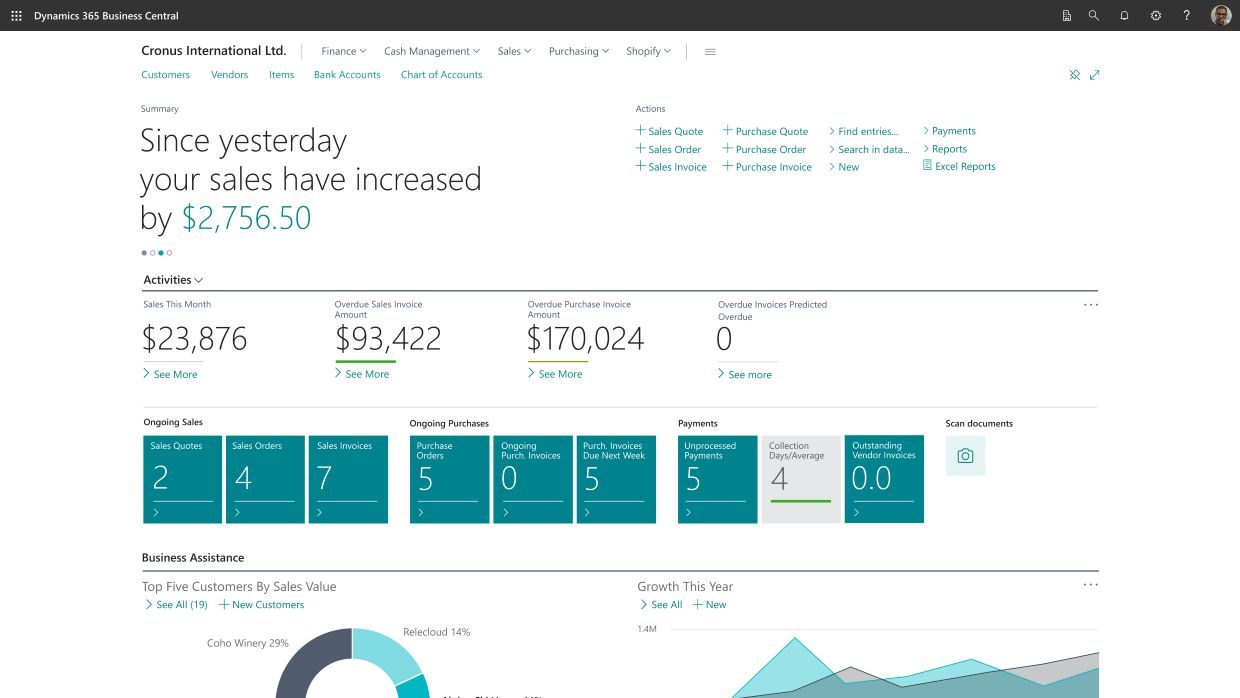
Breakdown of common pricing models
Subscription-based SaaS pricing
Most nonprofits choose SaaS because it reduces IT costs and provides access to constant updates. Pricing typically includes:
- Annual cost per user
- Optional add-on modules
- Support plans
- Hosting and security
Common SaaS price ranges:
- Small nonprofits: $50–$150 per month per user
- Mid-sized nonprofits: $150–$400 per month per user
- Large nonprofits: $400+ per month per user
Tools like Business Central, Intacct, and Blackbaud use variations of this model.
Per-fund or per-entity pricing
Systems such as MIP or Denali may charge based on:
- Number of active funds
- Number of nonprofit entities
- Number of programs or departments
This model can become costly for nonprofits with many restricted funds or complex operations.
Feature-based pricing
Vendors may charge extra for:
- Grant management
- Procurement workflows
- Advanced report builders
- Budgeting and forecasting tools
- Integration connectors
- Workflow and approval automation
This allows small nonprofits to start with a basic package and add capabilities as they grow.
User-based pricing
Most mid-sized nonprofits pay for:
- Finance team users
- Program managers with limited access
- Read-only users
User roles can significantly affect price.

On-premise licensing
Although rare for new implementations, some nonprofits still maintain on-premise systems.
Costs include:
- Server hardware
- Maintenance contracts
- IT labor
- Backup and security solutions
- Software upgrade fees
Cloud-based solutions nearly always offer better long-term total cost of ownership.
Implementation cost (often overlooked)
This is the most misunderstood cost component.
Implementation is not merely “installing software”—it is a specialized process that configures the system to support:
- Your fund structure
- Chart of accounts
- Restricted fund rules
- Donor and grant reporting
- Budgeting requirements
- Approvals and controls
Implementation cost depends heavily on the complexity of your organization.
What’s included in implementation?
1. Discovery and requirements gathering
Understanding your organization’s:
- Funds
- Grants
- Programs
- Reporting needs
- Approval workflows
- Data structure
2. Chart of accounts and fund structure configuration
The backbone of fund accounting.
3. Data migration
Migrating from:
- QuickBooks
- Excel
- Legacy systems
This typically includes:
- Historical transactions
- Fund balances
- Vendor and donor records
- Payroll extracts
- Open transactions
Data migration is often the largest cost driver.
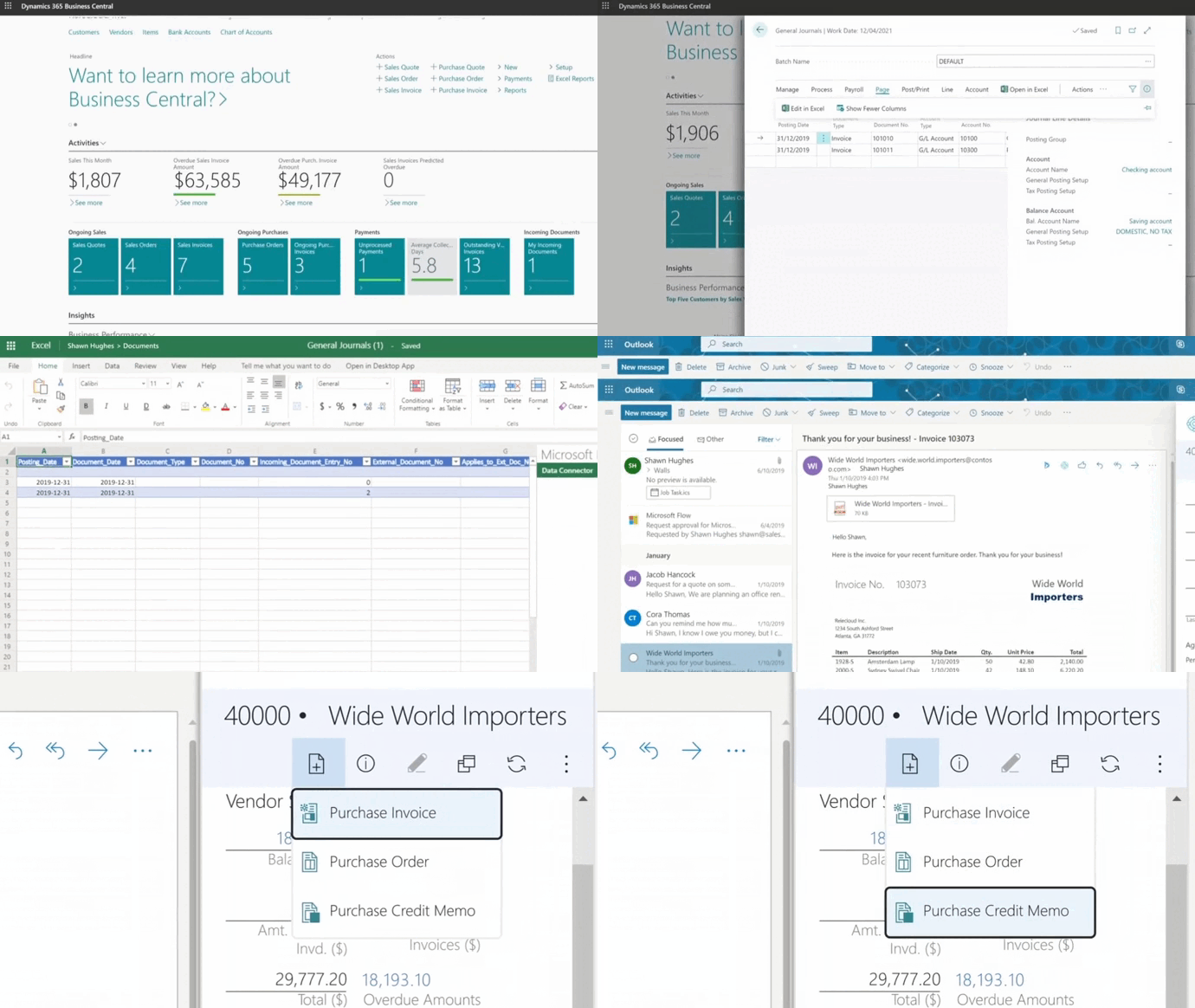
4. Workflow and approvals setup
Nonprofits often require:
- Expense approval workflows
- Purchase approval workflows
- Segregation of duties
- Restricted fund rules
5. Reporting development
FINANCIAL REPORTS:
- Statement of financial position
- Statement of activities
- Program expense detail
- Grant expenditure reports
MANAGEMENT REPORTS:
- Program dashboards
- Budget-to-actuals
- Fund balance reports
6. Integration setup
Often required with:
- Donor management systems
- Fundraising platforms
- Payroll/HRIS
- Banking feeds
7. User training
One of the most important parts of implementation.
Poor training = poor adoption.

Implementation cost breakdown by nonprofit size
Small nonprofits
Implementation range: $8,000–$20,000
Suitable systems: Aplos, small-scale Business Central, QuickBooks (if very simple).
Mid-sized nonprofits
Implementation range: $25,000–$80,000
Suitable systems: Business Central, Intacct, Blackbaud, MIP.
Large nonprofits
Implementation range: $80,000–$250,000+
Suitable systems: Business Central (advanced), Allvue (for investments), custom ERP.
How much can you save?
Download your free Excel calculator to find out how much you can save when implementing Business Central today.

Ongoing costs to plan for
Even after implementation, nonprofits should budget for ongoing expenses.
1. Support and maintenance
Cloud plans often include basic support, but many nonprofits choose enhanced support packages.
Expect:
- 10–20% of annual subscription cost
2. Upgrades and enhancements
As your nonprofit grows, you may need:
- Additional modules
- Additional users
- New workflows
- Advanced reporting
3. Training refreshers
Especially important during staff turnover.
4. Additional integrations
Nonprofits add systems over time:
- Donor CRMs
- Event tools
- Volunteer systems

How to build a realistic budget for fund accounting software?
To avoid underestimating the investment, nonprofits should use the following budgeting framework.
Step 1: Assess your current pain points
Common reasons for switching:
- Restricted fund confusion
- Manual grant reporting
- Audit inefficiencies
- Spreadsheets everywhere
- Lack of transparency for program managers
Step 2: Prioritize features you actually need
For example:
- Do you need multi-entity accounting?
- How complex are your grants?
- Do program managers need dashboard access?
- Do donors require detailed reporting?
This helps avoid unnecessary modules.
Step 3: Budget for implementation, not just subscription
Many nonprofits focus on subscription cost alone, which leads to budgeting gaps.
Implementation often represents 60–80% of the year-one investment.
Step 4: Include cost of internal change management
Your team must adapt to:
- New chart of accounts
- New workflows
- New reporting process
Training is critical here.
Step 5: Plan for future scaling
Especially if your organization expects:
- More grants
- More programs
- More funds
- Expansion into multi-entity structures
Business Central is particularly strong in this area.
Step 6: Choose a vendor with nonprofit expertise
Software alone doesn’t solve fund accounting problems.
An experienced partner ensures:
- Proper configuration
- Clean data migration
- Accurate fund reporting
- Strong internal controls
Book your free consultation today
Contact us for more details about our solution, Microsoft Dynamics 365 Business Central.
 Free discovery call
Why Microsoft Dynamics 365 Business Central delivers strong value for nonprofits?
Business Central is one of the best value options for nonprofits because:
- It supports complex fund accounting without expensive add-ons
- It uses a multi-dimensional GL instead of a rigid fund structure
- It integrates seamlessly with Microsoft 365 and Power BI
- It scales from small to very large nonprofits
- It offers strong reporting and audit capability
- It is secure, cloud-based, and constantly updated
- It can replace multiple systems (AP, AR, budgeting, reporting)
When implemented by a certified partner like Gestisoft, Business Central becomes an end-to-end financial system designed around nonprofit needs.
Conclusion
Understanding the cost of fund accounting software is essential for nonprofits planning to modernize their financial systems. While pricing varies across platforms, features, and implementation requirements, the key to building a realistic budget is understanding:
- How vendors structure their pricing
- How implementation complexity affects cost
- What ongoing expenses to expect
- How organizational growth influences total cost of ownership
Most importantly, nonprofits should view fund accounting software as a long-term strategic investment. The right system strengthens compliance, improves reporting, increases donor trust, and frees staff from manual financial tasks.
Liked what you just read? Sharing is caring.

December 01, 2025 by Kooldeep Sahye by Kooldeep Sahye Inbound Marketing Manager
Specializing in SEO-driven pipeline growth, I combine keyword strategy, content optimization, and inbound tactics to turn organic search into a reliable source of qualified leads. I work at the intersection of traditional SEO and AI search — optimizing for LLMs and AI Overviews alongside Google — pairing data-informed strategy with sharp, story-led copywriting.