
Route optimization software has become one of the most important tools for modern service organizations. Rising operational costs, technician shortages, and increasing customer expectations mean dispatchers can no longer rely on manual scheduling or basic route-planning tools. Businesses need intelligent systems that help them assign the right technician, plan the most efficient route, and respond instantly when last-minute changes occur.
Yet, most online resources focus almost exclusively on delivery and last-mile logistics, leaving a major knowledge gap for field service operations. Field service organizations — HVAC, telecom, utilities, manufacturing, maintenance, and more — face challenges far more complex than parcel drop-offs or courier routing. They need to match technician skills, certifications, parts availability, SLAs, and service windows. They also need to optimize multi-day workloads and maintain SLA compliance while controlling travel time and fuel costs.
This guide explains what route optimization software is, how it works, why it matters specifically for field service, and why Dynamics 365 Field Servicestands out as one of the most advanced optimization platforms available today.
Looking to optimize your route planning for technicians?
Contact us for a free consultation and to find out more about Dynamics 365 Field Service.
 Free discovery call
What is route optimization software?
Route optimization software is a digital solution that calculates the most efficient way for technicians or drivers to complete a sequence of stops. Unlike basic route planning tools that simply map a path from point A to point B, route optimization software considers dozens of variables to determine the ideal route for the entire service operation.
Route optimization for field service vs. delivery
Most routing tools are built for delivery. But field service routing is significantly more complex because it must incorporate:
- Technician skill sets and certifications
- Appointment windows and SLA commitments
- Types of service tasks (installation, repair, maintenance, emergency)
- Inventory availability, parts needed, and where they are stored
- The history and condition of the customer’s asset
- Safety regulations and industry standards
- Travel time, traffic, and technician scheduling constraints
This is why many delivery-focused tools — even advanced ones — fall short for field service organizations. They can optimize stops, but they cannot optimize service operations.
Field service route optimization demands a deeper integration of data, scheduling logic, and operational intelligence. This is exactly where Dynamics 365 Field Service differentiates itself.
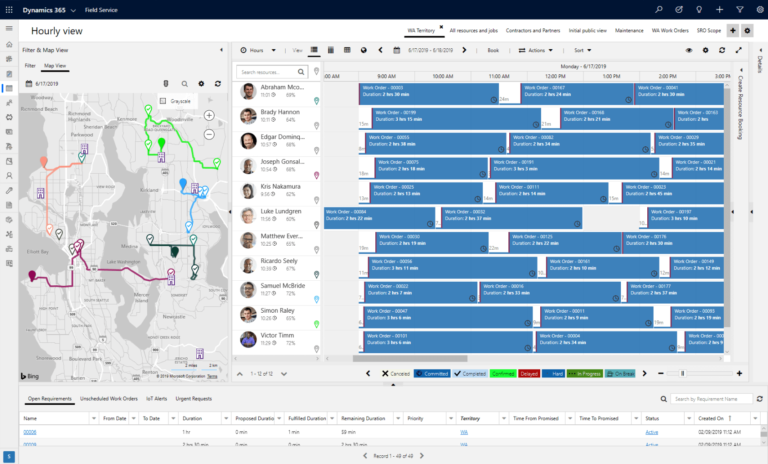
How route optimization software works?
Modern route optimization software uses advanced algorithms and AI to analyze millions of possible sequences and generate the most efficient routes across an entire fleet of technicians.
Here are the core components that power route optimization:
1. Multi-variable analysis
Optimization engines evaluate factors such as:
- Travel time, distance, traffic patterns
- Technician availability and schedules
- Required skills and certifications
- Appointment duration and priority
- SLA deadlines
- Job complexity
- Resource constraints
- Territory boundaries
A simple traffic-aware route planner can’t manage this level of operational complexity.
2. AI-enhanced resource scheduling
AI evaluates your entire set of work orders, technician schedules, and service windows to:
- Automatically assign the best technician
- Sequence jobs efficiently
- Optimize multi-day workloads
- Balance high versus low-priority tasks
This is known as Resource Scheduling Optimization (RSO) in Dynamics 365 Field Service.

3. Dynamic re-routing in real time
Conditions change constantly in field service. Route optimization software allows dispatchers to adjust schedules instantly when:
- A job takes longer than expected
- A technician becomes unavailable
- An emergency request comes in
- Parts are missing or delayed
- Weather affects travel or safety
Dynamic routing enables teams to stay efficient even when the day doesn’t go as planned.
4. Multi-technician and multi-day optimization
Field service jobs are rarely completed in a single stop. Multi-day optimization ensures consistency and efficiency across longer projects involving several technicians.

Key features every route optimization software should include in 2026
To support modern service operations, route optimization software must go beyond mapping. Essential features include:
1. AI-driven scheduling and optimization
AI not only builds routes, but enhances operational efficiency by learning from past performance and adjusting decisions over time.
2. Skill-based and certification routing
Only field service–oriented solutions can assign technicians based on:
- Required skill sets
- Asset type
- Safety or compliance expectations
- Specialized certifications
This drives higher first-time fix rates and fewer repeat visits.
3. Inventory and parts availability integration
If a technician doesn’t have the required part, the route — no matter how optimal — fails. Integration with ERP inventory data is essential.
4. Real-time traffic, weather, and hazard data
The system should adjust schedules in real time using reliable geospatial intelligence.
5. Technician mobile app integration
Technicians need:
- Step-by-step work order guidance
- Route instructions
- Up-to-date job information
- Ability to update status and collect data in the field
6. Predictive maintenance triggers
IoT-connected assets can automatically generate work orders and trigger route adjustments.
7. SLA-aware routing
The system must prioritize jobs with contractual deadlines or penalties.
8. Dynamic routing and instant re-assignment
Dispatchers should be able to modify the schedule at any time without disrupting the entire day.
9. Multi-objective optimization
The algorithm should balance:
- Cost
- Travel time
- Customer satisfaction
- Technician productivity
- SLA compliance
This level of sophistication is a defining feature of enterprise-grade solutions like Dynamics 365 Field Service.

Benefits of route optimization software for field service teams
Route optimization delivers measurable improvements for organizations of all sizes. Its benefits extend far beyond reduced mileage.
1. Lower fuel and vehicle costs
Optimized routes reduce unnecessary travel, extending vehicle lifespan and reducing operational expenses.
2. Increased technician productivity
Technicians spend less time driving and more time completing service tasks.
3. Higher first-time fix rates
Skills-based routing ensures technicians arrive prepared to resolve the issue.
4. Improved SLA compliance
Optimized scheduling helps teams honor time windows and meet contractual standards.
5. More jobs completed per day
Efficiency gains translate into higher capacity without hiring more staff.
6. Better customer satisfaction
Faster arrival times, clearer ETAs, and fewer delays create a better customer experience.
7. Reduced dispatcher workload
Automated scheduling frees up dispatch teams to focus on exceptions instead of manual planning.
8. Lower overtime costs
Well-optimized days lead to fewer scheduling overruns and fewer after-hours interventions.
9. Enhanced workforce utilization
The platform assigns the right job to the right technician at the right time, every time.

Route planning vs route optimization: Understanding the difference
Many businesses confuse route planning with route optimization. The distinction is important:
Route planning
- Creates a sequence of stops
- Often manual or semi-automated
- Does not consider all constraints
- Useful for small operations with simple routes
Route optimization
- Uses algorithms and AI
- Evaluates millions of possible combinations
- Prioritizes efficiency, cost, and SLA compliance
- Optimizes multiple technicians, constraints, and days
- Essential for modern field service teams
Simply put: route planning is basic. Route optimization is intelligent.
Why Dynamics 365 Field Service is the best route optimization software for field service operations?
Dynamics 365 Field Service offers one of the most advanced route optimization engines available, combining Microsoft’s AI capabilities, Azure Maps, and deep ERP/CRM integrations.
Here are the features that make it uniquely suited for field service organizations:
1. Resource Scheduling Optimization (RSO)
RSO uses AI to automatically assign and optimize technician routes based on:
- Skills and certifications
- Parts availability
- SLA deadlines
- Job duration
- Technician schedules
- Priority and urgency
- Travel time
It evaluates multiple objectives at once — a capability delivery-focused software simply cannot match.
2. Azure Maps integration
Dynamics 365 uses Azure Maps to deliver:
- Real-time traffic
- Predictive travel times
- Accurate geocoding
- Weather and hazard data
This ensures route decisions reflect real-world conditions.
Book your free consultation with our experts today
Contact us for more details about Microsoft Dynamics 365 Field Service, and find out how we can help you with route optimization for your technicians.
 Free discovery call
3. ERP + CRM + Field Service data in one platform
Dynamics 365 Field Service connects:
- Customer history
- Asset information
- Work order details
- Inventory and warehouse data
- Technician schedules
- IoT sensor data
This creates a far more accurate optimization model than standalone routing tools.
4. IoT-triggered work orders and predictive maintenance
Connected assets can create work orders automatically when anomalies are detected. The system adjusts the schedule instantly, incorporating the new request without breaking SLA commitments.
5. Enterprise scalability
From 10 technicians to thousands, Dynamics 365 Field Service supports complex, multi-region field operations.
6. Mobile Field Service app
Technicians receive:
- Route instructions
- Work order details
- Asset histories
- Photo and signature capture
- Offline support
This closes the loop between dispatch, field, and customer.
7. AI-powered insights for continuous optimization
Over time, the system learns:
- Technician performance
- Travel patterns
- Job duration estimates
- Seasonal or regional patterns
This leads to better recommendations and a more efficient operation.

Real-world scenarios of route optimization in field service
Without referencing fictional metrics, here are common scenarios that illustrate the power of route optimization software:
HVAC maintenance routes
Technicians are automatically assigned based on certifications, experience level, and availability of replacement parts.
Telecom service appointments
SLAs require strict arrival windows. Optimization engines prioritize time-sensitive appointments to maintain compliance.
Utility emergency dispatch
When an outage occurs, the system dynamically reassigns technicians based on proximity, availability, and skill set.
Manufacturing equipment repairs
Asset analytics may trigger proactive maintenance, automatically inserting new work orders into optimized routes.
These scenarios reveal how modern field service routing goes far beyond driving directions — it is an orchestration of people, parts, assets, and commitments.
Route optimization software for delivery vs field service: Why the difference matters
Delivery-focused software (Routific, Onfleet, Route4Me, etc.) excels at:
- High-volume drop-offs
- Parcel-based routing
- Simple delivery windows
- Driver dispatch and tracking
But field service demands capabilities that delivery tools do not provide, including:
- Skill-based routing
- Technician certifications
- Asset history and repair requirements
- IoT-triggered work orders
- Integration with ERP systems
- SLA prioritization
- Multi-day assignment planning
- Parts-based routing
This is why service organizations that rely on delivery-oriented tools often struggle with repeat visits, scheduling issues, and SLA compliance.
AI and the future of route optimization (2025–2030)
AI will continue to transform field service operations. Trends include:
1. Predictive scheduling
AI will anticipate where issues will arise — before customers experience downtime.
2. Autonomous dispatching
Schedulers will shift from manual planning to overseeing AI-driven recommendations.
3. Integration with digital twins
Service organizations will simulate routing and workforce allocation before deploying them.
4. Seamless IoT-to-technician workflows
Assets will detect failures, create work orders, schedule technicians, and adjust routes automatically.
5. Adaptive optimization models
AI will continuously refine travel times, job duration estimates, and prioritization logic.
Dynamics 365 Field Service is already moving in this direction, making it a future-ready choice.
How to choose the right route optimization software?
Use this checklist to evaluate your options:
- Do you require skill-based technician routing?
- Do you need ERP or CRM integration for parts, customers, and assets?
- Do you operate under SLAs or strict time windows?
- Do you need multi-day route optimization?
- Does your industry require specialized certifications or safety protocols?
- Do you manage inventory or track asset histories?
- Do you need IoT-triggered scheduling?
- How large is your technician workforce, today and in the future?
If your needs go beyond simple travel optimization, a field service-specific solution like Dynamics 365 Field Service is essential.
How Gestisoft helps you implement route optimization with Dynamics 365 Field Service?
Gestisoft specializes in helping service organizations unlock the full power of optimization capabilities through:
- Needs assessment and solution design
- Resource Scheduling Optimization configuration
- Dispatcher workflow setup
- Integration with CRM, ERP, and legacy systems
- Mobile technician enablement
- Continuous optimization and support
With decades of expertise in Microsoft solutions, Gestisoft ensures your organization benefits from a modern, AI-powered field service model.
-
Software that determines the most efficient route and technician assignment based on constraints such as skills, travel time, and SLAs.
Conclusion: Route optimization software is now essential — and Dynamics 365 Field Service leads the way
As service organizations face tightening SLAs, rising costs, and workforce constraints, route optimization software has become mission-critical. Basic route planning is no longer enough. To stay competitive, organizations need smart, AI-powered tools that consider every operational variable — from technician skills to inventory availability to asset history.
Dynamics 365 Field Service delivers the most complete route optimization capabilities on the market, built specifically for complex service operations. With AI, Azure Maps, IoT integrations, and deep ERP/CRM connectivity, it transforms scheduling from a manual, time-consuming task into a strategic driver of efficiency.
And with Gestisoft as your implementation partner, you can fully leverage these capabilities to modernize your field service operation and deliver exceptional customer experiences.
Liked what you just read? Sharing is caring.

December 10, 2025 by Kooldeep Sahye by Kooldeep Sahye Inbound Marketing Manager
Specializing in SEO-driven pipeline growth, I combine keyword strategy, content optimization, and inbound tactics to turn organic search into a reliable source of qualified leads. I work at the intersection of traditional SEO and AI search — optimizing for LLMs and AI Overviews alongside Google — pairing data-informed strategy with sharp, story-led copywriting.
